
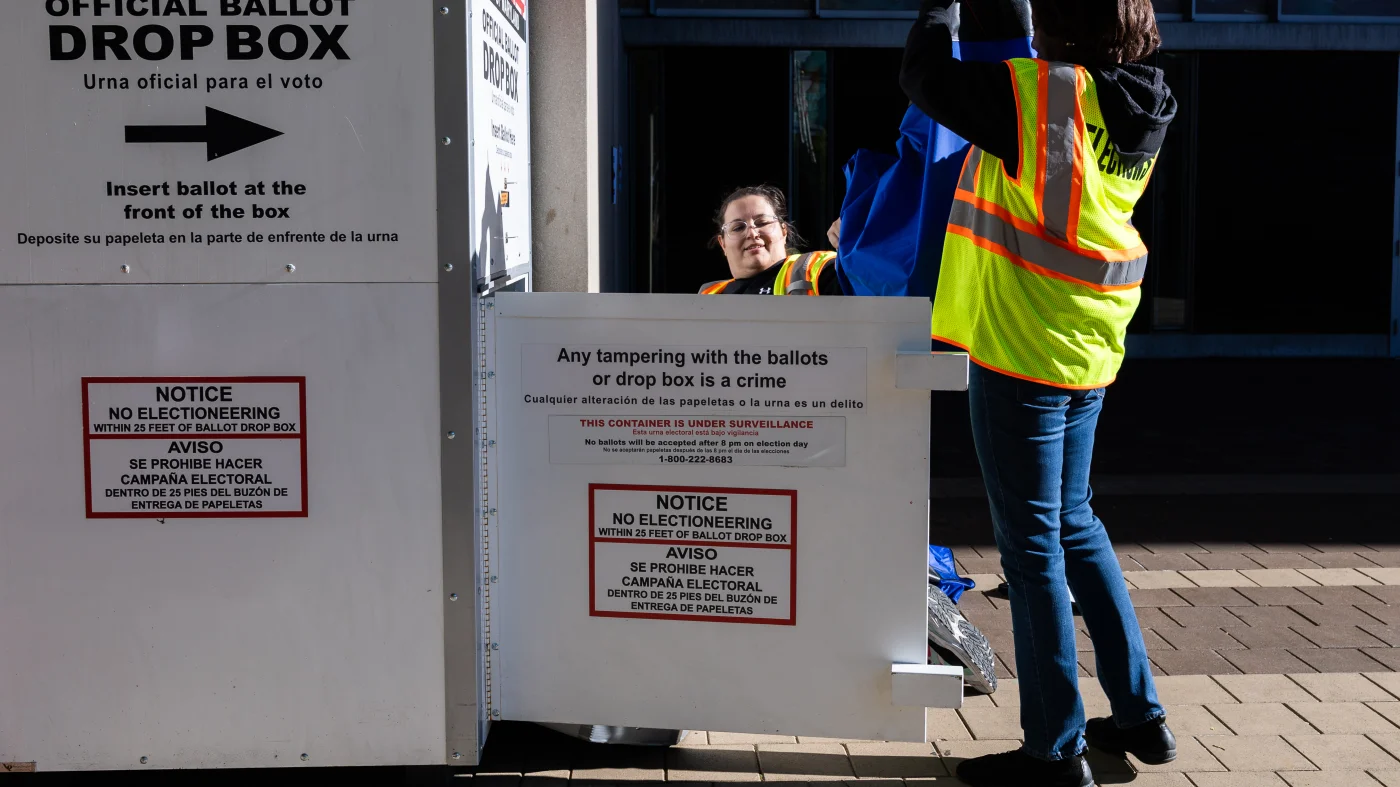
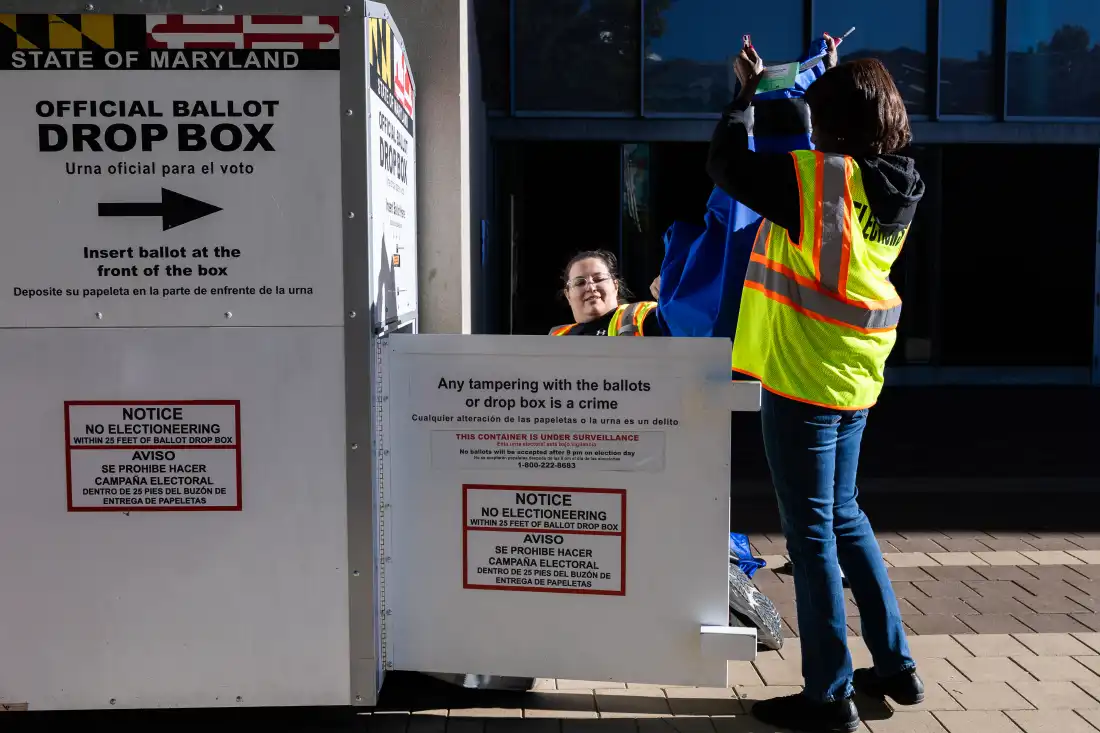
Election workers remove ballots from a drop box outside the polling center at the Silver Spring Civic Building on Oct. 22 in Silver Spring, Md.
Finn Gomez/Getty Images
hide caption
toggle caption
i
Finn Gomez/Getty Images

As of Friday morning, nearly 21 million Americans have already cast ballots in the midterm elections, according to the University of Florida’s Election Lab, which tracks voting by mail and in person.
But early voting numbers can be misleading. A surge in ballots cast before Election Day doesn’t necessarily mean more Americans will vote overall.
That’s because many of those voting early would have voted on Election Day anyway, according to Charles Stewart, a political science professor at MIT and founding director of the MIT Election Data and Science Lab.
Stewart told Morning Edition that the increase reflects both voter enthusiasm and the money campaigns are spending to encourage supporters to vote early.

“It also kind of reflects the large amount of money that’s in this campaign that’s going into retail politics, going door to door, and just making sure that supporters are energized,” he said.
Stewart also sees changes in how Democrats and Republicans are voting. Democrats still have an advantage in voting by mail, but that gap is smaller than in 2022 as more Democrats shift to early in-person voting. Republicans’ slight advantage in early in-person voting could also narrow.

What stood out to Stewart was the early voting activity in Maine and Iowa, two states that haven’t been major battlegrounds in recent elections. He said the numbers reflect voter enthusiasm and campaign efforts to mobilize supporters in places that haven’t seen as much political activity in recent years.
While speaking with NPR’s A Martinez, Stewart also discussed whether concerns about the U.S. Postal Service (USPS) and Trump’s opposition to mail voting are changing how Americans vote — and why polls still matter, even if they can’t predict exactly what will happen on Election Day.
Listen to the full interview by clicking the blue button above.
The digital version was edited by Treye Green.