
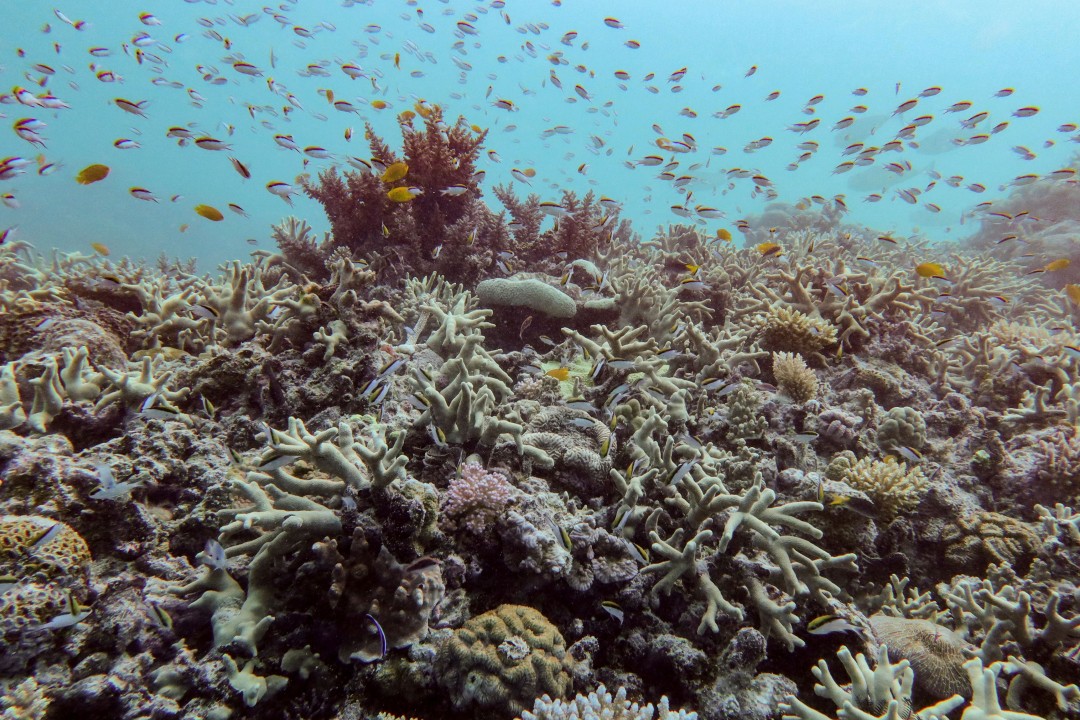
The world’s coral reef ecosystems almost all face a high risk of collapse in the next 50 years, mostly due to warming oceans and heat waves, according to a global assessment released on Thursday. It’s the latest dose of bad news for coral reefs, which are critical sources for seafood and tourism and often serve as buffers from coastal erosion and storms, per the AP. Sometimes dubbed “rainforests of the sea,” they boast some of the world’s richest biodiversity and support a quarter of marine species, as well as coastal communities and businesses.
Some 96% of shallow-water reef systems are already critically endangered and could disappear by 2075, the International Union for Conservation of Nature announced. Most of the world’s famous reef systems—including the Great Barrier Reef in Australia—are all critically endangered, the highest level of threat. When a reef collapses, hard corals disappear and are replaced by algae, rubble, and sponges. As a result, the reef no longer supports a diverse ecosystem. The assessment, encompassing 72,726 square miles of coral reefs globally, called climate change the “single most consistent threat driving coral reef decline worldwide.”
Beyond combating rising global emissions, experts say efforts to reduce pollution, overfishing, and coastal development can help reefs survive. “The risk of coral reef collapse is escalating, but this must be a wake-up call rather than a cause for despair,” says Mishal Gudka, the scientific lead of the global IUCN Red List of Coral Reef Ecosystems assessment, the first of its kind. “Coral reefs have shown a remarkable ability to bounce back from devastating bleaching events. … We must do everything within our reach to set them up for success.” More here.