
By Shahad Ali
This article was originally published by Truthout
As living conditions here in Gaza deteriorate, we have little hope that Israel’s elections will ease our suffering.
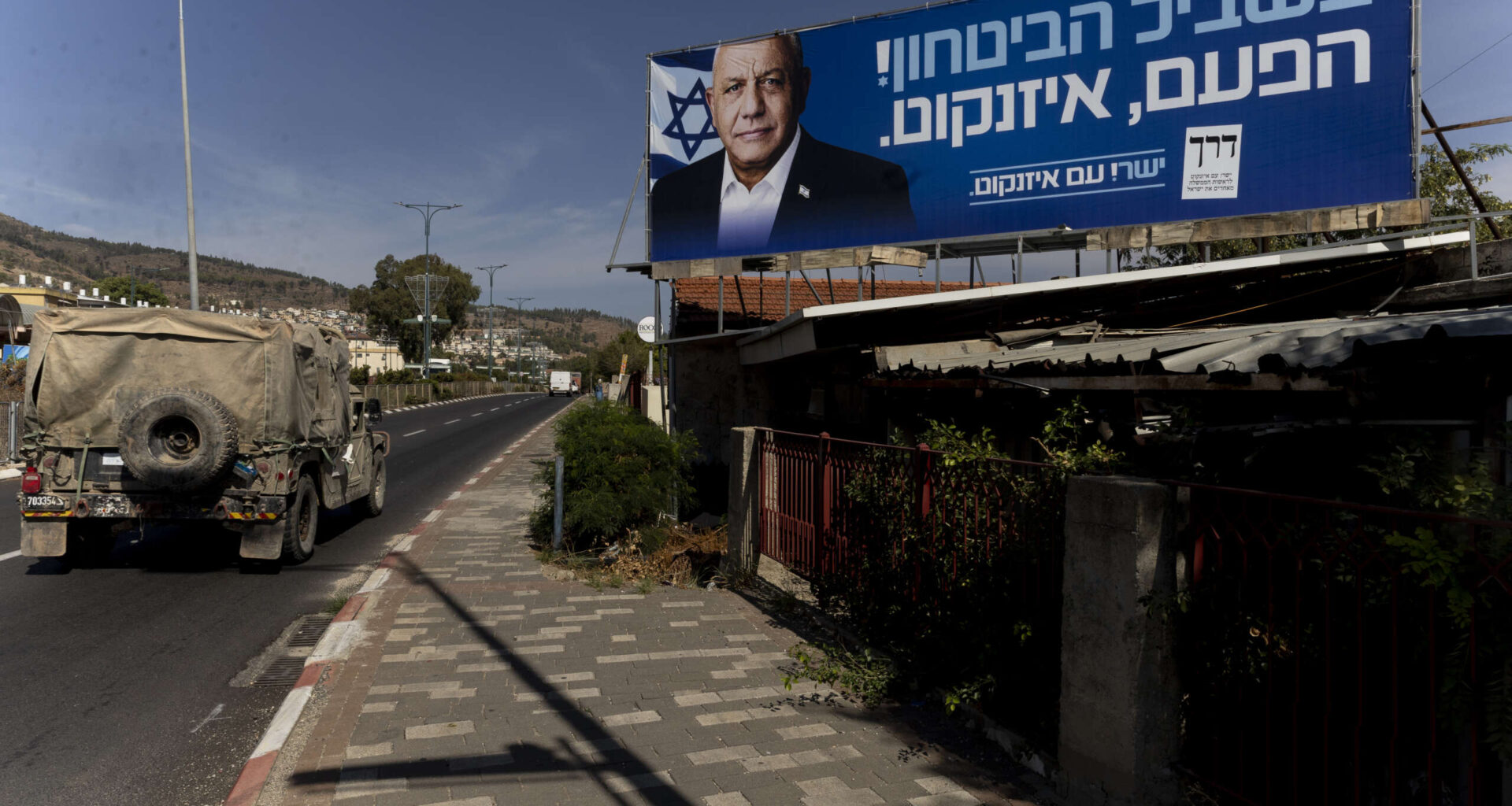
Israel is scheduled to hold general elections on October 27, with a fierce contest between incumbent Prime Minister Benjamin Netanyahu, leader of the Likud party, and former military chief Gadi Eisenkot, leader of the Yashar party. These will be the first elections since Israel’s genocidal war on Gaza began following the Hamas-led October 7, 2023, attacks on Israel.
The continuation of suffering in Gaza has been exploited as a political tool to attract more votes in Israel’s electoral struggle. The Likud party, led by Netanyahu, has cited ongoing military operations and the assassinations of Palestinian faction leaders in Gaza as evidence that its military strategy is working, warning that its opponents would end the war without fully destroying Hamas. It also frames the election as a decisive battle to protect Israel from the establishment of a Palestinian state and prevent the Palestinian Authority from returning to govern Gaza. The party argues that an opposition victory would mean yielding to international pressure and accepting a two-state solution.
Likud’s campaign rhetoric has unfolded alongside calls from its far right coalition partners for the “voluntary emigration” of Palestinians from Gaza and the re-establishment of Israeli settlements in the Strip. Both Bezalel Smotrich, Israel’s finance minister and leader of the Religious Zionism party, and Itamar Ben-Gvir, Israel’s national security minister and leader of the Jewish Power party, have championed rebuilding Israeli settlements in Gaza since October 7, 2023, framing the war as an opportunity to reverse the 2005 disengagement. Moreover, as part of his election campaign, Ben-Gvir has proposed a seven-year plan, which he calls “Disengagement 710,” to relocate approximately 1.86 million Palestinians from Gaza.
On the other hand, Gadi Eisenkot, the main challenger to Netanyahu and leader of Israel’s Yashar party, pledged to remove Hamas from power in Gaza and destroy its military wing within 18 months of becoming prime minister. Speaking near the Gaza border, he said he would work to end Hamas’s rule in the Strip, either by implementing U.S. President Donald Trump’s plan, which Netanyahu’s government had approved, or through military force.
In Gaza, most people see no real difference between Benjamin Netanyahu and rivals such as Gadi Eisenkot. In our view, Gaza’s future will not be determined at the Israeli ballot box. Both Netanyahu’s and Eisenkot’s parties and members of their coalition are likely to pursue similar policies toward our cause. Although the leading parties may have different ideas and methods, their policies ultimately serve the same goal: destroying Gaza and reshaping its reality and culture to give it an Israeli character.
As the election approaches, humanitarian conditions in Gaza continue to deteriorate. Israeli forces are intensifying their military operations across the Strip through airstrikes, artillery fire, and the expansion of the area under their control, known as the Yellow Line. Since the ceasefire agreement was announced on October 10, 2025, ongoing Israeli attacks have killed 1,522 Palestinians and injured 5,421 others. Israeli forces now control an estimated 63 percent to 70 percent of the Strip and continue to seize additional land. Recently reported expansion into more areas of eastern Gaza City has forced many families to flee without a suitable place to go.
The International Organization for Migration warns that approximately 1.8 million people in Gaza face a fourth winter without adequate protection from rain, flooding, and cold. Meanwhile, Israeli authorities continue to block the entry of emergency shelter supplies, timber for repairs, heating equipment, and winter clothing through the crossings.
In addition to this, the Israeli Coordinator of Government Activities in the Territories (COGAT) announced in a statement on October 15 that coordination for the entry of commercial goods into Gaza had been suspended. COGAT claimed that the decision was made by local merchants in Gaza, who had grown frustrated with Hamas’s imposition of taxes on their trucks. However, Jihad Esleem, deputy head of the Private Transport Association in Gaza, announced on October 19 that an official agreement had been reached with the Israeli side to resume operations at the Kerem Shalom crossing, allowing truck movements to resume and commercial goods to enter the Gaza Strip.
Although the closure of the crossing did not last long, it heightened Gazans’ concerns that such closures could happen again at any moment, with Hamas used as a pretext. The closure led to shortages of food and other basic necessities, including clothing and essential shelter materials, as well as significant price increases.
Humanitarian aid alone cannot meet the needs of the entire population. Commercial goods must also be allowed into Gaza to ensure that essential supplies are available at affordable prices. We are already beginning to see the effects of the closure. Take flour, for example: the price of a 25-kilogram bag of flour has risen from 70 shekels to 150 shekels, putting it beyond the reach of many families in Gaza, where the war has caused widespread poverty and unemployment. Moreover, vegetables, fruits, eggs, and chicken have become increasingly scarce because Israel continues to restrict their entry, even after resuming commercial operations through the Kerem Shalom crossing.
Beyond these immediate concerns, what we fear most is that the upcoming Israeli elections could trigger a resumption of the war. Netanyahu might use a renewed war to postpone the vote and salvage his political future, especially as polls have suggested the possibility of his electoral defeat. According to Haaretz military analyst Amos Harel, Netanyahu views losing the election as a serious personal threat. Harel added that people who have spoken with Netanyahu in recent years believe he is convinced that electoral defeat would lead to his conviction in his criminal trial.
Ranya Hammouda, a 45-year-old mother of five children in Gaza whom I met while she was trying to light a fire to cook for her children, told me she had no hope that her family’s conditions would improve if the Israeli government changed. She told me:
The Board of Peace plan for Gaza will remain ink on paper, as I do not believe that either Netanyahu or Eisenkot will move forward with it. From the beginning, I saw this plan as an illusion that we desperately clung to in the hope that our suffering might end one day and we could return to our normal lives.
We will continue to live under the same harsh conditions in flimsy tents, deprived of the most basic human dignity and struggling to obtain even food and water. I believe that the suffering we endured last winter will be repeated this winter. Our tent is now torn after two years of use, and I fear that strong winds and rain will cause it to collapse. On top of that, we do not have enough winter clothes or blankets. My only wish now is that winter would not come at all, because I know the suffering that awaits us … I fear that we might pay with our blood for the promises Benjamin Netanyahu makes to appease extremists. I fear that he might order vicious attacks against us simply to win more votes and bolster his election campaign.
Mohamed Abu Raylah, a 29-year-old programmer who is currently living in what remains of his home in Al-Shati Camp also told me that he no longer follows the Israeli elections or hopes that Netanyahu’s defeat might ease Palestinians’ suffering. He said he believes all the leading Israeli parties are the same, differing only in name:
The policies of killing, displacement, and destruction, passed down through Israeli generations since 1948, will continue until they achieve their goal of taking control of all Palestinian land and expelling its inhabitants…. Whether Netanyahu leaves and Eisenkot takes his place, each will use an escalation of military operations in Gaza to convince the Israeli public that he is building on past achievements rather than destroying them. The same scenario will continue: siege, suffocation, and war. Their mentality will not change. It is the mentality of an occupying power that believes we must be wiped out.
For Abu Raylah and many others in Gaza, the rivalry between Israeli politicians means nothing when Palestinians continue to be denied their rights and freedom regardless of who holds power in Israel.
“None of them will come along and give us our rights,” Raylah concluded. “Change won’t come from them. It will come from our own steadfastness.”
This article was originally published by Truthout and is licensed under Creative Commons (CC BY-NC-ND 4.0). Please maintain all links and credits in accordance with our republishing guidelines.