
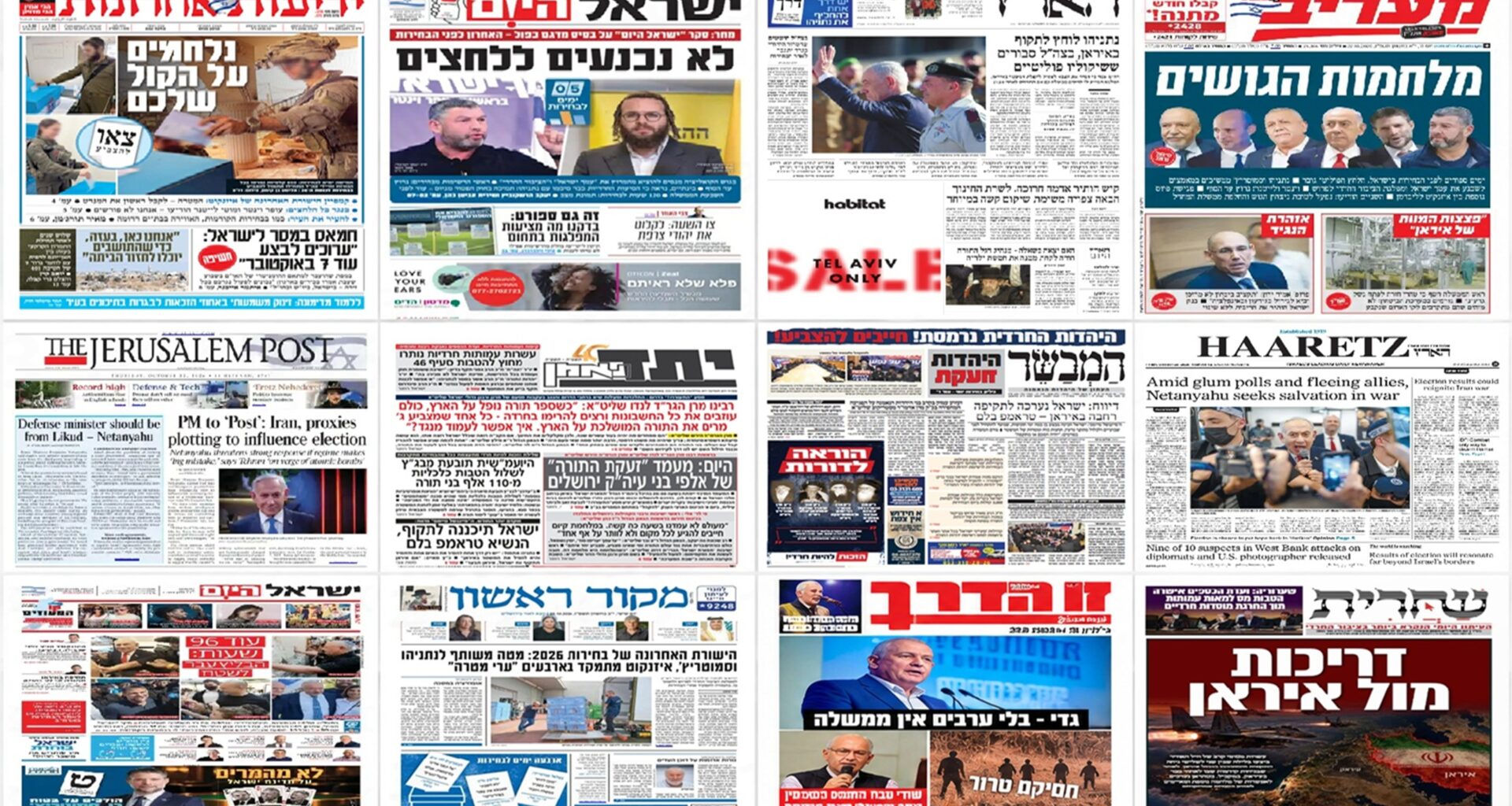
Israelis go to the polls this Tuesday, October 27, but anyone looking to the country’s news media for a clear prediction may come away more confused than enlightened. Depending on which television channel or newspaper they follow, Prime Minister Benjamin Netanyahu is either heading for another term or struggling to survive, while former military chief Gadi Eisenkot is either the likely winner or a distant runner-up.
In my explainer for The Media Line, I examine how Israel’s mainstream, right-wing, liberal, religious, and Haredi media are covering the election—and why their forecasts differ so dramatically.
The numbers tell the story. Channel 14, strongly supportive of Netanyahu, projects 30 seats for Likud and 62 for his right-wing and religious bloc, enough for a narrow parliamentary majority. Channel 13 gives Likud just 19 seats and Netanyahu’s allies 49. Most mainstream surveys put Eisenkot’s Yashar party first, generally with 20–24 seats, but leave his potential coalition short of the 61 needed to govern.
Even Israel Hayom, historically sympathetic to Netanyahu, places Eisenkot ahead. Meanwhile, Ynet considers another election more likely than any proposed governing coalition.
The religious press offers some particularly revealing perspectives. National-religious weekly Besheva anticipates another parliamentary deadlock, while divisions within the Haredi community could depress turnout and complicate Netanyahu’s plans. HaModia, associated with the Ger Hasidic movement, reportedly has not mobilized readers behind United Torah Judaism in its customary fashion.
For Eisenkot, the central obstacle is coalition arithmetic. Arab parties could hold 13–15 seats, potentially denying Netanyahu a majority without providing Eisenkot a workable alternative. Avigdor Liberman and Naftali Bennett have rejected governments dependent on Arab-party support.
Smaller parties hovering around the 3.25% electoral threshold could further scramble the calculations.
I also explore the difference between media bias, political sympathy, and formal endorsements, and why even a second-place finish might leave Netanyahu in power. The complete explainer traces the competing forecasts and the political commitments that could make coalition negotiations extraordinarily difficult.
The extraordinary possibility is that both camps could celebrate victory on election night, yet neither may be able to assemble a government.