
Daylight Saving Time ends on Sunday, Nov. 1, when the clocks fall back an hour from 2 a.m. to 1 a.m. giving Americans an extra hour of sleep.
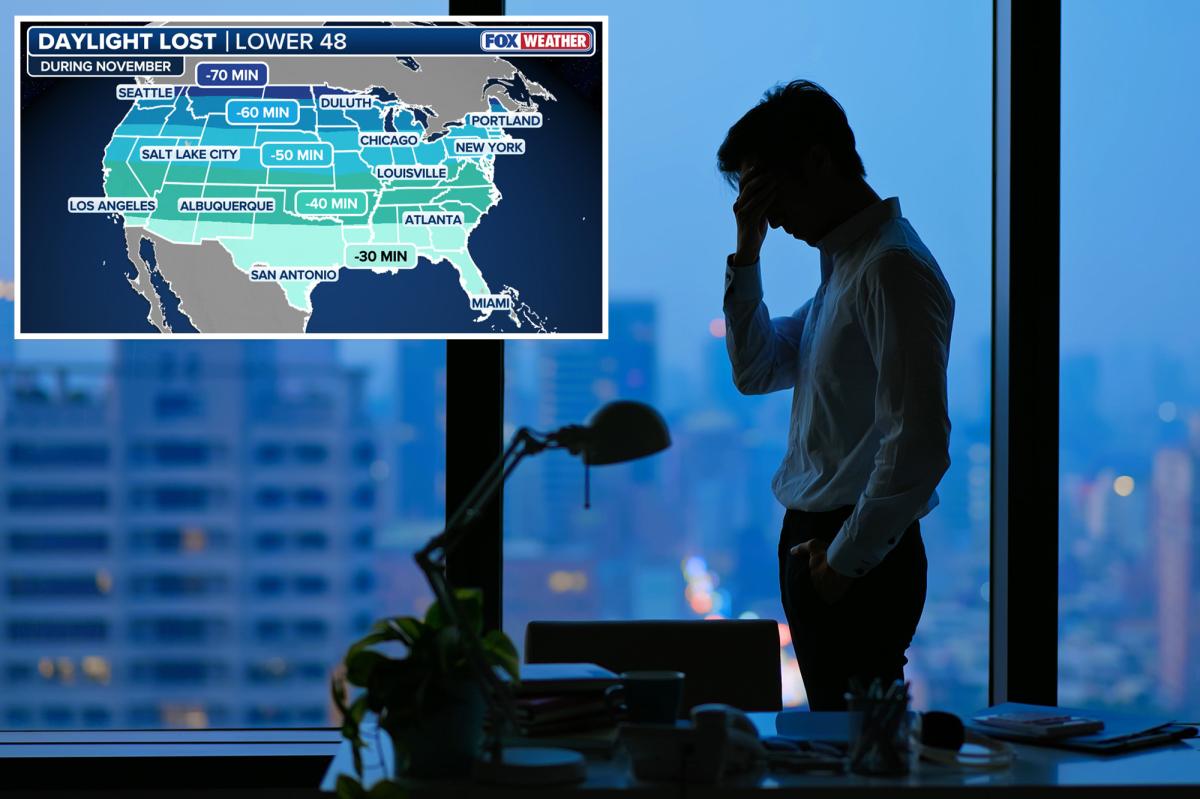
But the bonus sleep time also means people heading home from work in the dark during the colder months.
The upside, though, is that mornings will become noticeably brighter earlier.
Smartphones, computers and other internet-connected gadgets will make the switch on their own when the time comes.
But devices like the microwave, the oven, car dashboards and that old wristwatches will need to be changed manually.
 With Daylight Savings Time, many will leave work after it gets dark outside. ryanking999 – stock.adobe.com
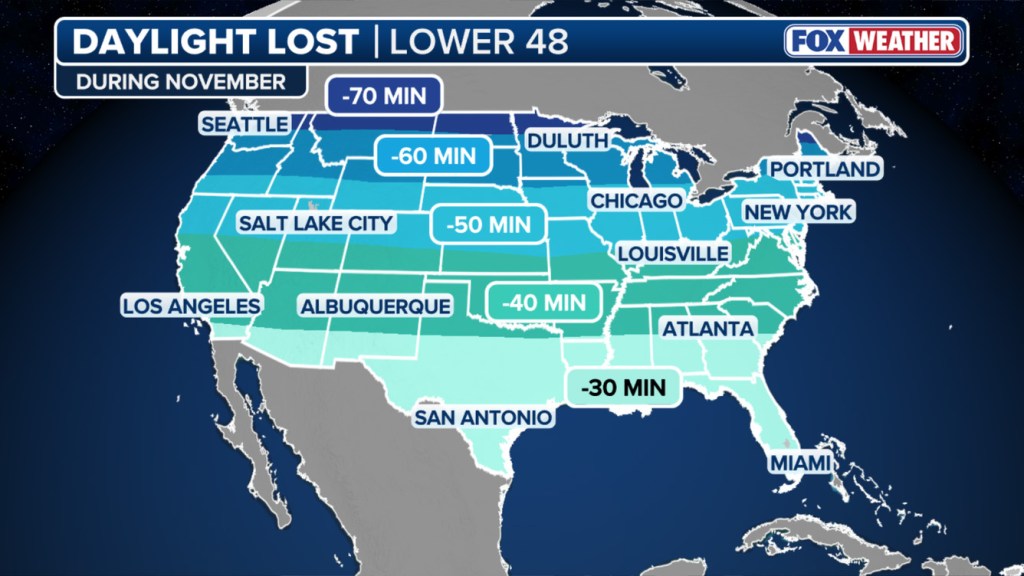 Map showing the amount of daylight lost in the lower 48 states during November, ranging from 30 to 70 minutes. FOX Weather
Daylight Saving Time runs from the second Sunday in March to the first Sunday in November in nearly every state except Hawaii and most of Arizona.
Lawmakers in Washington have tried to kill the clock change for good, and this summer the House overwhelmingly passed the Sunshine Protection Act, 308-117, which would make Daylight Saving Time permanent year-round.
That bill, however, remains locked in the Senate, meaning Daylight Saving Time will end as regularly scheduled to the disappointment of many Americans.
This all but guarantees that this weekend’s switch goes ahead as planned until at least March 2027, when clocks spring forward again — and Americans will lose an hour of sleep.
With Post wires