
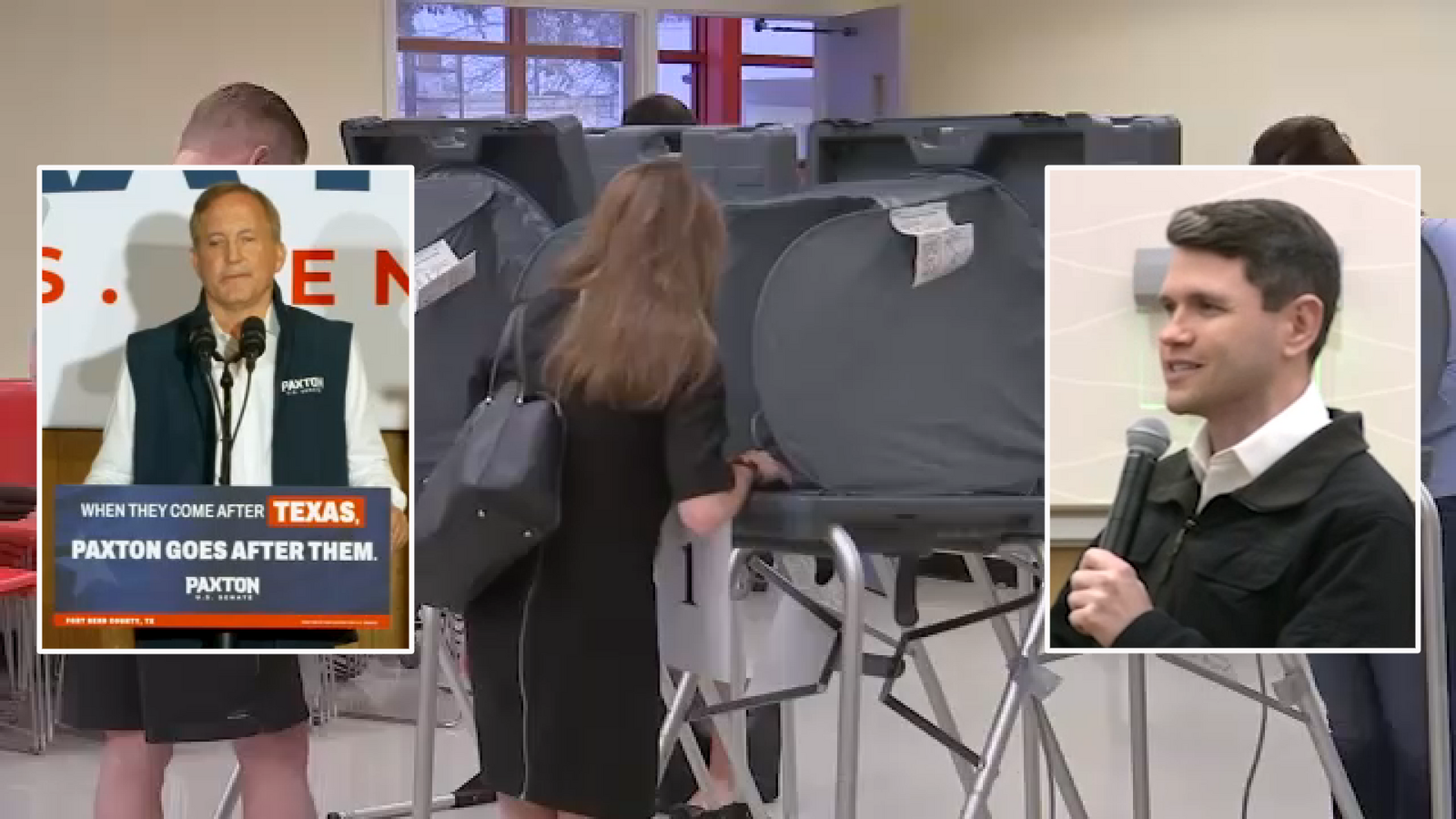
If you have spent any time on social media this month, you have probably been told how Texas will vote. The polls show a toss-up. Early voting lines wrap around the block in Houston. Somebody in your group chat has already called it. The conclusion, repeated until it sounds like a fact, is that a blue wave is coming, and Texas is riding it.
Here is what we actually know: nobody knows. Not the pollsters, not the pundits, not the strategists on either side, and not us. The polls can’t tell you who wins Texas this year, and neither can the early-vote numbers. That isn’t cynicism about polling. It’s what the record says. In each of the last three big statewide races, the final Texas polls missed the result by 3.6 to 4.7 points, and every public Senate poll this month shows the race closer than that. Record early turnout tells you people are showing up. It can’t tell you who they voted for, and the last time Harris County set records like these, in 2018, Democrats still lost statewide.
This story is about the difference between what the numbers say and what people want them to say. We’ll walk through Texas polling records, what current polls do and don’t show, why early-vote totals get misread, and what national post-mortems found after the last five elections. Then we’ll give you a few plain rules for reading polls between now and Nov. 3, and a promise to check our own work on Nov. 4.
Texas polls have missed by 3.5 to nearly 5 points in each of the last three statewide elections
Start with the question every Texan asking “can a Democrat really win?” wants answered: how much should you trust a Texas poll? The honest way to find out isn’t to argue about methodology. It’s to look at what the polls said the week before the last three big statewide races, and then look at what happened.
The three races below are the ones people remember. The 2018 Senate race was the closest a Democrat had come in a generation. The 2022 governor’s race was the rematch that was supposed to build on it. The 2024 Senate race was the one Democrats poured $80 million into. Each was polled heavily in the final week, and each ended somewhere the polls didn’t quite point.
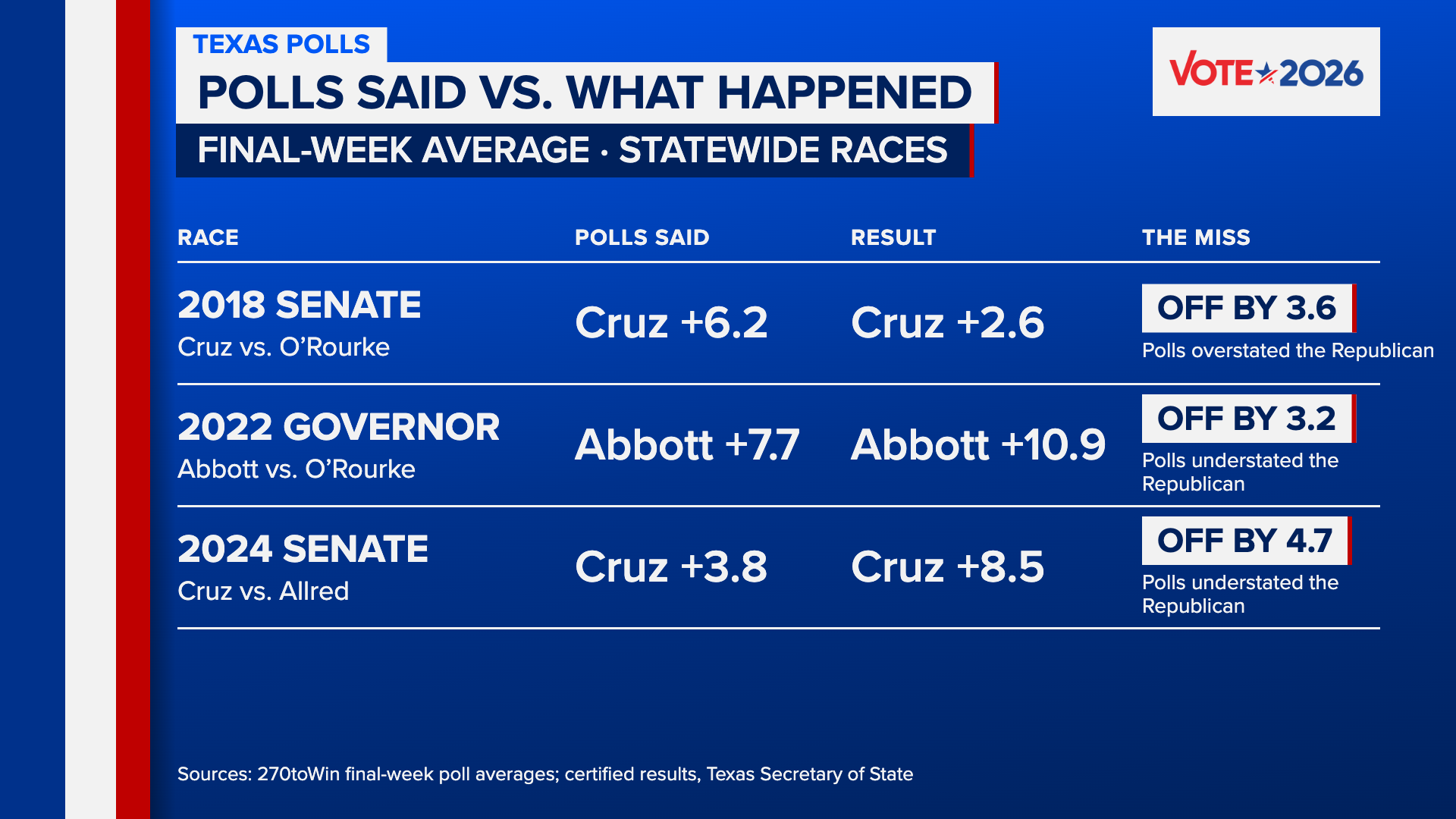
All three poll averages are 270toWin’s final-week averages, so the rows are apples to apples: 2018, 2022 and 2024 (the 2024 figure is 270toWin’s Oct. 18 – Nov. 3 average as compiled in Wikipedia’s aggregator table; RealClearPolitics’ final average that year was Cruz +4.4). Results are certified Texas Secretary of State totals.
Read across those rows and three things stand out. First, the polls called the winner correctly all three times, which is worth saying out loud, because “the polls were wrong” usually means “the polls were wrong about the margin,” not the winner. Second, they missed that margin by between 3.6 and 4.7 points all three times. That is not a fluke year or a bad pollster. It is the normal size of the error in Texas. Third, they missed in both directions. In 2018, Democrats beat their polls by more than three points. In 2022 and 2024, they fell short of them by three and nearly five.
That last point is the one to carry around this week, and it cuts both ways. If you are a Democrat hoping the polls undercount your side the way they did in 2018, the record says that can happen. If you are a Republican assuming they undercount yours the way they did in 2022 and 2024, the record says that can happen too, and it’s happened more recently. What the record does not support is certainty. The two most recent Texas elections both shortchanged the Republicans. Nobody knows whether that will repeat in 2026, and anyone who says it will is guessing.
Every public Senate poll this month is inside that miss
The Talarico-Paxton race is close in every poll released in October. None of these leads is bigger than the amount Texas polls have missed by in any of the last three cycles.
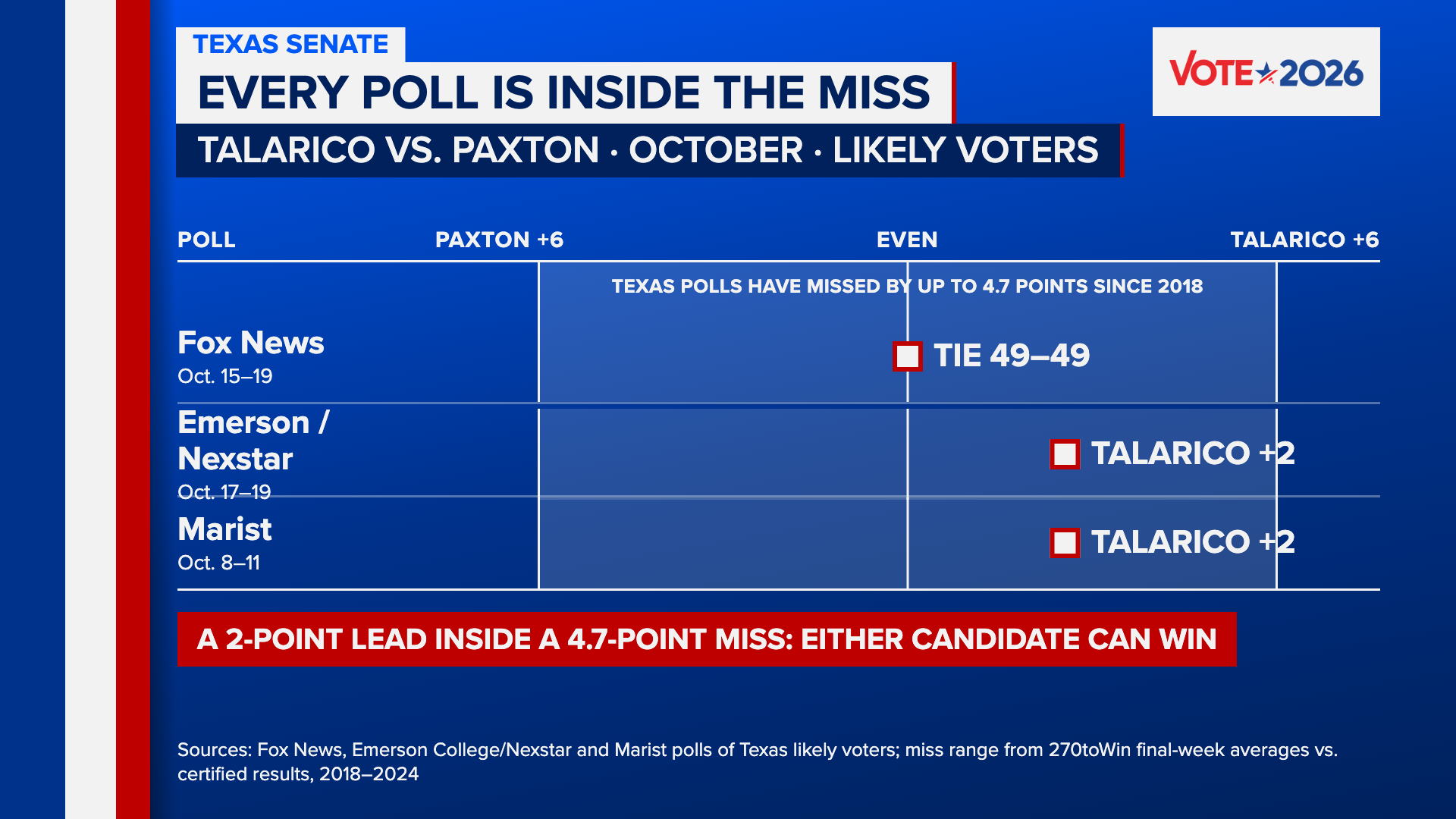
Read that table against the first one. A 2-point lead with a historical miss of 3 to 5 points in either direction means the honest answer is “we don’t know.” If the polls miss the way they did in 2018, Talarico wins comfortably. If they miss the way they did in 2022 and 2024, Paxton wins comfortably. Both are consistent with every number above.
The governor’s race is a notch wider, but the same lesson applies. Abbott leads Hinojosa 49-45 in both the Emerson and Marist polls and 52-47 in Fox’s.
One more number for context: Texas has not elected a Democrat to any statewide office since 1994, and has not had a Democratic senator since 1993.
Record early voting tells you people are voting, not who they’re voting for
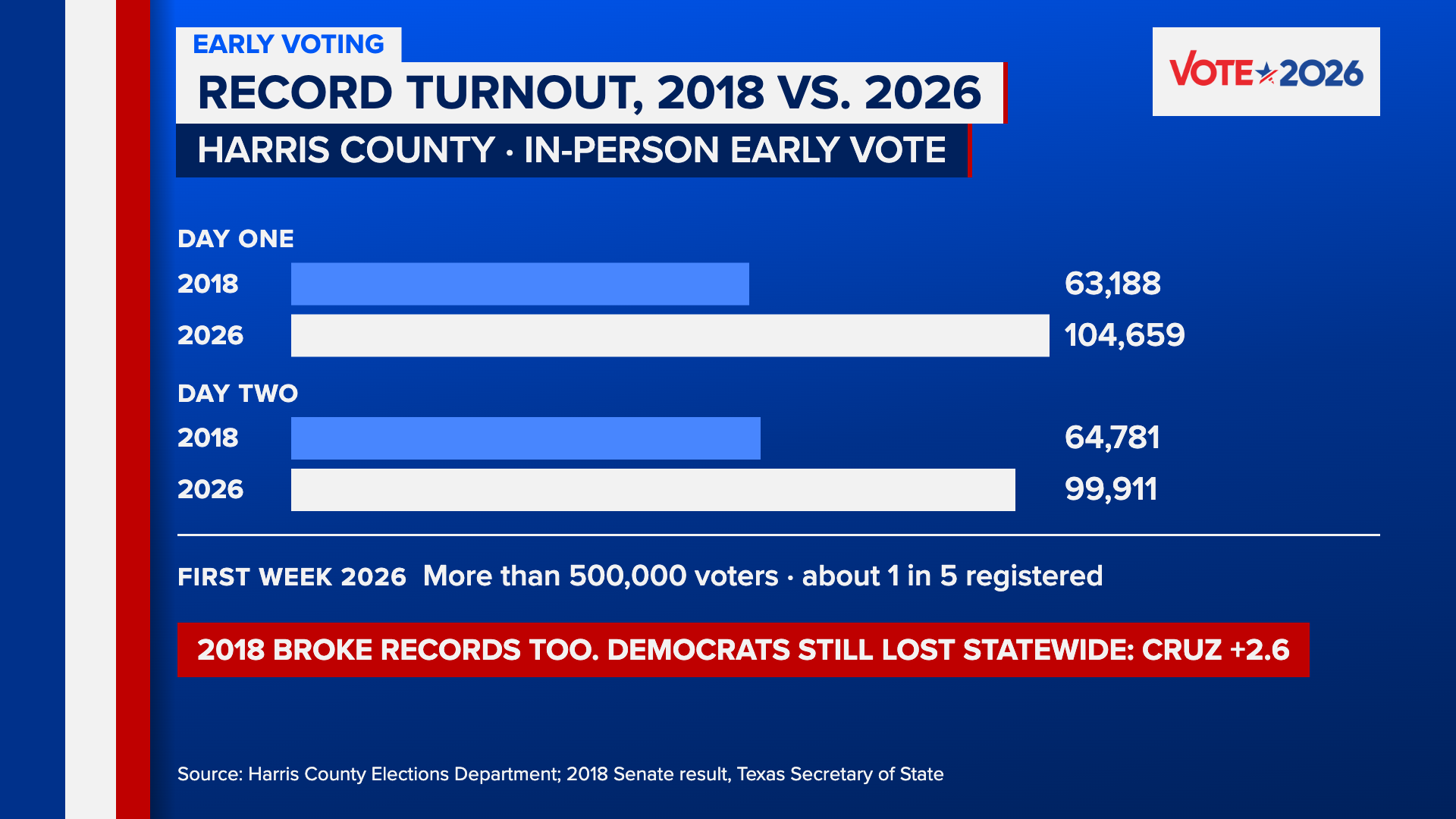
Harris County’s early-vote numbers are real, and they are big. More than 104,000 people voted in person on the first day, a midterm record that beat the 2018 mark of 63,188 and topped any single day of early voting in 2018 or 2022. The second day’s 99,911 was the most for a second day of any midterm in county records going back to 1998. By the end of the first week, more than half a million people had voted, about 1 in 5 of the county’s registered voters, and every day beat the same day in both of the last two midterms, per ABC13 and our Early Vote Tracker. Statewide, more than 3.5 million Texans voted in the first five days.
On social media, that has already become “Democrats are winning.” The numbers can’t carry that claim, and the reasons start with how Texas runs its elections.
Texas doesn’t register voters by party. In Florida or North Carolina, you can count early ballots by party registration and get a real, if partial, picture. Texas has nothing like that. Every claim about which party is voting early is an inference from where people live or which primary they voted in. University of Houston political scientist Nancy Sims told us that turnout is high even in the county’s suburban, traditionally Republican areas, and that because Harris County voters can vote at any location, it’s hard to extrapolate. That is an educated guess with a number attached to it.
The record everyone is comparing against is 2018, and Democrats lost that one. That year had the enthusiasm, the first-day records and the Beto O’Rourke moment. Cruz won by 2.6 points. Record early turnout in Harris County and a statewide Republican win are not contradictory. It has already happened once.
Harris County also isn’t Texas. Abbott lost Harris County by nearly 10 points in 2022 and won the state by 11. Big-city turnout has to be large enough to outrun the rest of the state, and rural counties have until Nov. 3 to catch up.
Early voting also measures when people vote, not whether more of them do. In 2016 and 2020, Republicans looked weak in the early vote and then turned out in force on Election Day, per RealClearPolling. Since 2024, Republicans have shifted toward voting early as well, so a big early number can mean the same voters showing up sooner rather than new voters showing up at all. And some of the record is simple growth: Harris County has about 400,000 more registered voters than it did in 2018, per state data, though turnout is running ahead of every midterm on record even as a share of all voters.
None of this means the early vote is bad news for Democrats. It means the early vote isn’t a result. As the Associated Press put it in 2024, parties can run up leads in the early vote and then watch them vanish on Election Day, because their supporters have already voted and the other side’s haven’t.
Nationally, the polls have been wrong in three different ways since 2016
The “blue wave” talk this fall rests on the generic congressional ballot, where the RealClearPolitics average has Democrats up 8.2 points (50.7 to 42.5, polls from Sept. 28 to Oct. 23), per RealClearPolling. That is a real and large lead. What it means depends on which recent election you think 2026 resembles, and the last five don’t agree.
 Three lessons for anyone reading “blue wave” this week:2018 is the case for taking the lead seriously. The generic ballot was in a similar place, the polls were right, and the wave was real.2020 is the case for caution. The polls pointed the right way and still missed by more than they had in four decades.2022 is the case against narratives. The data never showed a wave. Pundits did. That is the closest analog to a week where “blue wave” is trending harder than the numbers support.
And a note on what the generic ballot can’t do: it is a national number, and it says almost nothing about one Senate race in one state. A Democratic lead of 8 points nationally is fully compatible with a Republican win in Texas.
So. How do you read a poll between now and Nov. 3?
1. The margin of error is not the total error. A 3-point margin covers sampling. It does not cover the people who never answer the phone, the wrong guess about who turns out, or late deciders. AAPOR’s 2020 report found that 55% of state presidential polls that year missed by more than their own stated margin of error. A 3-point poll that misses by 4 is not broken. It is normal.
2. A 2-point lead is a tie. If the lead is smaller than the poll’s margin of error, the poll is telling you the race is close. It is not telling you who is ahead.
3. Watch who paid for it. In 2022, a late surge of partisan polls pushed some averages to the right. Look for the sponsor line. If it’s a campaign, a party committee or a group with a stake in the race, treat it as a press release with a sample size.
4. Likely voters versus registered voters. A registered-voter poll includes people who won’t show up. A likely-voter poll is the pollster’s guess about who will. In a turnout election, the second is more useful and more fragile.
5. One poll is a data point. Five polls pointing the same way is a signal. Five polls pointing the same way, all inside the margin of error, is a signal that the race is close.
6. Early-vote totals are a turnout number, not a result. See above. Texas has no party registration, and 2018 proved record early turnout and a Republican win can happen in the same year.
We’ll check our own work on Nov. 4
The day after the election, we’ll put the final Texas poll averages next to the results and add 2026 as a fourth row to the table at the top of this story. If the polls were right, we’ll say so. If they missed by 3 or 4 points again, we’ll tell you which way, and what that means for the next time someone tells you a wave is coming.
Copyright © 2026 KTRK-TV. All Rights Reserved.