
Welland’s eight-person race for the mayor’s seat was supposed to be the big election story of the night in Niagara, but it turned out there were bigger stories happening with the defeat of incumbent mayors who some may have considered unbeatable.
Jim Diodati in Niagara Falls, Wayne Redekop in Fort Erie and Bill Steele of Port Colborne all got their walking papers by voters who seemed to be in the mood for change.
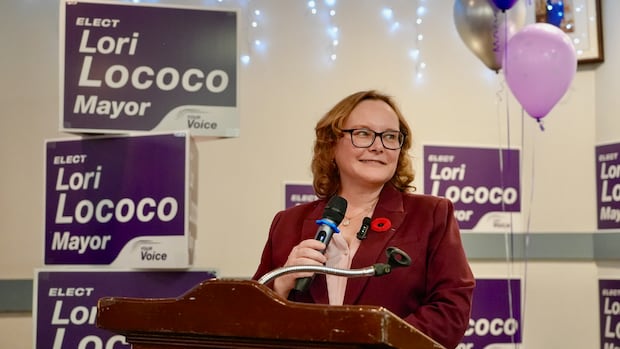
In an upset, four-term mayor Diodati was handily defeated by city councillor Lori Lococo who won 51.45 per cent of the vote in a five-person race, compared to Diodati’s second-place finish with 41.73 per cent, according to unofficial results.
Diodati had been mayor for 16 years and vowed if he’d won again, it would be his final term.
“I’m feeling pretty amazing,” Lococo told CBC News at her victory party with supporters.
She said she’s being told she’ll be the city’s first-ever woman mayor.
“I always hope that people vote for people based on their experience and skills, not because of their gender,” she said.
WATCH | Lori Lococo addresses her supporters Monday night: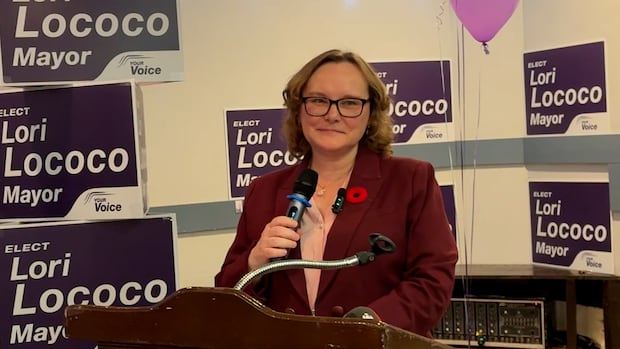
Lori Lococo speaks after winning Niagara Falls mayoral race
“We don’t have a revenue problem. We have a spending problem,” said Niagara Falls’ mayor-elect Lori Lococo, who beat four-term mayor Jim Diodati by over 2,600 votes on Monday night.
Lococo said she’s heard from residents that they’re struggling with affordability.
“We really need to get our budget and our taxes under control,” she said.
She said residents also told her they want a different type of leadership, “where they matter and they’re being heard. That’s what I want to bring forward with our city council.”
Fort Erie’s Wayne Redekop defeated
Another major upset in Niagara with the defeat of Fort Erie’s incumbent mayor Redekop by town regional councillor Tom Insinna.
Insinna won handily with 52.2 per cent of the votes, compared to Redekop’s 40.9 per cent of the share of votes, unofficial results showed.
Insinna, a former RCMP officer, had pledged to fight for the urgent care centre at the former Douglas Memorial Hospital in Fort Erie. Health care has been a major issue in the town for years since the hospital was downgraded to an urgent care centre, and hours have been cut regularly due to shortages of doctors at Niagara Health’s three large hospitals.
Insinna also pledged to bring fiscal discipline to the town as he said he’s done at Niagara’s regional government.
Redekop, a lawyer, has been a fixture at the helm of town politics for years. After serving as town councillor in the early 1990s he went on to become mayor for nine years starting in 1997, then returned in 2014 to hold the post until now.
Bea Kenny’s big comeback in Port Colborne
Port Colborne voters also opted for change, with unofficial results showing city councillor Bea Kenny won with 3,430 votes, compared to Steele’s 2,307 in a five-person race.
Kenny, who has served for more than 20 years on council, told CBC she left public office for eight years to care for her late husband when he was fighting cancer and decided to stage a return to city politics after his death.
“I’m humbled by the citizens of Port Colborne who have put their trust in me,” she told CBC News. “I won their trust knocking on doors.”
Kenny said plans by Niagara Health to shut down the town’s urgent care centre at the former Port Colborne hospital was a top issue with residents. She pledged to fight to keep that urgent care centre open.
“It’s not fair to the citizens of Port Colborne to be treated any differently than any other residents of Niagara,” she said.
Kenny said residents also want her to fight to get wastewater rates under control.
In Welland, an eight way race to replace retiring mayor Frank Campion was decided by a hair.
Current regional councillor Pat Chiocchio won with 4,271 votes, just above city councillor Graham Speck with 4,216 votes and former Wainfleet mayor April Jeffs with 3,091 votes, according to unofficial results.
In Thorold, the mayor’s race was decided by a mere 40 votes, with regional councillor Tim Whalen topping current city councillor and former mayor Henry D’Angela with 50.3 per cent of the votes compared to D’Angela’s 49.76 per cent, according to unofficial results.
D’Angela was mayor from 2006 to 2010, opted to switch to regional council in 2010 and served eight years there before unsuccessfully running against retiring mayor Terry Ugulini for mayor in 2018.
He was elected councillor again in 2022 at the beginning of Ugulini’s second term.
Whalen is CEO of the Thorold Community Credit Union.
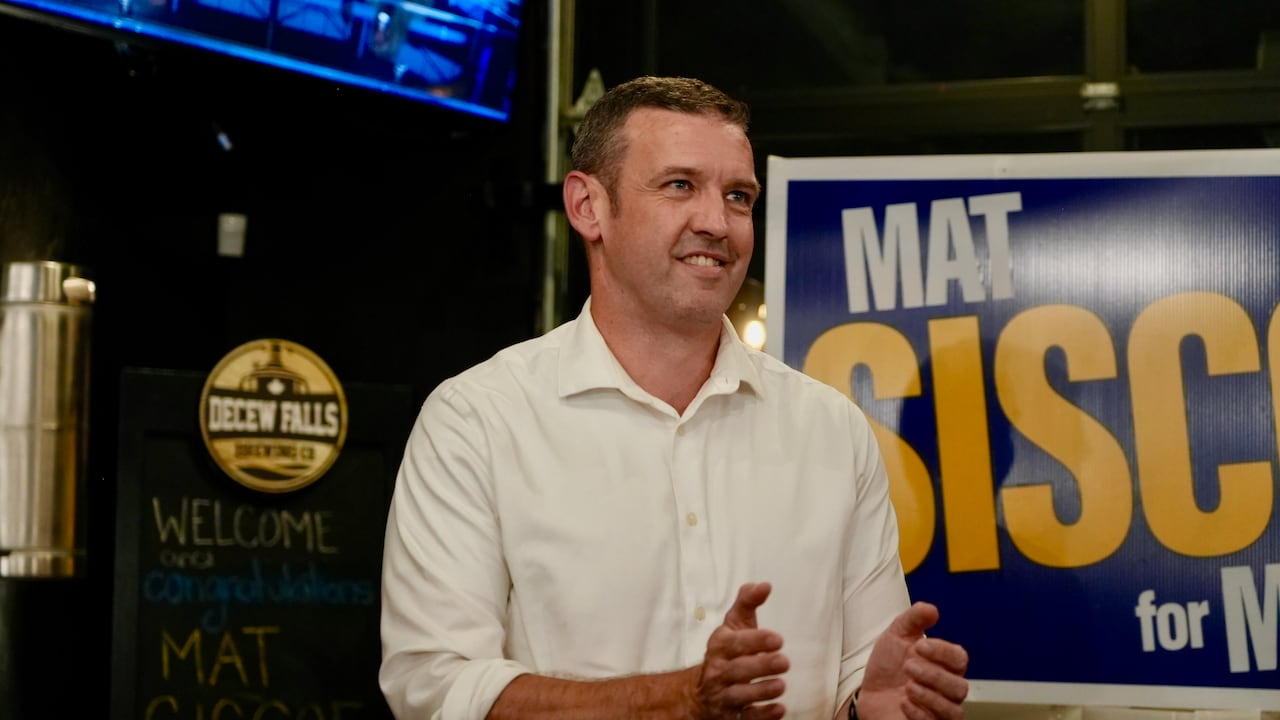
Incumbent Mat Siscoe speaks to supporters at his victory speech after unofficial results showed he cruised to victory in the mayor’s race in St. Catharines. (Diona Macalinga/CBC)
In Pelham, it was another close race in a four-person contest. Unofficial results show incumbent Marvin Junkin had 3,216 votes compared to second-place finisher Frank Adamson’s 3,201 votes.
Junkin had campaigned in part on a track record he said showed he had restored financial stability to the town with budgetary surpluses in each of his eight years as mayor.
In Lincoln, by 1 a.m. unofficial results showed another nailbiter, with town councillor Adam Thomas Russell leading the mayor’s race with 42.5 per cent of the votes, only slightly more than fellow town councillor’s Greg Reimer’s 42.1 per cent, while third-placed Cheryl Keddy-Scott had 15.5 per cent of the votes.
Outgoing Lincoln mayor Sandra Easton did not seek re-election.
St. Catharines’ Siscoe laments ‘dirtiest’ campaign
In Niagara’s largest city, St. Catharines mayor Mat Siscoe was re-elected for a second term in what he said was a dirty campaign.
Unofficial results show Siscoe won the five-person race with 52.42 per cent of the votes, compared to 30.46 per cent for second-place finisher Ann-Marie Zammit.
Siscoe said his campaign cruised to victory in the mayor’s race through old-fashioned campaigning on the ground in the face of what he called lies and untruths being spouted on social media.
“This was probably the hardest, the dirtiest, the most smear-filled campaign,” Siscoe told supporters in his victory speech.
“It turns out social media doesn’t win campaigns. Getting out on the ground, having conversations with people, talking to residents, that’s what wins campaigns,” he said.
“The reason why we won tonight is because we put in the hard work. I’m thankful that the community put their faith and their trust in me for four more years.”
Siscoe said from when he first ran four years ago that his plan was to serve just two terms as mayor, “work as hard as I can, then step away for someone with more energy. That’s still my plan.”
In scenic Niagara-on-the-Lake, where incumbent Lord Mayor Gary Zalepa didn’t run for re-election, unofficial results show philanthropist and former CEO of the company now known as Reliance Home Comfort Vaughn Goettler easily won a three-person race, with 55.1 per cent of votes, compared to 31 per cent for town councillor Erwin Wiens and 13.9 per cent for current regional councillor and former town councillor Andrea Kaiser.
Goettler campaigned in part on the idea that he was the “only candidate for Lord Mayor who has actually been a CEO and knows what that kind of leadership requires,” and said he’ll secure a commitment to build a high school in town.
In Wainfleet, a rematch between current mayor Brian Grant and former mayor Kevin Gibson, who served one term in office before Grant narrowly defeated him in 2022, went decidedly in Grant’s favour.
Unofficial results show Grant won 1,818 votes compared to Gibson’s 1,111 votes.
In Grimsby, unofficial results show incumbent mayor Jeff Jordan won the mayor’s seat with 39.2 per cent of the votes, topping second-place finisher Simon Duong’s 34.3 per cent, town councillor Veronica Charrois’ 15.4 per cent, and regional councillor Michelle Seaborn’s 11.1 per cent.
In West Lincoln, mayor Cheryl Ganann was acclaimed after no one ran against her.