
Bessent said Iran was running short of foreign currency, oil production was beginning to falter and the next eight weeks of Washington’s Operation Economic Outcast would be “even more intense.”
“I would predict that from March of ’26 until March of ’27, the economy would contract more than 25 percent, which is more than the Soviet Union contracted after its collapse,” Bessent told Iran International’s Kambiz Tavana on Monday.
The Treasury secretary said the campaign was intended to pressure Iran’s leadership rather than its population, while warning of severe fuel shortages this winter.
“My advice to the Iranian people would be: don’t pay your taxes because you’re not going to get anything back from the government,” Bessent said.
“You should start stocking up on heating fuel. There’s going to be a big heating fuel shortage. In terms of gasoline, everyone should fill up their tanks now.”
Asked about the impact on ordinary Iranians, Bessent said humanitarian channels remained open for food and medicine, but the government was running out of dollars to pay for imports.
He also said authorities were printing money, failing to pay salaries and would continue cutting social benefits.
Bessent said economic pressure was exposing disagreements among Iranian politicians, the Revolutionary Guards and the supreme leader. He described some IRGC commanders as isolated from the public and unaware of the extent of the economic deterioration.
‘More intense’ pressure ahead
Iran’s economy has come under mounting pressure from two rounds of war with the United States and Israel, a US naval blockade that has sharply curtailed its oil exports and an expanding sanctions campaign targeting its remaining sources of foreign currency.
“Iran, for the first time, probably since oil was discovered, has no oil on the water,” Bessent said. “There have been no loadings at Kharg Island. Production is starting to falter.”
“We’ve been going for eight weeks, and I can tell you the next eight weeks is going to get even more intense,” he said.
Bessent said Washington remained prepared to negotiate, but insisted Iran could not have a nuclear weapon and must stop financing regional armed groups.
Diplomatic efforts have intensified in recent days, with Qatari mediators in Tehran on Sunday followed on Monday by senior officials from Saudi Arabia, Pakistan and Turkey seeking to de-escalate tensions and revive negotiations.
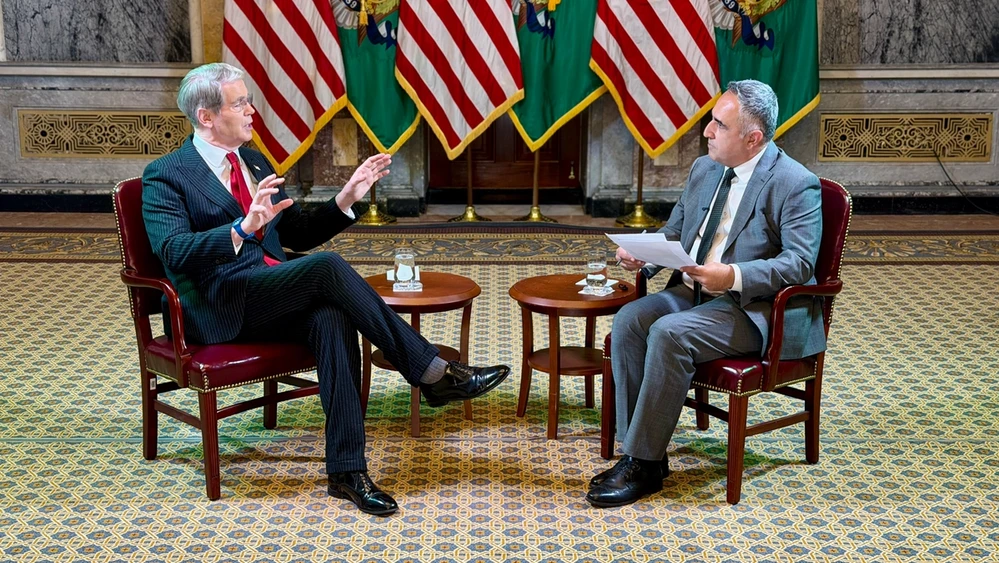 US Treasury Secretary Scott Bessent (left) and Iran International’s Kambiz Tavana during an interview in Washington DC on Oct. 26, 2026.
Tehran, however, has shown little sign of softening its core demands under mounting economic pressure. Iranian officials insist Washington must meet its conditions, including lifting the naval blockade.
Targeting Iran’s middlemen
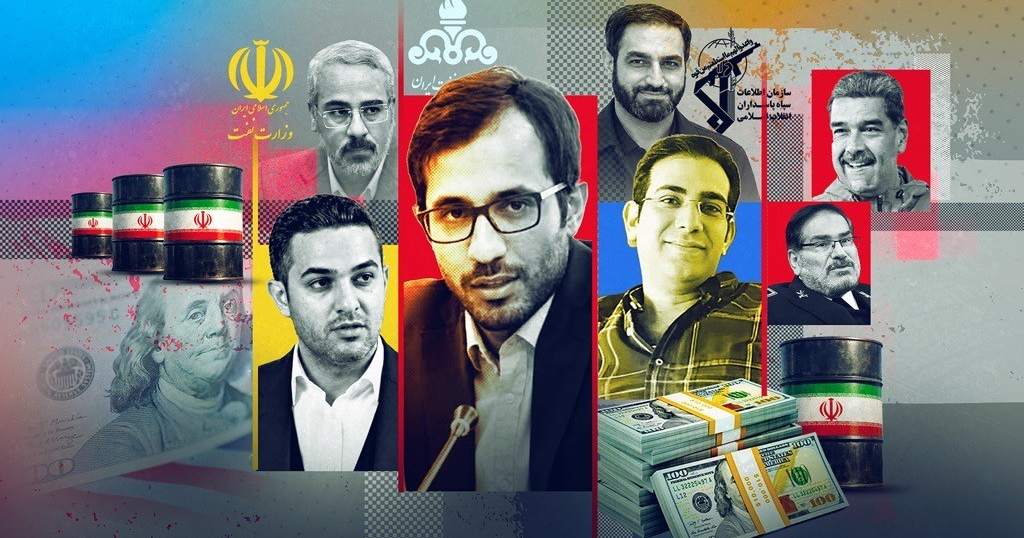
Bessent also appealed directly to people involved in moving Iranian government money overseas, saying some financial intermediaries were already refusing to return funds to Tehran.
Iranian officials commonly refer to such intermediaries as “trustees,” who handle oil revenues and other transactions outside the formal banking system to circumvent sanctions.
“We are seeing the regime go bankrupt,” Bessent said. “So many of the people who are holding money outside of Iran do not want to send it back in.”
He said Iranians inside the country, members of the diaspora and employees of embassies and consulates could provide information to Treasury under its whistleblower program, with rewards of up to 30% of recovered funds.
“We are happy to unsanction individuals who work with us,” he said, adding that cooperating intermediaries could potentially claim 30% of funds they were holding for Tehran.
Bessent said Treasury was also tracking Iran’s attempts to move money through cryptocurrency and foreign banks.
“There are numerous banks… We shut the Dubai branches of an Egyptian bank. We closed a Turkish bank, the second-largest Russian bank, VTB. We discovered that their external branches outside of Russia were aiding the regime,” he said.
‘Nothing like this’
Bessent rejected suggestions that Iran could wait for the US midterm elections in the hope that Washington’s approach would change.
“Nothing will change in terms of President Trump’s calculus, in terms of how resolute we are here at Treasury, in terms of the blockade,” he said.
Asked whether the combination of sanctions and a naval blockade had any historical precedent, Bessent said the closest comparison was Washington’s campaign against Venezuela, but argued that the measures imposed on Iran went substantially further.
“There’s been nothing like this,” he said.
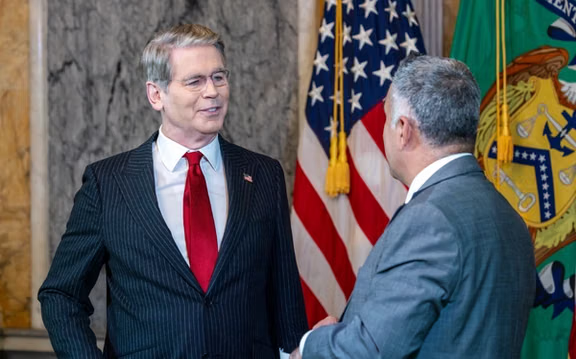 US Treasury Secretary Scott Bessent (left) and Iran International’s Kambiz Tavana during an interview in Washington DC on Oct. 26, 2026.