

Supporters of Israel’s Arab Joint List party celebrated at its election headquarters in Nazareth, with Arab parties projected to gain a record number of seats from Tuesday’s election.
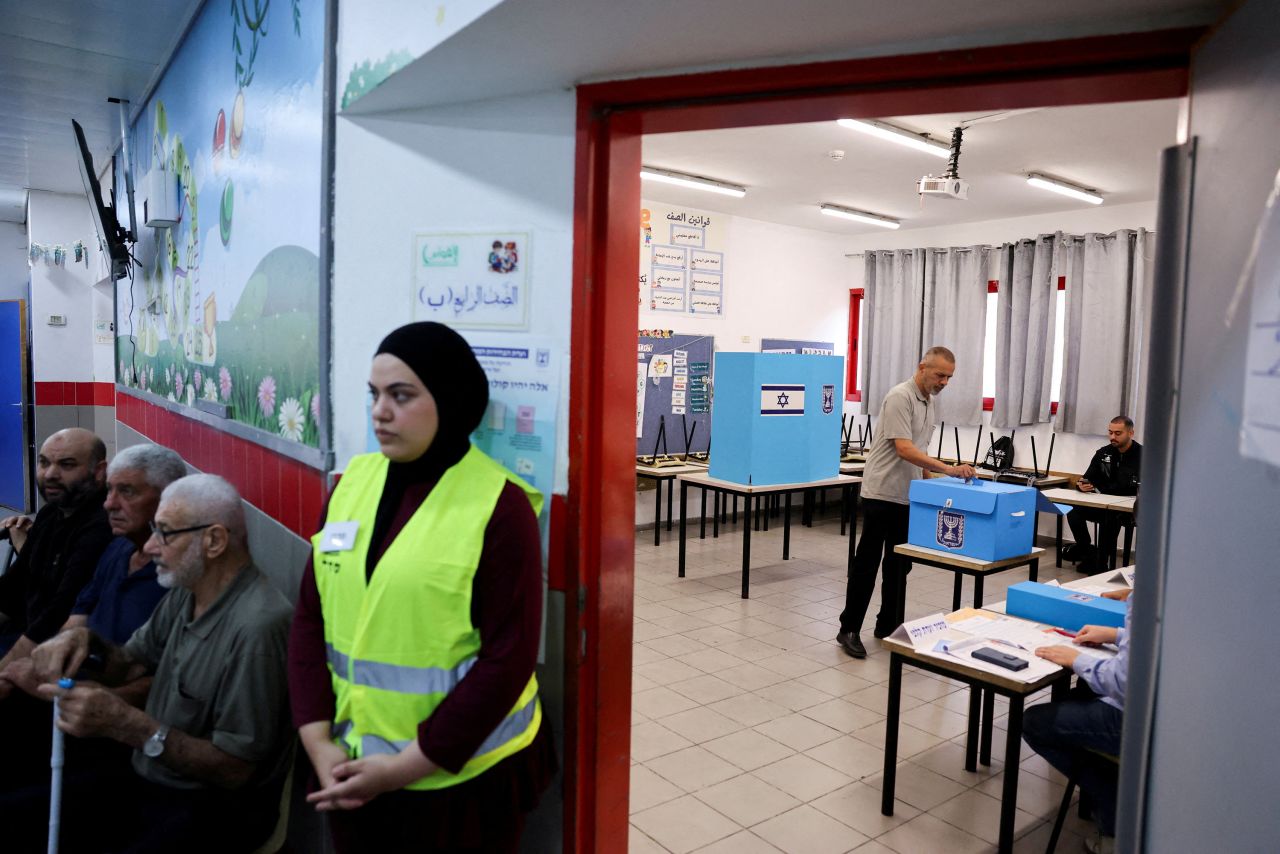
Party leader Yousef Jabareen commended a strong turnout among the community, saying it was “unprecedented and historic in our Arab society.” Arab voters make up about 20% of the Israeli electorate, but have traditionally voted at lower rates than Jewish Israelis.
That voter surge was driven by an urgent desire to dismantle Prime Minister Benjamin Netanyahu’s right-wing coalition, which includes hardline ministers such as Itamar Ben-Gvir and Bezalel Smotrich.
That sentiment was underscored by chants of “Ben-Gvir, go home” at the Joint List election headquarters.
Jabareen said exit polls showed Arab-led parties can “make a difference.”
He vowed to be a “safety net in the face of crime in our society, a safety net in the face of dangerous racism, a safety net in the face of the demolition of homes and entire villages.”
Some context: Entering government could still be tricky for Arab parties. Between them, the Joint List and Raam are projected to secure 17-19 seats in the 120-seat Knessett, their strongest showing in history.
Gadi Eisenkot’s Yashar party is projected to win 21-23 seats.
However, Eisenkot has set conditions for any partner to join his government, including recognizing Israel as a Jewish state and recognizing Hamas as a terrorist organization that must be dismantled, terms most Arab lawmakers are unlikely to accept.
Moreover, two of his opposition allies – Avigdor Lieberman and Naftali Bennett – have ruled out forming a government with the Arab parties altogether.
CNN’s Abeer Salman and Kara Fox contributed reporting.