

Listen to this article
Estimated 3 minutes
The audio version of this article is generated by AI-based technology. Mispronunciations can occur. We are working with our partners to continually review and improve the results.
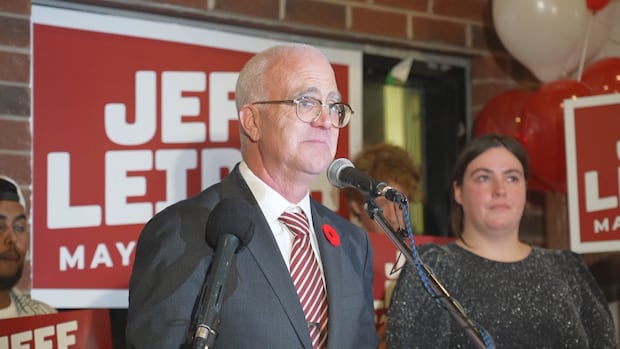
Jeff Leiper said he’s known for years that Oct. 27, 2026, would mark a new chapter in his life.
The three-term city councillor for the urban ward of Kitchissippi told CBC Radio’s Ottawa Morning on Wednesday he had decided the current council term would be his last in that role.
“It has been all-consuming,” he said.
He and the city found out on Monday night that chapter will not be about the ups and downs of four years as mayor.
Leiper earned about 106,000 votes, or about 34 per cent of voter support. He came second to Mayor Mark Sutcliffe’s roughly 139,000 votes, or about 45 per cent support.
“I don’t know [what’s next],” Leiper said Thursday. “The severance that we’re afforded allows me a few months to look for what’s next. I absolutely want to serve the public interest but I don’t know exactly in what capacity.”
The three-term city councillor for Kitchissippi had been a community association president and tech reporter before his first election win in 2014.
He did admit to some relief at taking a step back.
“It is an absolute joy not to have to worry about what people are saying about me on the internet. I don’t have to look at my email. People aren’t looking at me to fix the unfixable every morning.”
Early reflections
Key planks of Leiper’s platform included fixing aging infrastructure through a one per cent tax levy, and reversing 2025’s “New Ways to Bus” route and schedule changes, calling them a service cut.
He said he wanted to see a change from what he saw as a first council term under Sutcliffe that focused on consensus over ambition.
“Agreement is easy to do when you’re not pushing the envelope,” he said.
“The one vote that led me to that conclusion was around solid waste early in the term. City staff had put forward what I thought was a very progressive waste management strategy that included a partial ‘pay-as-you-throw’ [system]. When that became controversial, we ratcheted that proposal back.… We made virtually no change.”
Sticking with the idea of bag tags would have meant “a very fractious vote,” he said.
Leiper also said the lingering effect of COVID-19 lockdowns mean many people are focused on living privately with waning trust in government versus thinking more about the common interest.
“What [Sutcliffe] was able to do very successfully was talk to those people who are afraid of what the future holds … and to assure them that everything is going to be OK,” he said.
“I’m very concerned that things are not going to be OK, but as an election strategy it certainly worked very well.”