
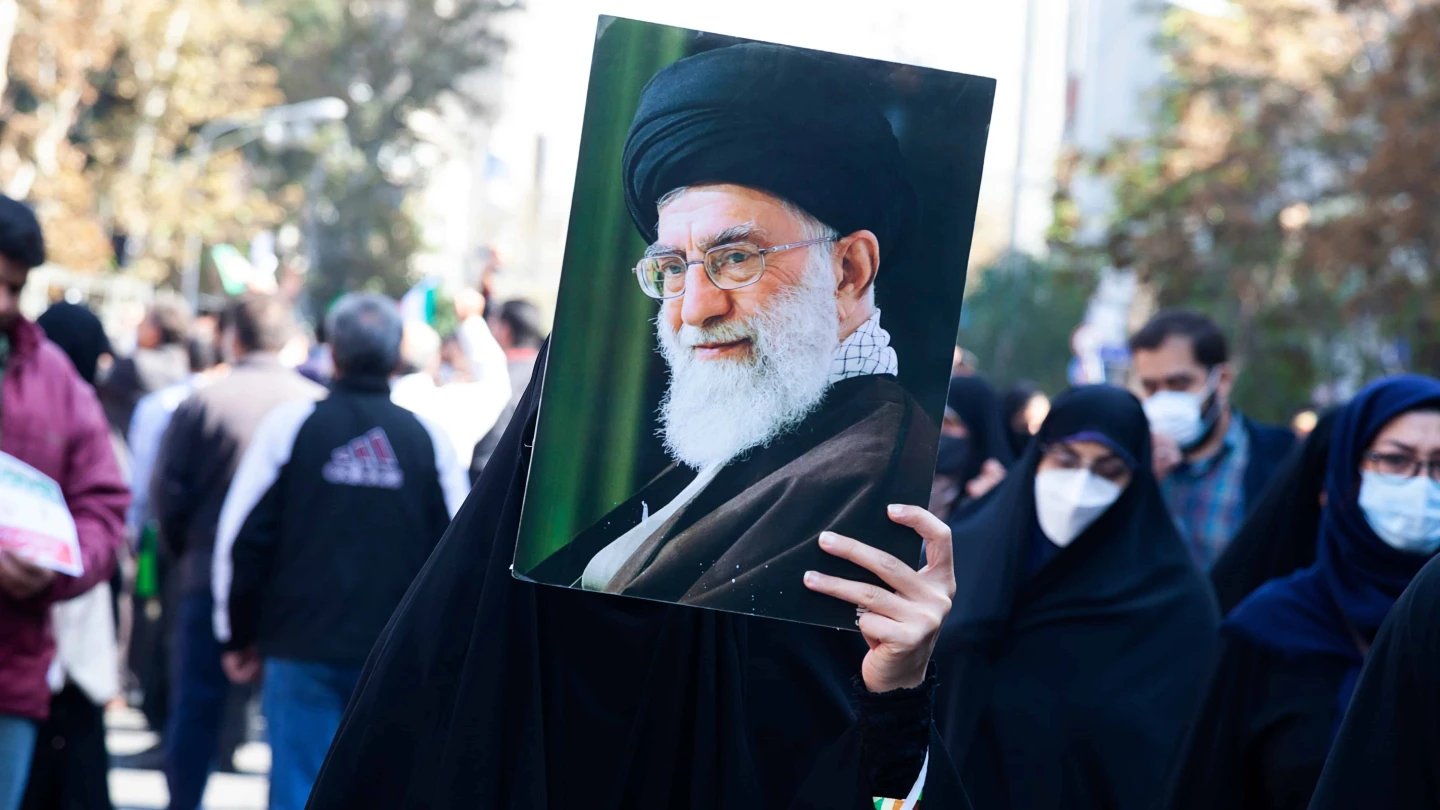
(Oct. 28, 2026 / JNS)
In February 2017, I sat in an auditorium in Tehran as the late Ayatollah Ali Khamenei addressed the Sixth International Conference in Support of the Palestinian Intifada. Representatives of Hamas, Hezbollah and Palestinian Islamic Jihad had gathered to celebrate what was presented as solidarity with Palestine. I remember chants of “Death to the Jews” delivered with a conviction that left little room for misunderstanding.
I had spent years gaining access to the Islamic Republic’s corridors of power, yet even I was struck by the extraordinary candor of the occasion.
Khamenei called upon the assembled movements to set aside their differences and unite around the Palestinian cause. Beneath the familiar revolutionary vocabulary lay an ambition of considerable consequence: Israel’s elimination, accompanied by an ideological campaign to make Jewish sovereignty appear morally indefensible.
The groundwork had been laid decades earlier. In 1975, the United Nations declared Zionism a form of racism, an accusation advanced through the peculiar marriage of Soviet geopolitical ambition and Arab rejectionism. The resolution was revoked in 1991, but ideas have an irritating habit of surviving their official funerals.
Tehran understood this perfectly.
What I witnessed in 2017 was the continued deployment of that accusation within a broader revolutionary program. The regime had little need for Europeans to embrace its theology. It was sufficient that they adopt a language in which Jewish national self-determination became synonymous with racial oppression.
Nine years later, consider Britain.
On Oct. 4, the Green Party adopted a motion defining Zionism as racism and advocating a single Palestinian state across historic Palestine. Its supporters insist the policy protects equal rights, although Jewish members and other critics have challenged its implications.
I find the progression extraordinary. An accusation once championed through Soviet diplomacy and subsequently embraced within Tehran’s revolutionary politics has acquired respectability within a British party that prides itself on progressive virtue.
There is no need to suggest operational coordination between these actors. The ideological resemblance is troubling enough. Therein lies Europe’s predicament.
I fear the danger reaches beyond Europe’s Jews.
For decades, sections of the radical left have found common ground with Islamist political movements, particularly where Israel and Western foreign policy are concerned. It is a curious arrangement. The supposed champions of secular emancipation occasionally display remarkable indulgence of political doctrines whose attitudes to religious authority, individual liberty and women’s rights ought to give them considerable pause.
One might admire such flexibility were its consequences less sinister.
Criticism of Israeli governments is entirely legitimate, as is support for Palestinian national aspirations. But declaring Jewish sovereignty inherently racist while celebrating the national rights of other populations requires an intellectual contortion that would embarrass a circus performer.
Meanwhile, European Jews are increasingly obliged to live with the consequences of this selective morality. Britain’s Community Security Trust recorded 1,926 antisemitic incidents during the first six months of 2026, an increase of 21% over the corresponding period in 2025.
A Star of David becomes a calculated risk. A Jewish child learns to consider whether acknowledging her identity might invite hostility. Synagogues require protection against threats that ought to be inconceivable in countries that have spent 80 years solemnly promising that history’s lessons had been learned.
The old hatred has acquired an agreeable vocabulary, and far too many people appear enchanted by the tailoring.
Yet I fear the danger reaches beyond Europe’s Jews.
Look at France, where legitimate grievances have given way to looting, arson and attacks on the Republic itself. The flags and slogans on display raise uncomfortable questions about whether elements of the radical left and Islamist movements are exploiting public anger for ideological ends.
Russia-linked networks have already sought to capitalize on the chaos. Who else stands to benefit? A society need not have every disturbance engineered abroad for hostile powers to profit from its growing instability.
But the deeper problem concerns Europe’s relationship with its own legitimacy.
We have reached a peculiar moment when patriotism is readily confused with prejudice, national sovereignty treated as an embarrassment and the national flag regarded, in certain political circles, as though it were an unfortunate family secret best kept out of sight.
The tragedy is that political leaders, anxious to placate increasingly vocal anti-Zionist constituencies, have mistaken accommodation for wisdom.
Europe has good reasons to reject racial nationalism. Its history offers ample justification. Yet loving one’s country need not imply despising one’s neighbors. A border need not constitute an act of hatred. A democratic state exercising lawful authority should not automatically be suspected of tyranny.
What, precisely, is expected to replace these institutions? Who protects the Jewish child, the Muslim dissident, the shopkeeper whose livelihood has been destroyed or the peaceful demonstrator whose grievances disappear beneath the spectacle of burning buildings?
The tragedy is that political leaders, anxious to placate increasingly vocal anti-Zionist constituencies, have sometimes mistaken accommodation for wisdom. They have allowed arguments once associated with the political extremes to enter respectable debate without demanding intellectual consistency. They have allowed arguments once associated with the political extremes to enter respectable debate without demanding intellectual consistency.
The Jews were the warning.
Antisemitism has always provided an unusually reliable indication of a society’s moral deterioration. It thrives when conspiracy theory displaces reason, collective blame replaces individual responsibility and the protection of minorities becomes conditional upon political fashion.
I heard Tehran’s ambitions articulated in a room filled with men who believed that Israel’s destruction represented a moral duty. What troubles me today is the ease with which elements of their political vocabulary have found acceptance in European discourse.
Europe need not embrace Khamenei’s religious ideology to assist the delegitimization of Jewish sovereignty. It need only become sufficiently embarrassed by its own principles that defending them begins to seem indecent.
Hatred is spreading through political cultures that once promised to consign it to history. A continent increasingly reluctant to defend Jewish equality should consider which other freedoms may eventually become negotiable.
When nationalism is automatically condemned as racism, the flag becomes a source of shame and democratic institutions are denied their legitimacy, then what ground remains to surrender?
And when that ground is gone, who will be left to defend Europe?