
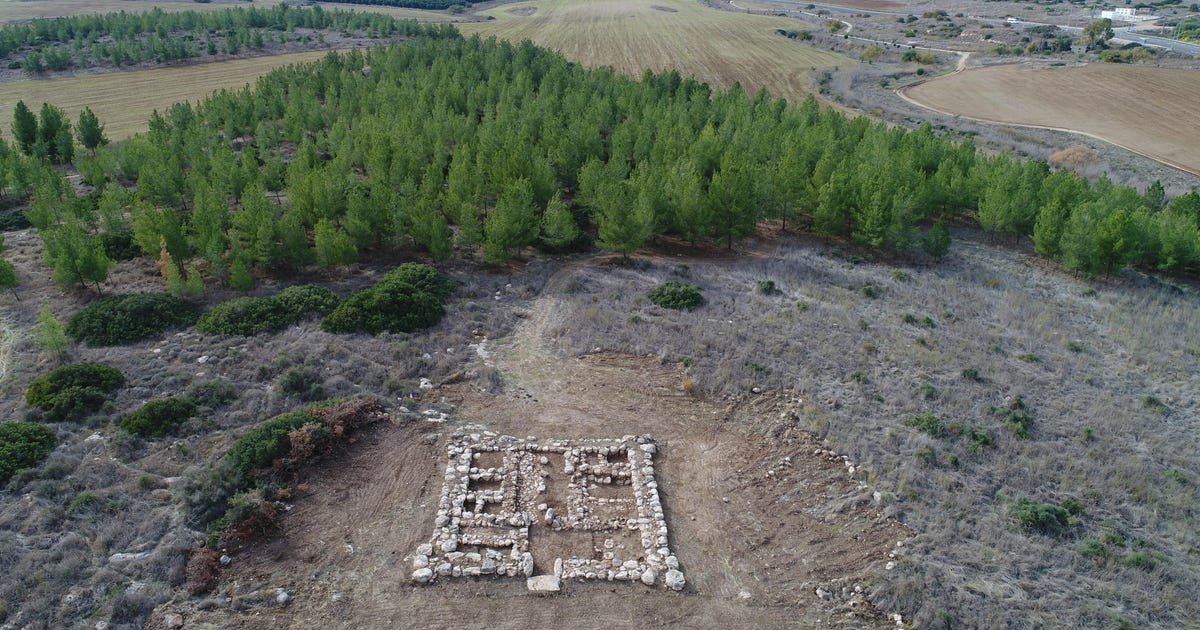
The remains of a 3,200-year-old stone fortress nestling in central Israel’s Guvrin Forest were opened to the public Thursday following their excavation, conservation and renovation about eight years after the site’s first public reveal.

Dating to the era of the Prophets, about the mid-12th century B.C.E., the Gal’on Fortress was only discovered in 2018. In the day, it had loomed above the main road between the coast and the Judean foothills. That road ran between the Canaanite city of Lachish and the Philistine city of Gath.
At the start of the 12th century B.C.E., Canaan was ruled by Egypt. But the Levant never has been the most peaceful of places, and the 12th century B.C.E. brought climatic and geopolitical upheaval, culminating in the “Bronze Age collapse” from about 1200 to 1150 B.C.E. that engulfed the Hittite Empire in today’s Turkey and ended the Egyptian expansion into Canaan.
 Close
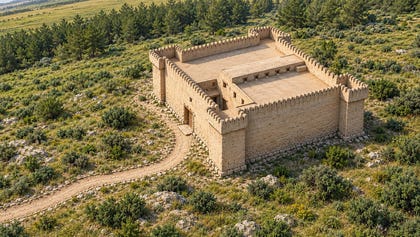
An AI-generated reconstruction of the Gal’on Fortress, based on a proposal by archaeologist Itamar Weissbein.
An AI-generated reconstruction of the Gal’on Fortress, based on a proposal by archaeologist Itamar Weissbein.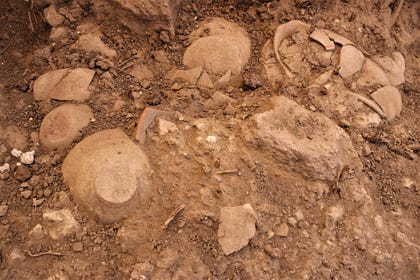 Close
Canaanite bowls uncovered during the excavations at Gal’on. Credit: Saar Ganor/Israel Antiquities Authority
Canaanite bowls uncovered during the excavations at Gal’on. Credit: Saar Ganor/Israel Antiquities Authority
Forced back to the land of the Nile, the weakened Egyptian forces even had to fight against invaders known as the Sea Peoples.
Related Articles
Back here and before the implosion, in the early 12th century B.C.E. the fortified structure in what is today an artificial forest had to have been built by the Egyptians’ local minions, the Canaanites – possibly to aid their combat against two new players in the region: the Israelites and the Philistines. Their advent led to a series of bloody territorial struggles, the Israel Antiquities Authority explains.
Haaretz Podcast | Israel’s election had no clear winner: What happens next? Aluf Benn and Esther Solomon explain
Let us merely note that to this day a debate rages over whether the Israelites hailed from further lands, as the Bible says, or if they emerged from the indigenous Canaanite population. The earliest known reference to “Israel” appears in the Egyptian “Merneptah Stele” carved in about 1208 B.C.E., which records Israel as a people in Canaan.
 Close
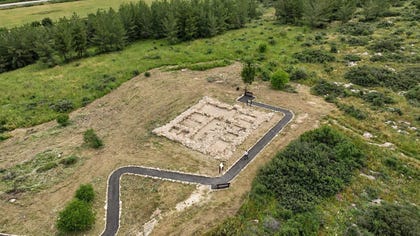
The site after renovations, including a path to the remains of the fortress. Credit: Emil Aladjem/Israel Antiquities Authority
The site after renovations, including a path to the remains of the fortress. Credit: Emil Aladjem/Israel Antiquities Authority 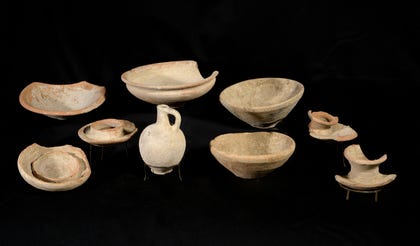 Close
Vessels found during the excavations. Credit: Dafna Gazit/Israel Antiquities Authority
Vessels found during the excavations. Credit: Dafna Gazit/Israel Antiquities Authority
The fortress was apparently involved in either a Canaanite or Egyptian attempt to deal with the new geopolitical realities, suggest Saar Ganor and Itamar Weissbein, who excavated the site for the antiquities authority.
The restoration of the structure cost about 400,000 shekels ($128,000), the authority says. The work involved renovating the remains of the fortress and developing amenities for visitors, including parking, a new access road, a picnic area and signs. The authority adds that there is handicapped-accessible parking and an accessible path to the citadel.