
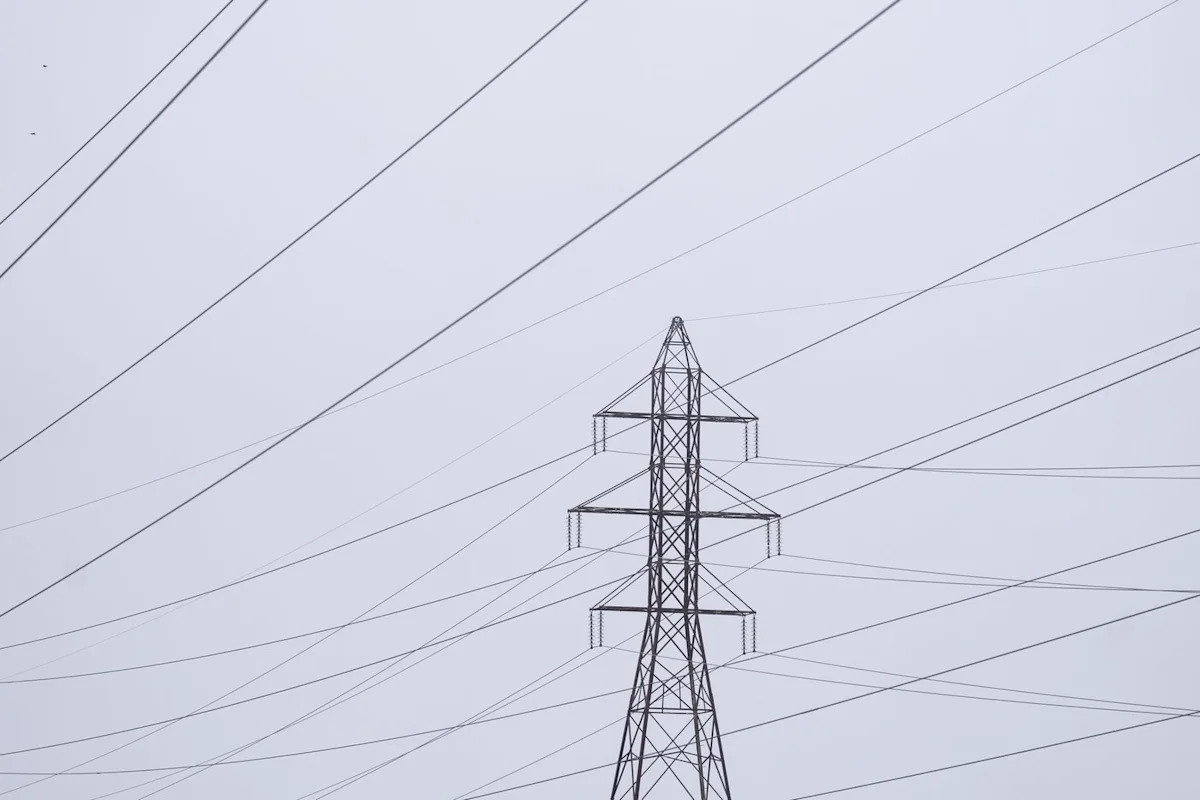
 High voltage power lines are seen in Beauharnois, Quebec on Nov. 10, 2025. THE CANADIAN PRESS/Christinne Muschi – The Canadian Press
MONTREAL — Hydro-Québec has released a report suggesting it may need to import electricity from neighbouring provinces or the United States within the next three years.
The state-owned utility’s new supply plan for 2027-41 projects an “extremely high” increase in the demand for energy in the coming years. The utility expects this demand could cause it to face energy deficits as early as 2029.
Hydro-Québec anticipates that Quebec’s electricity demand will increase by 60 terawatt-hours by 2041, representing an increase of over 30 per cent. The supply plan shows expected growth in demand for the electrification of transportation, data centres and for energy retrofits of buildings that currently rely on fossil fuels.
“We need the new generation assets to come online, because if we’re not able to build new generation capacity, demand will rise and production won’t keep up. And that’s when we’ll run into a problem,” said Dave Rhéaume, the company’s executive vice-president in charge of energy strategy, in an interview.
To meet demand, the utility plans to add 24,000 megawatts of generation capacity by 2041. It is also focusing on energy efficiency, aiming to achieve savings of 21 terawatt-hours by 2035.
However, the utility’s new growth predictions are more conservative than they were in a report filed just over a year ago.
Energy analyst Jean-François Blain pointed out that, in 2025, Hydro-Québec released a report in which it predicted it would sell 227.5 terawatt-hours of energy to its clients by 2035. In the report released Tuesday, that number has been lowered to 212.2 terawatt-hours.
“This is not a minor revision,” said Blain.
“They keep revising their figures downward, pushing their growth targets further into the future, year after year, because actual growth is not keeping pace at all with their forecasts,” he added.
Electricity rates are determined using Hydro-Québec’s forecasts, he said, adding that lower sales would mean lost revenue for the utility, which would eventually lead to higher prices for consumers.
He believes these “optimistic” predictions of growth come from a desire for Hydro-Québec to align with private investments in the energy sector.
He gave the example of data centres. Hydro-Québec expects their power need during winter peaks will grow from around 350 megawatts to close to 2,000 megawatts in 2041.
Blain points out that most data centres will need to get government approval to receive energy from the utility.
“It’s as if they’re assuming the Quebec government won’t exercise its discretionary power and won’t lift a finger to say, for example, we have other priorities than powering a Google data centre,” he said.
Hydro-Québec spokesperson Cendrix Bouchard said that while the utility’s predictions had changed, the overall growth in demand remained.
The revised predictions reflect less growth in demand for electric transport and for industry clients turning from fossil fuels to hydroelectricity, he said.
“It is materializing, but in a more gradual way,” said Bouchard.
He said this slower growth gives the utility more room to manoeuvre and ensure it can meet its clients’ energy needs.
“There’s no issue in terms of revenue,” he said.
Blain does expect Hydro-Québec to face a deficit and turn to importing, but he blames this on low water levels in their reservoirs. Hydro-Québec lost 108 terawatt-hours in energy production because of low water levels between 2023 and 2025, according to Tuesday’s report.
This situation is exacerbated by climate change and increases in droughts and torrential rains, said Blain. He added that urgent reflection is needed to ensure Hydro-Québec understands and meets these new dynamics.
“If the hydrological situation does not recover — and recover quite drastically — within six months to a year, we won’t even need to wait until 2029 to be in serious trouble. We could find ourselves in serious trouble as early as the spring of 2027,” said Blain.
Bouchard said predictions for the supply plan are based on a “normal” water level that takes into account climate fluctuations.
“We’re in a phase for the third consecutive year where water availability is below normal. A few years ago, it was the opposite — we had too much water in the reservoirs,” he said.
He added that the utility imported energy last year to offset these low levels.
This report by The Canadian Press was first published Nov. 3, 2026.
— With files from Stéphane Rolland
Marieke Glorieux-Stryckman, The Canadian Press