
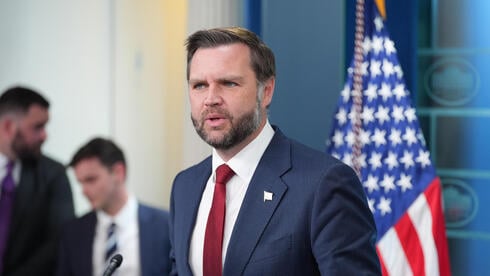
The post published by U.S. Vice President JD Vance, in which he analyzed the reasons for the Republicans’ midterm election defeat, should deeply concern every Israeli, especially coming after the crushing defeat suffered by U.S. President Donald Trump. The fact that Trump’s son, Donald Trump Jr., shared the post and declared his agreement with every word, while the president himself said Vance’s assessment was largely correct, even as he insisted the war had been worth it, should only add to those concerns.
The bottom line is that Vance attributes the election failure to four factors, three of which he links directly or indirectly to Israel. He did not mention the war in Ukraine or tariffs among his explanations for the defeat, reflecting his pronounced focus on Israel. Instead, he listed four priorities that could bring former Trump voters back to the Republicans: ending the war in Iran, addressing the cost of living and inflation, putting America first and changing the United States’ relationship with Israel. “Our voters showed up. And the above four reasons are why many of them voted for Democrats,” Vance wrote.
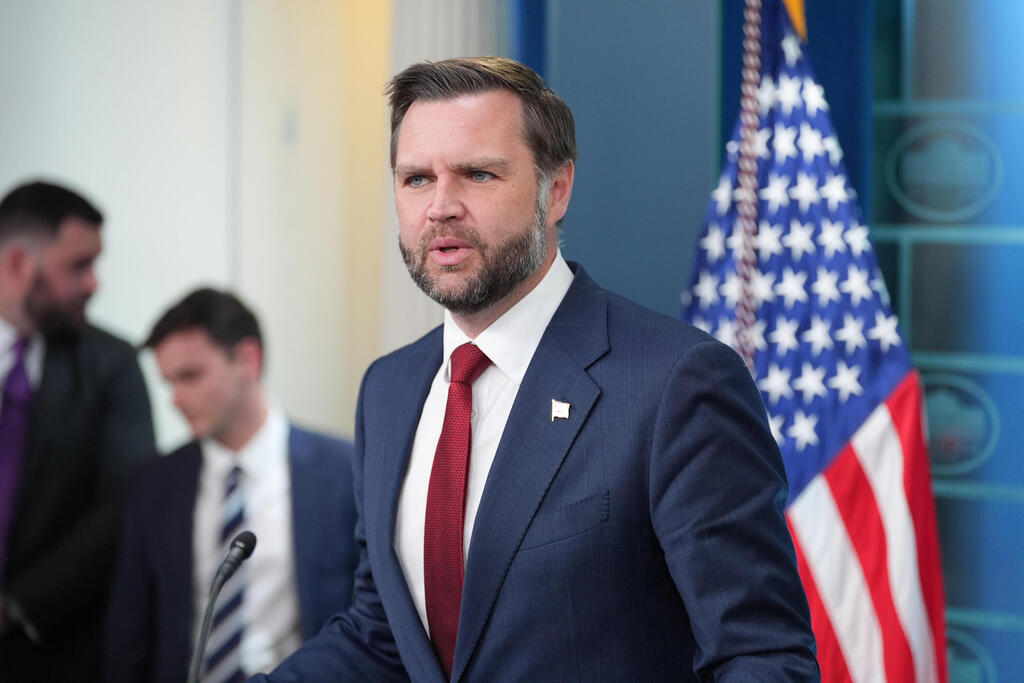
US Vice President JD Vance
(Photo: AP Photo/Alex Brandon)
The vice president’s remarks complicate matters for Trump, who is weighing whether to resume the war with Iran. They have weakened the political legitimacy of renewed fighting. They also amount to sharp criticism of Trump’s foreign policy and an appeal to the faction within the Republican Party that opposes America’s commitment to Israel. Vance is also reaching out to Trump voters who expect the president to put American interests at the top of his priorities.
Vance identified changing relations with Israel as one of the four main issues that led Trump voters to abandon the Republicans. The significance goes far beyond a midterm election defeat. For years, support for Israel within the Republican Party could be regarded as a stable political asset, particularly among conservative voters, evangelical Christians and Trump supporters.

Ending the war with Iran is one of Vance’s priorities. The Strait of Hormuz
(Photo: REUTERS/Stringer/File Photo)
The post suggests that this assumption may no longer hold true across every part of the Republican coalition. The strategic implication is that support for Israel could shift from an issue that enjoyed a relatively broad consensus within the Republican Party to one that fuels internal party divisions.
Vance opposed the war in Iran from the outset and played a leading role in securing an agreement to end it. Even now, in behind-the-scenes discussions, he is pressing Trump not to resume the fighting. This is not the first time he has criticized Israel and the war in Iran. In July, he accused elements within the Israeli government of attempting to undermine efforts to end the conflict and prolong the military campaign. “I know beyond a shadow of a doubt,” he said, referring to Israeli officials he believed were trying to shift Washington away from its diplomatic policy.
An Israeli official assessed that the election results and Vance’s remarks had effectively put the war in Iran on hold. The concern in Jerusalem, given the difficult political situation Trump now faces, is that the U.S. president could lower the conditions for ending the war and settle for reopening the Strait of Hormuz alone, without addressing Iran’s nuclear program.

Facing two difficult years in Washington. Donald Trump
(Photo: MANDEL NGAN / AFP)
In his remarks, Vance effectively began positioning himself for the next Republican presidential race. In political terms, the Trump era may have reached a turning point with the election defeat. The sitting president now faces the prospect of two years of legal battles, congressional hearings and endless investigations. These could consume much of his time and attention, leaving him with limited room to govern.
Vance’s post therefore also shifts responsibility toward Israel and Netanyahu. The vice president is embracing a narrative popular among segments of the American public that Trump was drawn into the war with Iran because of Netanyahu, a claim that has also circulated in conspiracy theories about Israeli influence over U.S. policy.
Following the Democrats’ midterm victory, a group of lawmakers whose campaigns featured sharp criticism of Israel and opposition to U.S. military assistance is entering Congress. These are 10 incoming Democratic members of the Senate and House of Representatives whose positions on Israel have drawn particular attention.
Abdul El-Sayed (Michigan): The state’s new senator defeated Republican Mike Rogers and will become the first Muslim to serve in the U.S. Senate. In media interviews, he said the Israeli government was as “evil” as Hamas and argued that Israel was not an American ally. In an interview with MS NOW, he described the Israeli government under Netanyahu as “bloodthirsty.” Although the remark referred specifically to Netanyahu’s time in power, El-Sayed made clear that his criticism extended beyond the current government to earlier Israeli policies. He opposes U.S. military assistance to Israel and made his campaign against AIPAC, the influential pro-Israel lobbying organization, a central issue in his election bid.
Peggy Flanagan (Minnesota): The newly elected senator, who previously served as the state’s lieutenant governor, has accused Israel of committing genocide and said she would vote to end military assistance under Netanyahu. In an interview with MPR News, she described Hamas’ October 7 attack as “horrific,” but said the Netanyahu government’s response had been deeply destructive. She pledged to oppose additional U.S. military assistance to Israel under Netanyahu.
Troy Jackson (Maine): The newly elected senator has said he would never vote in favor of U.S. taxpayer-funded military assistance to Israel and has accused the country of committing “genocide.” He later apologized to Jewish residents of Maine after making remarks about their views on the war in Gaza.
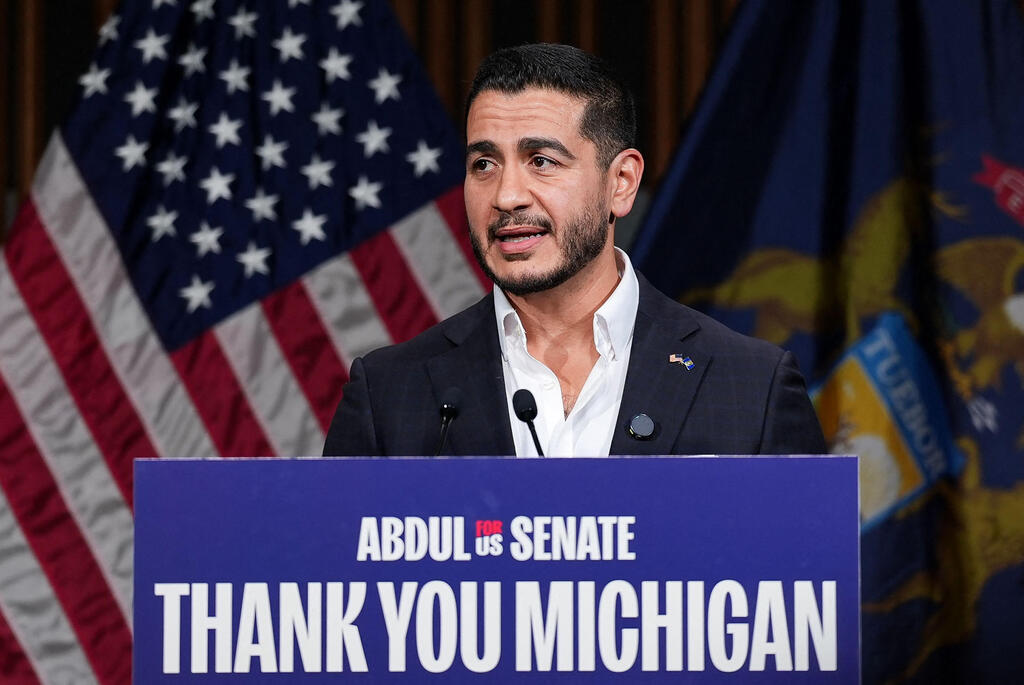
Abdul El-Sayed, who compared the Israeli government to Hamas
(Photo: Salwan Georges/Getty Images/AFP (Photo by Salwan Georges / GETTY IMAGES NORTH AMERICA / AF)

Peggy Flanagan, who has repeatedly criticized Netanyahu’s government
(Photo: Stephen Maturen / GETTY IMAGES NORTH AMERICA / AFP)

Troy Jackson accused Israel of ‘genocide’
(Photo: CHARLY TRIBALLEAU / AFP)
Melat Kiros (Colorado): A 29-year-old Black lawyer who was fired from her law firm after publishing an article defending students’ right to protest against Israel following October 7. She defeated longtime incumbent Rep. Diana DeGette in the Democratic primary. Kiros described the October 7 massacre as an “inevitable consequence of apartheid,” though she later clarified that she did not believe the attack was justified. She also initially declined to characterize the 2025 firebombing attack on a demonstration supporting Israeli hostages in Boulder as antisemitic, before subsequently acknowledging its antisemitic impact. She has blamed Israeli policies for rising antisemitism in the United States, called for a complete arms embargo on Israel and described the war in Gaza as “genocide.”
Darializa Avila Chevalier (New York): A Muslim former student protest activist at Columbia University who defeated Congressional Hispanic Caucus chairman Adriano Espaillat in the Democratic primary. She attended a rally in Times Square on October 8, 2023, the day after the Hamas massacre, and was photographed beside a demonstrator carrying a sign reading “Zionism is genocide.” She defended her attendance, saying she had anticipated a disproportionate Israeli response. According to City & State, she has described Israel as an apartheid state committing genocide. She has expressed support for a one-state solution and stopped short of agreeing outright that Zionism is racism. She is a political ally of New York City Mayor Zohran Mamdani.
Claire Valdez (New York): A New York state assemblymember who was arrested during a Jewish Voice for Peace protest in August 2025 and said at the time that it was impossible to stand by while what she described as genocide was taking place. In an interview with CNN, she said Democratic voters did not want to fund “genocide, occupation and apartheid.” She opposes U.S. military assistance to Israel.

Melat Kiros defended students’ right to protest against Israel
(Photo:Melat Kiros for Congress)
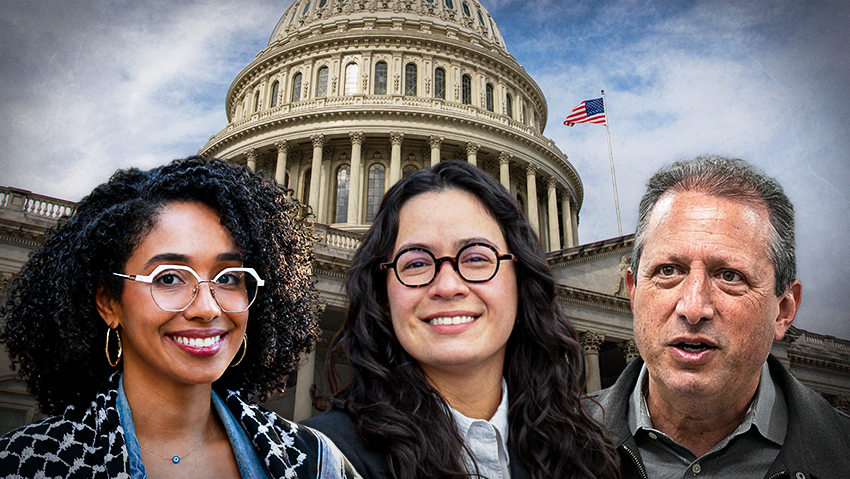
Opponents of US military assistance to Israel. Brad Lander, Claire Valdez and Darializa Avila Chevalier
(Photo: AP Photo/Richard Drew, shutterstock)
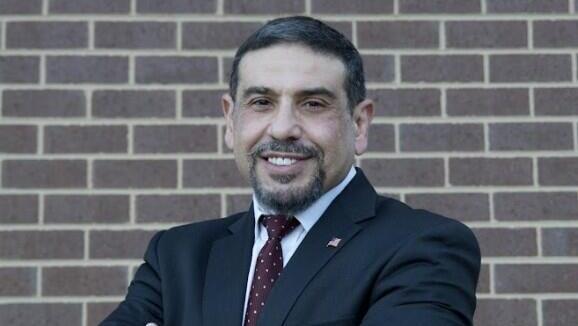
Adam Hamawy said he witnessed ‘genocide’ in Gaza
Brad Lander (New York): A Jewish politician and former New York City comptroller whose rhetoric has generally been more moderate than that of others in the group, though his policy positions are similarly critical of Israeli military actions. He has said Israel committed genocide in Gaza and opposed further U.S. assistance for both offensive weapons and the Iron Dome missile defense system.
Donavan McKinney (Michigan): A member of the Democratic Socialists of America (DSA) who defeated incumbent Rep. Shri Thanedar in the Democratic primary for a Detroit-area congressional seat. McKinney has attracted considerable attention and concern in Israel because of his political positions and strongly critical statements about the country. He has publicly called for an end to American arms shipments and military assistance to Israel, pledged to support legislation restricting bomb transfers and described IDF operations in Gaza as “genocide.” McKinney has also promised to work toward restoring U.S. funding for UNRWA, the United Nations agency for Palestinian refugees.
Adam Hamawy (New Jersey): A surgeon of Egyptian descent, a Muslim and a former U.S. military doctor who volunteered in Gaza. On his campaign website, he wrote: “What I witnessed was a genocide, paid for with American tax dollars.” He has supported ending U.S. military assistance to Israel.
Chris Rabb (Pennsylvania): A state representative who made accusations of genocide in Gaza a defining issue in his campaign, criticizing political rivals who refused to use the term. Rabb argued that failing to name what he considered genocide meant refusing to confront it. He has called for an arms embargo on Israel and supported the right of return for Palestinian refugees.