
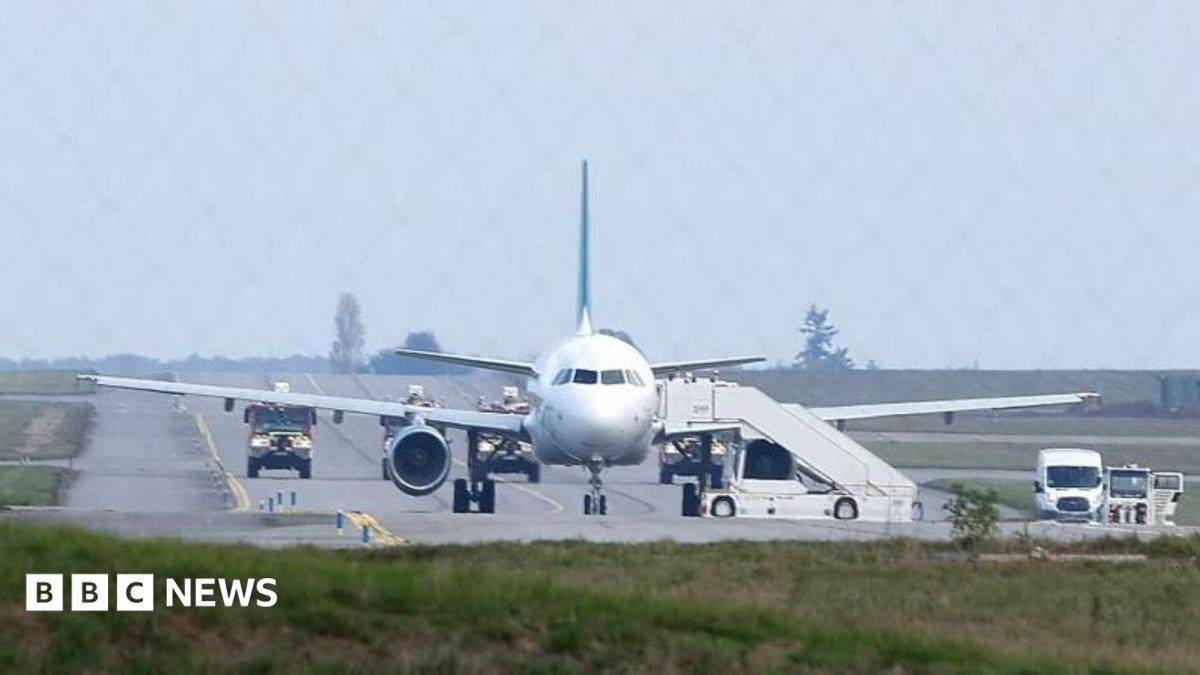
 With bomb threats, the cost to sender is low – but the cost to airlines can be far higherpublished at 11:28 GMT
11:28 GMT
By Thomas Copeland
An aviation safety expert has told BBC Verify this week’s
bomb threats are “most likely a hoax, but the system is right to treat it as
real”.
Marco Chan, senior lecturer in aviation operations at
Kingston University and former Cathay Pacific pilot, says hoax threats are seen
by some experts as “possibly part of a pattern of cheap, deniable
disruption” to air travel.
He adds that “hoax waves can also come from copycats or
a handful of individuals”, but that “three days of incidents is too small a
sample to separate co-ordination from contagion”.
Chan says the “cost to the sender is almost nothing” compared to the significant impact on airlines, airports and air forces.
“That
asymmetry is the point of the tactic, whatever the motive.”
In this case of this morning’s Aer Lingus flight which was
diverted to a military airfield in northern France, Chan says that “diversion,
escort, and isolation” at a military site shows the “high cost of false
alarms to avoid a single missed attack”.