
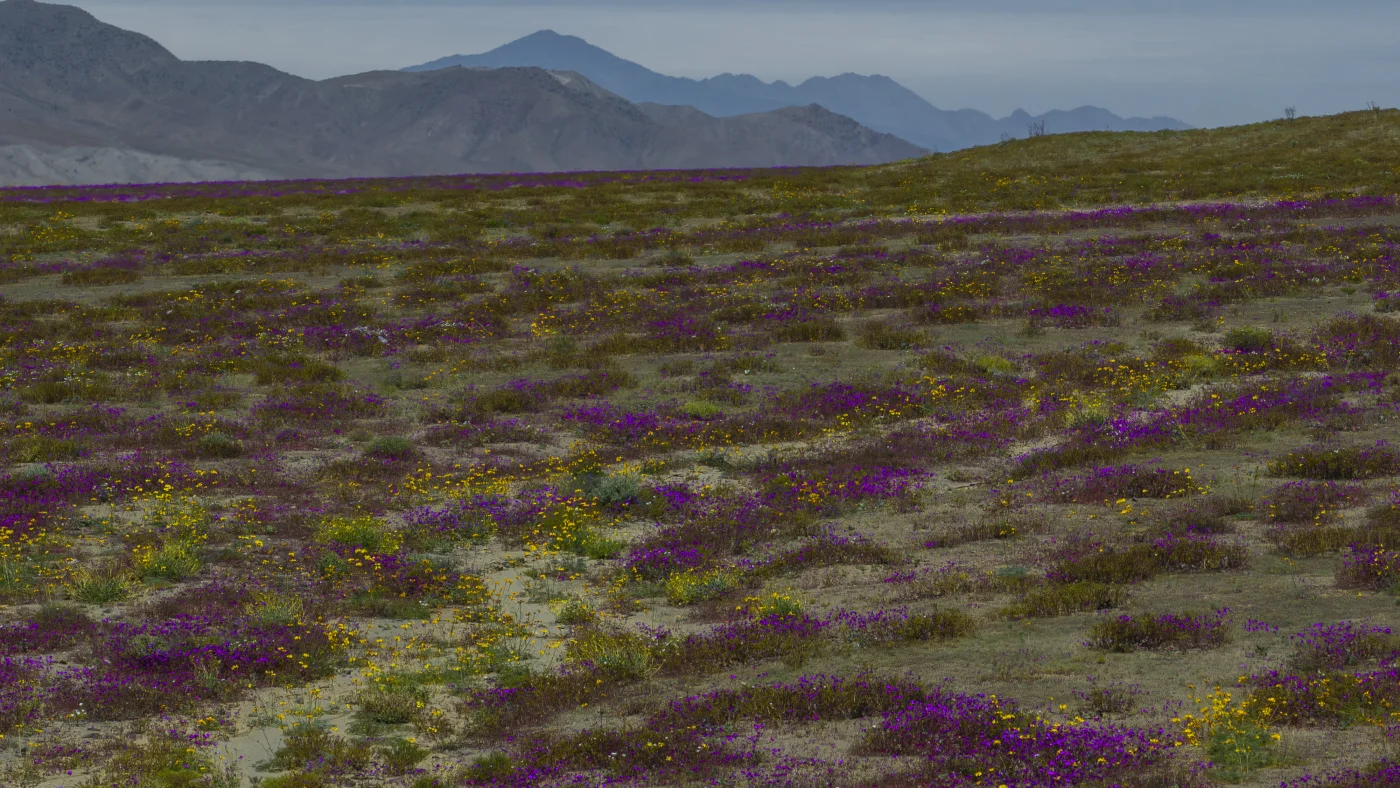
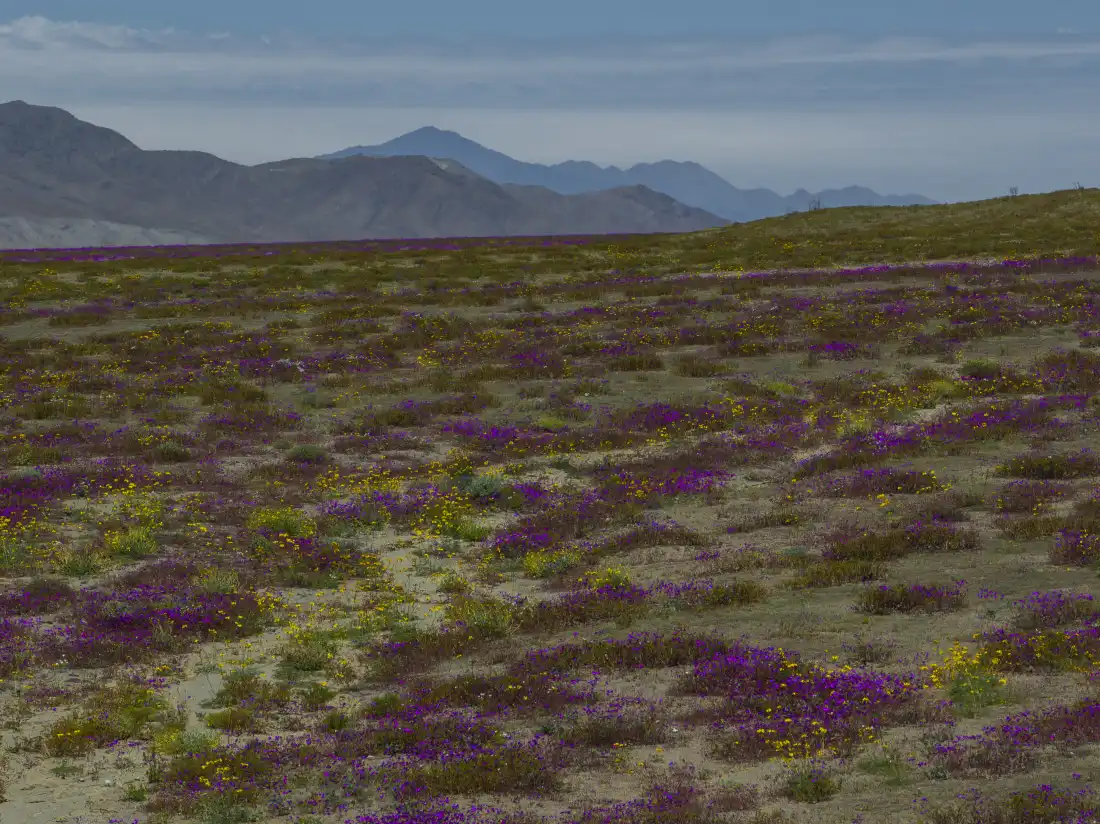
A field of colorful wildflowers blankets the Atacama Desert in northern Chile, transforming the world’s driest non-polar desert into a vibrant landscape during the rare flowering desert phenomenon, known locally as the Desierto Florido, or Desert Bloom.
Tamara Merino for NPR
hide caption
toggle caption
i
Tamara Merino for NPR
COPIAPÓ, Chile — A vast swathe of Chile’s Atacama Desert is now a patchwork of pinks, yellows, lilacs and purples stretching across the craggy desert floor as far as the eye can see.
This winter, heavy rains brought by the El Niño super cycle caused flash floods in the Atacama Desert, with some areas receiving the heaviest rainfall since records began in the 1950s.
Floodwaters in July and August destroyed or damaged dozens of homes, forcing hundreds of people to evacuate.
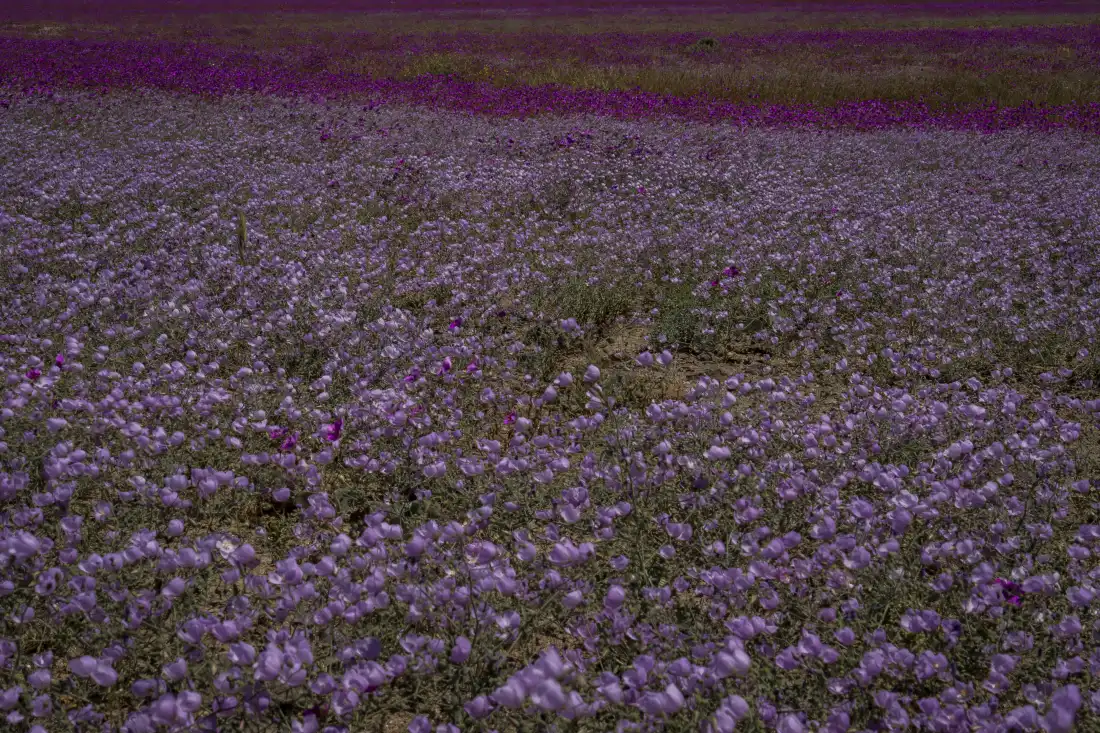
A field of wildflowers blooms across Chile’s Atacama Desert during the rare flowering phenomenon known as Desierto Florido, or Desert Bloom, triggered by unusually heavy rainfall that awakens dormant seeds. The brief blooms transform the world’s driest nonpolar desert into a landscape of pink, purple, yellow and white. Huasco, Chile, Wednesday, Oct. 21, 2026.
Tamara Merino for NPR
hide caption
toggle caption
i
Tamara Merino for NPR
But the floral bloom that followed has been the largest and most colorful in 30 years — and perhaps ever.
The rainwater penetrated deeper into the parched ground than it has in decades, allowing millions of seeds, bulbs and tubers to sprout above the surface. Many had lain dormant for decades under the sand.
Hide caption
A field of colorful wildflowers blankets the Atacama Desert in northern Chile, transforming the world’s driest non-polar desert.
Previous
Next
Tamara Merino for NPR
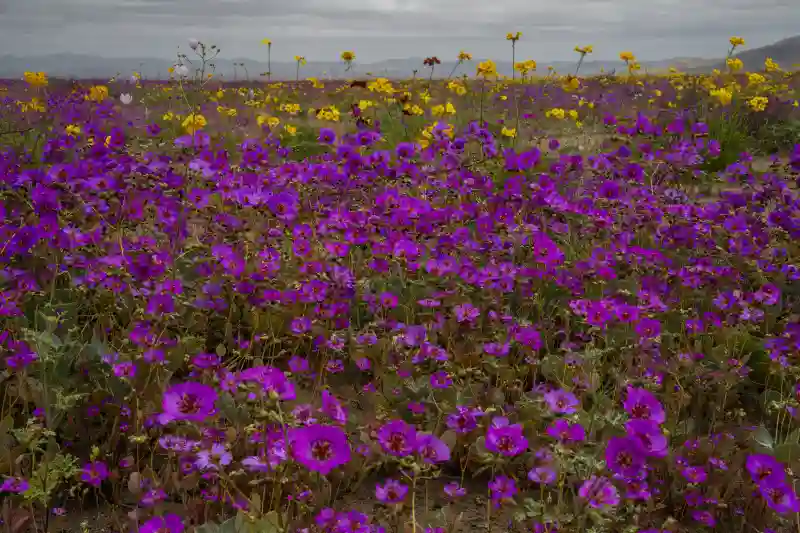
Hide caption
The blooms last only a few weeks before the flowers dry out and release their seeds, which remain in the soil until the next rainfall brings the desert back to life.
Previous
Next
Tamara Merino for NPR
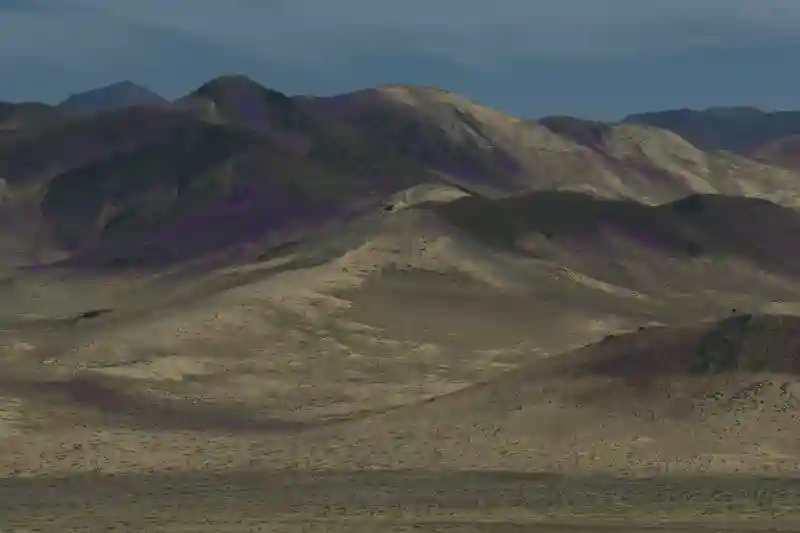
Hide caption
This extraordinary event occurs when unusually heavy rainfall awakens seeds that have remained dormant beneath the desert soil for years, sometimes decades.
Previous
Next
Tamara Merino for NPR
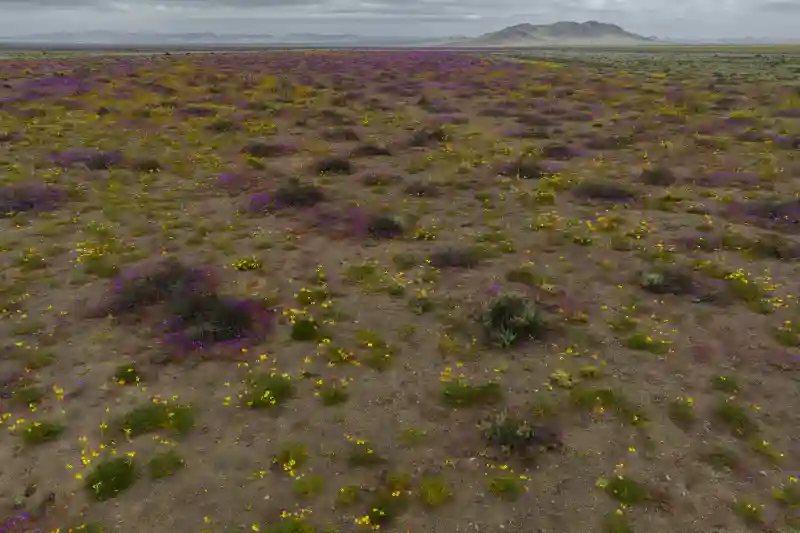
Hide caption
Within weeks, thousands of flowers emerge, covering vast stretches of the desert in shades of pink, purple, yellow, and white.
Previous
Next
Tamara Merino for NPR
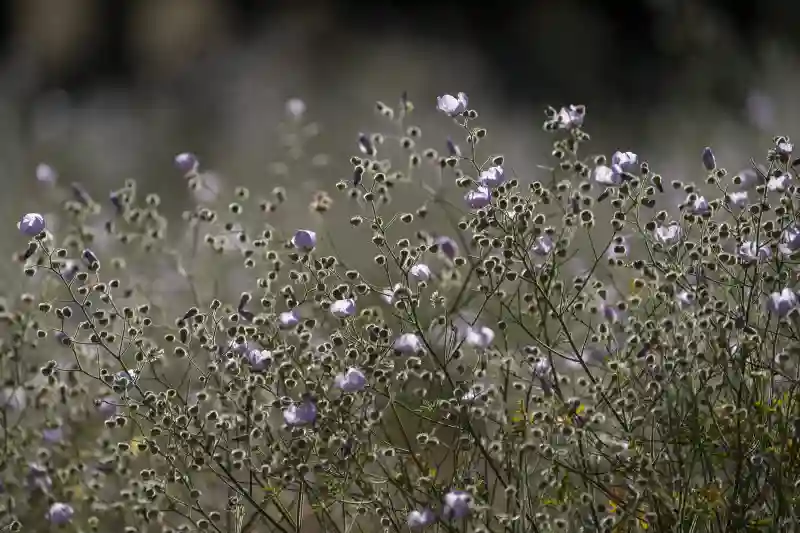
Hide caption
A field of Malvilla flowers blooms across the Atacama Desert.
Previous
Next
Tamara Merino for NPR
Hide caption
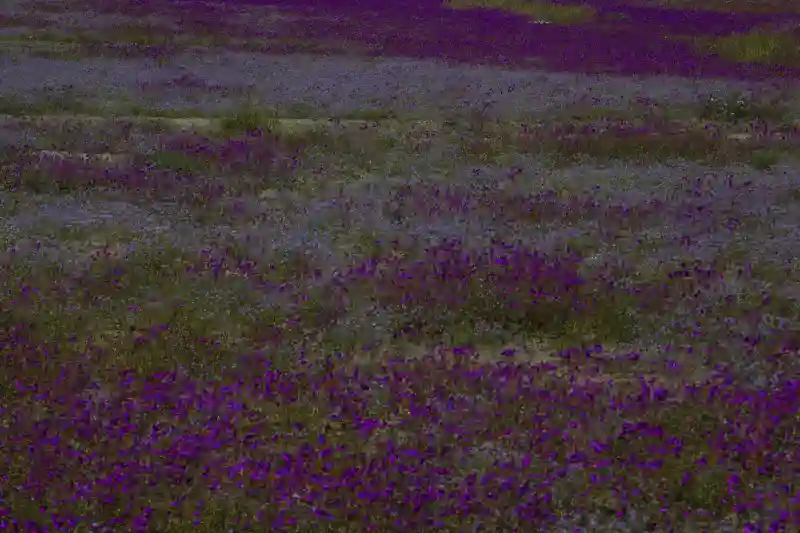
A field of colorful wildflowers blankets the Atacama Desert in northern Chile.
Previous
Next
Tamara Merino for NPR
Hide caption
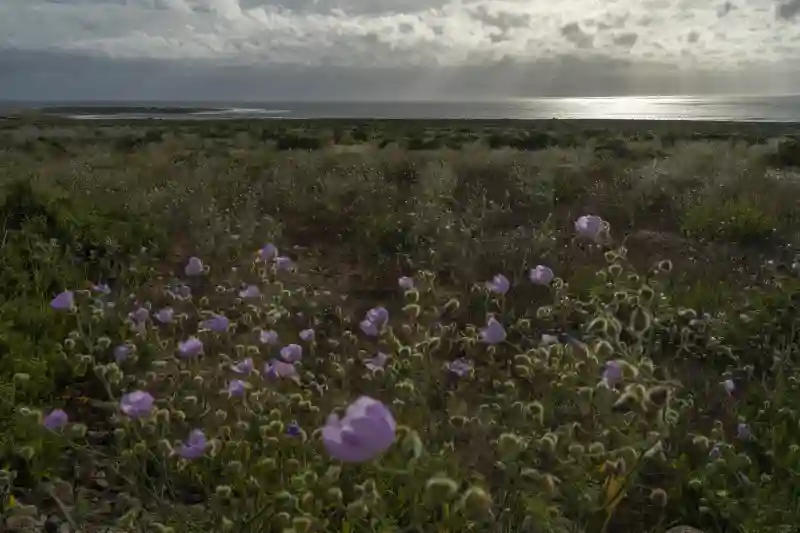
A field of Malvilla flowers blooms across the Atacama Desert during the rare flowering desert phenomenon, known locally as the Desierto Florido, in northern Chile.
Previous
Next
Tamara Merino for NPR
Hide caption
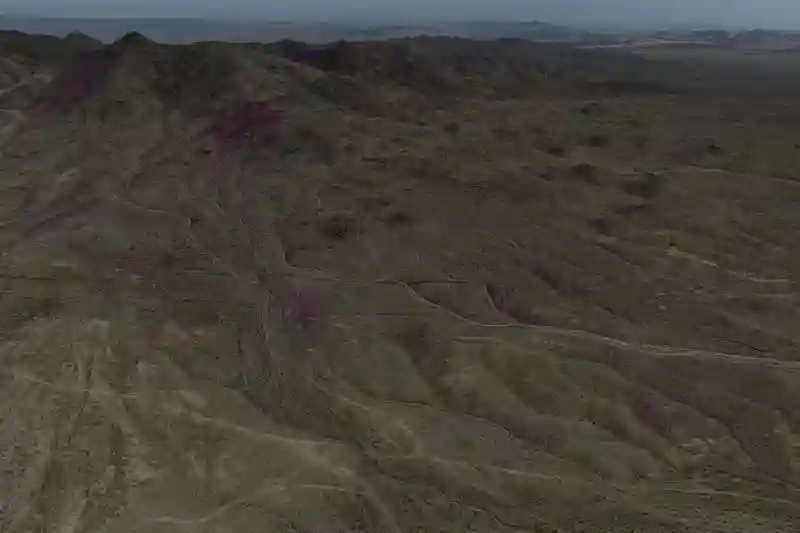
The wildflowers blanket the Atacama Desert in northern Chile.
Previous
Next
Tamara Merino for NPR
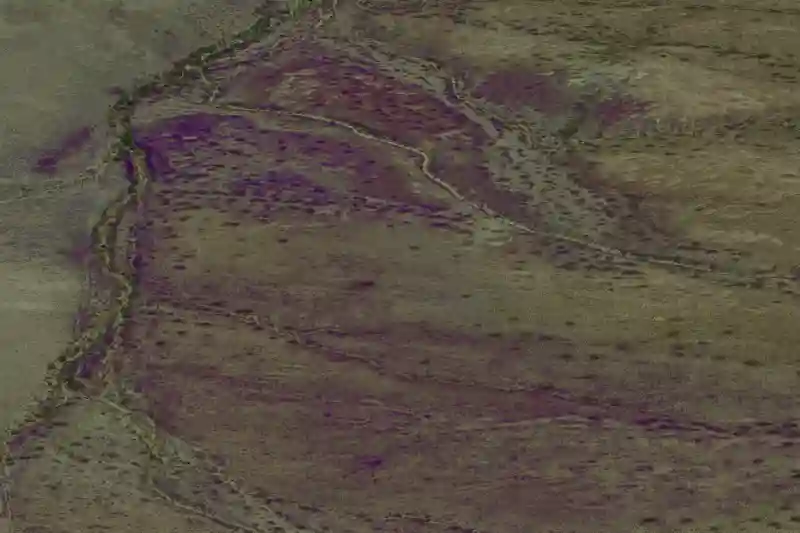
More than 200 species are in flower. A month ago, the first plants to emerge created a pale-yellow haze. This was followed by a soft purple hue as other bulbs germinated. Now, almost every indentation and crevice in the desert is streaked with color.
Scientists studying the phenomenon say there are patches of desert in bloom where flowers have never previously been recorded, suggesting that bulbs have remained dormant there since before the phenomenon was first studied in detail in 1997.
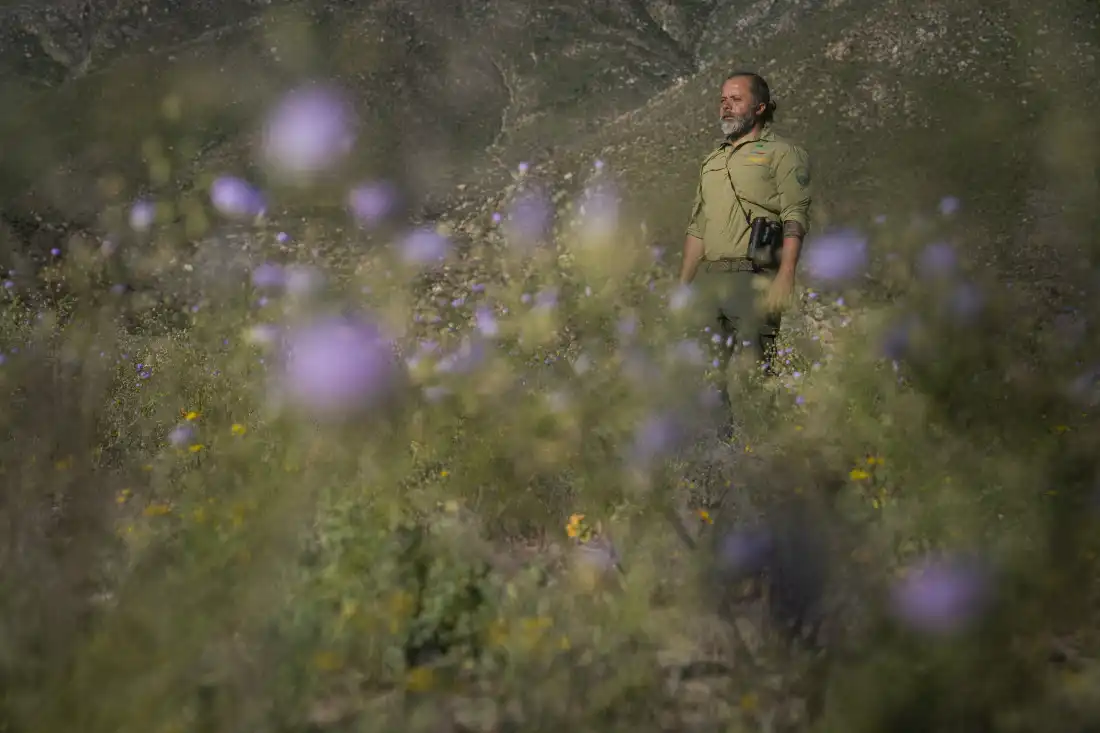
Moisés Grimberg has served as the administrator of Llanos de Challe National Park for the past three years and has worked in protected area management for 18 years. His work focuses on protecting the flora, fauna, and fragile ecosystems of the coastal desert near Huasco, Chile, while also managing the influx of tourists during the rare flowering desert phenomenon, known locally as the Desierto Florido. Huasco, Chile, on Monday October 19, 2026. Tamara Merino for NPR.
Tamera Merino for NPR
hide caption
toggle caption
i
Tamera Merino for NPR
“This is a natural seed bank, a dormant archive that becomes a living one with the rains,” says Moisés Grimberg, the administrator of Llanos de Challe National Park.
“But it’s a race against time — this brief biological window allows these species to complete their life cycle, which lasts roughly two to three months.”
Llanos de Challe is a 113,000-acre national park along the arid coastline, where waves lap at pristine white sand beaches.
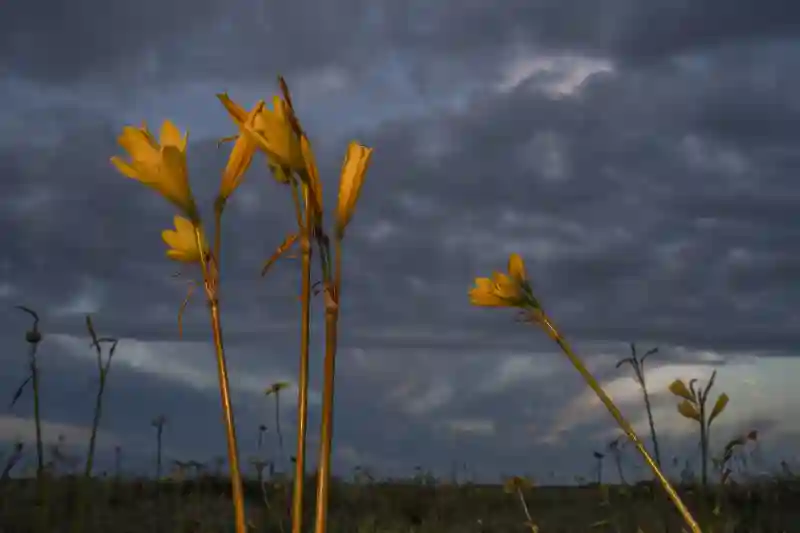
Hide caption
A cluster of Añañuca Amarilla and Coronilla de Fraile flowers blooms at sunrise.
Previous
Next
Tamara Merino for NPR
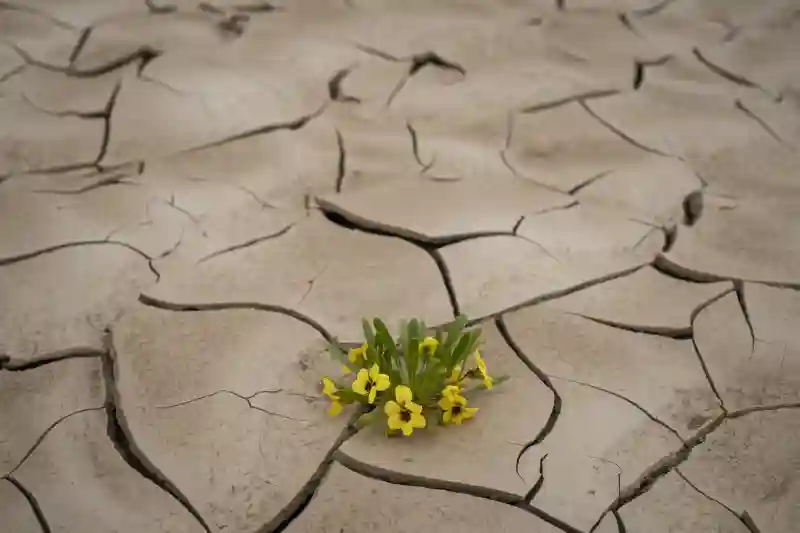
Hide caption
Wildflowers emerge from cracks in the dry soil of the Atacama Desert in northern Chile. Some areas receive virtually no rainfall for years or even decades.
Previous
Next
Tamara Merino for NPR
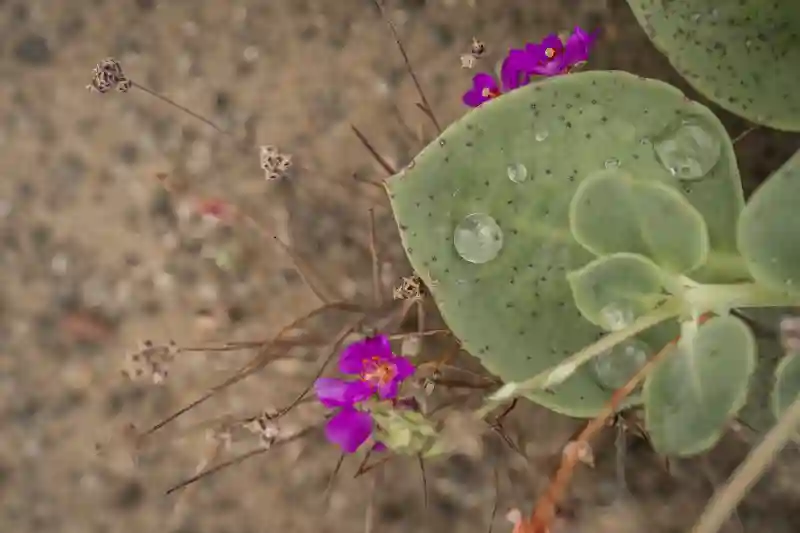
Hide caption
Raindrops rest on a leaf of the Pata de Guanaco flower in the Atacama Desert of northern Chile, widely considered the driest non-polar desert in the world. Some areas receive virtually no rainfall for years or even decades.
Previous
Next
Tamara Merino for NPR
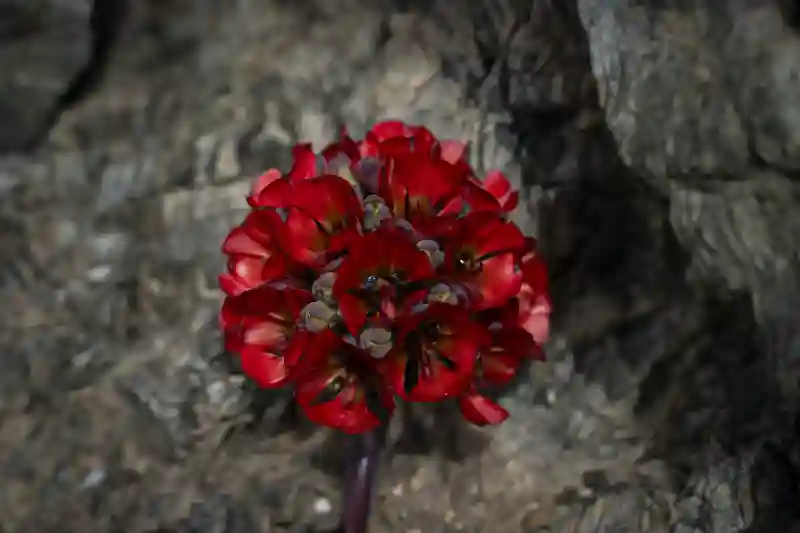
Hide caption
A Garra de León flower blooms is known for its vibrant red petals and is one of the region’s rare and emblematic desert species.
Previous
Next
Tamara Merino for NPR
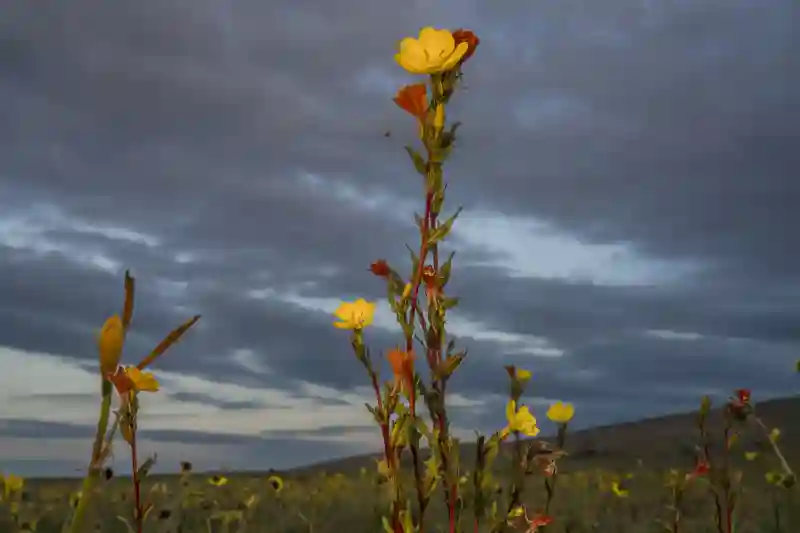
Hide caption
A cluster of Diego de la Noche flowers blooms at sunrise.
Previous
Next
Tamara Merino for NPR
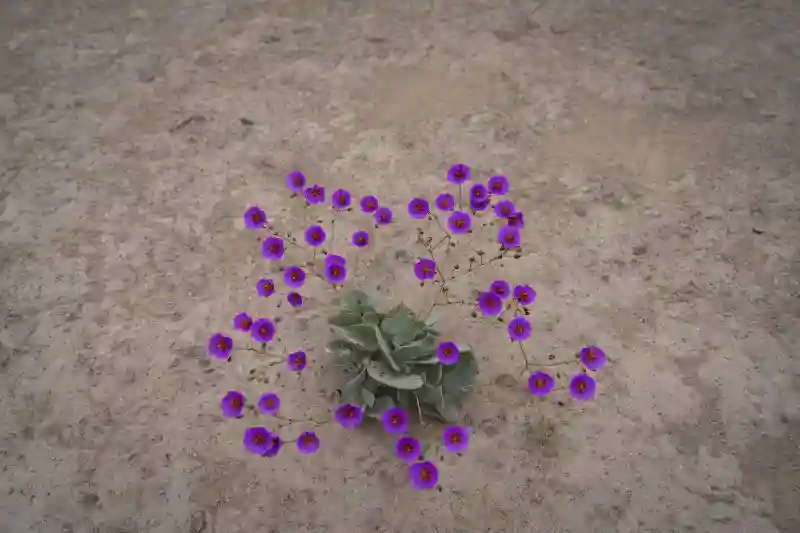
Hide caption
A cluster of Pata de Guanaco flowers blooms.
Previous
Next
Tamara Merino for NPR
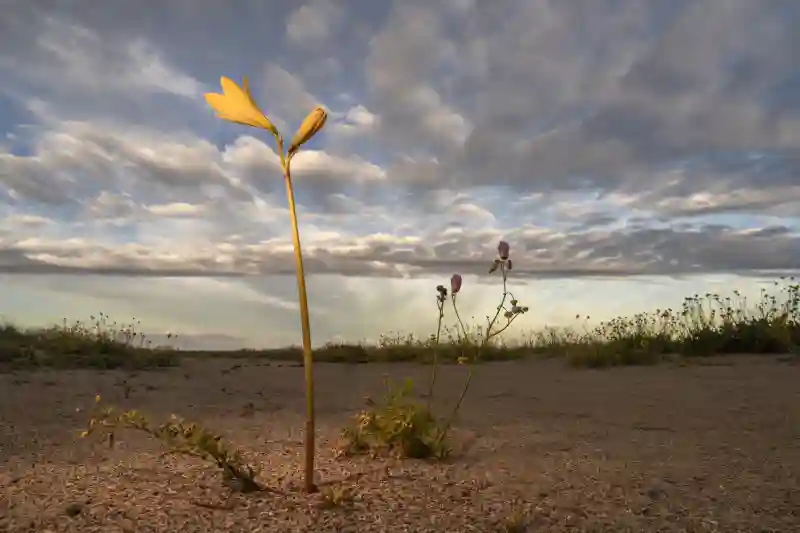
Hide caption
Pata de Guanaco and Añañuca Amarilla flowers bloom.
Previous
Next
Tamara Merino for NPR
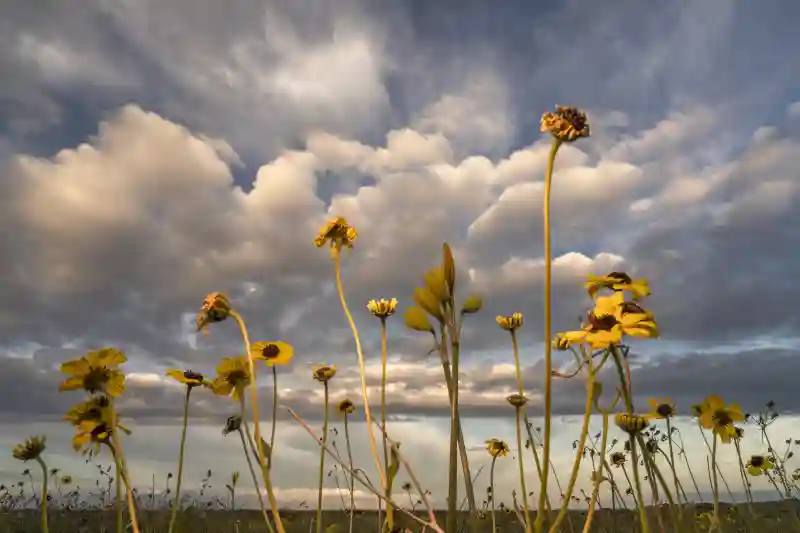
Hide caption
Clusters of Coronilla de Fraile and Añañuca Amarilla flowers bloom at sunrise.
Previous
Next
Tamara Merino for NPR
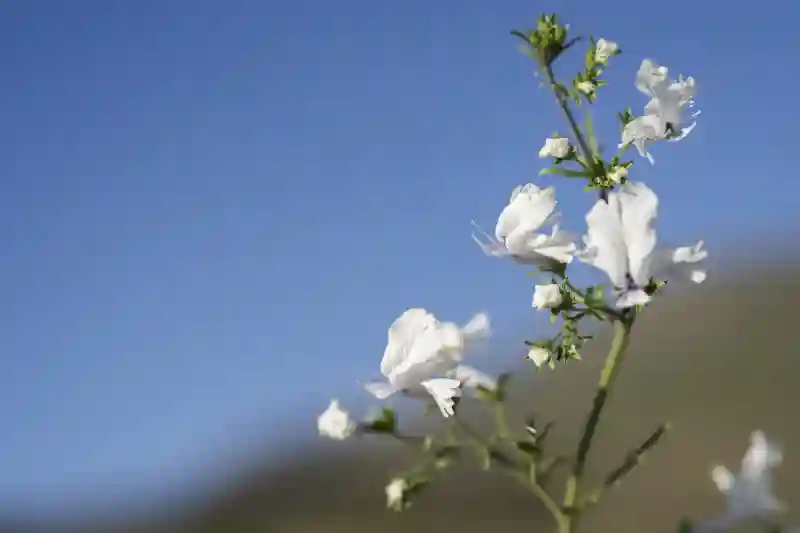
Hide caption
A cluster of Cactúa flowers blooms.
Previous
Next
Tamara Merino for NPR
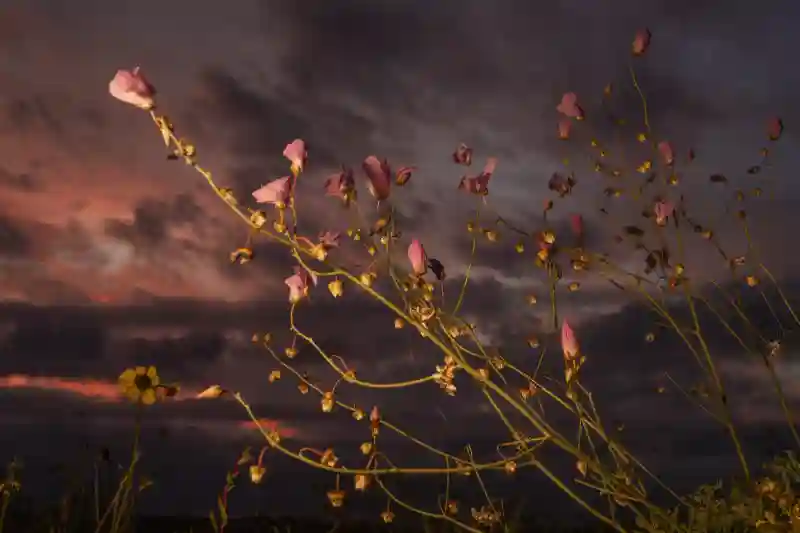
Hide caption
A cluster of Malvilla flowers blooms at sunset.
Previous
Next
Tamara Merino for NPR
Grimberg says the park normally receives about 10,000 visitors a year. But with the desert in bloom, 15,000 tourists have visited over the last few weeks alone.
Across the desert, the roads are lined with tourists’ cars. According to Chile’s national tourism board, the region is expected to see around 300,000 overnight trips during the two months the desert is in bloom.
Among the star attractions are the nectar-filled, crimson flowers of the garra de león, with their long tails of flame-like green leaves. This endemic flower is coaxed out of dormancy by the rains and grows along just a few miles of this stretch of coastline in the Atacama Desert — nowhere else in the world.
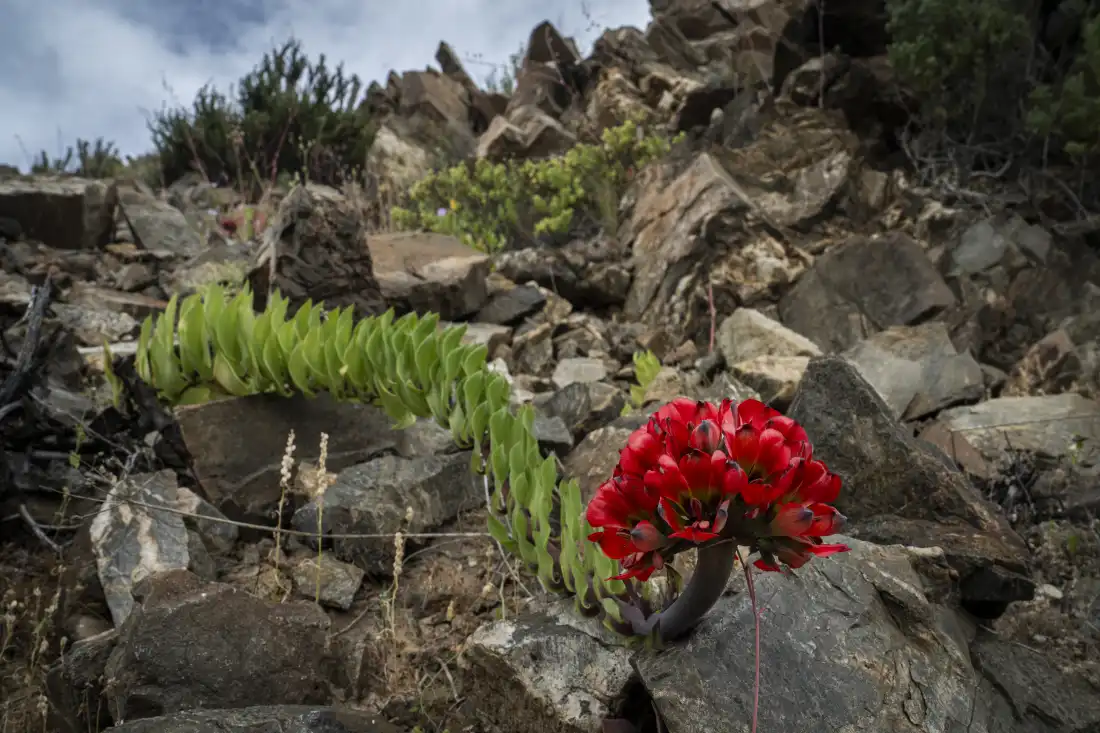
A Garra de León flower blooms in the Atacama Desert of northern Chile during the rare flowering desert phenomenon, known locally as the Desierto Florido. This striking native flower is known for its vibrant red petals and is one of the region’s rare and emblematic desert species. Canto del Agua, Chile, on Tuesday October 20, 2026. Tamara Merino for NPR.
Tamera Merino for NPR
hide caption
toggle caption
i
Tamera Merino for NPR
This bloom occurs every few years in what is the driest nonpolar desert on Earth. But scientists say the phenomenon is becoming more frequent as changes in the climate bring unseasonal rains.
The phenomenon gives rise to a thriving, transient ecosystem, with insects hatching and attracting lizards and bats, as well as larger mammals such as the guanaco.
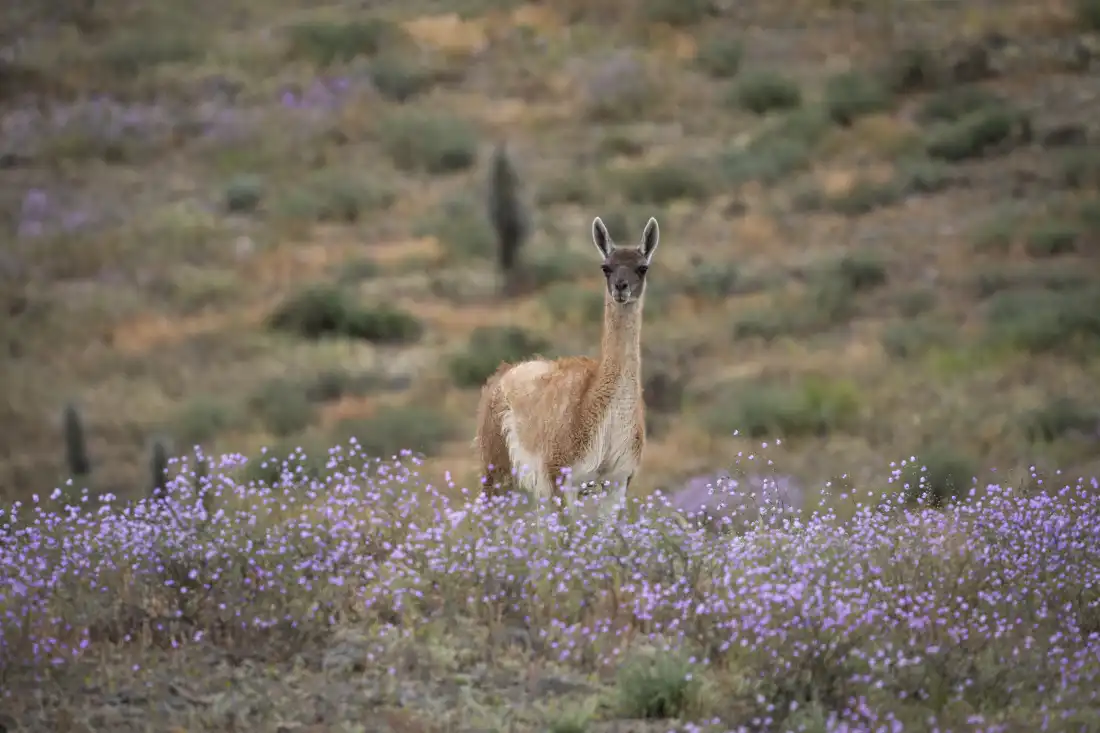
A guanaco stands amid a carpet of Malvilla and Pata de Guanaco wildflowers during the rare flowering desert phenomenon, known locally as the Desierto Florido, in the Atacama Desert of northern Chile. Canto del Agua, Chile, on Tuesday October 20, 2026.
Tamara Merino for NPR
hide caption
toggle caption
i
Tamara Merino for NPR
Biologists from INIA, Chile’s national seed bank, are collecting specimens to analyze in their laboratory before the brief flowering season ends.
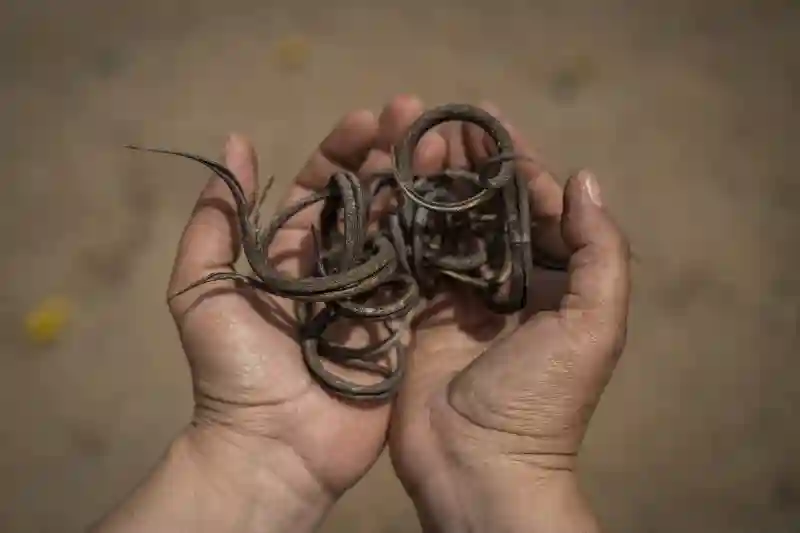
“It’s very exciting,” said Ana Sandoval as she delicately shook seeds free from their casings to take back to INIA’s taxonomist at its base in northern Chile.
“It’s as if the desert is awakening. Sometimes people think it’s an empty, arid place, devoid of life, but actually our desert is just waiting for the right conditions, and any precipitation, to awaken it.”
The seed bank wants to preserve the genetic material and unique adaptations each plant has developed to survive the extreme, arid conditions.
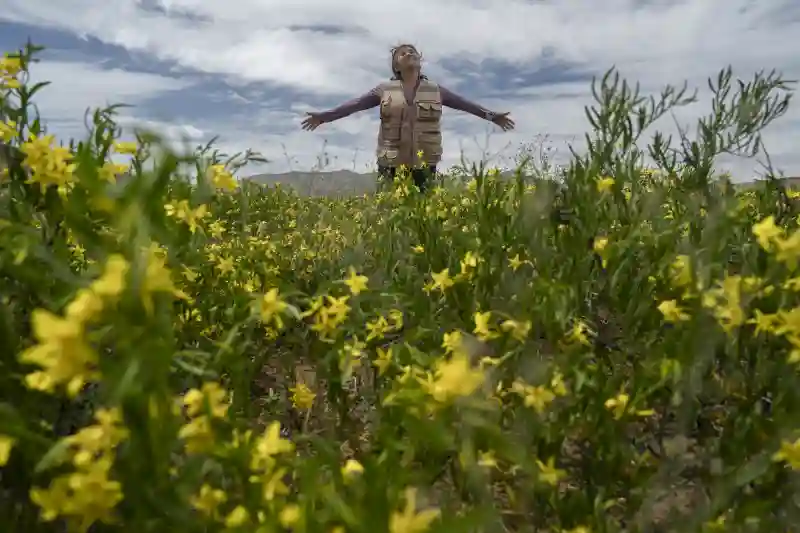
Hide caption
Ana Carolina Sandoval, 50, is a researcher at the Seed Bank of Chile’s Agricultural Research Institute (INIA), where she has worked for more than 20 years. Sandoval takes in the sweet fragrance of a large cluster of wildflowers on October 20, 2026.
Previous
Next
Tamera Merino for NPR
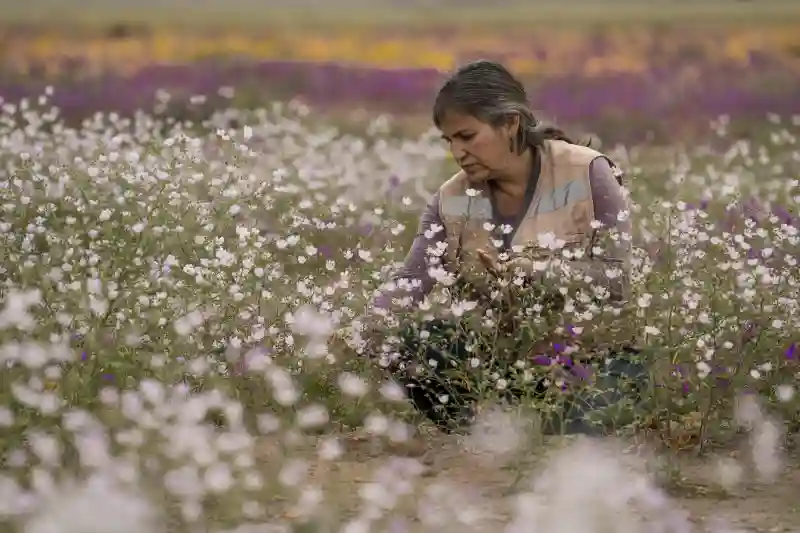
Hide caption
Sandoval collects seeds during the rare flowering desert phenomenon, known locally as the Desierto Florido, in the Atacama Desert of northern Chile.
Previous
Next
Tamara Merino for NPR
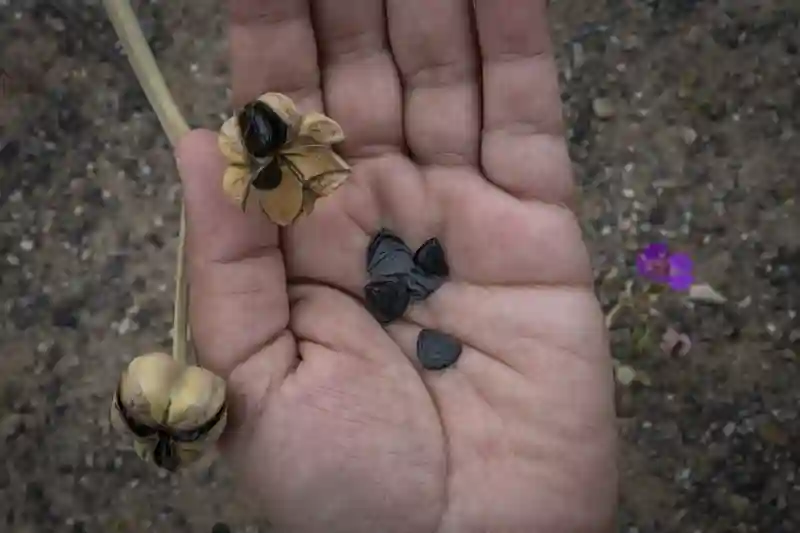
Hide caption
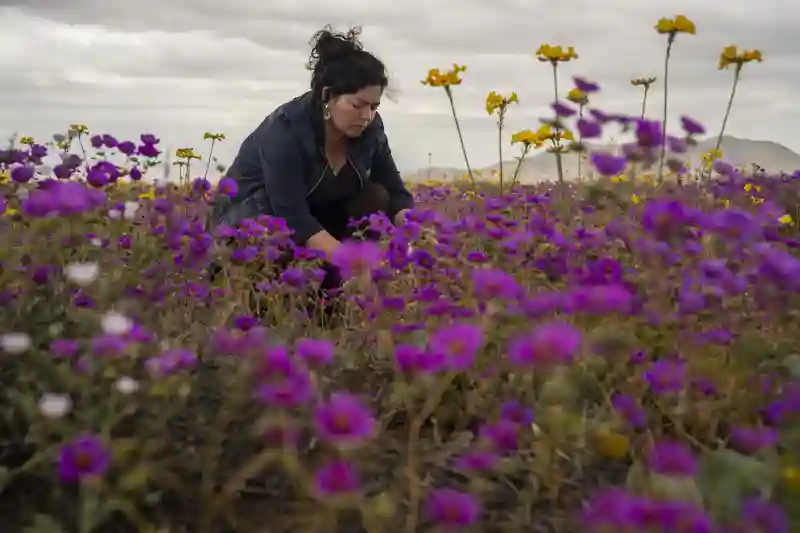
Researchers from Chile’s Agricultural Research Institute (INIA) collect seeds during the rare flowering desert phenomenon, known locally as the Desierto Florido, in the Atacama Desert of northern Chile. The seeds will be preserved in a seed bank to help protect the region’s native plant species and safeguard their genetic diversity for future generations.
Previous
Next
Tamara Merino for NPR
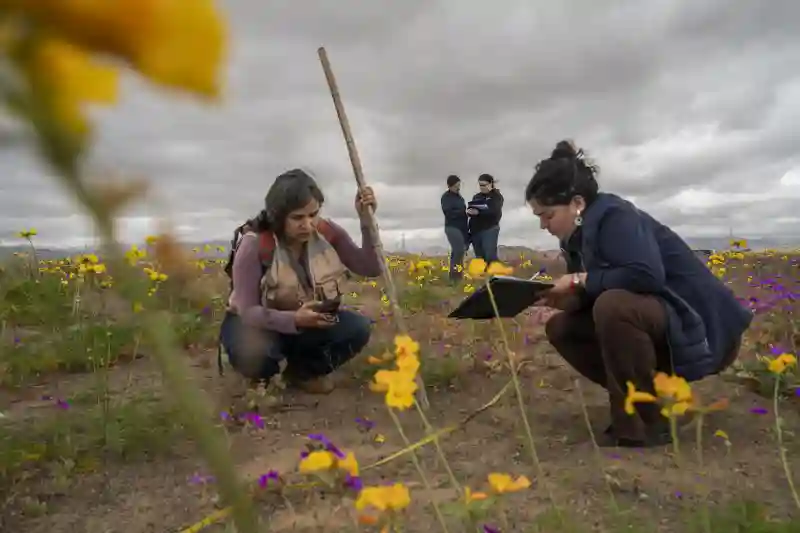
Hide caption
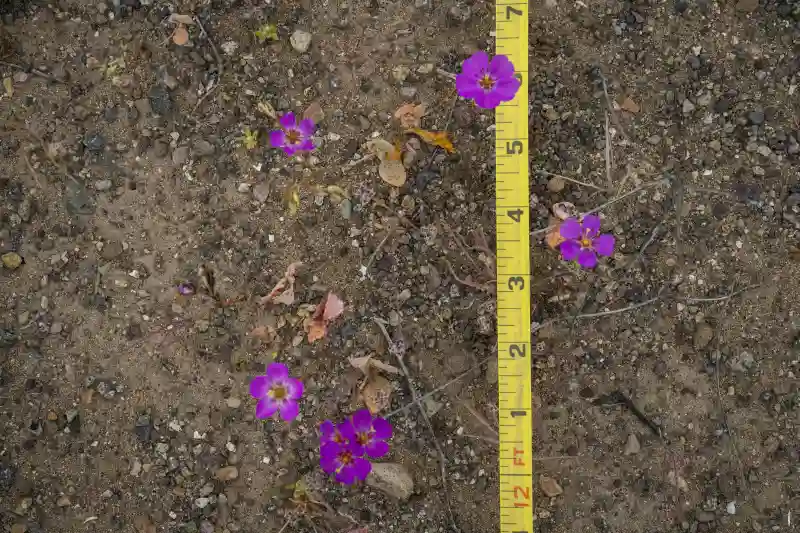
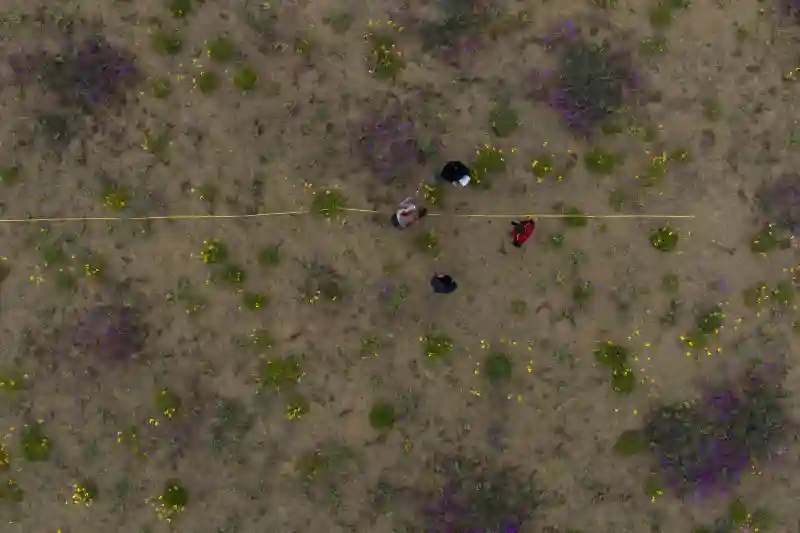
Researchers from Chile’s Agricultural Research Institute (INIA) record the number and variety of flowers per square meter during the rare flowering desert event.
Previous
Next
Tamara Merino for NPR
Hide caption
By monitoring the number and diversity of flowers in specific areas, researchers can better understand how different plant species respond to rainfall and how the desert ecosystem changes during these rare blooming events.
Previous
Next
Tamara Merino for NPR
Hide caption
Researchers from Chile’s Agricultural Research Institute (INIA) record the number and variety of flowers per square meter during the rare flowering desert phenomenon.
Previous
Next
Tamara Merino for NPR
Hide caption
Sandoval collects seeds from Cacho de Cabra flowers during the rare flowering desert phenomenon.
Previous
Next
Tamara Merino for NPR
Hide caption
Claudia Loreto Bavestrello Riquelme, 40, a researcher at Chile’s Agricultural Research Institute (INIA) since 2023, collects seeds.
Previous
Next
Tamara Merino for NPR
Sandoval points out different ways plants harvest water as she walks. Some leaves are covered in fine hairs; others have a thick waxy cuticle.
A national park dedicated to the desert bloom was created in June 2023 to protect a 141,000-acre area where flowers spring up every few years. Now local authorities want to go further.
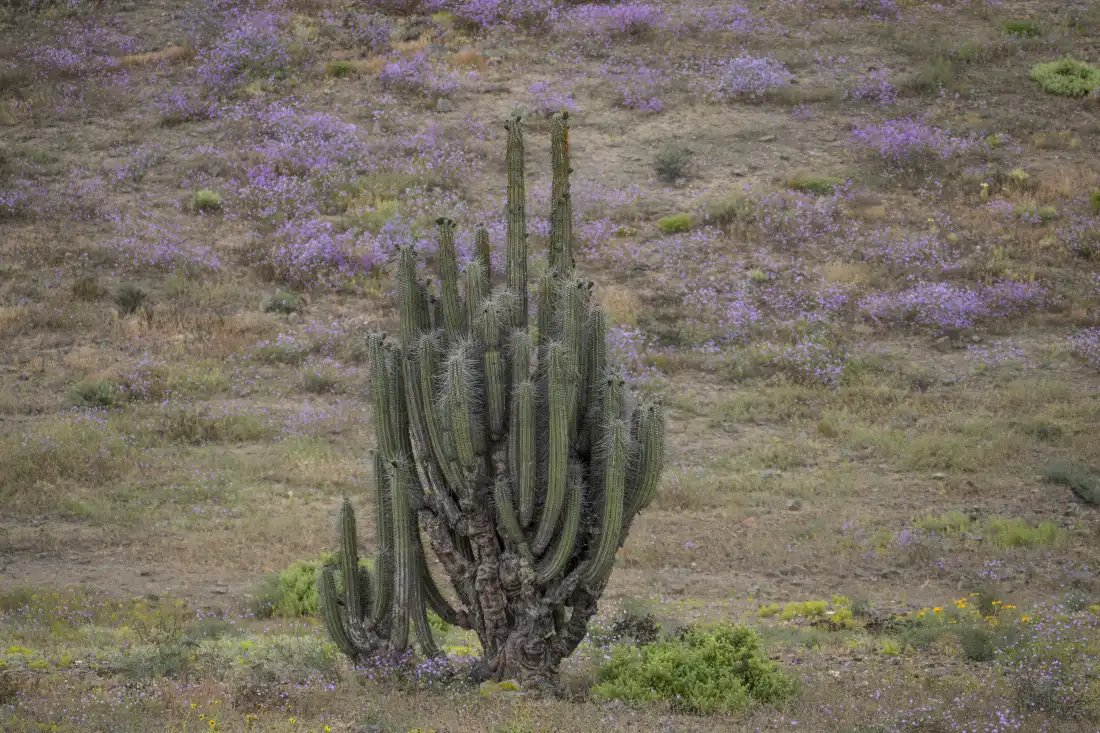
A cactus, which survives year-round despite the desert’s extreme temperatures, stands amid a carpet of Malvilla and Pata de Guanaco wildflowers during the rare flowering desert phenomenon, known locally as the Desierto Florido, in the Atacama Desert of northern Chile. Canto del Agua, Chile.
Tamara Merino for NPR
hide caption
toggle caption
i
Tamara Merino for NPR
Miguel Vargas, the governor of the Atacama region, is beginning the process of seeking UNESCO World Heritage recognition for the desert bloom phenomenon.
“This represents a tremendous opportunity to strengthen special interest tourism and diversify our regional economy, which is currently heavily reliant on mining,” he said. “Receiving UNESCO recognition would put the Atacama region on the world stage.”
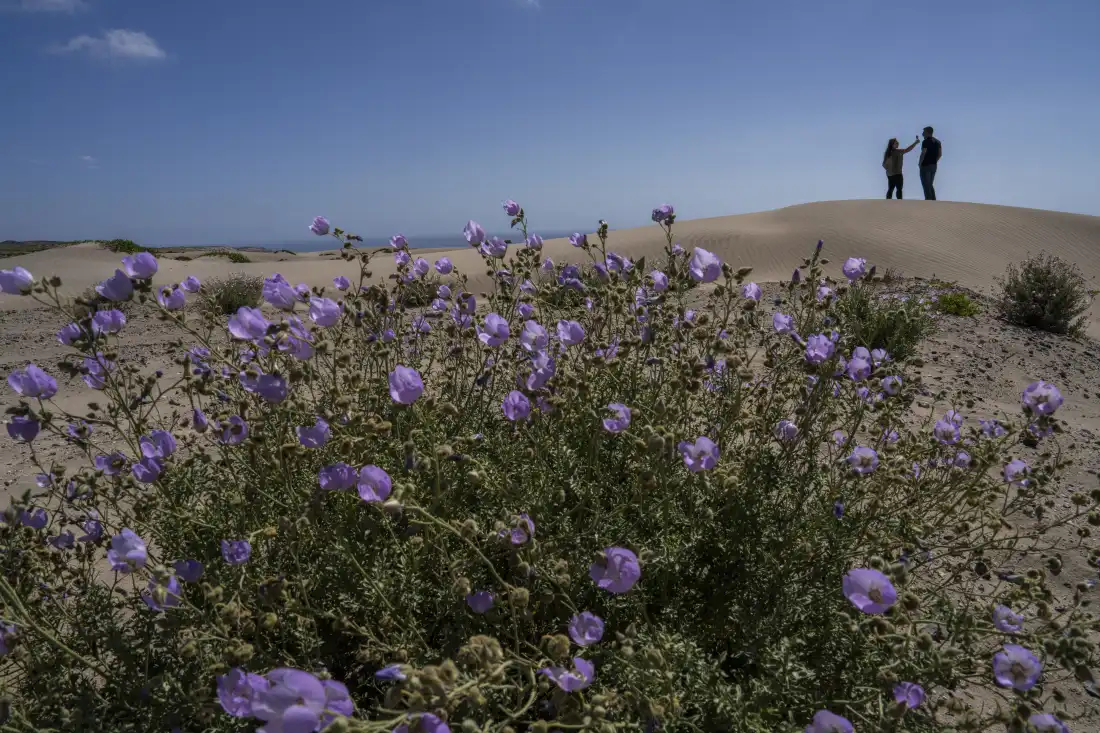
A couple of tourists visits the Atacama Desert during the rare flowering desert phenomenon, known locally as the Desierto Florido, in northern Chile. Huasco, Chile, on Monday October 19, 2026.
Tamara Merino for NPR
hide caption
toggle caption
i
Tamara Merino for NPR
Vargas hopes this will become Chile’s eighth World Heritage site within a couple of years.
This year, the bloom is projected to last until mid-November.
As the flowers begin to fade, scientists will be left with two tantalising questions: was this the Atacama Desert’s largest flowering event on record, and might closer examination reveal any previously unknown species among the millions of plants?