
Malicious actors are carrying out a “well-orchestrated and well-funded” disinformation campaign relating to Israel’s activities in Mexico, Israeli Ambassador to Mexico Yoed Magen claimed during a press conference on Friday.
The veteran diplomat convened the gathering to address what he referred to as “an alarming campaign of hatred and incitement against Israel on social media” in recent weeks.
The campaign, he continued, involves “blatant lies” and “false claims,” specifically conspiracy theories related to Israel’s relationship with Mexico.
“It is clear that the campaign is well orchestrated and well funded,” he told the press on Friday. “It includes ridiculous accusations bordering on delusion, such as claims that Israel is stealing Mexico’s water or wants to control it, or that former Israeli soldiers are infiltrating Chiapas or that Israel seeks to colonize Mexico, among other things.”
“These lies distort reality and create a false perception of Israel,” he stressed.
Magen also alleged that the campaign is being exploited by various actors, both in Mexico and abroad, “including Palestinians,” to “promote hatred, delegitimize Israel, and damage its good relations with Mexico.”
Magen then specifically addressed the accusation that Israel is seeking to take control of Mexican water.
He told the press that Israel is a “world leader” in water management, having become self-sufficient in water more than 25 years ago, allowing it to supply water even to its neighbors, including Jordan and the Palestinians.
“Since our independence, we have invested heavily in research and the development of irrigation solutions, water technologies, and precision agriculture,” Magen said, before listing some of Israel’s water-related achievements, such as collecting and treating 94% of wastewater and reusing 87% of it.
Over the years, he continued, Israeli experts and companies have gained extremely valuable experience and knowledge and want to share it with other countries, not just Mexico.
For this reason, Magen said Israel is invited to different Mexican states to understand their challenges and share best practices and solutions.
This includes, for example, a recent trip by Israeli representatives to the Agro Expo in Yucatán.
Magen also rejected allegations that Israel was seeking control over water resources in the northern Mexican state of Chihuahua.
The accusations emerged three years ago following a 2023 cooperation agreement between the state government and Israel’s international development agency, MASHAV, which activists have criticized over concerns about foreign involvement in water infrastructure.
Magen said the agreement’s purpose was to draw on Israeli expertise to address the state’s water challenges, but the operational component of the agreement was never signed and never implemented.
The agreement has been hotly protested by locals in recent months, including a larger protest at the start of August where Chihuahuans marched with signs reading ‘Water is for Mexicans, not for Zionists.’
Regarding accusations of Israeli soldiers infiltrating Chiapas, Magen said thousands of Israelis travel to South America and Central America for their ‘big trip’ after finishing the army. Some, he added, put the “Israeli spirit of volunteerism into practice” by volunteering in schools and communities or helping provide humanitarian assistance.
“It is important to clarify that these young people volunteer in many Latin American countries and, in fact, throughout the world. They always coordinate their activities with local authorities,” he said.
Magen concluded by expressing hope that his explanations “will clear up any misunderstandings that may have been deliberately caused by this campaign, this campaign of hatred against Israel, a campaign that seeks to damage relations between our two peoples.”
In recent weeks, claims have circulated on social media that Israeli soldiers were authorized to enter an indigenous school in Chiapas, a southern Mexican state known for having one of the nation’s largest indigenous populations.
The controversy largely emerged due to pro-Palestinian solidarity groups, which called for an investigation into the presence of Israelis at schools in Zinacantán, San Cristóbal de Las Casas, and Chamula.
According to testimonies and photographs circulated online, approximately 25 individuals identified by those making the allegations as IDF members appeared alongside Tsotsil children during school activities.
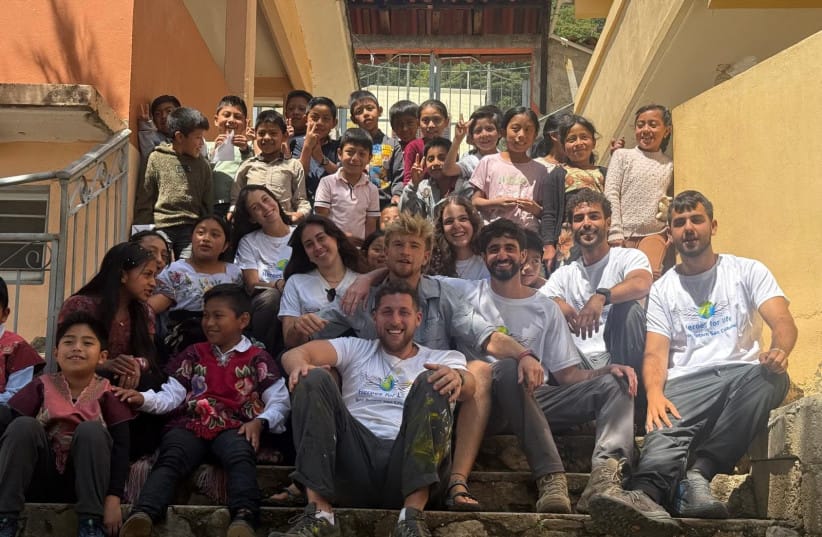
The visitors seem to have been coordinated by the Israeli nonprofit organization Heroes for Life, known in Spanish as Héroes por la Vida, which organizes short-term (usually two-week) humanitarian volunteer trips for Israeli backpackers and recently discharged IDF soldiers traveling abroad.
Heroes for Life volunteers helped renovate, paint schools, taught classes
The individuals reportedly helped renovate and paint schools and taught English, science, and music classes.
On November 3, the Chiapas Education Department denied authorizing current or former members of the Israel Defense Forces (IDF) to enter public schools in indigenous communities in the Los Altos region.
The department’s head, Roger Adrián Mandujano Ayala, told the press he was aware of members of a foreign organization participating in activities at a school, although he said their entry appeared to have been arranged directly with parents.