
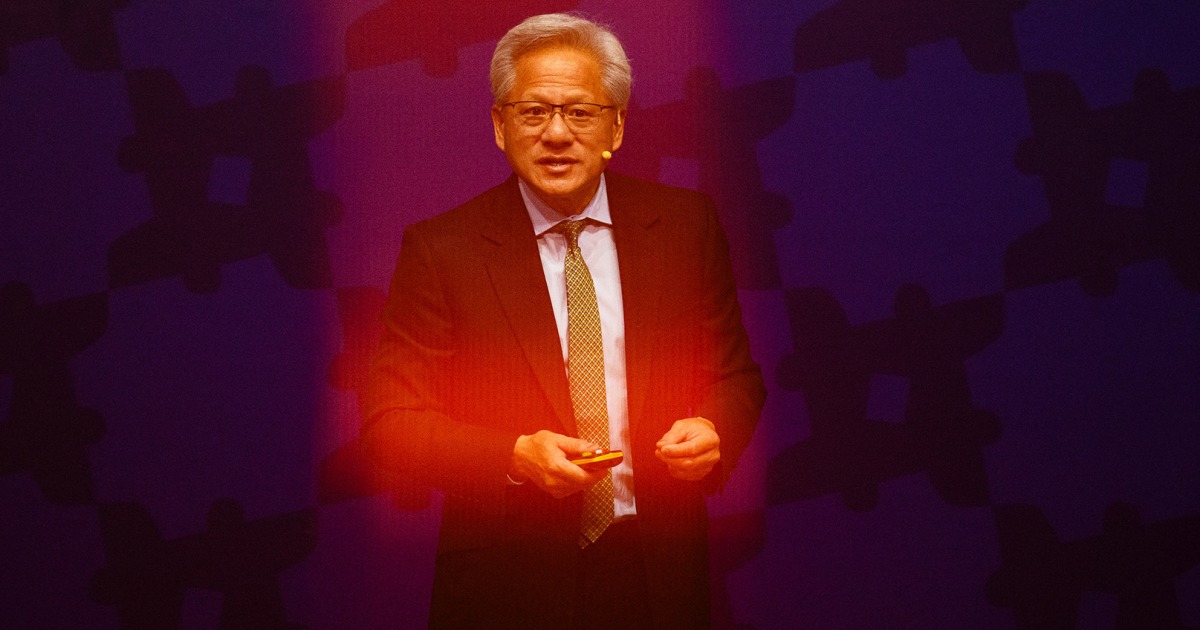
Nvidia’s board of directors said Sunday that it is opening an independent investigation after CEO Jensen Huang was targeted by a foreign intelligence effort.
The announcement followed recent reporting by The New York Times and the Financial Times about Huang’s relationship with Alice Huang, a Chinese businesswoman who the newspapers reported had been recruited to spy for China. The two are not related.
A person familiar with the matter told NBC News late Sunday that U.S. intelligence agencies had determined that Alice Huang was a Chinese spy and had a relationship with Nvidia’s Jensen Huang.
“The NVIDIA Board is initiating an independent investigation in light of recent reporting that founder and CEO Jensen Huang has been the target of a foreign intelligence effort,” the company said in a statement.
“A committee of independent directors, assisted by outside independent counsel, will oversee the investigation. The Board prioritizes U.S. national and economic security, which is paramount to the interests of NVIDIA and its shareholders.”
The company added that while it “has no reason to believe that either national security or NVIDIA secrets were compromised, the Board’s inquiry will examine all available information.”
In a memo to Nvidia employees that the company shared with NBC News, Huang said: “I was unfaithful to my wife. My actions hurt her and our children. There is no excuse for what I did.”
The New York Times and the Financial Times reported that Alice Huang, a Chinese citizen whose Singapore-based company was buying Nvidia’s advanced chips, had been under surveillance by U.S. intelligence agencies. Those agencies, the reports said, found that she had been recruited to spy by China’s top intelligence agency.
Jensen Huang and Nvidia, for years, have been at the forefront of the artificial intelligence boom. Nvidia’s products are the most highly sought-after chips in the world; however its top-tier products are mostly restricted from being sold to customers in China because of national security fears.
China has long sought to become a global leader in AI. President Xi Jinping set a 2030 deadline to surpass the capabilities of American AI systems.
Huang, 63, essentially serves as an ambassador for the industry, regularly appearing alongside the likes of President Donald Trump and King Charles III of Great Britain and at conferences to tout his company and what he says will be immense payoff in the future from AI.
In October, Trump awarded Huang the National Medal of Science, one of the nation’s highest honors for achievement in science and technology.
Nvidia is the world’s second-largest publicly traded company as of Friday, worth nearly $4.5 trillion. That’s up more than 500% over the last five years.
Huang’s wealth has also ballooned as he has led the company. His net worth has soared from around $25 billion at the start of 2022 to almost $160 billion, making him the world’s 10th-richest person, according to the Bloomberg Billionaires Index.
In the latest series of reports, published Sunday afternoon, The New York Times reported that concerns inside the U.S. government about Alice Huang and Jensen Huang rose as high as Secretary of State Marco Rubio.
Speaking Sunday to reporters in Florida shortly after Nvidia’s announcement, Rubio said, “I just can’t comment because of the nature of it, and I also can’t comment on an internal corporate matter that’s going on with Nvidia.”
A short time later, Trump gave Huang his complete support, telling reporters that he thinks Huang is a “fine person” who should remain CEO of Nvidia. “I think he’s an honorable guy,” the president said.
“He’s done an amazing job for our country,” Trump added, while touting recent stock market gains. The president also said he would support bringing Huang on his upcoming trip through Asia.
Asked by reporters if Trump wished that he had acted on intelligence about Alice Huang, he said, “no, I don’t think so.”
On Friday, the FT reported that the U.S. government believed Jensen Huang had a romantic relationship with Alice Huang. In response to the article, the FT reported that Nvidia declined to comment and said Jensen Huang meets “thousands of customer executives every year,” as any CEO normally does.
Huang previously defended his interactions with Alice Huang, describing them as business-related in a recent statement: “Our relationship, our interactions, have been related to Megaspeed, and it was all completely normal and not unusual.”
In Sunday’s memo, Huang wrote: “To my wife and family: I love you. I know an apology cannot undo what I have done. I hope our family will heal and that, over time, I can earn back your trust.”
The email to employees continued: “To my colleagues at NVIDIA, including those I have worked alongside for decades, and to our board, partners, and shareholders around the world: you deserve better from me. Leading NVIDIA is the privilege of my life. My responsibility is to serve you and be worthy of your trust. I have fallen short of that responsibility. I am fully committed to NVIDIA and will work to earn back your confidence.”
A spokesperson for Nvidia told NBC News that “today’s news will not slow” the company and that Huang is “committed to continuing to lead NVIDIA as CEO without interruption.”
Before Sunday’s announcement, Nvidia and Huang were already facing congressional scrutiny over the reports about Megaspeed and its executive. On Thursday, top House Republicans requested a briefing from Huang about the reports.
“Recent reports raise significant national security concerns regarding the PRC’s access to sensitive U.S. technology and information,” said Rep. John Moolenaar, R-Mich., who is also chairman of the House Select Committee on China. “PRC” is shorthand for the People’s Republic of China.
“It is vital that Congress determines the extent to which U.S. national security has been placed at risk,” a letter to Nvidia read.