
Raphael Warnock wasn’t trying to make the crowd laugh.
“There’s one race I think we’re sleeping on, and that’s Mississippi,” the Georgia senator said as he talked up Democrats’ big plans for the year at a Washington, DC, fundraiser in April.
Warnock had been beating the drum for the Senate race in the deep-red state going back to last November, eagerly pointing out to anyone who’d listen that the percentage of Black voters in Mississippi was higher than in Georgia, which itself had defied history to elect him twice.
But the attendees did laugh, according to a recording obtained by CNN, and quite hard, until Warnock cut them off. “Mississippi — yes,” he said, before launching into a little of Scott Colom’s biography: a seventh-generation Mississippian who beat a long-time incumbent district attorney in Trump territory.
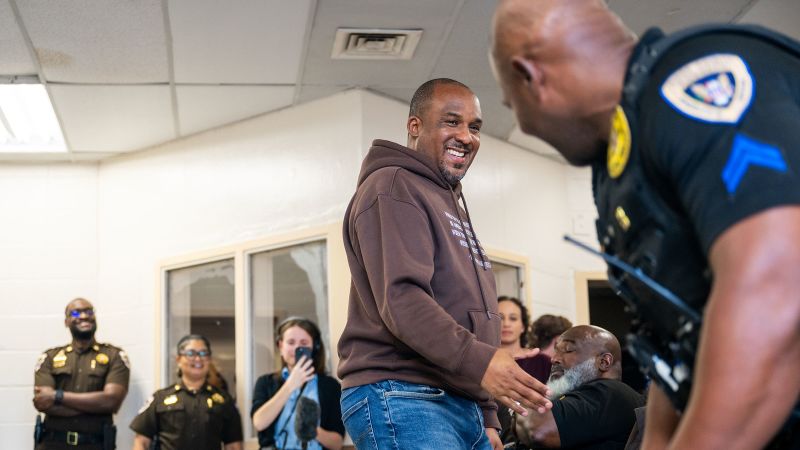
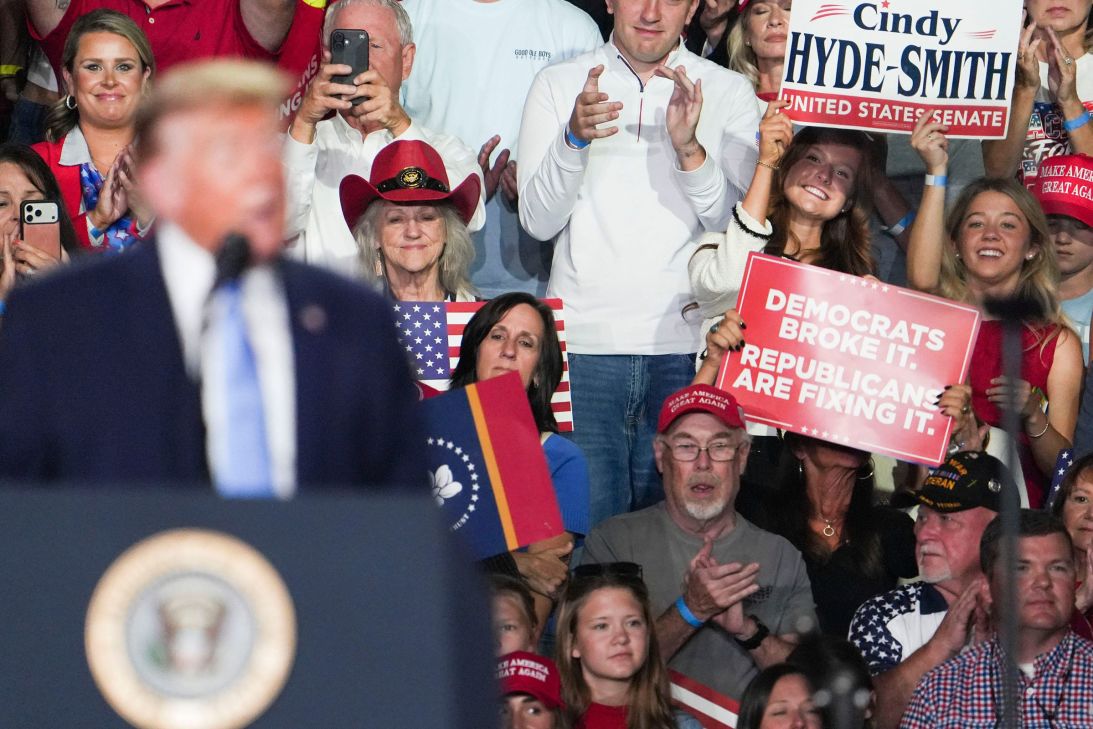
Six months later, Colom was standing on the floor of his old high school gym in Columbus, challenging Donald Trump to a debate. The president was coming to the state a few days later in an 11th-hour attempt to save GOP Sen. Cindy Hyde-Smith, and Colom said he’d do it then or any other time.
“Other people are scared — no, I want him to answer why he didn’t release the Epstein files, why he betrayed the farmers,” the Democrat told CNN after the rally. “Listen, the reality is, I’m not scared, I ain’t Joe Biden. I’m ready to go. Let’s go. He ain’t gonna do it. He’s scared, too.”
Running for Senate at all, let alone like this, seemed like a crazy long-shot that afternoon in November 2024 when Chuck Schumer agreed to have Colom and his father over for lunch. Those were the days when Colom had already set his mind to run but was struggling to get national buy-in.
Now, he’d just had former Vice President Kamala Harris stump for him to 1,000 cheering people filling the seats and the stands, hearing their applause as he kept coming back to his slogan “Mississippi matters” in his unmistakably homegrown accent. On a break from working the crowd, he did a local TV interview with a former classmate turned reporter, talking about how it felt for this all to be happening on the same basketball court where he’d played as a teenager.
“It’s a real special moment for me. It was one that I’ll treasure for the rest of my life,” Colom told him.
But the 43-year-old quickly shifted back into campaign mode, pointing to the hundreds of thousands of Mississippians without health insurance and all the rural hospitals, like the clinic three hours away in Clarksdale he’d brought Harris to earlier that afternoon, at risk of closing next year because of the Medicaid cuts from Trump’s “One Big Beautiful Bill” scheduled to kick in over the weeks ahead. The gas prices. The tariffs. Many of the Epstein files still not released by the administration.
“And our junior senator, the person that’s supposed to represent Mississippi, she caused all that to happen,” Colom said, never referring to his opponent by her name.
Now, just six years after Mississippi removed the Confederate stars and bars from its state flag, Colom could become the first Black senator from the state since Reconstruction and the first Democrat to win the seat since 1982. The last Democratic senator in the state, John Stennis, was an avowed segregationist himself.
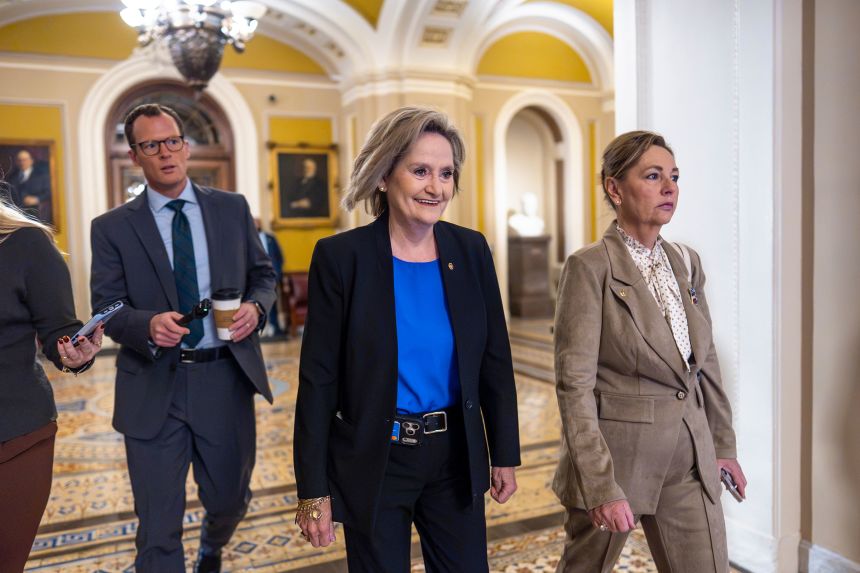
Hyde-Smith is trailing Colom by a couple thousand votes after a noticeably quiet eight years in the Senate, capped off by a campaign in which she was rarely seen — including when she took the microphone for just a few seconds at the rally Trump flew in to headline for her in the final week, just long enough to say, “Is this not the best president in our lifetime?” and then walk away.
Colom was at that rally in Corinth too, outside, shaking hands and taking selfies along the line.
Hyde-Smith has said little since election night, making rare remarks to reporters in the hallways of the Capitol on Tuesday.
“We are still counting votes and there’s a few thousand out. We feel confident,” Hyde-Smith said, declining to elaborate on where she saw her path to victory in the race.
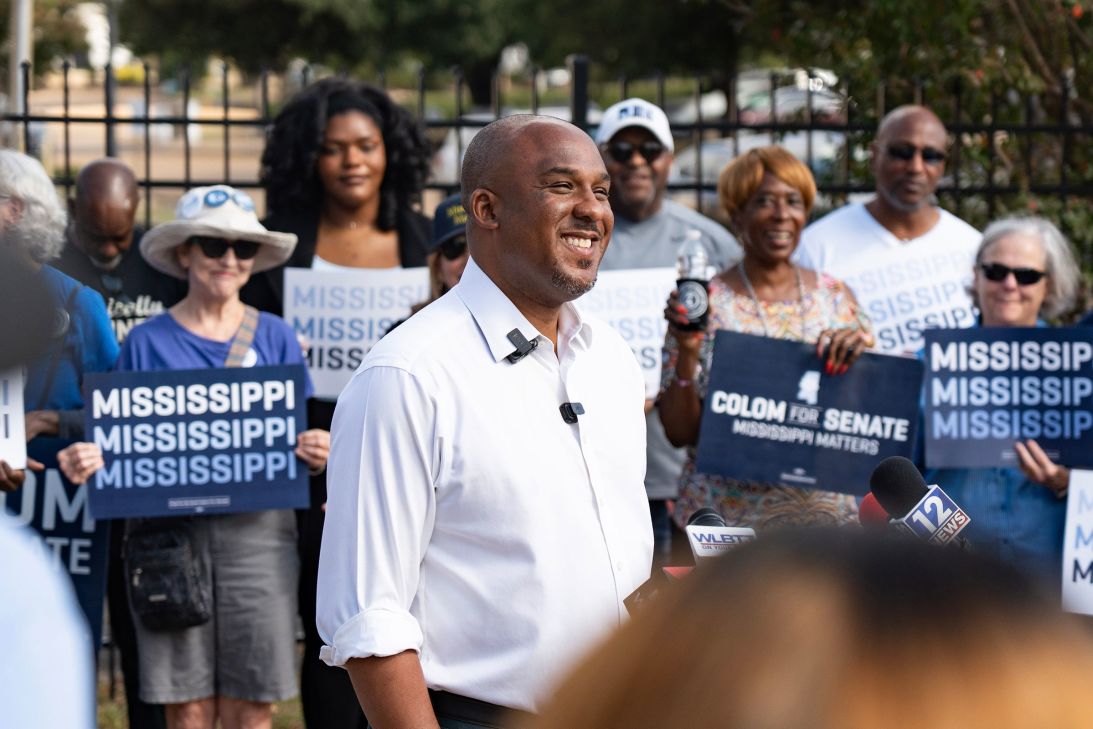
Colom has been around Mississippi politics for decades. As he proudly pointed out in his launch video, his father, Wilbur, worked for Ronald Reagan and was the Republican nominee for state treasurer all the way back in 1987 (written up by newspapers at the time as “A Different Sort of Agitator in Mississippi” and “A New Kind of Black Leader from Mississippi”). His mother, Dorothy, was an elected judge on a local chancery court. Colom himself was a municipal court judge and local prosecutor before being elected in 2015 as the district attorney for four counties in the state.
Early on, he caught the eye of the state’s lone Democratic congressman, Bennie Thompson, who included him in a leadership training program he helped create called the Mississippi Black Leadership Institute.
“We were trying to create a farm team for people who might pursue public service,” Thompson told CNN in October.
In 2022, Colom got his campaign origin story when President Joe Biden nominated him to be a district court judge on Thompson’s recommendation. Sen. Roger Wicker, the state’s senior senator, was ready to support the nomination, but Hyde-Smith refused to give back her “blue slip,” the Senate traditional courtesy enabling senators to singlehandedly delay or derail judicial nominees from their home states.
Prematurely claiming victory on election night, Hyde-Smith hearkened back to that.
“I blocked Scott Colom from being a federal judge, and you blocked him from being a US senator,” she boasted.
‘Nobody wanted to listen’
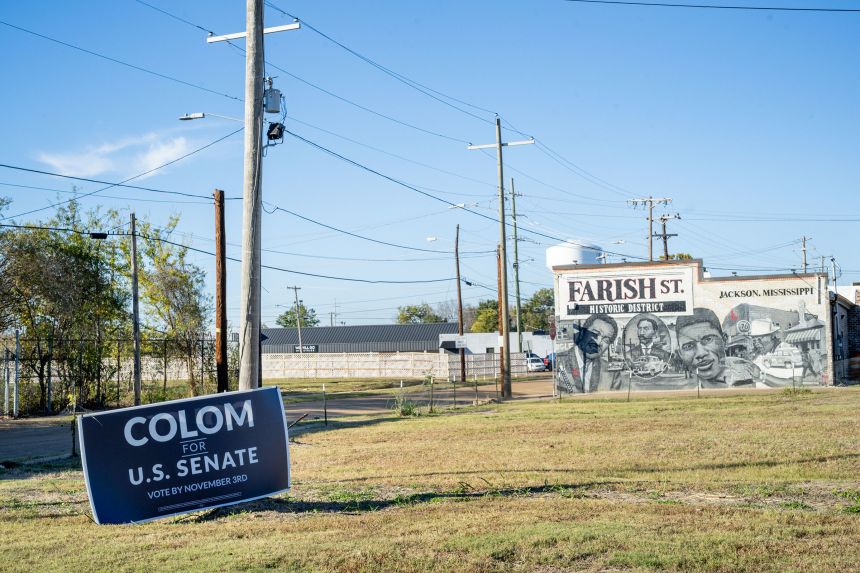
Brandon Presley, the 2023 Democratic nominee for governor in Mississippi and a longtime Democratic leader, said Colom has been talking about running for years. He recalled sitting with Colom, going over the numbers that showed Barack Obama winning more raw votes in Mississippi in his 2012 reelection than Republican Phil Bryant had gotten in 2011, when Bryant won the governor’s race.
“There were just a few of us who were idealistic enough to think that the chance was here, and if you did it in the right way you could win — and if you did it at the right time,” Presley told CNN.
That was a hard argument to sell at the time, Presley noted.
“We felt like Noah: nobody wanted to listen,” he said. “And then it started to rain.”
For this year’s Senate race, Presley said he fielded a call from famed Democratic consultant James Carville telling him he had to run. Presley said he was deferring to Colom. He joked to CNN that it took a few tries to get Carville to pronounce Colom’s name correctly (kuh-LOAM’).
Colom’s pollsters saw a formula: high turnout among the state’s Black population, coupled with at least a quarter of the White vote would be a win. Mike Espy, a former Bill Clinton secretary of agriculture who had represented the state in the House, tried to pull that off against Hyde-Smith in 2020, but fell far short in a presidential year defined by the COVID-19 pandemic. Presley thought he could get there in a run for governor in 2023, but lost by 3 percentage points, or just over 26,000 votes.
Warnock stayed involved throughout the campaign, calling and texting Colom with support and advice, and raising $750,000, much of which came in early to help pay for voter registration and mobilization efforts, and through the year was pushing Schumer to step up with more, according to a person familiar with the conversations.
Schumer stayed skeptical, though Sen. Kirsten Gillibrand, defending him on Tuesday as he faces a potential leadership challenge, argued that the two New York senators held a fundraiser for Colom a year ago and ensured there were resources to register new Mississippi voters.
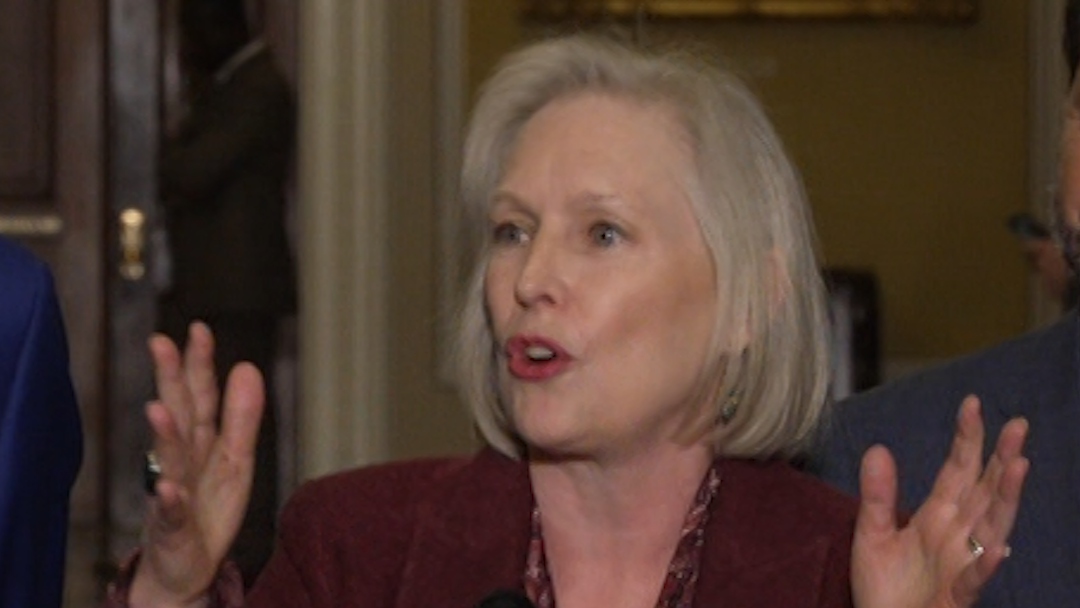
Gillibrand praises Schumer, saying blue wave wasn’t ‘created by magic’
Democratic Sen. Kristen Gillibrand praised Sen. Chuck Schumer’s role in the Democrats’ sweeping victory in the 2026 midterm elections, as some members of the caucus won’t pledge to back him as majority leader.
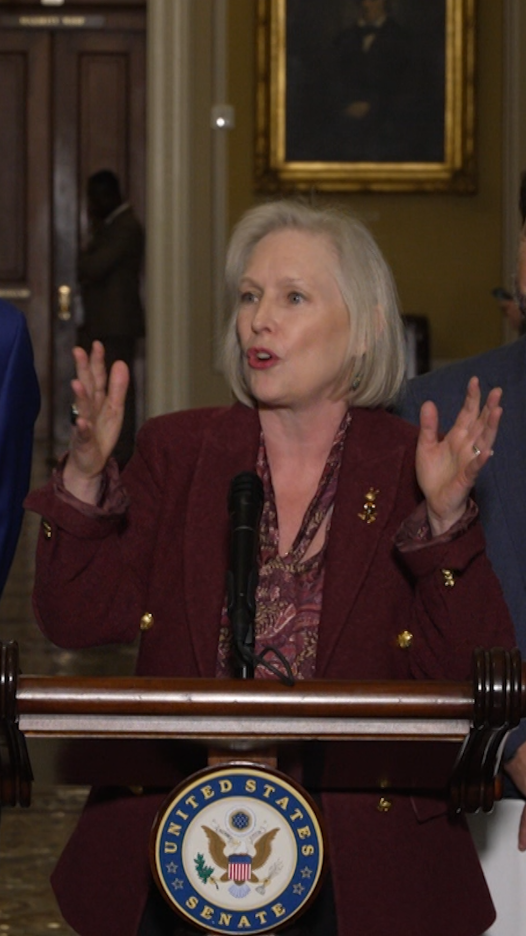
Gillibrand praises Schumer, saying blue wave wasn’t ‘created by magic’
1:39
Senate Majority PAC, the outside spending group affiliated with Schumer, kept an eye on the race for months, intrigued by how Colom was popping on social media and the way that Hyde-Smith kept making mistakes. It wasn’t until Labor Day, when polling gave way to a larger sense that other once competitive Senate seats were becoming safe bets, that calls started going out to donors and partner groups, encouraging them to move in Mississippi, however wacky a prospect they believed it to be.
“This was constantly one of those where we didn’t want to get our hopes up— but he was running a really good campaign,” said Lauren French, Senate Majority PAC’s communications director.
By October, Warnock and New Jersey Sen. Cory Booker both made trips to campaign in the state, as did the Senate’s other Black Democratic senators.
In the final stretch, as Obama cut an ad for Colom, other Democrats started to pay attention. With some urging to do an end run around consultants who worried about nationalizing the race, Harris called Colom to offer to come campaign, and he accepted.
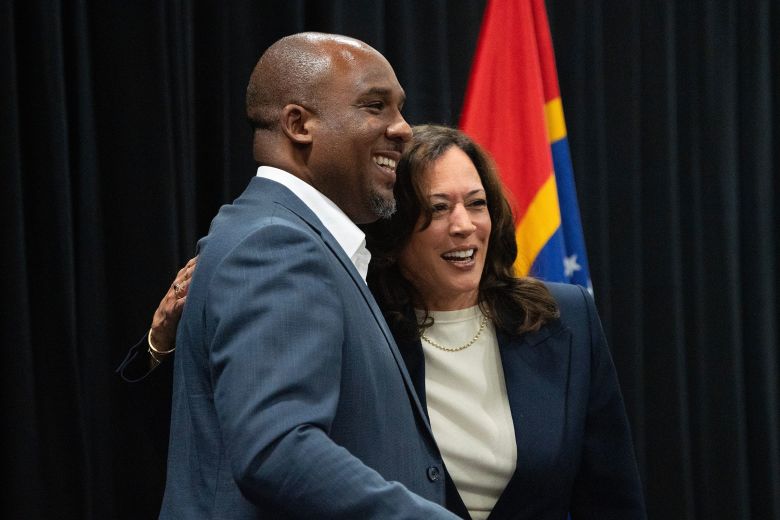
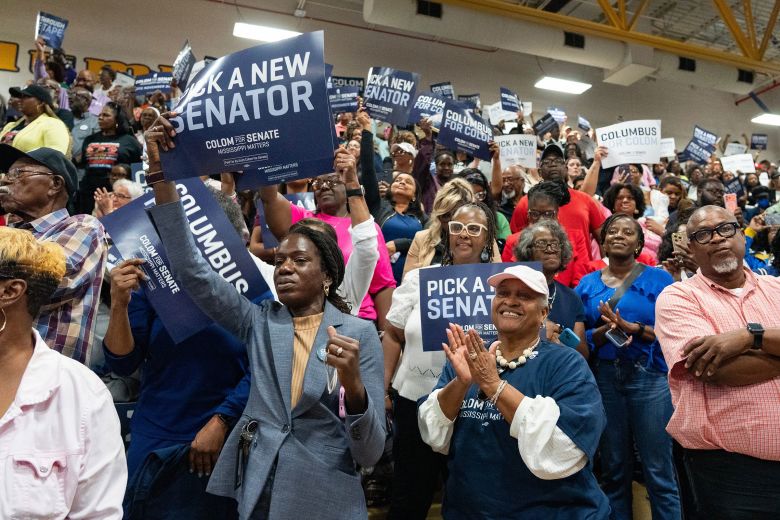
“We gotta fight,” Harris told CNN backstage at Columbus, about why she wanted to come. Noting that Trump announced his trip after hers, she joked, “You’re welcome.”
Former Transportation Secretary Pete Buttigieg soon followed. New York Rep. Alexandria Ocasio-Cortez connected with Colom in early October, and though they had a good conversation, people familiar with the call told CNN that a combination of her campaign schedule taking her elsewhere and some concerns about how a joint appearance would play for each of them kept her from coming. The progressive congresswoman did, however, write a $3,500 check to his campaign from her own account — the maximum allowed — and sent a fundraising email for him to raise more.
Then Illinois Gov. JB Pritzker, another potential 2028 presidential candidate who spent tens of millions of his own fortune on behalf of candidates across the country, jumped in with a previously undisclosed $1.4 million on two TV ads and additional $200,000 in calls and texts targeting Black voters, according to a person involved with the placement.
One Pritzker-funded PAC ad showed flies buzzing around cow dung and then around Hyde-Smith, highlighting possibly Hyde-Smith’s most infamous blunder: telling those concerned about the price of beef to “pick another protein.”
Colom himself had pushed for his campaign to turn that comment into one of the most viral ads of the cycle, full of Mississippians expressing disgust and saying they would “pick another senator” instead.
All told, Democrats outspent Republicans in the state $9 million to $3.9 million in the final two weeks, according to AdImpact data.
Behind the scenes, Colom had Patrick Gaspard, the former Obama political director who first met Colom through his criminal justice reform-minded prosecutorial work, advising and helping him make connections since the spring, including with Harris and Ocasio-Cortez.
Gaspard said he’d been thinking about Mississippi himself since Obama got 43% there in 2008 without trying to contest the state, talking about it with players like NAACP president Derrick Johnson, whose interests in the state go back to attending Tougaloo College in Jackson.
But Gaspard said Colom’s relentless campaigning was the core of the success, whether that was watching him work the six people who’d showed up for a cookout event during a summer downpour or the casino workers in Biloxi who took time amid an AR-15 raffle at an employee event to talk with him about Flock cameras, data centers, the price of gas and the corruption they see in the Trump administration.
“There was something he was getting back that made it abundantly clear that something had cracked in the Trump wall,” Gaspard said.
Colom’s team could tell the race was so close in the final days that they put in a plea to the last Southern Democrat in the White House: Bill Clinton.
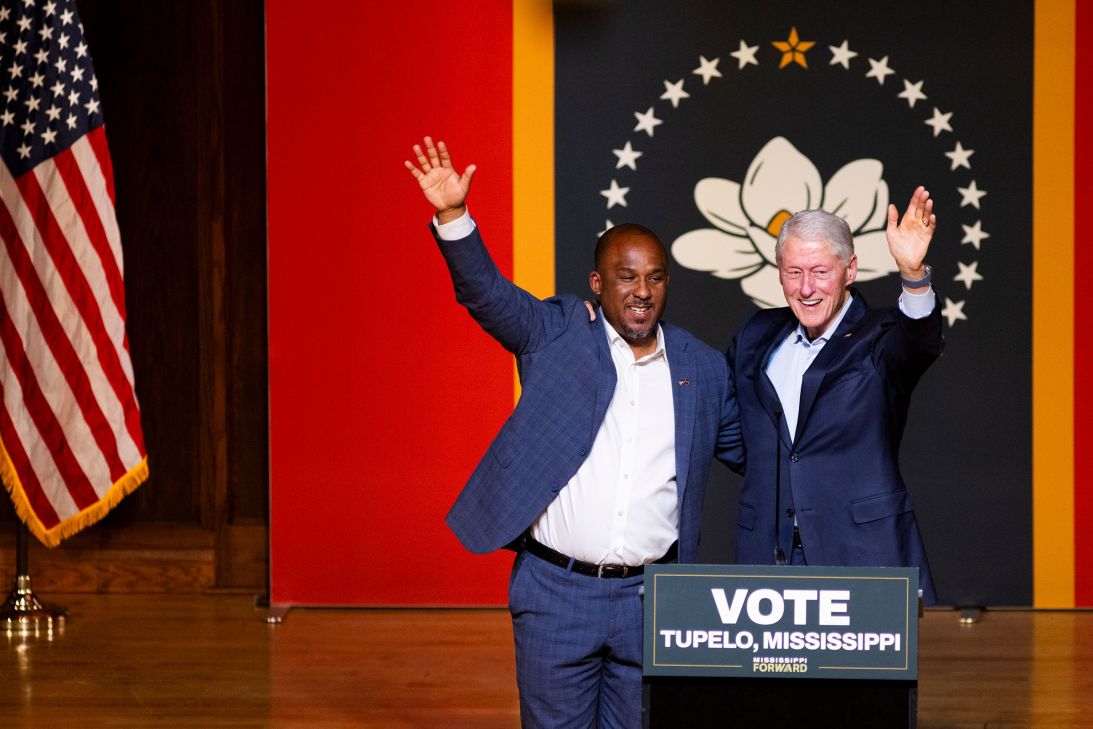
The former president made only one other public campaign stop in these midterms, but he was eager to come for what ended up being a large event, headlining a bill of supporters that included Carville and former New Orleans Mayor Mitch Landrieu.
“A prosecutor knows something Washington needs to learn all over again: saying something that’s wrong louder every day than he did the day before doesn’t magically make it right,” Clinton said, praising Colom for asking practical questions about healthcare and immediate needs.
But Clinton also wanted to talk Hyde-Smith’s “pick another protein.”
“That’s a shopping tip, not a policy,” Clinton said. “People already know they can buy something else. They’ve been doing a lot of that lately. They put things back at the grocery store to make ends meets. I have a higher opinion of the intelligence of her electorate than she does, and I don’t believe we need a senator to explain the existence of chicken.”
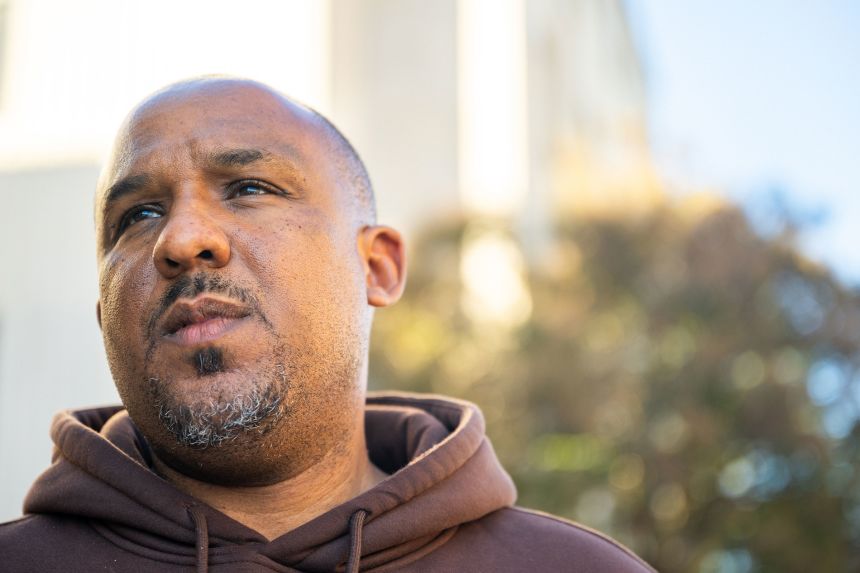
Coming out of election night, Colom’s campaign tracked him doing exactly what they’d needed in their model. The feeling was less “I told you so” than exuberant disbelief that they’d pulled it off.
As supporters wait for the final count to show whether the math bore out, Mississippi Democrats are already calling this an earthquake, with Presley going so far as to tell CNN “this changes the political dynamics in Mississippi for the next 50-75 years.”
Several voters at the Columbus rally with Harris told CNN that this was the first time they were feeling like their votes mattered.
“It’s time for Mississippi to make history,” said Jeffrey Robinson, a 56-year-old retired plumber who’s the second vice president of the NAACP at Noxubee County and one of the most exuberant members of the crowd for the Harris rally in Columbus. “It’s time for Mississippi to go across that finish line.”
More Democrats are going to run for local offices, Presley predicted, and more will win — though he demurred on whether that would include a repeat run for governor or another office of his own.
Waiting through the counting, Colom has remained sure that he’ll win, though not without privately voicing his annoyance at those he sees as jumping on the bandwagon after doubting he could do it — and even taking some shots publicly at the Cook Political Report.
“He felt like people who didn’t see it,” said Margie Omero, a pollster who worked on his campaign, “just didn’t have all the facts.”
Asked for his own thoughts about the arc from that first phone call he made to this point, Carville was at a very rare loss for words.
“Too emotional to think about,” Carville told CNN on Tuesday evening. “This is remarkable.”