
In mid-October, about a week before the election, Prime Minister Benjamin Netanyahu held a campaign event where he presented his new “national security concept,” which he formulated after the October 7 massacre. The main threat to Israel was and remains nuclear weapons, he said; but immediately after that, “perhaps surprisingly,” is the danger of drones.
Drones enable anybody to perform attacks, he explained; using them, “the enemy can concentrate fire on weak points: on our radar systems, communication and command and control centers, and leaders.” Using drones launched from Ramallah, Ramat Gan or Romema – a neighborhood in Jerusalem, the enemy could deliver a focused strike on Israel’s top leadership, he said. “
Here, Netanyahu wanted not only to be the first to identify the threat but also the first to be protected against it. About a week ago, just days after the campaign event, Haaretz journalist Uri Misgav revealed photographs indicating that nets apparently designed for drone defense have already been deployed around the prime minister’s private houses in Jerusalem and Caesarea.
 Close
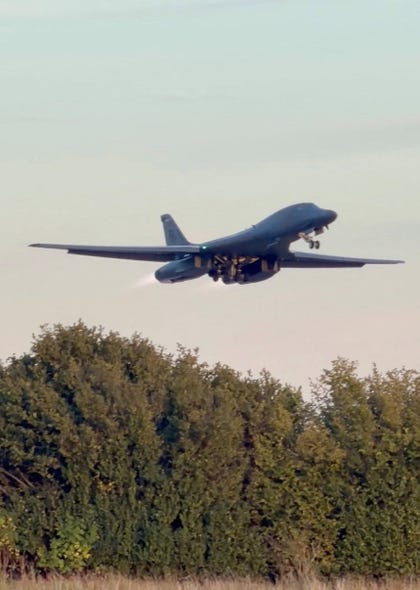
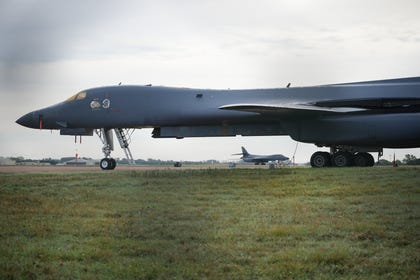
Last month, fear of an Iranian drone attack led the U.S. to urgently evacuate bombers stationed at Fairford in the U.K. (in the photo: a B1 bomber at RAF Fairford in September). Credit: AP Photo/Alastair Grant
Last month, fear of an Iranian drone attack led the U.S. to urgently evacuate bombers stationed at Fairford in the U.K. (in the photo: a B1 bomber at RAF Fairford in September). Credit: AP Photo/Alastair Grant
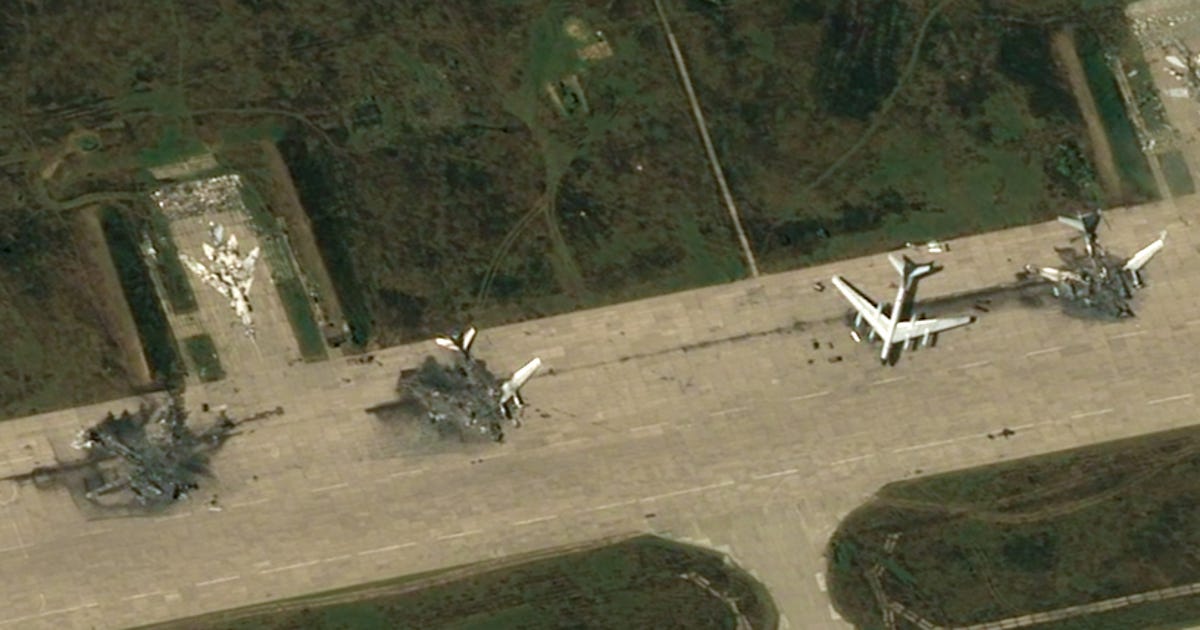
Netanyahu has good reason to focus on the drone threat. Last June, Ukraine stunned Russia and the world with its unprecedented drone activity. In a sophisticated mission dubbed “Operation Spiderweb,” the Ukrainians placed more than 100 explosives-laden quadcopters in strategic points deep inside Russia. The drones were hidden inside cargo containers that were transported by trucks with Russian drivers to areas near airfields. Upon reaching their destinations, Ukrainian operators remotely opened the container roofs and launched the drones.
They severely damaged more than 40 Russian strategic bombers, several of which were completely destroyed.
Less than two weeks later, Israel used similar methods against Iran, in an attack that launched Operations Roaring Lion and Epic Fury. According to reports, including in The Wall Street Journal, in the months leading up to the operation, Israel smuggled components for dozens of explosive small FPV drones into Iran, and at the chosen time, they were assembled and launched at aerial defense and ballistic missile batteries.
Related ArticlesHaaretz Podcast | ‘Unprecedented and risky’: Eisenkot’s big gamble to oust Netanyahu
The details and lessons of these operations are being studied worldwide, and likely an attempt by Israel’s enemies to replicate the success against it is only a matter of time. Last month, fear of an Iranian drone attack led the U.S. to urgently evacuate bombers stationed at Fairford in the U.K. The need to evacuate the strategic bombers, which had attacked deep inside Iran throughout the war, was deemed so urgent that some took off even before aerial refueling aircraft had been allocated for their return flight to the U.S.
Is Israel prepared for a similar scenario, where swarms of drones are launched in a surprise attack at strategic targets from within its borders?
Not at this stage, according to conversations Haaretz held with experts in the field, professional pilots and senior officials in civilian and security bodies. The country is littered with potential targets. One is Ben-Gurion International Airport, which is also where American aircraft refuel.
According to freely available satellite images, many jets at air force bases are exposed, not parked in protected structures. Though one source with which we talked pondered why focus on worrying about air bases: There’s no need to replicate previous operations. “One could surprise and attack emergency storage units, for example,” the source said. In fact the list of potential targets is long, including government buildings, power plants, crowded stadiums and more.
Air force for the poor
In many ways, drones are the antithesis of nuclear weapons. They are cheap and highly accessible, capable of precisely hitting a specific target. The war in Ukraine showcases how drones and other autonomous vehicle are changing the modern battlefield.
Since ISIS first began using quadcopters in Iraq and Syria, these drones have given small, poorly funded military units, as well as terrorist and guerrilla forces, capabilities that were once beyond their reach. They also provide real-time intelligence and can even carry out aerial bombing missions. They’re like a poor man’s air force.
The military applications of drones ramped up when armed First-Person View (FPV) racing drones entered the battlefield in Ukraine. These types of drones have particularly impressive maneuverability and acceleration and are flown using goggles that show the operator the field of action as seen through the drone’s camera.
A Hezbollah fiber optic drone attacking IDF soldiers in southern Lebanon
The implication is far-reaching: A drone that can be assembled independently for a few hundred dollars is capable of carrying out precise attacks that previously required guided missiles costing tens of thousands of dollars per unit, or more.
In the past year, Iran used these drones to attack targets at U.S. Army bases in Iraq and Kuwait.
Alongside the growing use of drones on the battlefield, detection and interception systems have also developed rapidly. However, most of those were adapted for the original drones, which were remotely operated; interception was carried out by disrupting communication between operators and drones using electronic warfare. Furthermore, these systems are mainly effective for protecting specific targets, such as strategic facilities, prisons, bases, and maneuvering forces.
In response, drone operators began using alternative communication methods, primarily flying via fiber optics, which is immune to jamming. Hezbollah used such drones in the last round of fighting in Lebanon, and they claimed the lives of 13 IDF soldiers and wounded dozens.
Simultaneously, other drones appeared on the ground, equipped with SIM cards and remotely controlled via cellular communication. These drones – which the Ukrainians used in the “Spiderweb” operation – can indeed be jammed, but in a way that could also disrupt other communication systems in the area.
To jam or intercept hostile drones, first one has to identify them. This requires a combination of several types of sensors – radars, optical systems, and listening systems.
Watch: Footage released by Ukrainian intelligence showing drone strikes during Operation Spiderweb:
According to experts, deploying and continuously operating such defenses could cost tens or even hundreds of millions of dollars. Interception can be carried out using personal weapons equipped with smart sights – for example, Smart Shooter, shotguns that fire buckshot or birdshot rounds which spread over larger areas, machine gun-armed sensor guided turrets, or laser systems – or by other solutions, including launching nets or interception drones. When it comes to drones on the battlefield, experts emphasize that alongside technology, solutions from the realm of soldiering are also required – meaning awareness and understanding of the danger, and appropriate training (including camouflage, use of nets, and other means).
Holes in the net
Conversations Haaretz held with senior IDF officials, the Civil Aviation Authority and defense-tech industry experts suggest that intensive efforts are being made to deal with the drone threat. But it is clear that despite repeated warnings over a decade (the state comptroller published a report on national preparedness for drone threats in 2017), many gaps in defense have yet to be closed – on the technological, operational, and regulatory fronts.
The IDF admits that only recently have control units been deployed along all borders, responsible for managing and monitoring low-altitud airspace, disseminating intelligence, and defending against threats in the low-altitude domain – i.e., drones, unmanned aerial vehicles and other low-flying craft. Talking with Haaretz, an official in a relevant IDF unit said the military believes that expanding deployment will improve both threat detection and interception capabilities.
However, other sources emphasize that improving border defense will not be enough in a “Spiderweb” scenario – meaning a surprise attack by drone swarms from within the country. Israel has no real solution against that. The only complete solution is preventive – intelligence that would allow such an attack to be thwarted in the planning stage.
 Close
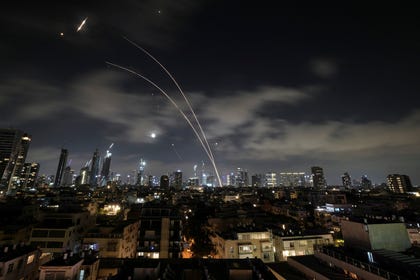
Israeli air defense system fires to intercept missiles during an Iranian attack over Tel Aviv, Israel, early Wednesday, June 18, 2025. Credit: Leo Correa,AP
Israeli air defense system fires to intercept missiles during an Iranian attack over Tel Aviv, Israel, early Wednesday, June 18, 2025. Credit: Leo Correa,AP
Actually it isn’t possible to deploy a full defensive blanket with a variety of detection, defense, and interception means over the entire country, nor over all strategic facilities within its borders. This would involve multi-layered defense: sensors capable of detecting fiber-optic and SIM-card drones, as well as interception means – i.e., physically hitting each drone – alongside passive defense of all sensitive systems and facilities in underground bunkers or with nets. To drive home the point, a study by the U.S. Congressional Budget Office found that to provide multi-layered defense for a single base with an area of approximately 13 square kilometers would cost initial investment of approximately $72 million and an annual budget of $5 million.
Before detection and interception, there’s another problem: drones are also civilian tools used in a host of leisure and professional activities. To distinguish between innocent and hostile drones, the air control system has to identify all legal drones and provide a “sky picture” to all relevant bodies.
An initial attempt to establish such a system was made following the October 7 attack, which involved Hamas using drones. The Knesset approved emergency regulations requiring drone operators to install transmitters for remote identification, but the regulations were not enforced and have since expired.
 Haaretz national security
In the last three months, the Civil Aviation Authority and the defense establishment have tried to revive the initiative and establish a new civilian authority for the low-altitude domain, which would be subordinate to the Transportation Ministry and manage a control system that complements the security control system.
As an interim measure, last month Defense Minister Israel Katz signed an order prohibiting the flying of drones controlled by fiber optics or cellular communication (SIM) in Israeli airspace for six months.
“The decision was made against the backdrop of concrete intelligence and increasing threats from our enemies, both internal and external, including drone attacks, attempts to harm senior officials, the use of drones by criminals and crime families, intelligence gathering, and smuggling,” Katz stated.
The purpose of the prohibition is to stop drones that cannot be easily identified and intercepted by existing electronic warfare means from flying. However, until infrastructure is built to monitor the skies and identify all authorized drones, it is doubtful whether such a prohibition can be enforced.