
After a fourth straight loss that sunk the Toronto Maple Leafs’ playoff chances close to just 10 percent, coach Jim Hiller delivered a dose of copium that probably doesn’t sit right with a lot of Leafs fans right now.
“We played a lot of good hockey this year,” he said after Tuesday’s 6-3 loss to the Avalanche. “Our results suck. You can write those stories, there’s no question and we deserve that but we’ve played some good hockey at times. I thought tonight was another night where, for a large part of the game, we played some really good hockey.”
No one wants to hear that when the Leafs are on pace for just 76 points, but here’s the thing: Hiller is correct. Despite an aggressive rash of key injuries, Toronto’s underlying process has improved a lot over the last three weeks as the team has meshed and settled.
If the new Leafs regime wants a return to focusing on process, how they lose does matter — even if it’s just a pyrrhic victory. It may have been the fourth straight loss, but it’s also the fifth straight game that the Leafs have been the better group of skaters at five-on-five, winning the xG battle each time.
Top Plays from Avalanche @ Maple Leafs
That’s no small feat for two reasons. First, they did it against Utah (58.8 percent xG this season), Montreal (52.1 percent), New Jersey (54.4 percent) and Colorado (54.4 percent). And second, it’s a feat the Leafs didn’t manage once during Craig Berube’s entire tenure as coach.
It’s a major step up from the first segment of the season where the Leafs had a meagre 42 percent xG which ranked 29th in the league. Over the last three weeks, that’s up to 53.5 percent, the eighth-best mark in the league.
A big chunk of that stems from the Leafs chasing a lot of hockey during that time; there’s no denying that. They’ve been only okay when the game is tied and that probably speaks to their true talent as a likely mid team. But even being “barely okay” when tied against a difficult schedule says a lot about the improvement of the team’s underlying process. That they’ve been elite while trailing and strong while leading is also a big deal. Adjust for score state, and the Leafs are showing the underlying improvements many hoped for against teams that matter. The flashes that were there early in the season have manifested into consistently stronger overall showings.
That’s been felt most on defence. There have been plenty of mistakes and blunders, but over this latest stretch, the Leafs rank seventh in xGA/60 (2.31 per 60) and Grade A chances against (4.8 per 60). Last season, those numbers were 2.83 and 5.8, respectively.
Across the board, the Leafs have made strides in almost every defensive category to get there. They recover more dump-ins to exit and have more successful dump-outs. They’re denying more entries and blocking more passes. They’ve significantly reduced chances off the rush and in-zone. The only thing that hasn’t really changed are the mental mistakes that have led to a lot of failed touches and turnovers in their own zone. Even with that, Toronto’s overall defensive process has still been fairly sound.
So where’s the disconnect between process and results? In net.
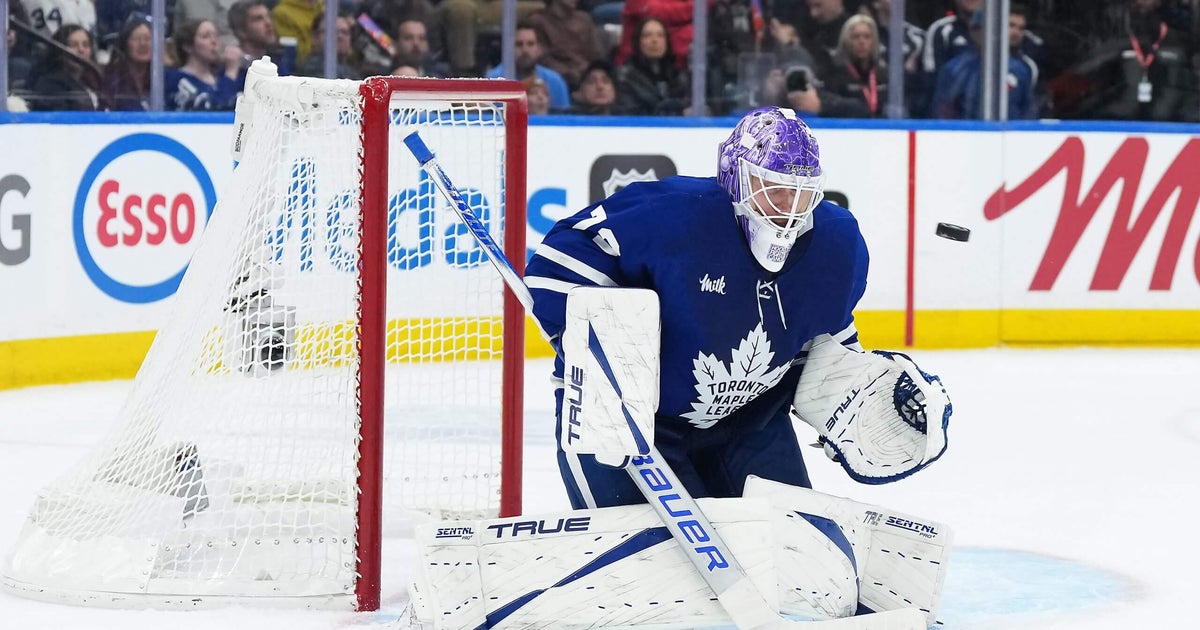
Toronto’s biggest bet this offseason has been, predictably, its biggest bust. Sergei Bobrovsky has been nowhere close to good enough. For the season, his GSAx is minus-9.6 at five-on-five, nearly three goals worse than Kevin Lankinen, the next worst goalie, and nearly five goals worse than Jordan Binnington in third. It’s bleak.
A lot of that has specifically come over the last three weeks, where Bobrovsky has allowed 7.2 goals above expected at five-on-five. That’s a little over one per game. Essentially, a Bobrovsky game has meant the Leafs start every game down 1-0.
A lot of people will look at the goals Bobrovsky allowed and say he had no chance because of what the Leafs gave up. And it’s true, he has had to face some tough chances against. But sorry, that’s not how this works — so does almost every other goalie. Goalies are expected to make saves and even a great scoring chance won’t have a 100 percent chance of going in. The emotion that comes with a goal allowed often clouds the actual probability of that puck going in.
Against Colorado, Bobrovsky faced seven Grade A chances totaling 1.82 expected goals; you’d expect Bobrovsky to allow two goals on those chances and be fine with it. It was the most Grade A chances allowed over the last three weeks. Still, Bobrovsky allowed four goals, 2.2 more than expected. Make a save, or that’s the ball game.
Over this stretch (where Bobrovsky has also allowed his fair share of bad goals from the outside), Bobrovsky has faced 23 Grade A chances at five-on-five where he was expected to allow 5.4 goals against, good for an expected save percentage of 0.763. Actual retail price: Nine goals allowed with a save percentage of 0.609.
A good goalie will make more saves than he’s expected to. An average goalie will take what’s given to him. Bobrovsky is doing neither despite being paid big money to do exactly that — and the goals have often been extremely deflating, too. That’s obfuscated what has otherwise been a strong rising trend for the rest of the team.
The Leafs are playing a lot better than the scores indicate right now. But they’re getting exactly what they deserve because of who they’re putting in net. The losses piling up aren’t all on Bobrovsky, but right now he’s at the top of the list of problems.
Stock Watch
The biggest changes in projected value over the last 10 games.
Risers
Jack Roslovic
Net Rating: up 2.0
The Leafs made a lot of moves this offseason; signing Jack Roslovic has been the best of them by a long shot. He’s playing point-per-game hockey on the top line and has looked like a legitimate driver there with his transition and passing ability. After the past 10 games, he now grades out as a legitimate top-six piece. Roslovic’s chemistry with Auston Matthews, in particular, has been special.
Whether he can maintain this level, though, is the big question. Roslovic has a bit of a reputation for looking incredible for short stretches before disappearing for a majority of the season. With how thin the rest of the forward group feels most nights, the Leafs can’t afford something similar happening. For now, it’s cautious optimism that Roslovic has found the right fit in Toronto where he can consistently be at his best.
Easton Cowan
Net Rating: up 1.8
Easton Cowan’s stock continues to rise as he’s cemented a spot on the top line next to Matthews. That line has consistently been Toronto’s best and Cowan’s ability to enter the zone with control has been a major boost there. Despite not having a spot on the top power play, Cowan has 16 points in 20 games, a 67-point pace. There isn’t a lot that’s gone right this season, but Cowan emerging as a top-six calibre player has been a bright spot.
Fallers
William Nylander
Net Rating: down 2.0
Everyone loves Willy, but when it gets ugly, it gets ugly. While Nylander has never been a strong defensive player, his off-puck game is off to new lows this season, leading to him being heavily out-chanced and outscored all year. His projected Defensive Rating now sits at minus-2.8; only rookie Gavin McKenna is worse up front.
It’s not just defence, though. There’s been noticeably less pop off the rush compared to last year, when Nylander had 12.9 controlled entries per 60 generating 3.5 scoring chances off them. Over the last 10, that’s down to 10 and 1.8, respectively.
Jake McCabe
Net Rating: down 1.6
It’s been a tough go of late for what is usually Toronto’s sturdiest defenceman. Jake McCabe is tasked with the toughest assignments for the Leafs, but has become a burden this season with his inability to win those minutes. His work over this last stretch hasn’t improved and that’s degraded his projected value down to No. 4 territory. Essentially, he’s way overextended in his current role.
Stars and Scrubs
The top and bottom three Leafs over the last 10 games, relative to expectations.
Stars
Troy Stecher
Net Rating: +1.5
When Troy Stecher was claimed off waivers last season, he immediately had a stretch where he looked like a legit top-four defender. He can’t sustain that level all the time and struggled out of the gate this season, but this latest stretch has had him looking close to the way he did when he arrived in Toronto last season. No Leaf outscored opponents more than Stecher and his 53 percent xG rate made him one of the few defencemen in the positive column.
Morgan Rielly
Net Rating: +1.6
It’s a shame that Morgan Rielly went down with an injury because he was playing some of his best hockey in years. He was putting up points at even strength and tilting the ice heavily thanks to a considerably cleaned-up puck-moving game.
One of Toronto’s biggest weaknesses last season was exiting the zone after recovering a dump-in; Rielly was one of the team’s weaker options with a 71.3 percent success rate. This year it’s been a shocking source of strength and it’s Rielly leading the charge with an 82.4 percent success rate. That ranks fifth in the league among defencemen (Darren Raddysh ranks 10th and has also been a big boost in this regard as well). Night and day.
Jack Roslovic
Net Rating: +1.9
Despite missing a game, Roslovic was Toronto’s leading scorer over the last stretch with 11 points in eight games. While his projected value has bumped up to second liner, his full season value has been top-line calibre. He’s somehow on an 88-point pace!
Scrubs
Sergei Bobrovsky
GSAx: -7.5
Not even his work on the penalty kill can save Bobrovsky’s numbers over the last three weeks. That’s what carried him over the season’s first segment, where his five-on-five work was below average, but even that’s regressed back to normal since.
William Nylander
Net Rating: -0.8
Hiller has called out Nylander a few times over this last stretch and it’s not difficult to see why, despite being one of the team’s leading scorers. Defensively, he’s been a mess. His 3.09 xGA/60 is one of the worst marks on the team and he’s not generating nearly enough the other way to make up for it.
John Tavares
Net Rating: -1.3
Chris Tanev
Net Rating: -1.1
We’re going to group the band-aid boys together here. John Tavares only played three games during this last stretch while Chris Tanev only played four. That didn’t stop either from creating a massively negative impact when they did play, with both sporting an xG in the mid-30s while getting badly outscored. It’s worth noting Sportlogiq’s xG model is significantly kinder to both (and the team as a whole, for that matter), but it’s still clear that neither player is making the impact expected of them.

Quick Questions
A look at where the Leafs are and where they’re going.
Are the Leafs better than they were 10 games ago?
Change in Offensive Rating: -1.3
Change in Defensive Rating: -3.8
Change in Net Rating: -5.1
The big shift here is the team’s Defensive Rating and much of it is between the pipes (the xGA shift above is from the Sportlogiq xG model, which I haven’t incorporated into my own yet). Toronto’s skater group isn’t exactly good, but it’s being dragged down heavily by what the model now considers the league’s 29th-worst goaltending duo. Much of that is deflated by the expectation that Bobrovsky gets a majority of the starts — something that needs to change quickly if the Leafs want to get this season back on track.
Where do the Leafs stand in the Atlantic?
Chances of making the playoffs: 12 percent
Most likely landing spot: 7th
It’s getting late early. The Leafs are now projected to earn just 85 points this season in a division where the fifth-best team has a projection of 101. Things would be different in the Pacific, sure, but the Leafs don’t live there. The process may be improving, but unless the results quickly shift to an elite level, the Leafs are very likely to land outside of the playoff picture.
Are the Leafs actually good?
Chances of 100 points or more: 8 percent
League-wide ranking: 20th in Net Rating, 24th in projected points
I don’t think the Leafs are as bad as their record. When healthy, I don’t think they’re as bad as their projected Net Rating either. But The Leafs Are Actually Mid isn’t exactly a ringing endorsement. And with the way things are going right now, Toronto has a lot to prove to even get there. As rosy as the underlying process has seemingly looked over the last nine, as mentioned at the top, the Leafs need to show that for a lot longer than a nine-game stretch where they’ve mostly been trailing.
Data via Sportlogiq, Evolving Hockey, Hockey Stats, and Hockey Stat Cards