
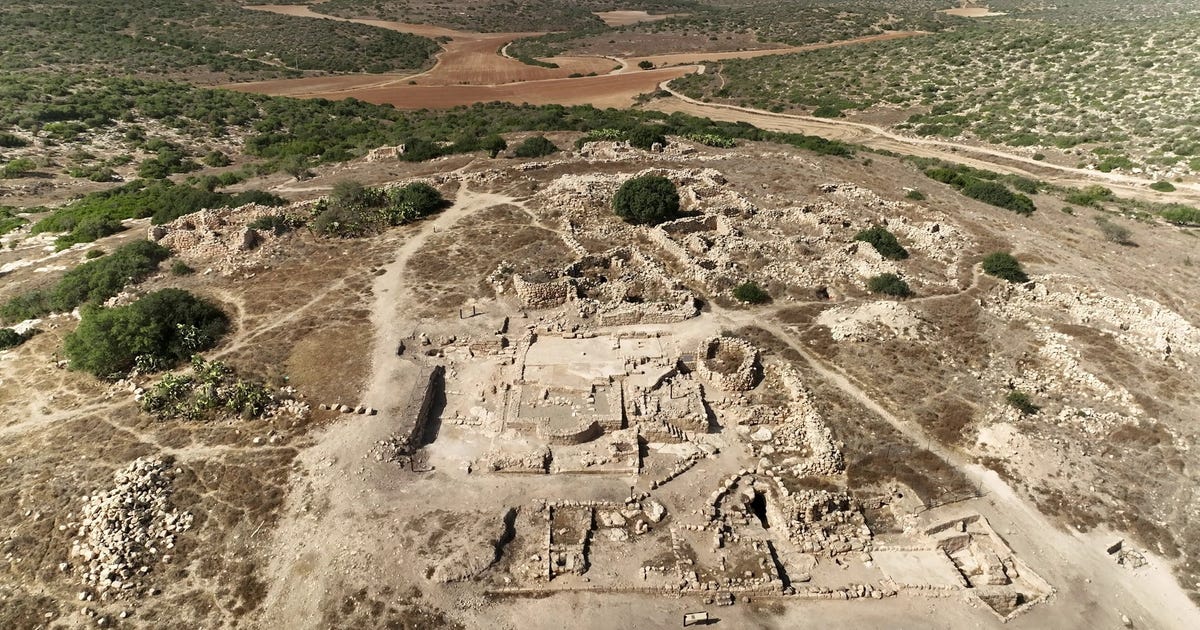
A complex of tunnels Jews carved out of the bedrock during rebellions against the Romans over 2,000 years ago and a later Byzantine church have been opened to the public at the Horbat Burgin archaeological site, the Israel Antiquities Authority said Thursday.

The complex features early Christian mosaics and the close tunnels that visitors can crawl through to test their claustrophobia and identify with the terrified Jews.
During the Second Temple period, there had been a village at what is today Horbat Burgin, a bucolic spot in the Judean foothills southwest of Jerusalem. It may have been the largest village in the region, with as many as 3,000 to 4,000 people, says Amir Ganor of the Israel Antiquities Authority, who is also the site’s excavator and director of the Antiquities Theft Prevention Unit.
 Close
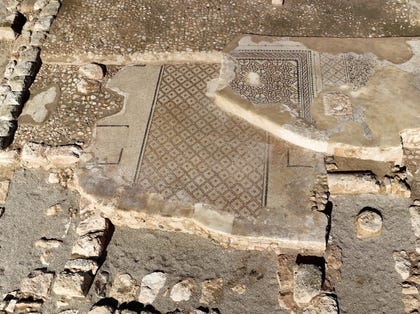
An ancient mosaic at the site. Credit: Emil Aladjem/Israel Antiquities Authority
An ancient mosaic at the site. Credit: Emil Aladjem/Israel Antiquities Authority
But the times were turbulent and beneath the houses of the people, who were driven by fear inspired by the wars, the Jews carved tunnels out of the bedrock to hide in, both during the first and second rebellions against the Romans.
Related Articles
Note that hiding from the Romans in artificial tunnels was common. Archaeologists have reported more than 350 subterranean complexes in at least 135 Second Temple sites in Israel, including in the Galilee and the West Bank. Most date to the disastrous Bar Kochba Revolt between 132 and 136 C.E., but some were dug during the First Jewish-Roman War that started in 66 C.E.
 Close
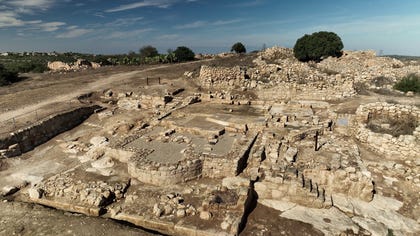
The Jews carved tunnels to hide in both during the first and second rebellions against the Romans. Credit: Emil Aladjem/Israel Antiquities Authority
The Jews carved tunnels to hide in both during the first and second rebellions against the Romans. Credit: Emil Aladjem/Israel Antiquities Authority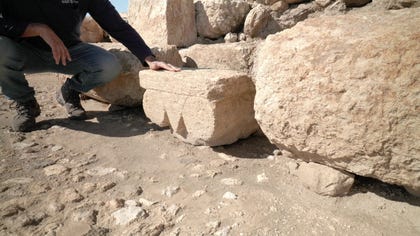 Close
An artifact at the site. Credit: Emil Aladjem/Israel Antiquities Authority
An artifact at the site. Credit: Emil Aladjem/Israel Antiquities Authority
Burgin has it all, say Ganor, Alon Klein and Peter Gendelman of the antiquities authority.
But the Bar Kochba Revolt ended the story of the Jewish village. It was destroyed by the angry Romans and a new one was built there by Roman soldiers who had completed their service but decided to stay rather than return to Europe. Beneath their new village, the people buried their dead in catacombs that were also carved out of the rock.
Haaretz Podcast | Washington Post’s Heidi Levine on the settler attack that nearly killed her
This ruin, now renovated in part, may have been a village written about by the Roman-Jewish historian Josephus, in a context that makes the tunneling all the more understandable. The Roman commander Sextus Vettulenus Cerialis was sent by Emperor Vespasian to stamp out remaining rebel strongholds around Jerusalem.
 Close
The Romans destroyed the village, which was rebuilt by Roman soldiers who had completed their service but decided to stay rather than return to Europe. Credit: Emil Aladjem/Israel Antiquities Authority
The Romans destroyed the village, which was rebuilt by Roman soldiers who had completed their service but decided to stay rather than return to Europe. Credit: Emil Aladjem/Israel Antiquities Authority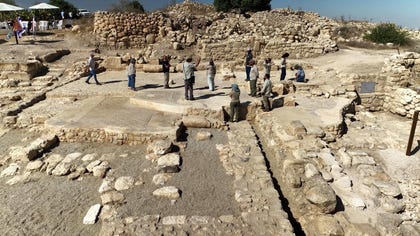 Close
Ultimately, the village wound down and disappeared in the Ottoman era, experts at the Israel Antiquities Authority say. Credit: Emil Aladjem/Israel Antiquities Authority
Ultimately, the village wound down and disappeared in the Ottoman era, experts at the Israel Antiquities Authority say. Credit: Emil Aladjem/Israel Antiquities Authority
“Cerealis … laid waste that part of Idumea which was called the upper Idumea: and attacked Caphethra, which pretended to be a small city, and took it at the first onset, and burnt it down. He also attacked Capbarabim [thought to be the village in question] and laid siege to it; for it had a very strong wall,” Josephus wrote in Book IV, Chapter 9 of “The Jewish War.”
“And when he expected to spend a long time in that siege, those that were within opened their gates on the sudden, and came to beg pardon, and surrendered themselves up to him.”
A few hundred years later, in the Byzantine era, a church and a monastery arose at the site, decorated with mosaics, as was the Byzantines’ wont. They also erected cotes for pigeons, and winepresses.
Plausibly the villagers grew vines that they fertilized with dove droppings, as was done throughout the Byzantine Negev, and made a living by selling wine.
Ultimately, the village wound down and disappeared in the Ottoman era, Ganor, Klein and Gendelman say, based on excavation. Not that the place was ignored forever more.
“For years, the site suffered from intensive antiquities looting,” Ganor says. “Looters broke into burial caves and underground hiding systems and damaged buildings aboveground.”
At least some of the robbers were caught, and now, after conservation work, the site and its tunnels can be enjoyed by the public.