
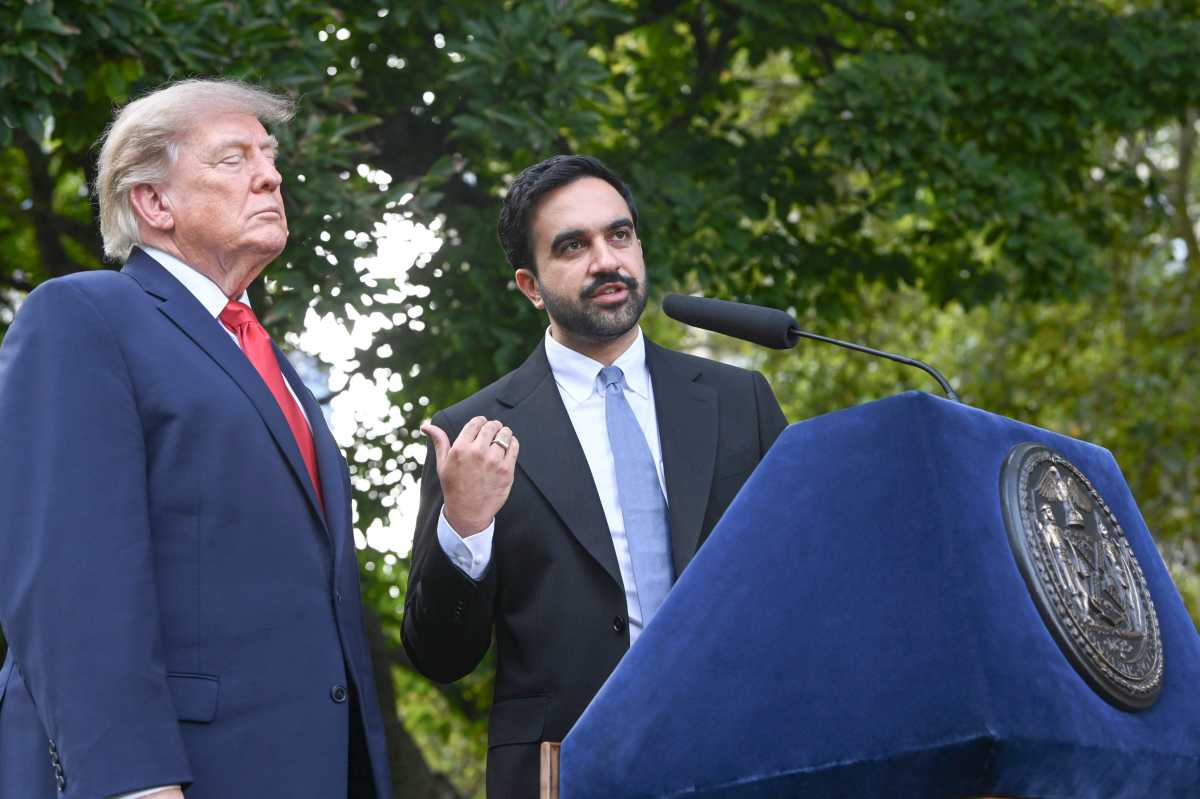
Mayor Zohran Mamdani announced Friday that he had struck a deal directly with President Donald Trump to delay enforcement of new federal food-stocking requirements for small retailers nationwide, securing a reprieve of at least 90 days for thousands of New York City bodegas that risked losing their ability to accept food stamps.
The agreement, which City Hall said was reached through negotiations with the president, comes less than two weeks after Mamdani urged the U.S. Department of Agriculture (USDA) to postpone the new requirements for six months, warning that neighborhood stores had not been given enough time to comply.
The USDA had previously declined to postpone the Nov. 4 effective date, telling amNewYork on Nov. 3 that the rules would proceed as scheduled.
Now, according to City Hall, the Trump administration has agreed to delay enforcement for “at least” 90 days, extending the relief beyond the five boroughs to small retailers across the country.
“I am grateful that President Trump has agreed to delay beginning enforcement of this rule, and we will continue fighting to protect our neighborhood businesses and the New Yorkers who depend on them,” Mamdani said in a statement Friday.
The mayor said the agreement followed concerns raised by bodega owners who feared they could lose a significant source of revenue if they were unable to meet the federal requirements.
“When hundreds of bodegas came to our administration asking for help, we stood with them,” Mamdani said. “These neighborhood businesses are the backbone of our small business economy and an essential source of affordable food for more than one million New Yorkers – and 36 million Americans – who rely on SNAP.”
The agreement does not eliminate the new requirements, which are intended to increase access to nutritious food for recipients of the Supplemental Nutrition Assistance Program, or SNAP. Instead, it gives smaller retailers additional time to adjust their inventories and meet the federal standards.
The White House confirmed later Friday afternoon that retailers accepting SNAP would receive an additional 90 days to comply with the new stocking requirements.
“President Trump is always willing to work with those interested in helping their business community,” White House spokeswoman Allison Schuster told amNewYork. “This action offers retailers accepting SNAP 90 additional days to comply with staple food stocking requirements, making sure families have access to more dairy, fruits, vegetables, grains, and protein.”
The USDA was also contacted for additional details about how the extension would be implemented, including its effect on retailer authorization and reauthorization reviews.
Speaking at a City Hall press conference Friday, Mamdani said the extension would begin immediately and last “at least 90 days.”
He confirmed that he had personally spoken with both Trump and Agriculture Secretary Brooke Rollins, saying he escalated the issue to the president because the city was running out of time.
Asked whether Trump needed convincing, Mamdani said he explained how the requirements could threaten neighborhood businesses and the New Yorkers who rely on them. “And the president took that concern seriously, and he agreed to extend this by at least 90 days,” Mamdani said.
What new SNAP rules mean for bodegas and buyers
Under the rules finalized by USDA in May, most SNAP-authorized retailers must stock at least seven varieties of food in each of four categories: dairy, grains, protein, and fruits and vegetables. That is up from three varieties per category under the previous requirements.
Stores must also carry perishable foods in at least three of those categories, up from two, and keep at least three units of each qualifying variety in stock, for a minimum of 84 items.
Certain products, including butter, jerky, snack bars and fruit spreads, no longer count toward those stocking requirements, although customers can still purchase them using SNAP benefits.
The changes have raised concerns among owners of the city’s more than 10,000 bodegas and corner stores, many of which operate with limited shelf space and refrigeration.
In his Nov. 2 letter to Secretary Rollins, Mamdani argued that USDA had not provided businesses with enough time to prepare. The agency did not release implementation guidance until Sept. 4, followed by a compliance calculator later that month and additional instructions in October.
More than 100 bodega owners had contacted the city with concerns about the requirements, according to City Hall.
Bodega organizations estimate that SNAP purchases account for 15% to 20% of a typical store’s sales, with some Bronx owners reporting figures as high as 30%.
Retailers that fail to meet the standards risk losing their SNAP authorization, meaning they could no longer accept food stamps. Under USDA guidance, stores removed from the program for failing to comply must wait six months before reapplying.
USDA previously defended rules
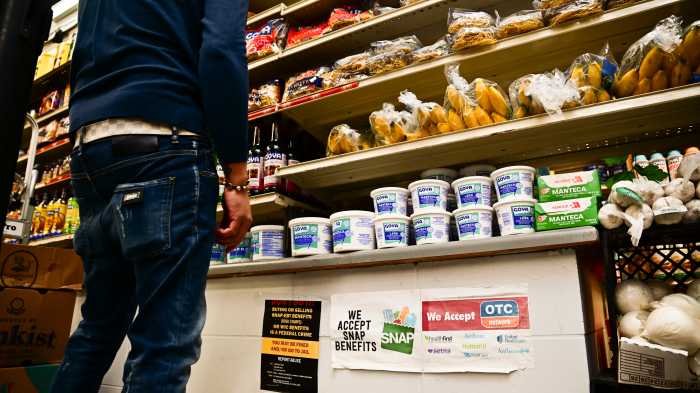 Photo by Lloyd Mitchell
In a Nov. 3 statement to amNewYork, the department defended the new requirements, arguing that Congress had directed USDA to strengthen stocking standards in 2014 and that the changes would provide SNAP recipients with greater access to nutritious foods.
“Secretary Rollins has made it clear that if you want to accept any part of taxpayer-funded SNAP, you should be in the business of selling more real food. Not jelly as a fruit or beef jerky as a meal,” a USDA spokesperson said at the time.
The agency also clarified that retailers would be assessed for compliance when applying for SNAP authorization or renewing their existing authorization, rather than automatically losing their ability to accept benefits when the rules took effect.
Existing retailers are generally reviewed for reauthorization every five years, although USDA can reassess their eligibility at any time.
The mayor’s administration had argued that losing neighborhood SNAP retailers could leave low-income New Yorkers with fewer places to buy groceries, particularly in communities where bodegas outnumber supermarkets.
Approximately 1.6 million New Yorkers receive SNAP benefits, with more than $5 billion distributed annually, according to Mamdani’s earlier letter.
Asked Friday afternoon why he was giving Trump credit for delaying a rule imposed by his own administration, Mamdani defended the decision.
“I will give credit whenever someone takes a decision that makes life easier for working New Yorkers,” he said.
The mayor also described having ongoing conversations with Trump despite their political differences, although he declined to say how frequently they speak.
City to help bodegas prepare
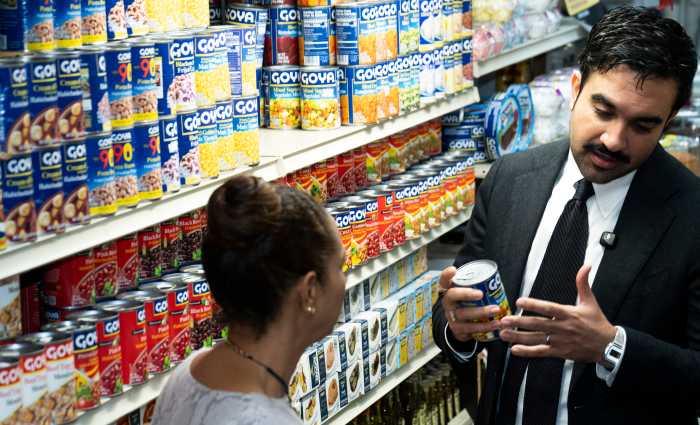 Mayor Zohran Mamdani speaks with workers at La Union grocery store inside Brooklyn’s Moore Street Market on Monday, Nov. 2, 2026, about changes to federal SNAP requirements.Photo by Lloyd Mitchell
With the additional time, City Hall said it would work with USDA’s Food and Nutrition Service, the Department of Small Business Services and the city Department of Health and Mental Hygiene to help store owners meet the requirements.
That effort will include reaching owners in their preferred languages, identifying gaps in their inventories and connecting them with distributors that carry qualifying products.
The agreement comes as the city is also grappling with separate federal SNAP work requirements that have already caused thousands of New Yorkers to lose their benefits. The Mamdani administration says it has assisted more than 220,000 New Yorkers at risk of losing food assistance through a citywide outreach campaign.
Deputy Mayor for Economic Justice Julie Su, who met with bodega owners at City Hall on Oct. 29 alongside the administration’s mom-and-pop czar, Delia Awusi, said many owners wanted to comply with the stocking requirements but lacked the resources and guidance to do so.
“We told them we would fight for them and we meant it,” Su said. “Now this extension gives them a welcome reprieve and time to make these changes.”