

Listen to this article
Estimated 5 minutes
The audio version of this article is generated by AI-based technology. Mispronunciations can occur. We are working with our partners to continually review and improve the results.
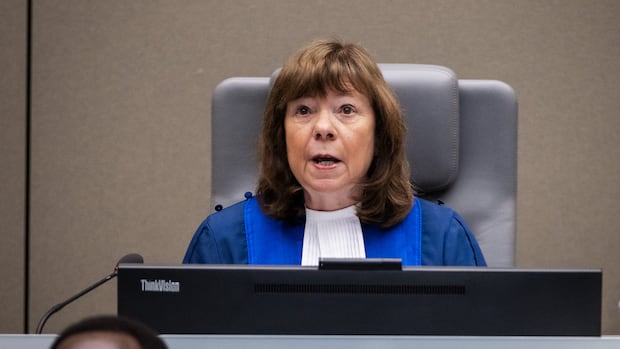
Kimberly Prost began to feel the effects of the U.S. sanctions immediately.
“These economic sanctions are not symbolic in any way,” said Prost, a Canadian judge at the International Criminal Court (ICC), who was sanctioned by the Trump administration last year.
Prost’s credit cards were cancelled and her access to banking services hindered, she said, because of the U.S.’s wide-reaching impact on the global banking system.
“Every time literally I go to make a bank transfer, I hold my breath because I don’t know if it’s going to work,” Prost said in an interview with CBC News.
“To order an Uber, book a hotel, buy a theatre ticket — everything requires some form of credit card, and so you’re sort of struggling to adjust.”
WATCH | ICC Judge’s Amazon Alexa stops responding: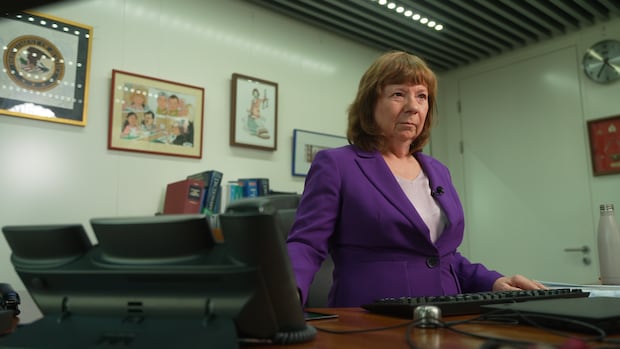
Google, iCloud, Amazon accounts cut off for ICC judges amid U.S. sanctions
Kimberly Prost, a Canadian judge who has served on the International Criminal Court since 2018, describes how she and her colleagues were cut off from a wide range of American-based services including Google, iCloud and Amazon accounts after being sanctioned by the Trump administration.
Based in The Hague, Netherlands, the ICC investigates and tries individuals charged with genocide, war crimes and crimes against humanity when courts in its 125 member states, including Canada, are unwilling or unable to do so.
The sanctions on Prost are part of a larger U.S. campaign to discredit and dismantle the ICC, which began in earnest after a February 2025 executive order imposed sanctions for investigating American personnel and issuing arrest warrants against Israeli Prime Minister Benjamin Netanyahu and his former defence minister Yoav Gallant.
U.S. President Donald Trump has since sustained his attack on the international court, calling on member states to immediately “resign from this rogue institution” in a September UN General Assembly speech. Just last month, Secretary of State Marco Rubio threatened to dismantle the ICC “brick by brick” if allies do not “rein in” the court.
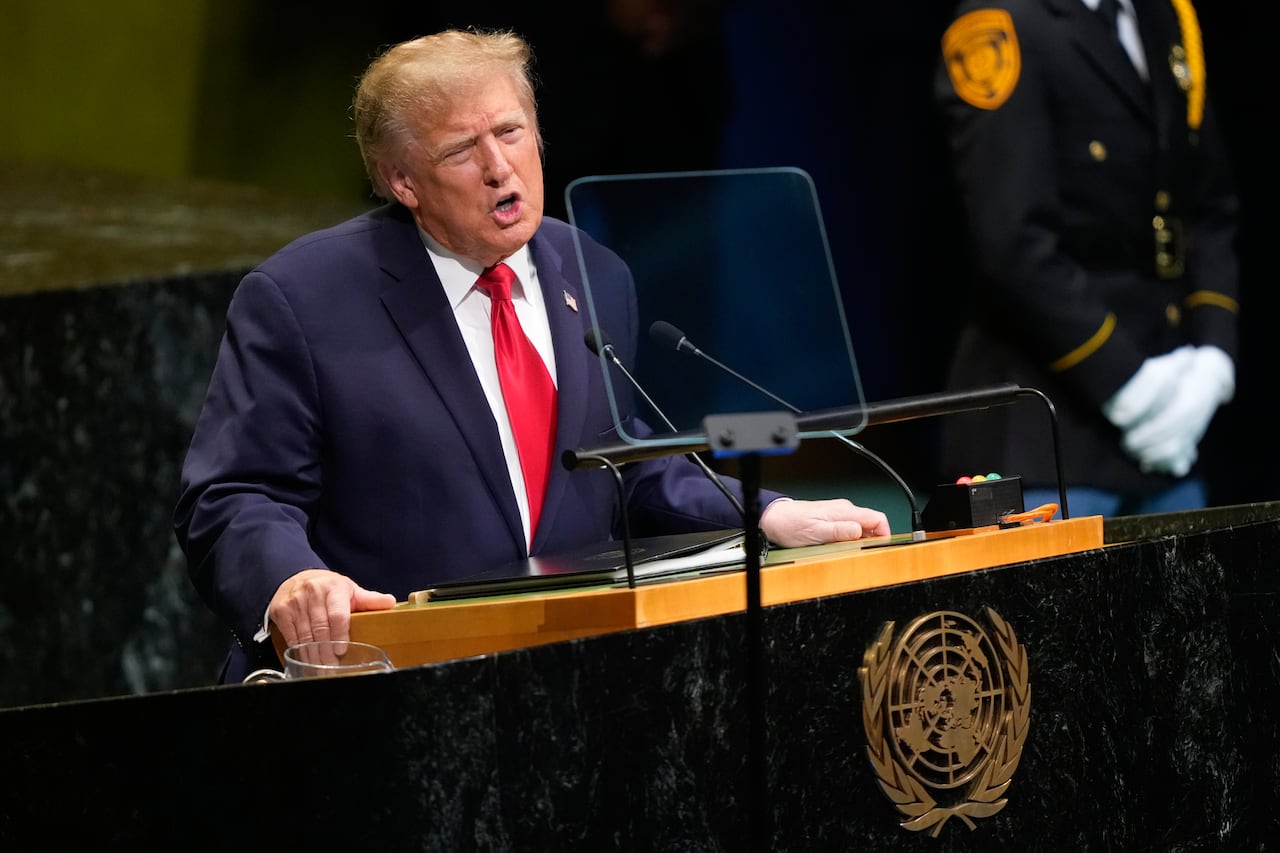
In a Sept. 22, 2026, speech at the United Nations General Assembly, U.S. President Donald Trump urged member nations of the International Criminal Court to ‘officially resign from this rogue institution immediately.’ (Yuki Iwamura/The Associated Press)
Prost says these actions are an attack against the international system of criminal justice and rule of law that has been built since the Second World War.
“It is an attack that foresees a world where victims of atrocity crimes are forgotten. And it is an attack in favour of impunity and ending accountability for these crimes. That’s the only way it can be framed.”
Rubio warns ICC endangers Americans
Prost was singled out for her role in judicially authorizing a March 2020 preliminary investigation into alleged war crimes in Afghanistan since 2003, including by U.S. service members.
Since 2021, however, the investigation has deprioritized the role of the U.S., focusing instead on the Afghan government and Taliban forces.
“To my knowledge, there’s no active investigation of the Americans in that case, but I’m sanctioned.”
The United States has never been a member of the ICC, and has long expressed concerns that its citizens could be prosecuted.
“As the United States works to bring peace around the world, our diplomats or our soldiers could be drawn into this court,” President George W. Bush said the day after the court was inaugurated in 2002. “It’s very troubling to me.”
WATCH | ICC ‘waging a war’ against U.S., says Rubio:
Twenty-four years later, Rubio echoed the same rhetoric about the “dangers” of the global court, warning that American border patrol agents, marines and prosecutors would “be at the mercy of foreign judges,” risking imprisonment for defending their own country.
However, Prost says Rubio’s arguments are misleading, as the ICC would have “no jurisdiction” if the U.S. asserted its sovereignty and conducted its own genuine investigations or prosecutions when allegations arise.
Member states ‘have to protect’ ICC
Prost and two other ICC judges sued the Trump administration in June, opposing the sanctions that they say are “designed to exert extra-judicial pressure” and coerce them into “prioritizing their private interests over deciding cases on the basis of the law and facts.”
“We decided that it was so significant and such an impediment to our work — and to the work of the court — to challenge it before the courts of the United States,” said Prost.
In July, four former U.S. ambassadors and prosecutors of international criminal tribunals submitted a brief in support of the ICC judges, arguing that the sanctions “penalize independent judicial decision-making.”
Canadian officials have not intervened in Prost’s lawsuit. But in a September interview with CBC News, Foreign Minister Anita Anand said Canada “remains committed to the ICC process.”
“As a sovereign country, we determine our foreign policy, and that includes the principles on which our foreign policy is based,” Anand said. “One of those fundamental principles is respect for international law.”
WATCH | ‘I would never even think about abandoning this work’: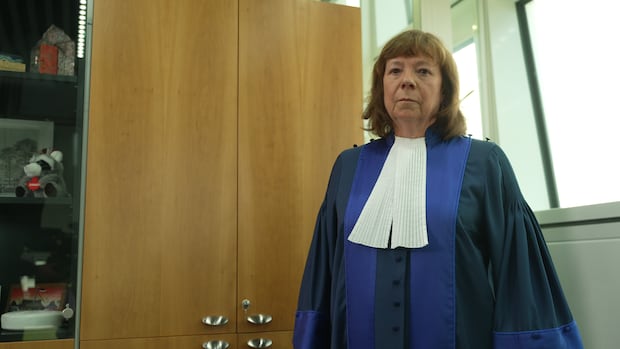
Mission of ICC ‘too important’ to abandon, says Canadian judge
Despite the economic sanctions imposed on her by the U.S., International Criminal Court Judge Kimberly Prost says she would ‘never even think about abandoning’ her work and bringing justice to victims of atrocity crimes.
Prost said the efforts to intimidate her and other judges are ultimately “futile.”
“We continue to judge our cases on the facts and the law and the evidence before us objectively and independently, and that will never change,” she said.
In October, the U.S. allowed the ICC to access certain information technology and banking services for six months. The State Department said that time would allow member states to demonstrate “meaningful progress” on U.S. concerns.
Prost says losing access to those systems could have a “very crippling effect” on the court’s operations.
Though some member states have signaled support, she says the moment remains “critically important” to safeguard the ICC, which has taken steps to prepare in case sanctions come into full force.
“It’s their court. It’s not the prosecutors’ court, not the judges’ court. It’s the states’ court, and they have to protect it.”