

Listen to this article
Estimated 4 minutes
The audio version of this article is generated by AI-based technology. Mispronunciations can occur. We are working with our partners to continually review and improve the results.
Torontonians are wary of Waymo’s plans to launch in their city, according to new polling that finds many unconvinced by the ride-hailing platform’s push to move north of the border in the next two years.
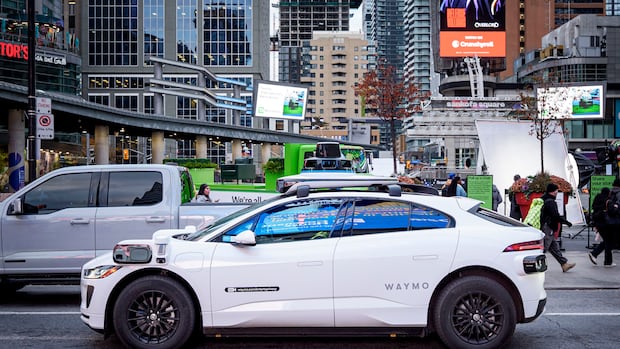
In mid-October, Waymo announced it was beginning to test its self-driving vehicles on Toronto’s roads, mapping the city ahead of a planned full-service launch in 2028.
But the drive to begin serving Toronto could be an uphill battle, new polling from Liaison Strategies suggests.
Research from the pollster found 62 per cent of those surveyed in Toronto would not be likely to use a Waymo, while only 36 per cent of those surveyed think the service should be allowed to launch paid, driverless rides in Toronto at all.
“We’re not seeing results that would be encouraging if you’re Waymo,” David Valentin, principal at Liaison Strategies, told CBC News.
“Only 11 per cent are saying that they should start the service. For Waymo, if that’s the next step, if that’s the next move, [there’s] not a lot of support for that.”
WATCH | Waymo launching self-driving taxi testing in Toronto: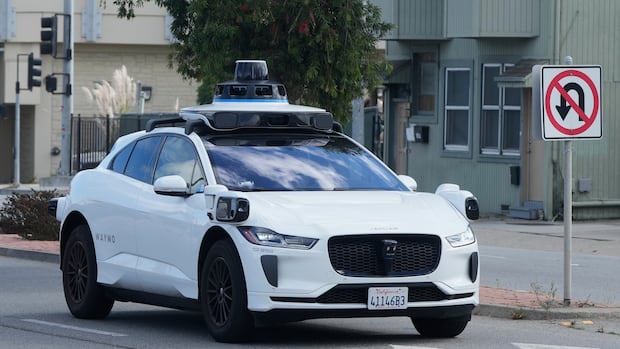
Waymo launching self-driving taxi testing in Toronto
Waymo is bringing its self-driving vehicles to Toronto for testing in the coming days with trained safety drivers behind the wheel. The company aims to launch a fully autonomous ride-hailing service in the city by 2028. CBC’s Meagan Fitzpatrick breaks down what you need to know.Launch comes amid ‘techlash,’ professor says
Matti Siemiatycki, professor of geography and urban planning at the University of Toronto, points out Waymo’s plans come at an awkward time for the company – amidst a broader “techlash,” as public opinion on big tech sours.
“We’ve seen it around data centres, we’ve seen it around AI, that there’s just a growing skepticism. I think Waymo kind of fits into that,” he said.
WATCH | Waymo’s self-driving cars safer than those operated by humans, report suggests: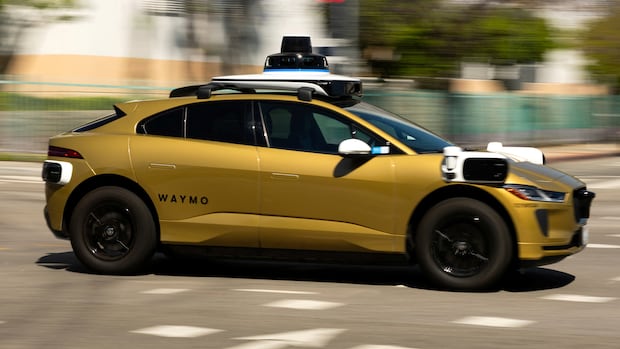
Waymo robotaxis now way safer than human drivers: report
Google’s Waymo robotaxis now cause far fewer, and less serious, accidents than human drivers in four major U.S. cities, according to a new report that also calls for better monitoring of self-driving vehicle fleets.
Siemiatycki added concerns about how technology is reshaping the jobs market could also play a part.
“I think Torontonians are really in a ‘show me’ type of mood when it comes to big tech and putting any faith in their products,” he said.
Public prefers small pilot
Liaison’s data suggests there would be more of an appetite for a short-term pilot limited to a small geographic area.
But Waymo itself has said it eventually plans to launch a full-scale autonomous ride-hailing service like the one it already offers in 15 cities across the United States.
The California-based company has said its Toronto presence will be introduced through a “rigorous, phased, safety-first approach,” which will start by mapping local street networks and testing with trained specialists behind the wheel.
WATCH | Some are concerned Waymo’s arrival could hurt ride-hail service drivers: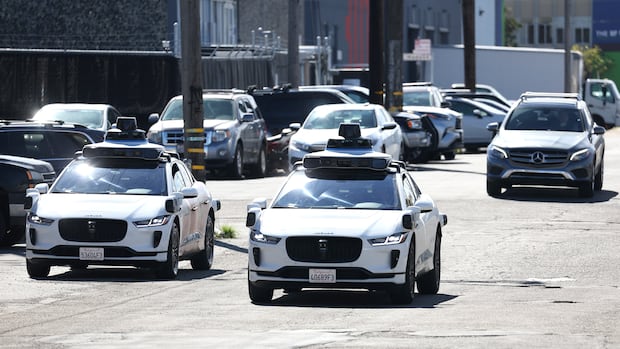
Could Waymo put Uber and taxi drivers out of work in Toronto?
Waymo’s plan to bring driverless ride-hailing vehicles to Canada has some drivers and advocates concerned the market is about to get more crowded and that more rideshare and taxi drivers could find themselves out of work. CBC’s Mercedes Gaztambide breaks down what you need to know.
Toronto Mayor Olivia Chow has previously said she wants to see autonomous vehicles regulated to the highest standards, but accepted the power to do that lies with the province.
Ontario Transportation Minister Prabmeet Sarkaria recently told the Empire Club in Toronto he was “excited” for Waymo to launch in the city and potentially across Ontario.
“It’s really exciting to see the Waymo vehicles that are now mapping… it’s real, it’s going to happen, it’s coming to the city,” he said on Nov. 10. “We’re really excited about it.”
Concerns about winter driving, road safety
The Liaison polling highlighted several concerns from Torontonians about the launch.
Some 24 per cent of those surveyed said they were most worried how the autonomous vehicles would cope with a Canadian winter, while 22 per cent flagged the issue of pedestrian and cyclist safety as their top concern.
Michael Longfield, the executive director of the advocacy group Cycle Toronto, said he wasn’t sure if Waymo would make the city less safe for riders, but suggested approving its pilot would be bad for busy streets.
“Approving Waymo will undoubtedly make traffic worse,” he suggested. “Adding more cars to an already clogged roadway network is not going to make traffic move any better.”
Liaison’s polling also shows another 12 per cent worried most that taxi and Uber drivers would lose work.
Siemiatycki added that there could be issues with how self-driving cars navigate Toronto’s sprawling downtown streetcar network.
When it announced its launch in Toronto, Waymo said its “all-weather” systems would “complement” Toronto’s transportation ecosystem and work alongside bike lanes and public transit.
The Liaison poll surveyed 1,000 Toronto residents between Nov. 14 and Nov. 15 using interactive voice recording. The data was weighted based on the 2021 Census and has a margin of error of ±3.1 percentage points, 19 times out of 20.