
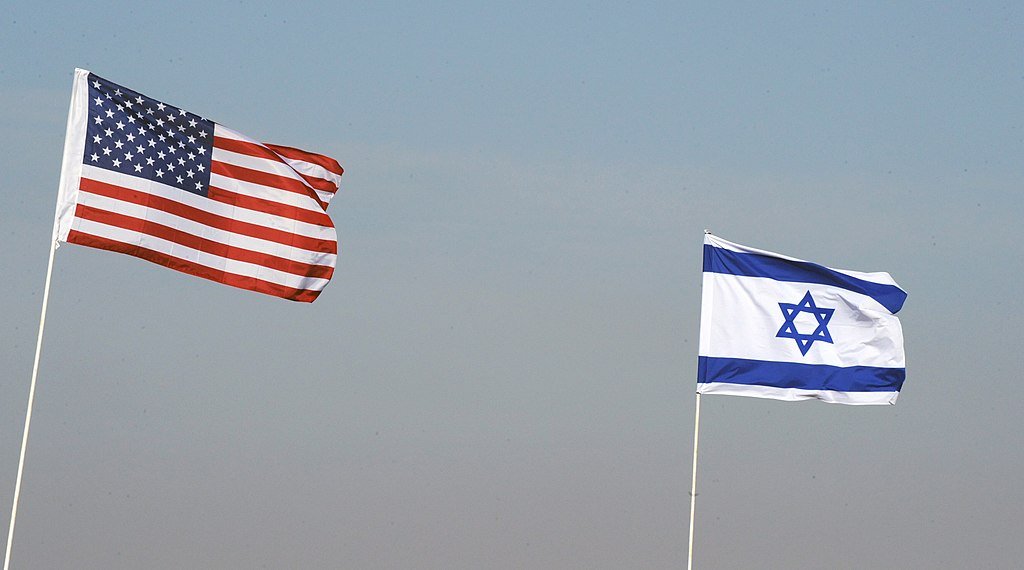
There is a rise in public and private reports that Americans flying to Tel Aviv are increasingly being denied entry by Israel—apparently because of who they are, where they are going, or whom they are traveling with—and possibly because of their imputed political views. The denials appear to be growing more frequent and systematic, causing real harm and trauma to our fellow American citizens. I partnered closely with the Palestinian American community to track this issue during my government service, work I’ve continued since.
Because the Trump administration hasn’t been reporting on this issue publicly, Americans today lack a full picture of how widespread the problem is. Still, media reports, together with my own conversations with people turned away at the Israeli border, make clear that the public deserves the facts. At a minimum, the administration owes Congress a comprehensive explanation, and if one isn’t offered, Congress should demand it.
By default, foreigners traveling to the United States from countries other than Canada and a few special territories like the Marshall Islands, have historically required visas to enter the United States. Then, in 1986, Congress established the U.S. Visa Waiver Program (VWP), which was signed into law by President Reagan. The program allows for citizens of a participant country to travel to the United States visa free for business or leisure for periods of up to 90 days and reciprocal travel by Americans to the participant country for business or leisure also for periods of up to 90 days. Currently, the program includes 42 countries, including Israel. The United Kingdom, Japan, France, and Switzerland were the first countries admitted to the program. And since at least 2008, memoranda of understanding have been signed between the United States and applicant countries.
It was not until the summer of 2023, just before the Oct. 7, 2023, Hamas attacks on Israel and the start of what nearly 40 percent of American Jews now consider genocide in Gaza, that the United States and Israel reached an agreement enabling Israel to join the Visa Waiver Program, giving Israelis visa-free entry to the United States. In describing the agreement, the U.S. Department of State explicitly stated, “All U.S. citizens traveling to Israel with a valid U.S. passport are to be recognized by Israel as U.S. citizens and receive equal treatment without regard to race, religion, or national origin.” According to a later statement, “In advance of this designation, Israel made updates to its entry policies to meet the VWP requirement to extend reciprocal privileges to all U.S. citizens without regard to national origin, religion, or ethnicity.” The concept of reciprocal privileges is based on U.S. code. While the memorandum of understanding is nonbinding, reciprocity is a requirement of U.S. law. Failure to provide it could therefore justify removing Israel from the program.
When the United States admitted Israel to the program, Israel made a commitment in return: All Americans—including Palestinian Americans and those listed in the Palestinian population registry—would be treated equally at border crossings it controls regardless of national origin, religion, or ethnicity. The memorandum of understanding entered into by Israel and the United States on July 19, 2023, makes clear that Palestinian Americans would be able to enter the country through Ben Gurion Airport and other Israeli-controlled ports of entry under the same standards as other Americans, rather than being singled out because of their Palestinian identity or because they planned to travel to the West Bank. The Department of Homeland Security and the State Department stated in September 2023 that “DHS monitored Israel’s compliance with these requirements and engaged with Palestinian-Americans both living in the West Bank and living in the United States, who now have the ability to enter Israel visa free, and fly in and out of Ben Gurion airport, reducing barriers to travel for these Americans.” The agreement even stated that “[a]ny U.S. citizen who is on the Palestinian population registry for Gaza, including a resident of Gaza, and is located outside of Gaza, will be able to seek to enter Israel visa-free through Israeli international ports of entry.” While Israel could still deny Americans entry on “legitimate security, criminal, health, or immigration concerns,” those rules have to be applied “based on a uniform application of Israeli legal standards” and cannot be based on ethnic background or other immutable characteristics as a proxy for the aforementioned concerns.
Israel’s admission to the Visa Waiver Program rested on a central condition: reciprocity. Israel agreed to grant U.S. citizens, whatever their background, the same access to Israeli-controlled ports of entry that its own citizens enjoy in the United States. If Israel’s denials of entry for Americans prove systematic, the United States has both the precedent and the obligation to enforce the bargain it made, starting with a rigorous public assessment of Israeli compliance.
Many Arab, Muslim, and Palestinian Americans were leery from the outset that Israel would uphold its end of the agreement. Arab and Muslim Americans have long reported additional scrutiny at Israeli-controlled borders—so much so that, in 2024, several members of Congress wrote to the Biden administration to express these concerns about entry points controlled by Israel.
Israel’s candidacy for participation in the Visa Waiver Program was complicated by the fact that it also controls entry into the West Bank and Gaza, where it maintains a military occupation. Per the U.S. Department of State, Palestinian Americans in particular have received different treatment at the Allenby Bridge crossing between Jordan and the West Bank, where Israel decides who may enter. In 2023, the State Department assessed Israel’s treatment of U.S. citizens, including Palestinian Americans, at entry points like Allenby and Ben Gurion Airport to measure compliance. The U.S. government monitors every Visa Waiver Program participant’s compliance, but Israel’s control over the West Bank and Gaza access led to additional complications that no other participant presents. Even so, the system appeared to work reasonably well through 2024.
Some time after President Trump took office, the Netanyahu government appears to have accelerated the denial of entry to Americans—Palestinian and otherwise—at Israeli-controlled ports of entry with increasing frequency. In February, Israeli Diaspora Minister Amichai Chikli boasted that Israel would bar individuals or groups it did not like regardless of their background. Whatever Israel may argue in individual cases, a policy like that cuts against the spirit of the agreement.
In recent months, I have personally heard directly about a growing number of such cases—at least a dozen—and have spoken with a number of the Americans involved. The denials fall into two categories.
The first involves Palestinian Americans traveling to the West Bank, including high-profile individuals with relatives living under Israeli military occupation. (These individuals do not want to be named for fear of retribution.) According to the State Department, the agreement stipulates that they may use ordinary ports of entry under Israeli control to travel “to or through Israel for short term travel for business, tourism, or transit.” That should include reaching the West Bank through Ben Gurion. Yet several Palestinian Americans told me that when they flew into Ben Gurion, they were denied entry and told they would have to enter through the Allenby Bridge from Jordan. That is squarely inconsistent with the agreement with the U.S. Those who do enter via Allenby are often given restricted permission to enter the West Bank only, not Israel. The restrictions are not stamped on passports, but noted on a small paper ticket (several of which I have seen), which may restrict the duration of the stay to just a few weeks, or specify that the entry is valid for the West Bank only.
The second category consists of Americans, not necessarily Palestinian Americans, who appear to have been denied entry because of their political views. Examples include an interfaith group led by a retired Emory University professor and members of a comedy group, among other individuals.
If these denials are indeed systematic and contradict the agreement, or are based on Americans’ ethnic backgrounds, this disregard for the American passport should be unacceptable across the political spectrum, especially to the president, the secretary of state, and the secretary of homeland security. They should already be aware: Palestinian Americans continue to report their denials of entry to the U.S. government through established channels. The responses I have seen have been limited to modest acknowledgments and suggestions that the individual contact a lawyer.
Participation in the Visa Waiver Program is a privilege the U.S. grants to other countries, not a right, and the program has a record of enforcement. U.S. code authorizes the Department of Homeland Security, consulting the State Department, to rescind VWP designation for any reason, including noncompliance with program requirements, under subsection (d). As a first step, Washington has options in light of Israel’s apparent violations, including some that fall short of terminating Israel’s participation in the program altogether. The program has deployed reciprocal measures in the past: The United States removed Argentina from the program in 2002, after too many Argentines overstayed their visas, and Uruguay in 2003, when it stopped meeting program requirements. A terminated country can seek readmission; Argentina began that process in 2025. The road to readmission is longer and more cumbersome after termination than suspension.
Alternatively, through the Visa Waiver Program, Washington can impose escalating consequences, such as shortening the two-year validity of Israelis’ travel authorizations or placing Israel on provisional status before moving to suspension or termination. For example, Belgium remained in the program in 2003 but was put on provisional status over non-machine-readable passports and poor reporting of lost passports. And in 2017, the U.S. placed Hungary on provisional status, reviewing its compliance annually rather than every two years. Then, in 2023, the Department of Homeland Security limited Hungarians’ travel authorizations to a single trip rather than multiple trips.
During Israel’s candidacy and after its admission to the program, some American diplomats used a simple phrase to capture the principle: “Blue means blue!” A U.S. passport, they said, should carry the same weight regardless of who holds it. Many feared that standard would never be fully met, and that Palestinian Americans and their friends would not be treated like other Americans. It now appears that Israel may no longer be implementing the program in a uniform, nondiscriminatory manner.
The first step is a rigorous assessment of Israel’s admissions practices and whether they are treating all Americans equally and fairly. The administration should conduct this assessment and, ideally, share it with the public, or at least with Congress. If Israel is not complying, it should be placed on provisional status, suspended, or terminated from the program depending on the extent of the documented violations.
If Israel cannot ensure equal treatment for all American travelers—including Palestinian Americans—Washington should enforce the bargain it made. Protecting the integrity of the American passport, and the rights of the citizens who carry it, requires nothing less.