
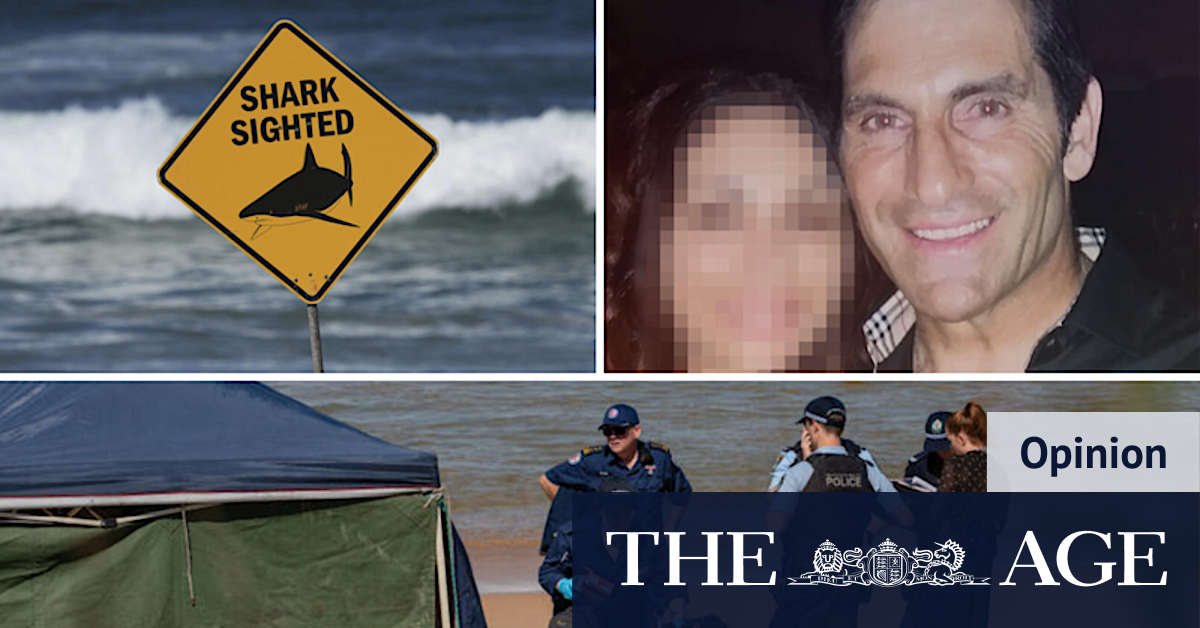
Among the hundreds of thousands of sessions boardriders enjoy in Sydney each year, many during the net-free winter, this was the first shark-related fatality ever. The first. Among millions of surf sessions in NSW every year, this was the ninth lethal shark bite. Including swimmers, according to the Australian Shark-Incident Database, there have been 55 fatalities in Sydney in the 237 years since white settlement. Thirteen were at ocean beaches.
Loading
Supporters of shark-netting in Sydney cite the absence of so-called shark “attacks” since the nets’ introduction in 1937. But this is to give the randomness of mathematics the mystique of causation, as Dr Brianna Le Busque, from the University of South Australia, told Nine News: “The pause in the trial of the removal of shark nets is unfortunate, as shark nets are not an effective mitigation approach, and can actually provide ocean users with false security that they are being protected from bites. People fear things that we feel we can’t control, and non-effective mitigation techniques like nets can make people inaccurately feel in control of shark interactions.”
I feel sorry for those scientists who have devoted careers to accumulating and analysing information, which has confirmed that thousands upon thousands of sharks swim harmlessly near people every single day, only to have their work overturned in a moment when politics sees an opportunity to exploit emotion.
Politics, unlike science, is about producing illusions of control and safety. The “zero tolerance” response is engineered to meet an expectation that government can stop every accident of nature. A section of the public is spring-loaded to see sharks as murderers who can and must be stopped. The political posture is to present “strength”: put a few dozen napkins out there.
Shark hysteria is a recurring theme of life in Sydney. The author Vicki Hastrich has just published The Last Days of Zane Grey, a tale of the shark hysteria in the 1930s that brought the world-famous writer, “Hollywood legend” and big-game fisherman here to hunt down a great white shark and make a movie about it called White Death. After a swimmer was taken at Manly Beach, Hastrich writes, “The creatures were quite simply hated.” Grey himself “detested sharks and believed that each time he killed one he was potentially saving a human life”. Aiming to eradicate the species, harbour fishermen were being paid 10-shilling bounties for every shark they caught.
Loading
Grey’s Australian adventure developed into a hairy-chested competition to land the biggest beast. For all his efforts, Grey failed to catch one for his film, but later, in South Australia, he hooked a “killing machine”, only to have his self-image as the great white hunter flipped when he stared “into the face of death” and “had to picture himself as meat”.
Zane Grey’s story evokes a time when humans imagined themselves as heroes in a man-versus-shark contest. But the myth has proven durable, and politics rides on legends more than science. Jaws doubled down in 1975 and Chris Minns is like a prudent iteration of Amity Island Mayor Larry Vaughn.
While there has been a renewal of white shark stocks since bans on fishing them in 1996, according to a CSIRO summary of published research, any rise in shark bites in recent decades “coincides with an increasing human population, more people visiting beaches, a rise in the popularity of water-based fitness and recreational activities, and people accessing previously isolated coastal areas”. Mercury Psillakis’ family said he was “aware of the risks of the ocean”, among which sharks would have been one of the lesser. His death wasn’t a crime, it was an accident.
I don’t doubt for a moment that politicians are sincere when they say they respect grief. But sometimes respect can be expressed in restraint. Sometimes they don’t need to project an image of “strength”. Sometimes they could just listen to the science. Sometimes it’s not about them. Sometimes they could stay silent. Otherwise the moment they open their mouths they find themselves in no man’s land. And yes, the same applies to media, so I’ll shut up now.
Malcolm Knox is a journalist, author and columnist for The Sydney Morning Herald.