
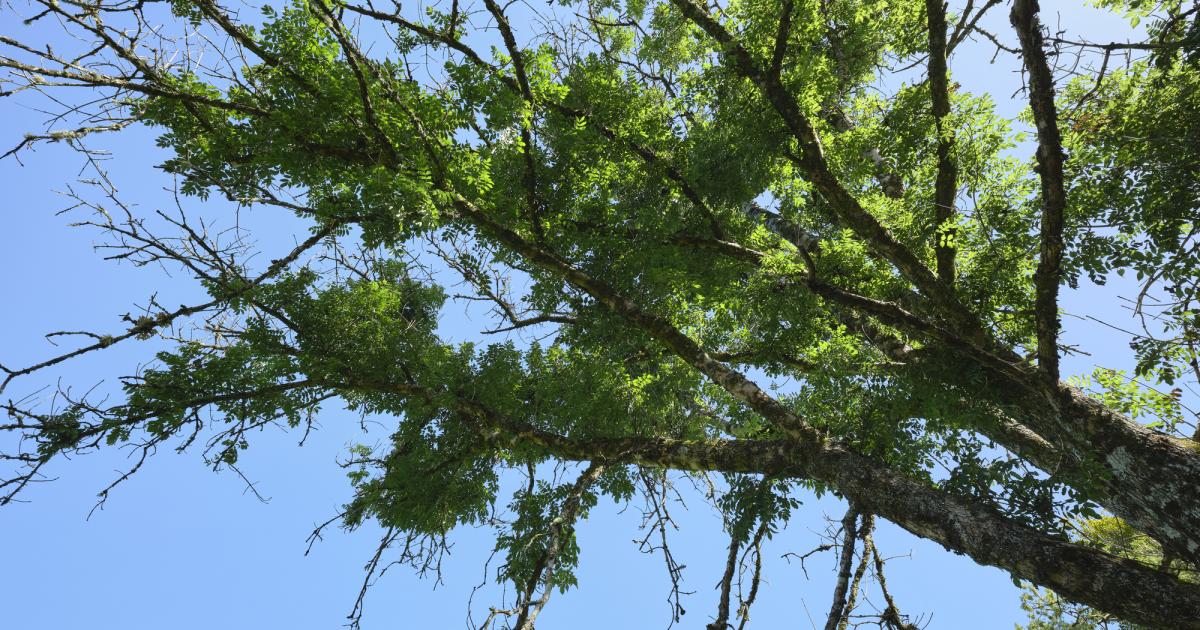
Seeing how many of my own Ash trees were affected, I felt there might yet be hope for some of them. Here, Ash trees normally spread almost like weeds and I’ve always saved some seedlings. I pot them up, grow on for 2-3 years and plant out and now fervently hope that the process identified in Surrey might happen here too.
Saplings and young trees were the first to succumb to the disease here but a few well established ones are still looking ok, including one ancient specimen, despite half of the lower trunk having split away in a long ago accident and the soil beneath part of the root plate having been washed away by a burn’s raging winter torrents.
Read more:
Trees produce millions of seeds, but at best only one or two will grow to maturity. A few will get going in the most unlikely places here, like in a crook between the trunk and large branch. Leaves would have rotted down there to make the perfect seed sowing mix: just right for a seed blown in by the wind or dropped by a bird. Sadly though, this enterprising seed won’t make it. The few that do are lucky and well adapted to their environment.
Not everyone lives in a place where this kind of thing is possible, but as we all know, sometimes to our cost, vast numbers of seeds germinate in every garden. I honestly believe they’re much fitter than many of our cosseted seedlings.
So don’t automatically fell every unwanted seedling. No one wants chickweed, couch or docks, but even weeding can become interesting when you come across an unfamiliar little plant. You could let it grow on a bit to help identification and might find a free app like plantnet.org useful.
Why not lookout for other tree or shrub seedlings in the garden? A Rowan, Birch or Viburnum might unexpectedly arrive.
And many other familiar plants could also be good. A Calendula is flowering beautifully in a path next to its parent’s flower bed. When I posted a photo of this on my Bluesky account, a correspondent told me her 10 year old daughter had bought a small pot of Calendula at a market and, 40 years on, it’s descendants are enjoying life in relatives’ gardens hundreds of miles apart. Seeds don’t spread as far as that independently but collected seed takes most things in its stride.
And as well as Calendula, Aquilegia, Polemonium and Foxgloves readily self-seed and can, if necessary, be moved to a suitable spot.
And herbs are much the same. A strong, vigorous clump of chives has become established in an impoverished crack of soil in a slab path. It’s the go-to plant when we want a bunch of chives. Dill, borage and Sweet Cicely, to name a few, are willing self seeders.
So weed with care and capitalise on keen spreaders that you like.
Plant of the week
Hylotelephium cauticola ‘Lidakense’(Image: free)
Hylotelephium cauticola ‘Lidakense’ is a low growing sedum with cherry red flowers and blue green, succulent leaves. It needs a sunny, well drained spot and, once established, will tolerate drought; but not permanently wet ground in winter.
Like all Hylotelephiums the flowers are much visited by queen bumblebees fueling up for winter hibernation.