
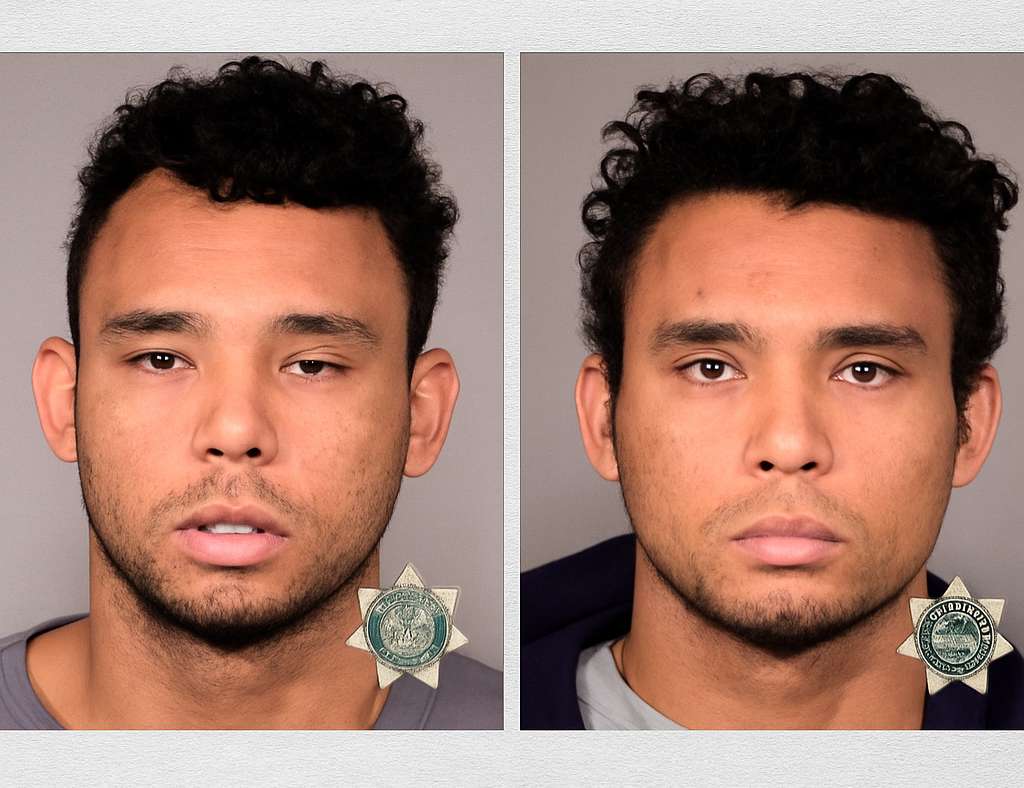
A former mixed martial arts fighter has been sentenced to 50 years in prison after being convicted of a series of violent sexual assaults against unhoused women in Portland, Oregon. The case, which drew widespread attention for its brutality and its focus on some of the city’s most vulnerable residents, concluded with Judge Celia Howes handing down the lengthy sentence last week in Multnomah County Circuit Court.
The defendant, identified as 33-year-old Zachary Lee Andrews, was found guilty on 16 separate charges, including three counts of first-degree rape, three counts of sexual abuse, and a charge of kidnapping. Prosecutors argued that Andrews preyed on unhoused women, attacking them in or near their tents, and used his physical strength and combat training to overpower and silence them. The assaults involved not only sexual violence but also strangulation, leaving survivors physically injured and deeply traumatized.
The trial laid bare the details of multiple attacks that spanned a period of time in which Andrews deliberately targeted women with few resources, little protection, and limited ability to seek help. Prosecutors emphasized that these were not crimes of opportunity alone but acts committed with intent and cruelty against individuals already living under difficult and precarious conditions. Evidence included survivor testimony, medical examinations, and forensic support that tied Andrews to the assaults.
Andrews, who once participated in mixed martial arts competition, had been living in Portland when the attacks occurred. His athletic background became a troubling element of the case, as prosecutors described how his fighting experience contributed to the calculated violence against women who had little chance of defending themselves. The victims, all living without permanent shelter, testified about the fear and helplessness they felt when attacked, as well as the ongoing psychological toll.
The sentencing was seen by prosecutors as an important step in holding offenders accountable for violence against the unhoused community, a population that is disproportionately at risk for sexual assault, physical abuse, and exploitation. Advocates for survivors of sexual violence noted that the case highlighted systemic gaps in protection for people living on the margins, and the necessity of treating crimes against unhoused individuals with the same seriousness as those involving victims from more stable circumstances.
The judge, in issuing the sentence, underscored the severity of the crimes and the pattern of predatory behavior. With a half-century term in prison, Andrews will serve the majority of his life behind bars, effectively removing him from society and eliminating the possibility of repeat offenses.
The case has also renewed discussions within Portland about public safety and the treatment of unhoused residents, who often face increased vulnerability to violent crime. Community leaders and advocacy groups have pointed to the assaults as a reminder of the importance of providing stronger protections, improved shelter access, and greater accountability for those who commit crimes against people experiencing homelessness.
For the survivors, the conviction represents a measure of justice in the aftermath of terrifying ordeals. While the scars left by such violence may never fully heal, the lengthy sentence stands as a recognition of the gravity of Andrews’ actions and the harm inflicted on some of Portland’s most vulnerable citizens.
