
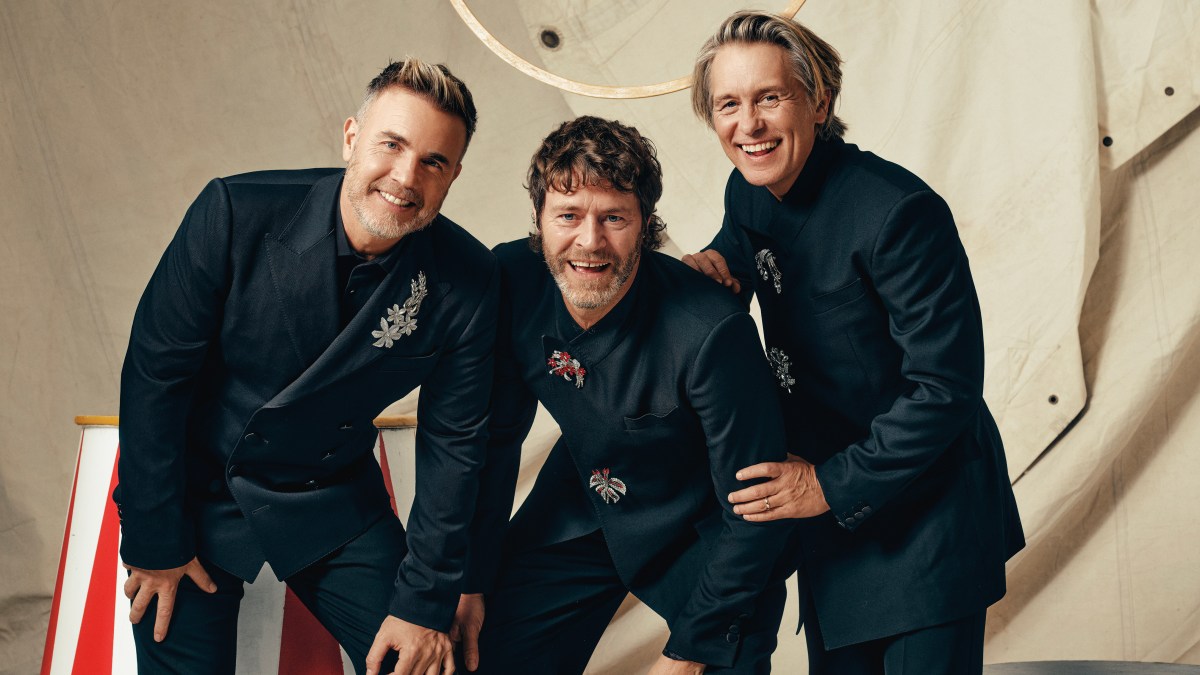
Back for good? Take That never really went away. We have had 35 years of these greatest survivors — the boy band who lived, as opposed to the many others from the Nineties who were taken in by a rabid pop industry machine and then spat out. Indeed, Take That could lay claim to being Britain’s longest-lasting still-thriving band. Who else? Coldplay have been going for seven years fewer, while, despite Oasis’s summer success, all but one of the songs they played was from last century.
Take That, on tour, mix their indelible Nineties classics such as Pray, Babe and No Regrets with hits from the past 20 years — Rule the World, Greatest Day, Patience, The Flood. From the start Gary Barlow was the songwriter; Mark Owen the cute one; Robbie Williams the rogue; Howard Donald and Jason Orange the unstoppable dancers. Next year the band will play 17 stadium shows in a revamp of their hugely successful 2009 tour The Circus Live, while also gearing up for a warts ’n’ all Netflix documentary. Such was the demand for the tour that, on the day the tickets went on sale, six extra dates were added.
And yet, of course, there are only three of them now: Barlow, Owen and Donald. We are sitting in a photography studio in west London cradling coffees and, in the case of Barlow, 54, his fluffy pomeranian, Hugo. He is still the serious one but now wears his success more lightly than he once did, with a dry wit that can take you by surprise.
Owen, 53, meanwhile, dressed in a checkerboard coat and wearing a tan he’s picked up from his home in Los Angeles, is sweet and softly spoken, but also with a deadpan sense of humour. (Whenever someone calls Take That a boy band, Owen tuts with faux indignance, “Well, we weren’t a boy band, but go on…”) Donald, 57, on the other hand, is deeply emotional — his big orange trousers belie a rather serious man who adores what he does and, I think, still cannot believe he gets to do it.
“I’m really proud that we have brought so much joy into people’s lives,” Donald says. “Whether it was the Nineties or now, for two hours we are on stage and give a really great energy for people to go away with. We put on a f***ing great show.”
Which is entirely true — the first Circus Live tour often had 40 people performing at once, plus an animatronic elephant. It is a bombast of euphoric pop joy, yet these men are human, with families, love and loss. Owen was forced to evacuate his family from their home in the Palisades area of LA for a month during the wildfires this year; Donald tells me forlornly that he lost touch with his brothers in the early days of the band; while Barlow has been through hell.
On August 4, 2012, Barlow’s fourth child, Poppy, was stillborn. He and his wife, Dawn Andrews, were allowed to hold their baby daughter for a while and organised a funeral. Eight days later Barlow was on stage with Take That at the closing ceremony of the London Olympics.
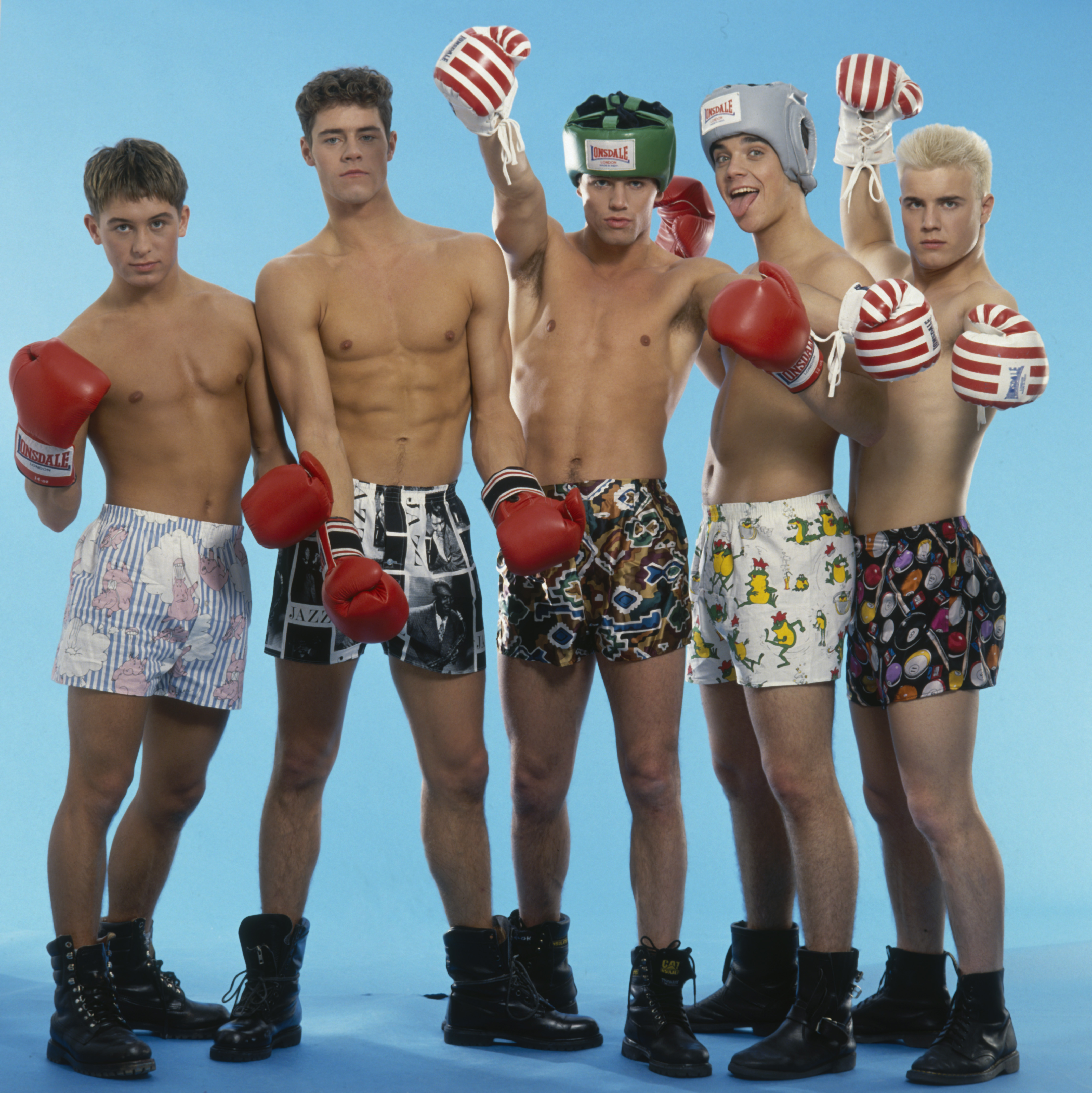
A fresh-faced Take That in the video for their debut single, Do What U Like, in 1991. From left: Mark Owen, Howard Donald, Jason Orange, Robbie Williams and Gary Barlow
GETTY IMAGES
This side of their jobs, I venture, seems absurd — putting on a front when you just want to hide? “I could give you ten answers here,” Barlow sighs. “I mean, we’re singing — it’s not that hard. I could be doing a proper job. That’s what I always think.”
Donald comes to his aid. “Without trying to speak for Gary,” he says, “when we did the Olympics, he got on stage and…” he wells up. “Sorry, I’m getting emotional. I thought he was never going to do it, you know? But he is a professional, he got up and sang Rule the World. I was thinking, f***ing hell, Gaz.”
Barlow shrugs and smiles, holding Hugo that little bit tighter. “You’ve just got to turn it on for a few minutes, haven’t you?” he says. “But you know, welcome to showbusiness. It’s a funny one and you’re absolutely right. Definitely some nights you stand side of stage thinking, oh, I could be at home tonight, but you go out there and it’s the most wonderful two hours.”
In the past Barlow has spoken about Poppy’s death with a calm reassurance that has led to his and Dawn’s story being featured on websites and support services for people suffering similar grief. Does he feel a responsibility to speak about his experiences because it can help others?
“I think so,” he says. “I do believe we’re in a world where we overshare… I don’t want to be the poster boy for loss, but it’s really hard because sometimes you read something and go, ‘Jesus, what I said helped this person…’ ” He pauses and frowns. “It’s hard to find a balance. My wife’s really private. She doesn’t want me to talk about any of it and so it’s just very hard. But also I’ve always got to ask myself, with anything we do, ‘Why am I here today?’ I am here because I write songs and sing — and that should be enough. And so anything else that’s extra to that? I just need to think about it because I’m not a psychiatrist.”
• Take That: ‘We didn’t know what we were doing’
Barlow met Andrews, a dancer, on a Take That tour in 1995 and they married in 2000. They have three children — Daniel, 25, Emily, 23, and Daisy, 16.
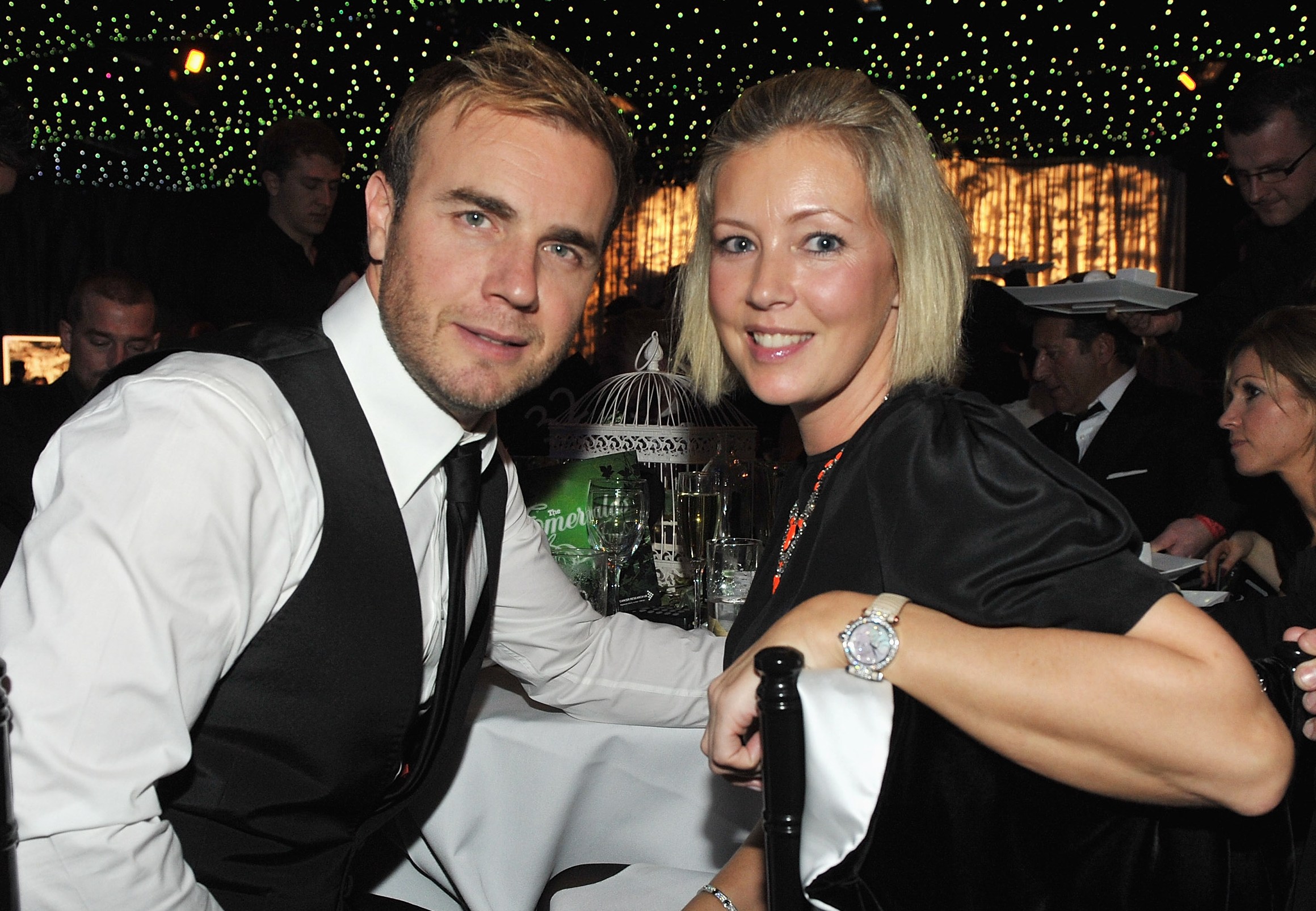
Barlow with his wife, Dawn, in London in 2009. She was a dancer on a Take That tour when the couple met in 1995
GETTY IMAGES
“What were my mum and dad thinking?” Barlow says, puffing out his cheeks at the thought of how his parents sent him off to join Take That at the age of 18. It was 1990 and their manager, Nigel Martin-Smith, had a dream of taking the wildly successful American formula of New Kids on the Block — five lithe, hunky men for teenage girls to pin their burgeoning sexuality upon — but making them from Manchester. In the early days none of Take That wore much on stage as they tore around the schools (and gay clubs) of northwest England.
“I was thinking, what I would do now — as a parent?” Barlow continues. “Especially as my kids are at the age where they’re starting to get jobs. All my friends were going off and getting jobs in banks and stuff, and I was going, ‘I’m going to be famous!’ I was gigging in social clubs and pubs. I was thinking that, as a parent, I probably would have told them to find something else to do. I’d have been worried.”
“My mum was so angry with me when I said I was going to be in a boy band,” Donald recalls. “Because all of a sudden I’d lost my job being a vehicle painter, earning £150 a week, and therefore she was going to lose out on the £20 a week income I paid to live there.” Donald was 21 when the band first hit the road. “At that time I never had much positivity, thinking I was going to be famous and massive. It could have gone either way.”
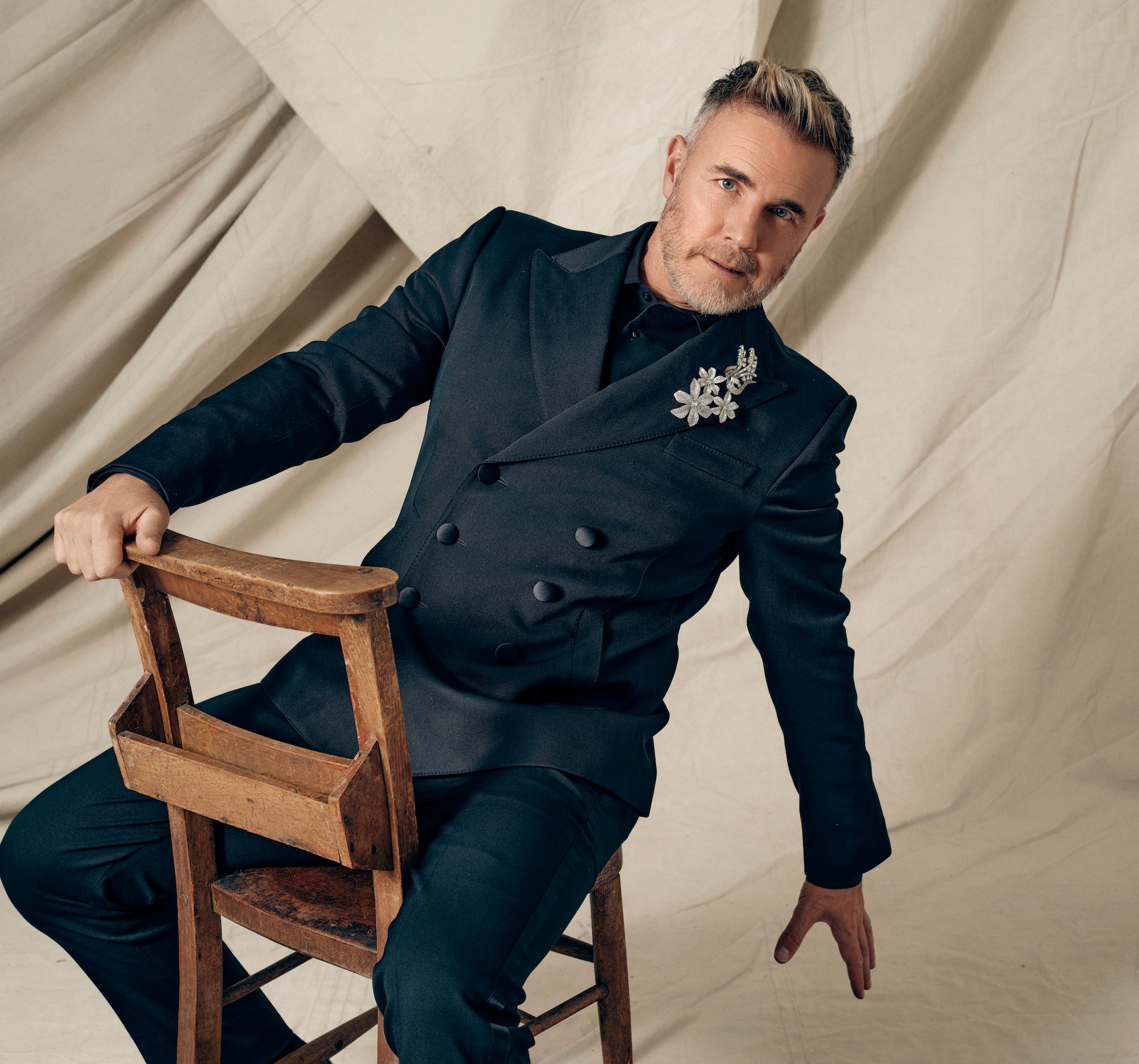
SANE SEVEN FOR THE SUNDAY TIMES MAGAZINE
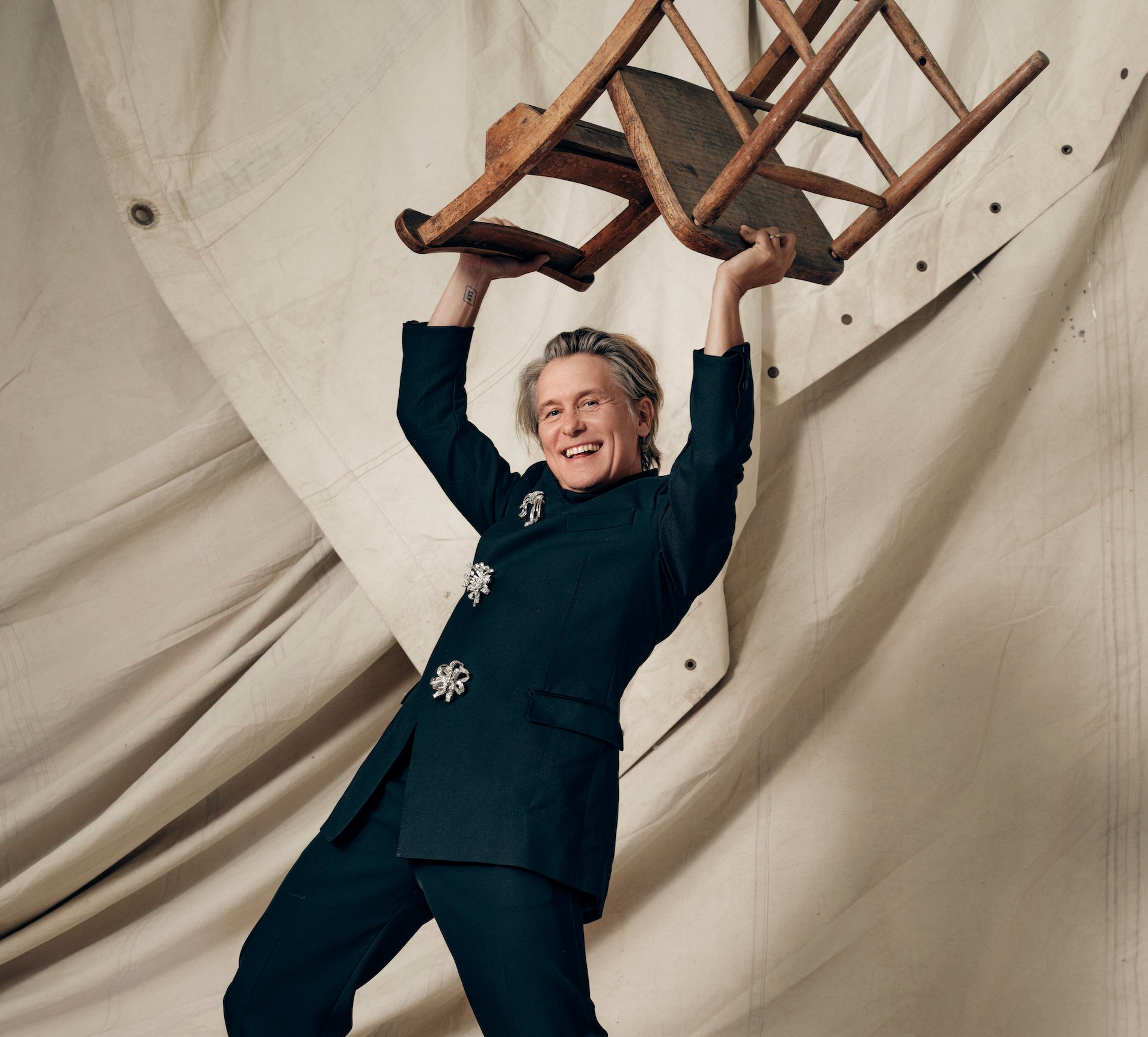
SANE SEVEN FOR THE SUNDAY TIMES MAGAZINE
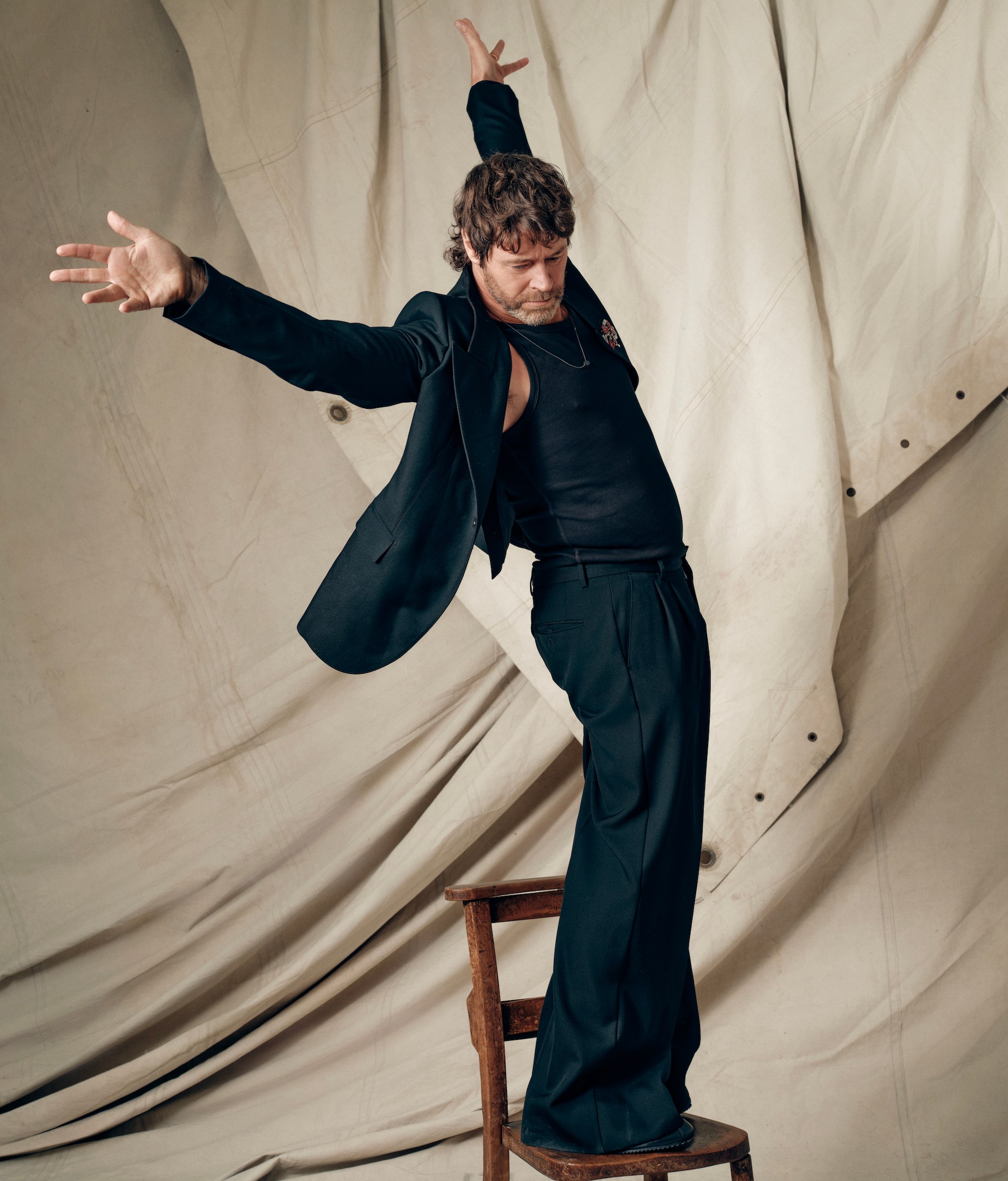
SANE SEVEN FOR THE SUNDAY TIMES MAGAZINE
Was there a moment when their parents realised their sons had made the right choice? “Our manager was good,” Barlow says of Martin-Smith. “He used to get all the families together and he organised for them all to come to London on a little bus, put them up in a hotel and took them to watch the Royal Variety Performance.” It was 1994 and Take That played Could It Be Magic and A Million Love Songs, both of which had already gone Top Ten in the UK. Barlow smiles. “But that felt like a moment — we were on this show and so was Shirley Bassey. There were kids screaming. We sat up until 4am and I remember the look on their faces. My parents were just thinking, this is incredible…”
What were their first impressions of each other? Martin-Smith had auditioned for young men to back up Barlow, to whom he had taken as a songwriter. “Howard arrived late,” Owen says. He had been at work. “And Gaz was there early — you had set up your microphones, ready, doing your stretches, pressing play on the cassette.” Barlow looks towards Owen. “I don’t really remember you that much from that day,” he says.
Owen laughs. “That’s not changed — ‘What does he do?’ ” he says. “But I’ll tell you who stole the limelight that day — Jason. He was the most unbelievable dancer. I don’t even really remember Rob from that day.”
Ah, Orange and Williams. The former appears to be a virtual recluse, variously seen in London and the Cotswolds but not in the group since 2014. “He didn’t want to do it any more,” Owen believes. “But I’m not going to speak for him.” As for Williams — well, how can you sum up that powerhouse? Since leaving Take That in 1995 to pursue a world-conquering solo career, he rejoined the band in 2010 and released the superb song The Flood. He then fled again a year later to continue on his very singular path and last year released a biopic called Better Man, which imagined Williams as a chimp.
What animals would these three be? “In the Nineties I would have been a lemming,” Donald says. “But not now, though!”
Is there still any relationship with either of their old bandmates? “I mean, on occasion with both of them,” Owen says vaguely. “It’s come and go. We think about them a lot, but it’s not like we call them every week. We don’t see them much. We love Rob and Jay but we’ve been like this as a band for the longest period of all now — it feels right for us.”
“For the first time in my life I asked Robbie for two tickets for a gig of his in Berlin for my friends,” Donald chips in, beaming like a fan. “And he got them tickets and did a meet and greet! Which was amazing of him, so, so nice.”
• Take That’s Gary Barlow: there’s no enigma — I owe my hits to Elgar
As for Barlow — well, Williams has been a tricky subject for him. They vied for solo success in the late Nineties and the one who sang Angels came out on top, but their relationship has improved significantly. Barlow has co-written a jokey song on a new album by Williams, out soon, about stalking Morrissey. “Morrissey’s going to love this,” Barlow says. “We did it years ago, in lockdown. I’m glad he’s using it, it’s funny. And look,” he adds, “on Rob — we all know him well enough to say we love the fact he’s out there doing stuff and we’re out there doing stuff. It is good for everyone, it really is. Sometimes I hear from him ten times a month, sometimes I don’t hear from him for six months.”
I ask again about Martin-Smith, the manager Williams spent the best part of 30 years railing against in song, film and interview. A divisive figure, Martin-Smith helped the band sell 45 million albums, largely in the pre-streaming era of CDs, making multimillionaires of all his charges. Barlow is worth an estimated £100 million, Williams perhaps twice that. Williams, though, has fought court cases against his former manager over earnings and spoken often about their bitter disagreements.
Why, I ask, is Williams so angry with him, compared with Barlow? “Well, everybody had different experiences of the Nineties,” Barlow says. “And Nigel isn’t someone I see all the time, but he was the guy who took me out of the working men’s clubs and got us on Top of the Pops. I can’t forget that. I have to have thanks for it. You just need a few people to believe in you and he was that person — I’ll never forget it.”
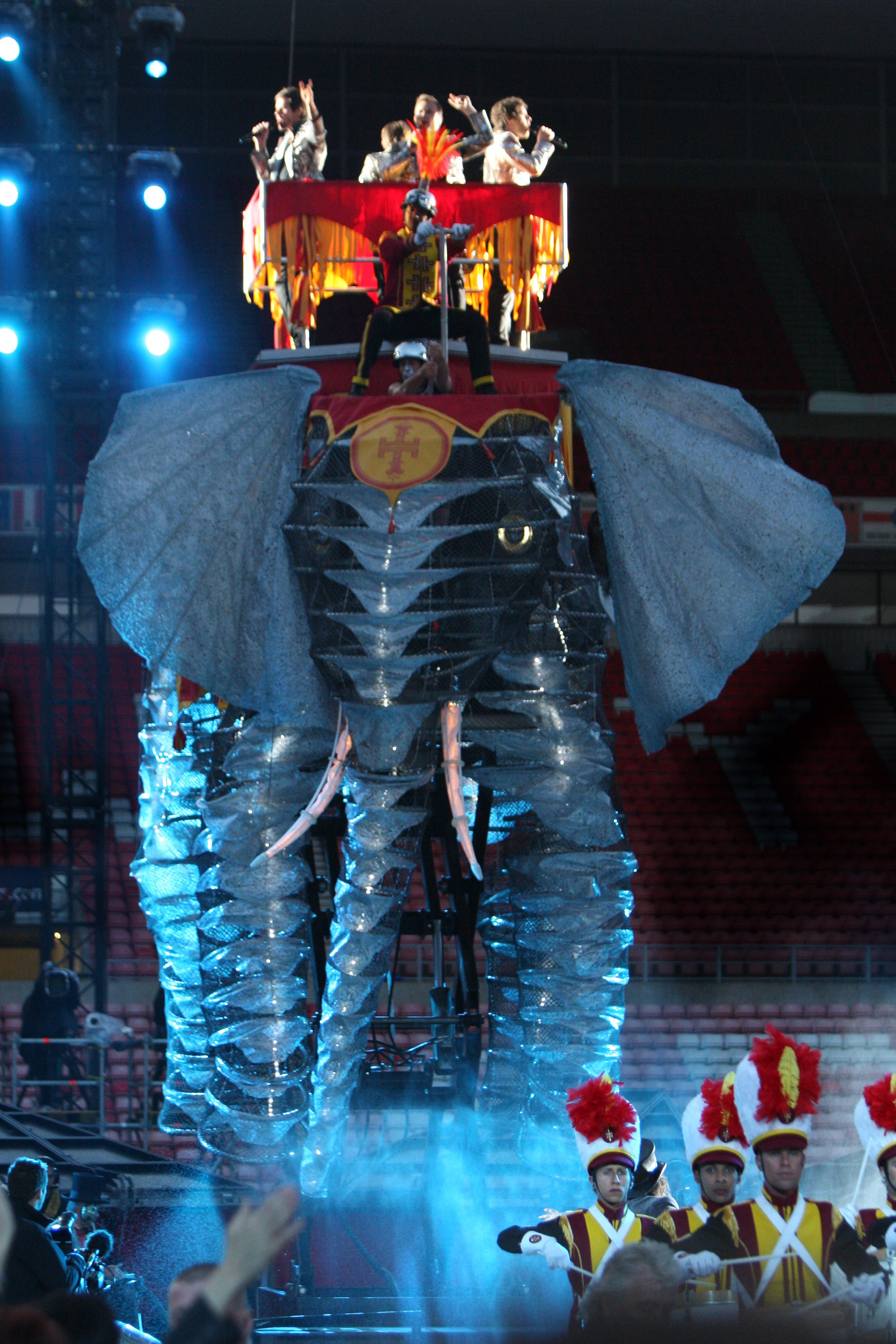
Riding high on the Circus Live tour at the Stadium of Light in Sunderland, 2009
GETTY IMAGES
Take That split up in 1996 — at a press conference to staggered journalists a year after Williams absconded. “From today Take That is no more,” Barlow said and the mood was sombre and odd, with the four men — Orange was still around — insisting the break-up was a “career move” when, clearly, it was only Barlow, as songwriter, who had any chance of immediate success. There were helplines for distressed fans. “I was the first to call it,” Donald says.
“It was a long time ago,” Owen says with a sigh when I ask who was the most reluctant to call it a day on a band still very much having No singles. “I think it was the most obvious choice for Gary,” Donald says bluntly. Barlow gasps. “He was the writer, the main attraction and the talent,” Donald adds, “so it was more obvious he was going to have a solo career. We all had different experiences with the split and I found it difficult. I wasn’t ready.”
A journalist at that conference asked them for their advice for the upcoming boy bands Boyzone and Upside Down. The three men in front of me look blank when I mention Upside Down. “I can’t even remember them,” Barlow says guiltily. None of them can. Yet they were clearly a name at that time, placed in the same bracket as Boyzone.
Why do some, such as Boyzone and Take That, make it while others have no such luck? “We were very fortunate to have Gary as a writer,” Owen says tenderly of a man with more hits than Tyson Fury. “With Gary writing the songs, we had our own energy. We would perform at Whitley Bay Ice Rink, thinking we were walking around Wembley Stadium.”
“Well, I can take that a stage further,” Barlow adds with a glimmer. “I’m an ambitious motherf***er. Always have been. I have tamed it in recent years, but I was up there with some of the best, and also we worked so hard. Anybody you met in the Nineties would say we were the hardest-working band around — hands down. Back then we were just told to do everything. The weird thing is? We did it. We did it all! Nobody had ever seen anyone work like us.”
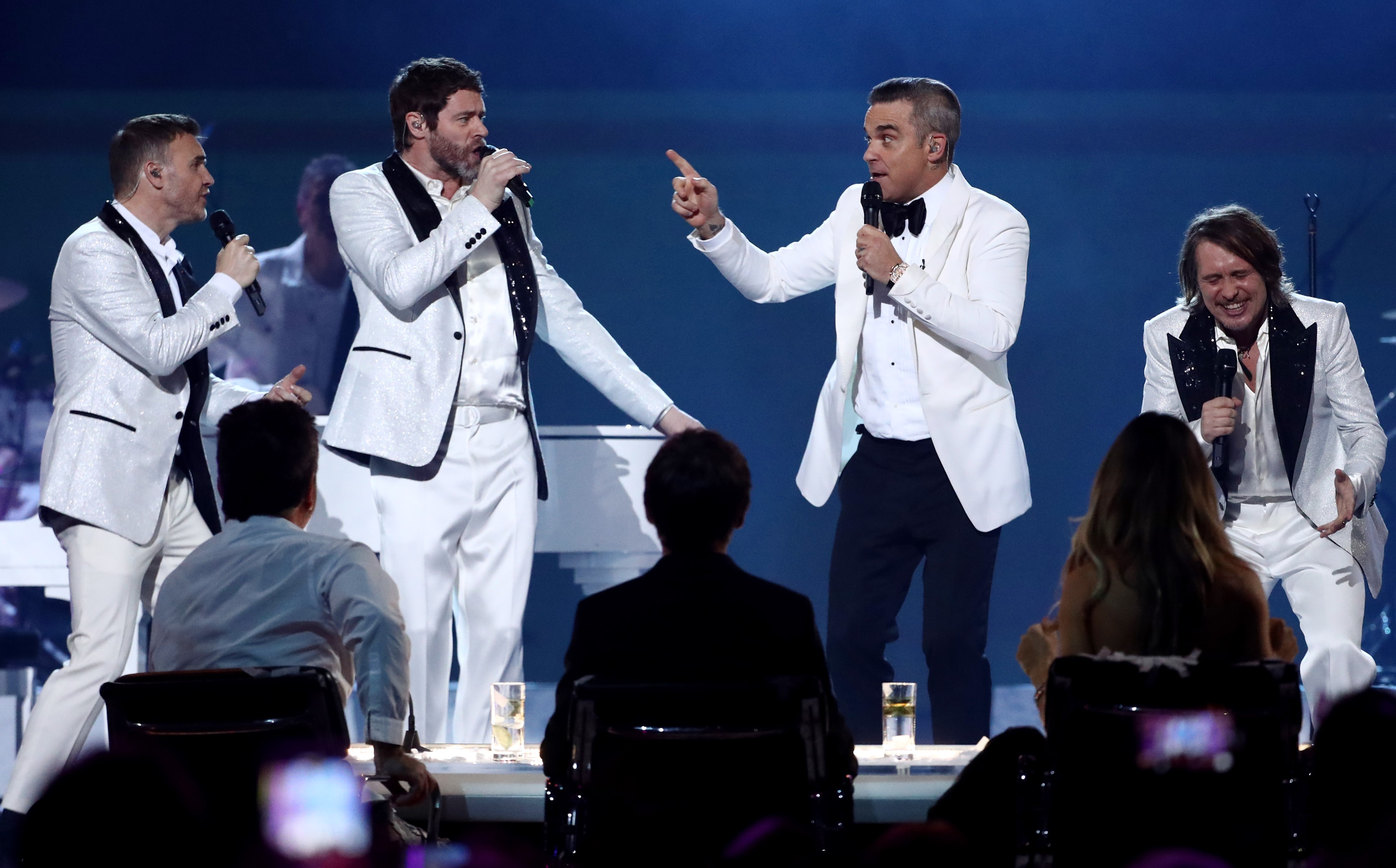
The band reunite with Williams during his stint as a judge on The X Factor at Wembley Arena, December 2018
REX FEATURES
After a nine-year blip of solo efforts packed with occasional highs — Barlow tried to be George Michael; Owen went indie; Donald largely DJ’d — but mostly lows, Take That re-formed in 2005 without Williams. The five had barely spoken in the interim period before ITV offered to make a documentary, Take That: For the Record, about the band and, soon afterwards, an offer of a new tour arrived. Donald said they worried nobody would show up but that was 20 years ago, an anniversary that means the second coming has long outlived the first.
They have largely remained the good guys in the eyes of the public, save for the incident in 2012 when Barlow, Owen and Donald were accused of tax avoidance after investing in a music scheme that could have served as a tax shelter. They apologised and repaid £20 million to HMRC. When I asked Barlow about this a few years back he said, “You’ve just got to own your mistakes,” which very much felt like the end of that conversation and is still a subject about which they have nothing to add.

SANE SEVEN FOR THE SUNDAY TIMES MAGAZINE. GROOMING: LIZ TAW. STYLING: LUKE DAY ASSISTED BY ZAC SUNMAN AND OLLY COOK. MARK WEARS SHIRT BY EDWARD SEXTON TROUSERS AND TIE BY DOLCE & GABBANA, SHOES BY GRENSON. HOWARD WEARS BLAZER BY MR P, ROLLNECK BY JOHN SMEDLEY, TROUSERS BY DOLCE & GABBANA, SHOES BY AMI GARY WEARS BLAZER BY EDWARD SEXTON, SHIRT BY ETON, TROUSERS BY DOLCE & GABBANA, SHOES BY BOSS, BOW TIE BY TURNBULL & ASSER
Was a reunion always on the cards? “No, definitely not,” Barlow says. By 1999 “I just couldn’t see a way back. I couldn’t see a world where it would happen because Robbie had gone not just big — he’d gone so big we were just left there. Who would want to come and see us? Who would care?”
It was a torrid time for Barlow — his songs were expected to make him the breakout star but, for example, Williams’s Let Me Entertain You simply packed more punch than his own Forever Love. He took it badly, suffering from bulimia in an attempt to “kill off the pop star” he thought he no longer was. His weight fluctuated hugely and in 2003 he resolved to completely change his diet.
“I felt like a failure,” he says. “I had all this shame of the position I was in and it would have been different if it happened today, because you could reach out for help. It’s not shameful to ask for help now. But I would not have done anything differently because it’s all led to here.”
• Gary Barlow: ‘I kissed the ground after my holiday boat trip horror’
I say I want to pivot to something more jolly — the three-hour Take That Netflix documentary due out in February. “My God, that’s not more jolly!” Owen exclaims with a laugh. “It’s not an easy watch,” Barlow says, suggesting no stone is left unturned and fans will see things they haven’t before. Orange and Williams have not been involved.
“Gary joked that at the end of the doc it looked like we were in an old folks’ home,” Owen says. “You watch yourself at 18 and you look amazing, then it goes ‘15 years later’ and cuts to us in the room ”
“… Where it looks like someone’s going to start knitting,” Barlow adds.
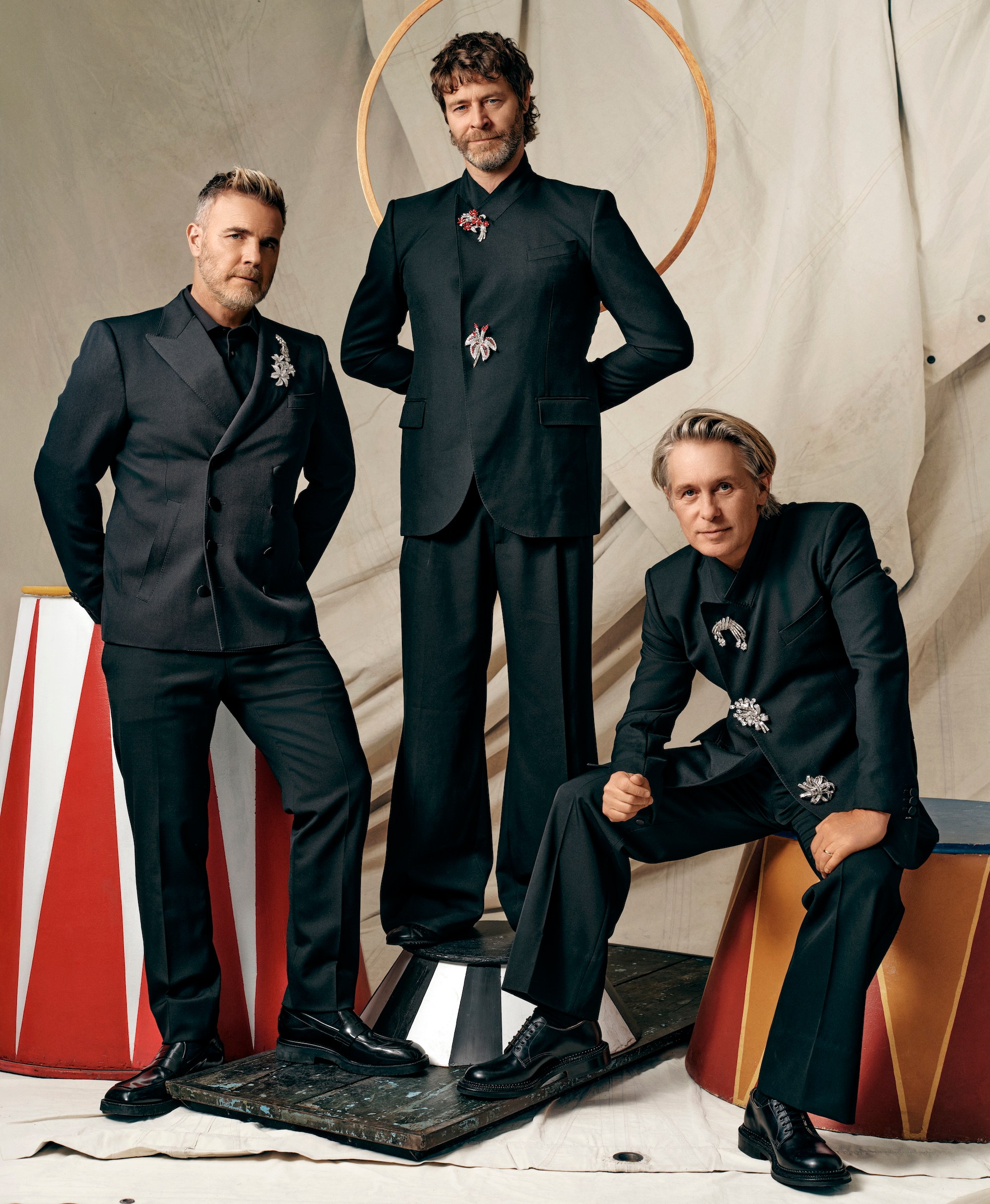
SANE SEVEN FOR THE SUNDAY TIMES MAGAZINE. GROOMING: LIZ TAW. STYLING: LUKE DAY ASSISTED BY ZAC SUNMAN AND OLLY COOK MARK WEARS SUIT AND BROOCHES BY DOLCE & GABBANA, SHOES BY GRENSON. HOWARD WEARS SUIT AND BROOCHES BY DOLCE & GABBANA, SHOES BY AMI GARY WEARS SUIT, SHIRT AND BROOCHES BY DOLCE & GABBANA, SHOES BY BOSS
They are buzzing about next year’s tour, where they plan on playing a few new songs. “We’re not doing dynamic pricing,” Barlow says of the ticketing method that caused such an uproar with Oasis last year.
They were, dare I say it, younger men when they performed their lively dance routines on the original Circus Live tour. Can they still pull them off? “I’m not sure we can give you an honest answer now,” Barlow says ahead of rehearsals. “But,” Owen adds, “we did say that if we’re going to recreate this, it has to be now — mainly because Howard’s back isn’t going to last.” The three men laugh. “I’m joking,” Owen says. “Howard’s the fittest of us all. He’ll still be spinning on his head in his eighties.”
They have been to the storage units, somewhere just outside London, that hold the giant elephant and their outfits from the old tour. “Some of them are a little mouldy,” Owen says, “a little worse for wear, but they’ve stood up.” And you just know what’s coming as Barlow adds, beaming: “Which is a bit like us then. Some bits have made it, some bits haven’t — and we’re a little rough round the edges.”
Tickets for Take That’s Circus Live tour next summer are on sale; takethat.com