
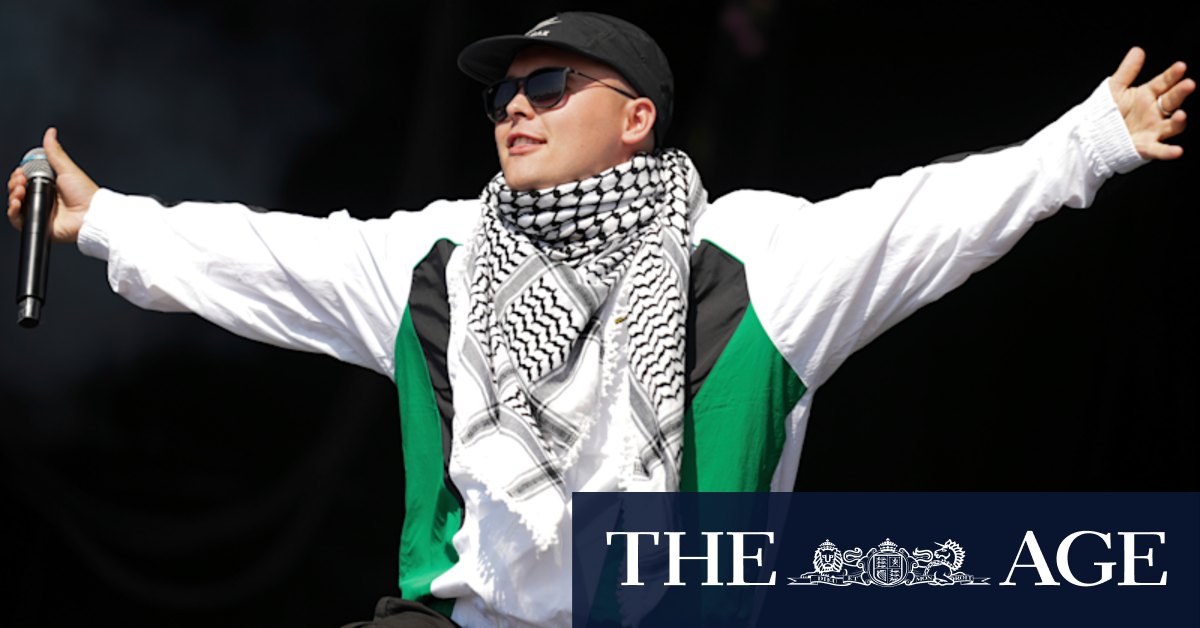
O’Hanna, 27, had claimed the prosecution was a politically motivated effort to silence the band’s support for Palestinians.
Loading
“We will not be silent,” the rapper told supporters outside the court after the charges against him were thrown out. “As people from Ireland, we know oppression, colonialism, famine and genocide.”
Northern Ireland First Minister Michelle O’Neill welcomed the move, saying the charges were part of “a calculated attempt to silence those who stand up and speak out against the Israeli genocide in Gaza”.
“Kneecap have used their platform on stages across the world to expose this genocide, and it is the responsibility of all of us to continue speaking out and standing against injustice in Palestine,” she said.
The Crown Prosecution Service said it was “reviewing the decision of the court carefully” and pointed out that it can be appealed.
London’s Metropolitan Police said it was working with the prosecutors to “understand the potential implications of this ruling for us and how that might impact on the processing of such cases in the future”.
Kneecap have been a centre of controversy in Britain since last year, when the previous Conservative government sought to block an arts grant for the band, citing their anti-British politics. That decision was overturned after the Labour Party won last year’s parliamentary election and Prime Minister Keir Starmer took office.
The group’s members played themselves in the feature film Kneecap, which won an audience award at the 2024 Sundance Film Festival. It was shortlisted for best foreign-language film and best original song at this year’s Academy Awards, though it did not make the final cut.
Get a note directly from our foreign correspondents on what’s making headlines around the world. Sign up for our weekly What in the World newsletter.