
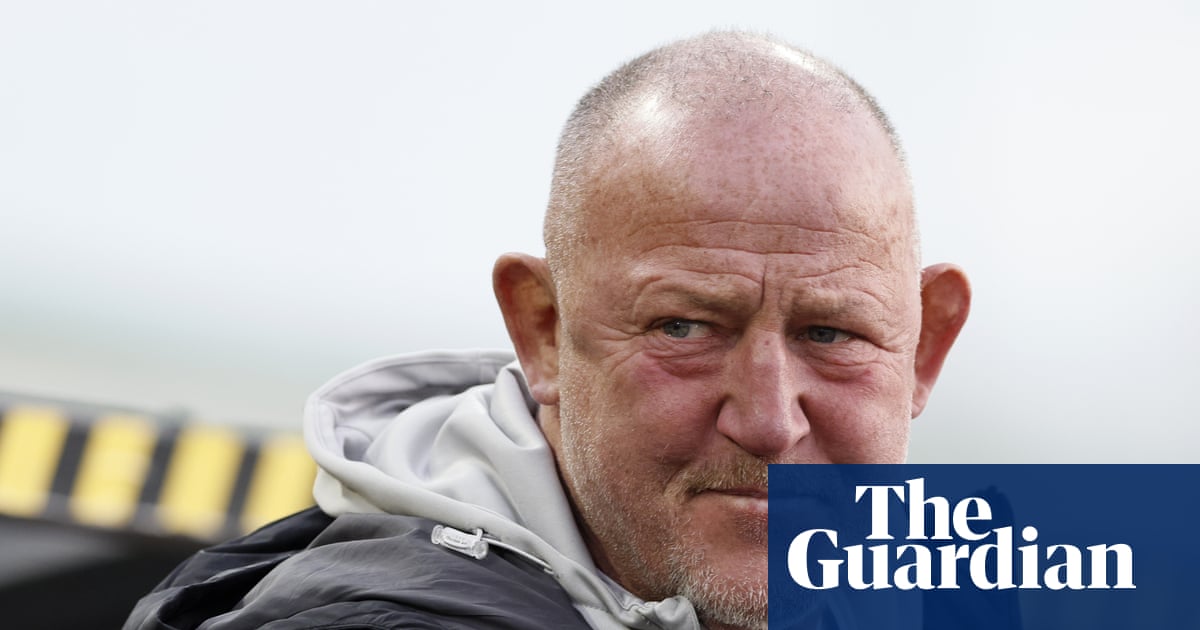
Steve Diamond has been let go by Newcastle just one match into the club’s new era and Gregor Townsend, the Scotland head coach, has joined Red Bull in an advisory role.
Diamond has been relieved of his duties with immediate effect, four days after the Red Bulls began the season with a 39-17 defeat by Saracens. Townsend joins Red Bull as a part-time consultant – he will work for the energy drinks giant for 30 days a year – and will oversee its global rugby strategy.
Red Bull completed the takeover of Newcastle two months ago and have lofty ambitions of reversing the club’s fortunes after a period in which they won just two matches in two seasons. The decision to dispense with Diamond so soon into the new season comes as a shock, however, after the 56-year-old former Sale coach guided the club through that difficult period in such an admirable manner.
Since the takeover was completed, there have been question marks over whether Diamond – who has forged a reputation as a no-nonsense firefighter – was the right fit for the club but he spent the summer using his wealth of experience to sign a raft of players, including Christian Wade and Liam Williams. He has regularly spoken of his determination to make Newcastle competitive this season before recruiting A-list signings for the following campaign but Red Bull has moved quickly to overhaul the management structure and Diamond has been ruthlessly shown the door.
Scotland head coach Gregor Townsend work only part-time with Red Bull. Photograph: David Gibson/Fotosport/Shutterstock
“We would like to thank Steve Diamond for his passion, contribution, and guidance which have been instrumental in supporting the club throughout this important transition,” read a brief Newcastle statement.
Alan Dickens has been promoted to head coach while the former Scotland prop Neil McIlroy joins as sporting general manager next month, taking up a similar role to ones he has held in France at the rugby league team Catalans Dragons and at Clermont Auvergne. John Fletcher, a highly rated development coach, joins from the Scottish Rugby Union, with Red Bull seeking “the development of local talent into world-class players”. Jonny Petrie will shortly be taking up the role of managing director having held the same
position at Edinburgh. He has spent the last five years as Ulster’s chief executive.
skip past newsletter promotion
The latest rugby union news and analysis, plus all the week’s action reviewed
Privacy Notice: Newsletters may contain information about charities, online ads, and content funded by outside parties. If you do not have an account, we will create a guest account for you on theguardian.com to send you this newsletter. You can complete full registration at any time. For more information about how we use your data see our Privacy Policy. We use Google reCaptcha to protect our website and the Google Privacy Policy and Terms of Service apply.
after newsletter promotion
Townsend’s appointment by Red Bull is the most eye-catching, however. He will keep his Scotland job and work only part-time with Red Bull but on the face of it his role appears similar to that which the former Liverpool manager Jürgen Klopp holds as the company’s global head of soccer. The Newcastle overhaul also suggests Red Bull is implementing a similar model employed to such success with RB Leipzig.
A Scottish Rugby spokesperson said: “Red Bull have appointed Gregor Townsend as strategic advisor and consultant on their global rugby strategy with Scottish Rugby’s full knowledge and support. This is a great opportunity for Gregor with one of the biggest sporting organisations in the world. He will be participating in high-level strategic conversations with a powerhouse in sport and we see that as being beneficial to Scottish Rugby going forward. Gregor remains fully committed to his role as Scotland head coach and we see this new role working alongside that well.”
Meanwhile, World Rugby’s has agreed new player workload guidelines for the elite game, and the sport’s global body has said next year’s inaugural Nations Championship can now go ahead as planned. Under the guidelines, players should not play more than 30 games in a single season or in six consecutive match weeks, and should also have a dedicated five-week off-season break. They will be entitled to minimum rest periods of at least one week when selected for international fixtures, and across a year have 12 weeks of non-contact time, with clearer communication encouraged between club and country.