
The Bledisloe Cup arrives in Perth with the kind of electricity that makes even neutral supporters lean forward. Australia returned from Auckland with frustration and belief in equal measure.
The nine-point loss at Eden Park stung because the Wallabies were in the fight for long passages, yet they lacked the final touch in the twenty-two. Now they bring the rivalry across the Tasman to a sold-out Optus Stadium, a venue that has given both sides extremes. In 2019, Australia won with a swagger that felt like a turning point. In 2021, New Zealand hit back with the ruthless precision that has long defined them. This time, the context carries extra weight. It is James Slipper’s farewell in gold, it is Joe Schmidt’s chance to stamp a line under year one, and it is Scott Robertson’s opportunity to show that an injury-reshuffled All Blacks squad can still close out a tournament at a sprint.
This Rugby Championship has been tight at every turn. All four teams have taken lumps out of each other, and momentum has swung week to week rather than month to month. That is why this match matters beyond the usual theatre. It is not only about a trophy. It is about who has learned fastest across the first five rounds and who can now turn lessons into control. For Australia, the ask is clarity and composure. For New Zealand, the demand is discipline and definition. For everyone else, it is a chance to see a modern classic under lights in a city that has become a proving ground for both jerseys.
Team News
Australia make five changes to the starting fifteen, and the message is unmistakable. Jake Gordon returns to start and partners with Tane Edmed, who is handed the ten jersey to run the attack with tempo and a calmer exit game.
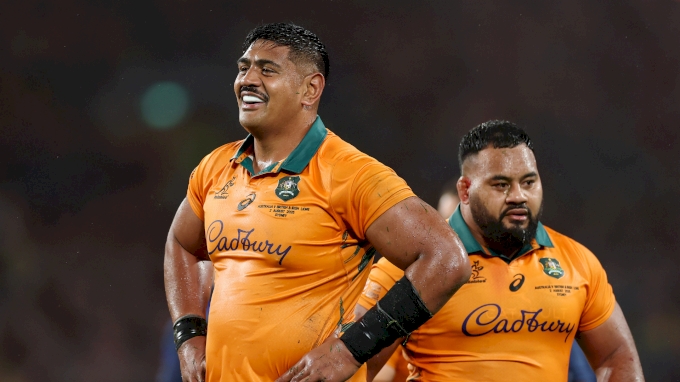
Allan Alaalatoa anchors an all-Brumbies front row with Billy Pollard at hooker and James Slipper at loosehead in his final Test in Wallaby colours. Will Skelton is back in the second row to reunite with Nick Frost, while the back row remains the same with Tom Hooper, Fraser McReight and captain Harry Wilson, who has grown into the role with quiet authority.
In the midfield, Len Ikitau and Joseph Aukuso Suaalii continue to build their connection. Filipo Daugunu earns a first start of the year on the left wing and joins Harry Potter and Max Jorgensen in a back three that can kick, chase and counter with equal intent. The bench is notable for the return of Rob Valetini, who brings carrying power late, while Ryan Lonergan and James O Connor provide playmaking cover, and Josh Flook offers utility value across the backline.
New Zealand adjusts through injury and choice. Scott Barrett returns to the starting side to captain from lock and partners Tupou Vaa’i. Peter Lakai is promoted to a first start at number eight after a series of lively cameos, with Wallace Sititi set to bring impact from the bench. Tamaiti Williams and Fletcher Newell come into the front row, a nod to the need for scrum stability after setbacks in Auckland.
In the backs, Damian McKenzie starts at fly half to steer the shape and the tempo, Quinn Tupaea is trusted at outside centre to add direct running and defensive bite, and Leicester Fainga’anuku returns on the left wing to give the visitors punch on the carry. Will Jordan reaches a landmark fiftieth cap at fullback and remains the most dangerous broken field runner on either team. The bench backs that intent with Samisoni Taukei Aho, George Bower, Pasilio Tosi, Patrick Tuipulotu, Sititi, Cortez Ratima, Rieko Ioane and Ruben Love.
Key Match Up
Will Skelton against Scott Barrett is the axis that everything else spins around. Skelton changes the geometry of a rugby match. Defences compress when he carries, rucks slow when he arrives second and third man, and mauls take on a darker shade of green and gold when he locks in. His impact on Australia this season has been felt as much in the unseen effort as in highlight carries. When he plays, the Wallabies win more ruck races in the middle third, and they win more penalties in maul defence as teams over-commit to stop his weight. Perth suits him. The turf is true, the crowd is loud, and the game will not drift into a track meet if Australia hold shape.
Barrett operates with a different kind of dominance. The All Blacks are rarely chaotic when he is calling the lineout and organising restarts. He secures the ball at height, he clips the tempo to what his nine and ten want, and he positions bodies where the breakdown will be won in two-phase time. In Round Five, he was the steadying hand that allowed New Zealand to keep composure when Australia surged. Pair that with his willingness to carry in tight, and you have the perfect foil to Skelton’s raw gravitational pull. If Barrett owns the air and wins the decision-making battle at set pieces, New Zealand can script the game to suit McKenzie’s vision.
There are secondary duels that will tilt the scoreboard. The nine battle between Jake Gordon and Cam Roigard is tempo versus tempo with two very different shapes. Gordon thrives on quick taps, short side raids and a contestable kicking game that buys metres and time for his forwards. Roigard loves to hold defenders with a dart before tipping late to his carriers and has a nose for the support line that turns half-chances into tries. At fly half, Edmed brings a square stance and a compact passing game that can feed the first receiver forwards and then hit wide on the second touch. McKenzie is more jazz than classical, forever probing with movement and feints and forever asking defenders to decide early. The back three battle also matters. Jorgensen’s backfield coverage and kick return smarts must blunt Will Jordan’s eye for grass. If Jordan gets running lanes, the All Blacks find points.
Key Stats From Round Five
The Eden Park ledger explains why both camps have leaned into their selections. New Zealand won the match by nine with a late try that sealed a performance built on accuracy at key moments. They created a clean launch ball from a lineout and punished Australia on two long-range counters. Jordie Barrett and Will Jordan both passed one hundred running metres as the All Blacks repeatedly found space in the back field. Australia were brave and direct. Tom Hooper carried with intent, Harry Potter made important yards on kick return, and the set piece gave them a foothold, but penalties at the attacking ruck and a handful of handling errors stalled promising sequences. The lesson was simple. The All Blacks needed only a few clear looks to land telling blows. Australia needed more visits for the same return.
Opta trends across the Championship add another layer. New Zealand leads the competition in lineout tries, which underlines how vital Barrett’s calling and the throw from Codie Taylor will be in Perth. Australia have trimmed their penalty count from the early rounds but still sit a shade higher than New Zealand, which makes exit discipline and offside lines non-negotiable. New Zealand continue to be the most dangerous team in the tournament from turnover ball and kick return. Australia remain most effective when they build pressure through ten or more phase passages rather than trading chaotic strikes. The numbers point to a straightforward truth. The team that controls the middle third through set pieces and kicking detail will own the scoreboard.
What History Tells Us
Perth can swing either way. Australia’s big win in 2019 was a snapshot of what is possible when their skill and ambition align with discipline. Two years later, New Zealand won at a canter because their defence strangled the Wallabies’ exit and their counterattack lit the match. The broader head-to-head is no secret. New Zealand has dominated the Bledisloe era, yet the Wallabies have often found their best at home when they marry set-piece parity to a ferocious kick chase. This is the recipe again. Own the air, squeeze the edges, take the points.
Tactical Focus
Australia’s plan must be about sequencing rather than volume. Use Skelton’s threat to win central penalties, kick to the corners, then force New Zealand to defend a set of repeat mauls and pick and go pressure. From there, let Gordon speed the ruck only when the defence is unbalanced. Kick variation is critical. Contestables for Potter, deep touch finders for Jorgensen, and short kicks to hold a blitzing edge. Defensively, the Wallabies have to deny McKenzie early touches on front-foot ball and keep Jordie Barrett honest with hard inside pressure at the second receiver.
New Zealand’s blueprint is familiar. Keep the ball alive, play off two playmakers, and ask the Wallabies to make thirty more tackles than they want. Roigard will keep the tempo high around the ruck, and McKenzie will shift the point of attack to prevent Skelton from settling on one channel. Fainga anuku brings a straight line that can pin defenders for Jordan to sweep in behind. The All Blacks will kick when the picture is not right, and when they kick, they will chase to kill time rather than just metres.
Prediction
The Wallabies have selected for control. Skelton’s presence should raise the floor of their set piece and their maul. Gordon’s energy and Edmed’s composure can nudge the match into the corners and keep it there. New Zealand will land blows because they always do, but if Australia keep their penalty count tight and bank points from pressure, the final ten minutes can belong to the home side. Call it Australia twenty-nine to New Zealand twenty-three and a send-off worthy of Slipper’s service. Australia by six.
Team RostersAustralia
15 Max Jorgensen, 14 Harry Potter, 13 Joseph Aukuso Suaalii, 12 Len Ikitau, 11 Filipo Daugunu, 10 Tane Edmed, 9 Jake Gordon, 8 Harry Wilson (c), 7 Fraser McReight, 6 Tom Hooper, 5 Will Skelton, 4 Nick Frost, 3 Allan Alaalatoa, 2 Billy Pollard, 1 James Slipper.
Replacements: 16 Josh Nasser, 17 Tom Robertson, 18 Taniela Tupou, 19 Jeremy Williams, 20 Rob Valetini, 21 Ryan Lonergan, 22 James O’Connor, 23 Josh Flook.
New Zealand
15 Will Jordan, 14 Leroy Carter, 13 Quinn Tupaea, 12 Jordie Barrett, 11 Leicester Fainga’anuku, 10 Damian McKenzie, 9 Cam Roigard, 8 Peter Lakai, 7 Ardie Savea, 6 Simon Parker, 5 Tupou Vaa’i, 4 Scott Barrett (c), 3 Fletcher Newell, 2 Codie Taylor, 1 Tamaiti Williams.
Replacements: 16 Samisoni Taukei’aho, 17 George Bower, 18 Pasilio Tosi, 19 Patrick Tuipulotu, 20 Wallace Sititi, 21 Cortez Ratima, 22 Rieko Ioane, 23 Ruben Love.
How To Watch Rugby Matches In The United States On FloRugby
Professional club rugby in Europe all streams on FloRugby and the FloSports app in the United States. FloRugby and FloSports also are the U.S. home to:
FloRugby also is home to match archives and match replays.
Join The Rugby Conversation On FloRugby Social