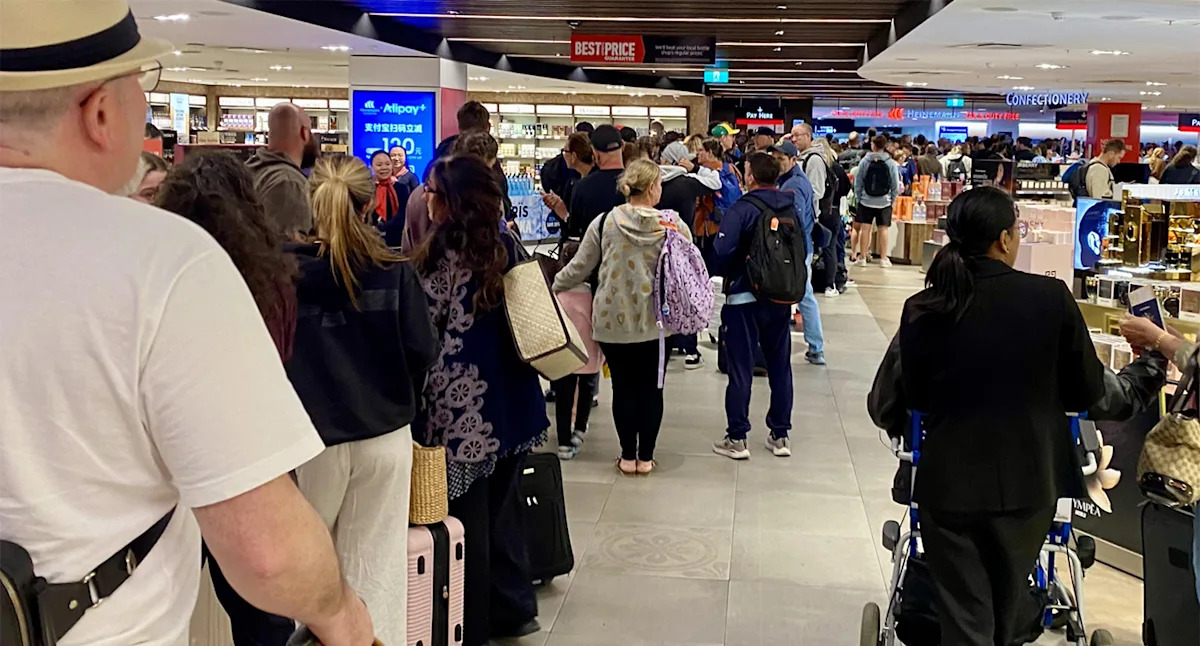
Australian travellers could face major “chaos” if a cyberattack targeted local airports, experts warn, following a wave of disruption across Europe’s busiest hubs. Last month, several European airports were forced to halt check-ins, delay flights, and pause baggage handling after a failure in third-party software providers, highlighting just how interconnected modern air travel systems have become.
“It was an issue with third-party software providers surrounding check-in and baggage facilities,” Professor Nigel Phair from the Department of Software Systems & Cybersecurity said. “When these systems fail, the knock-on effects ripple across multiple airports and airlines, creating widespread disruption for travellers.”
While speculation has swirled about whether the European attack involved organised crime or opportunistic exploitation of a technical flaw, Phair said it’s too early to say. “Until a thorough investigation is completed and the results are made public, any talk of nation-state or organised crime involvement is just speculation,” he said.
Around the world, such airport incidents are becoming a concerning trend, showing how reliant the industry is on complex, interconnected software.
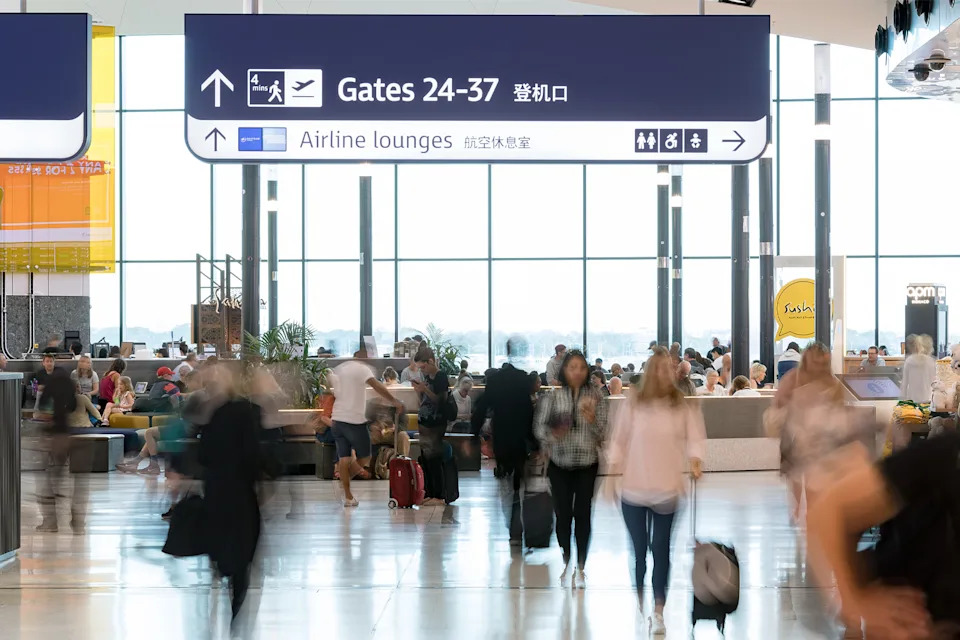
Around the world airport incidents are becoming a concerning trend. Source: Getty
What can we learn from Europe?
But, Phair warns, the lessons from Europe are particularly relevant to Australia. “Airports and airlines are globally interconnected,” Phair explained. “Australia uses many of the same software providers as European airports. Our systems are particularly interconnected because many travellers pass through multiple airports and use multiple airlines. Even a minor delay in one part of the system can cascade and affect thousands of passengers.”
Despite these vulnerabilities, Australian airports are not without defences. “We do have robust mechanisms in place, such as support from the Australian Government’s Critical Infrastructure Security Centre, which helps airport operators understand risks and meet regulatory requirements,” Phair notes. “That said, no system is completely immune — a cyber-related outage could still happen here.”
How would Australian airports cope?
Recent incidents, including the Qantas data breach, have highlighted that cyber threats are not always purely technical. “The Qantas incident showed us that cyber breaches aren’t always purely technical,” Phair said. “They often involve social engineering or employee error, which highlights the need for ongoing staff training and vigilance.”
If a cyberattack struck Sydney or Melbourne airports tomorrow, the impact on travellers would be immediate and severe. “We’d be looking at chaos,” Phair said. “That’s why it’s crucial that airports and airlines regularly practise scenarios for system failures or cyber incidents, to ensure they can respond quickly and minimise disruption.”
With the holiday season approaching, travellers are urged to stay aware and prepared. “We should always be aware of cyber risks, no matter the time of year,” Phair warned. “Travellers can’t control everything, but being aware and prepared for delays is wise.”
Do you have a story tip? Email: newsroomau@yahoonews.com.
You can also follow us on Facebook, Instagram, TikTok, Twitter and YouTube.