
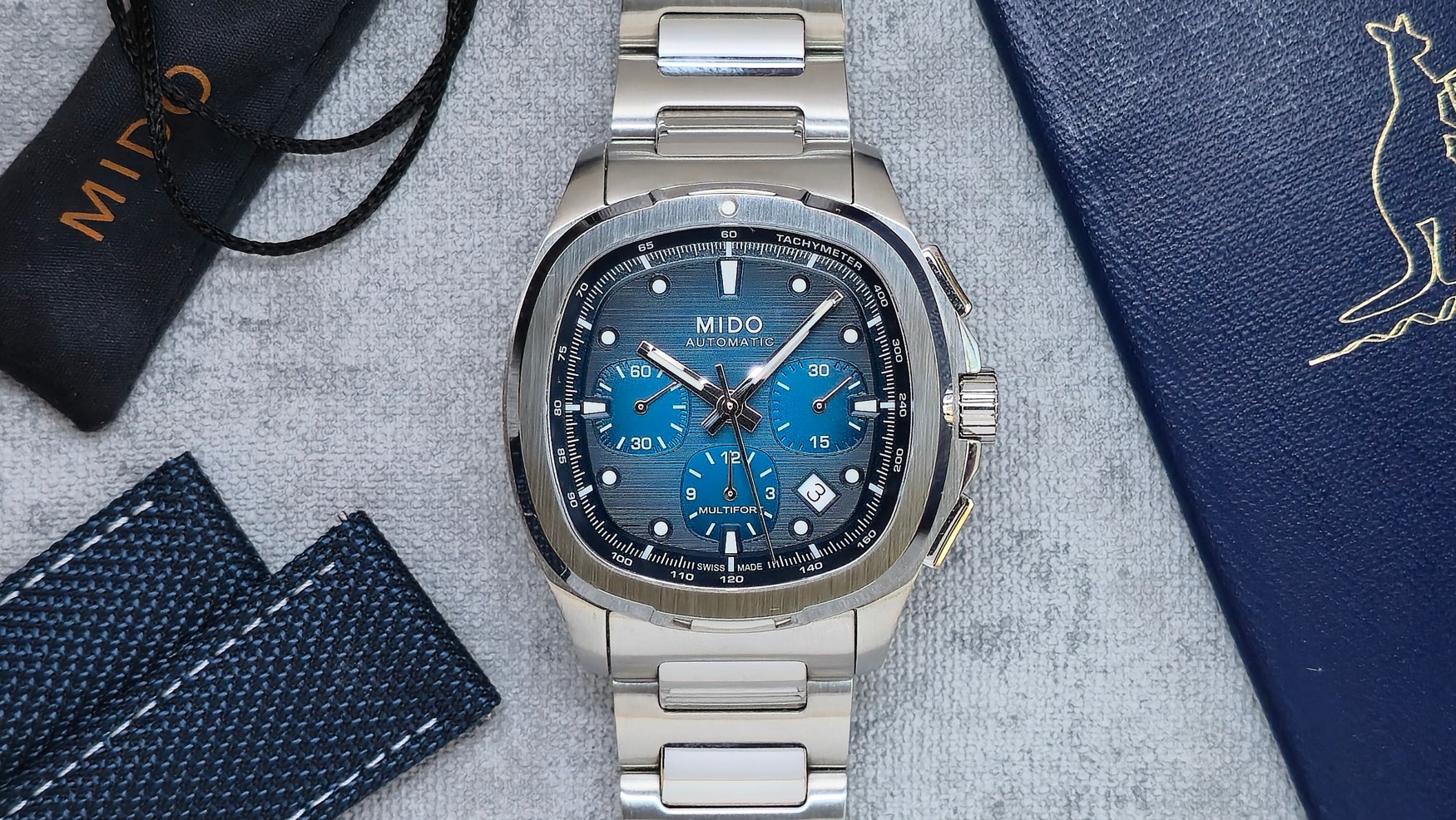
Watch design trends, like fashion trends, are cyclical. What was once outdated and passé is now edgy and cool: a great example of this is two-tone watches, which were huge in the 1980s and 90s, fell out of favour in the 2000s and 2010s, and seem poised to make a comeback in the 2020s. TV dials are another great example. While many of the most enduring designs in watchmaking come from the 60s and 1970s, TV dials – with their Space Race, bell-bottom, shag carpet connotations – were long overlooked. Until now, that is. It seems that modern watch collectors are obsessed with the weirdest and wackiest impulses of the 70s, whether that’s stone dials, faceted crystals, or the ‘squircle’ cases of TV dial watches.
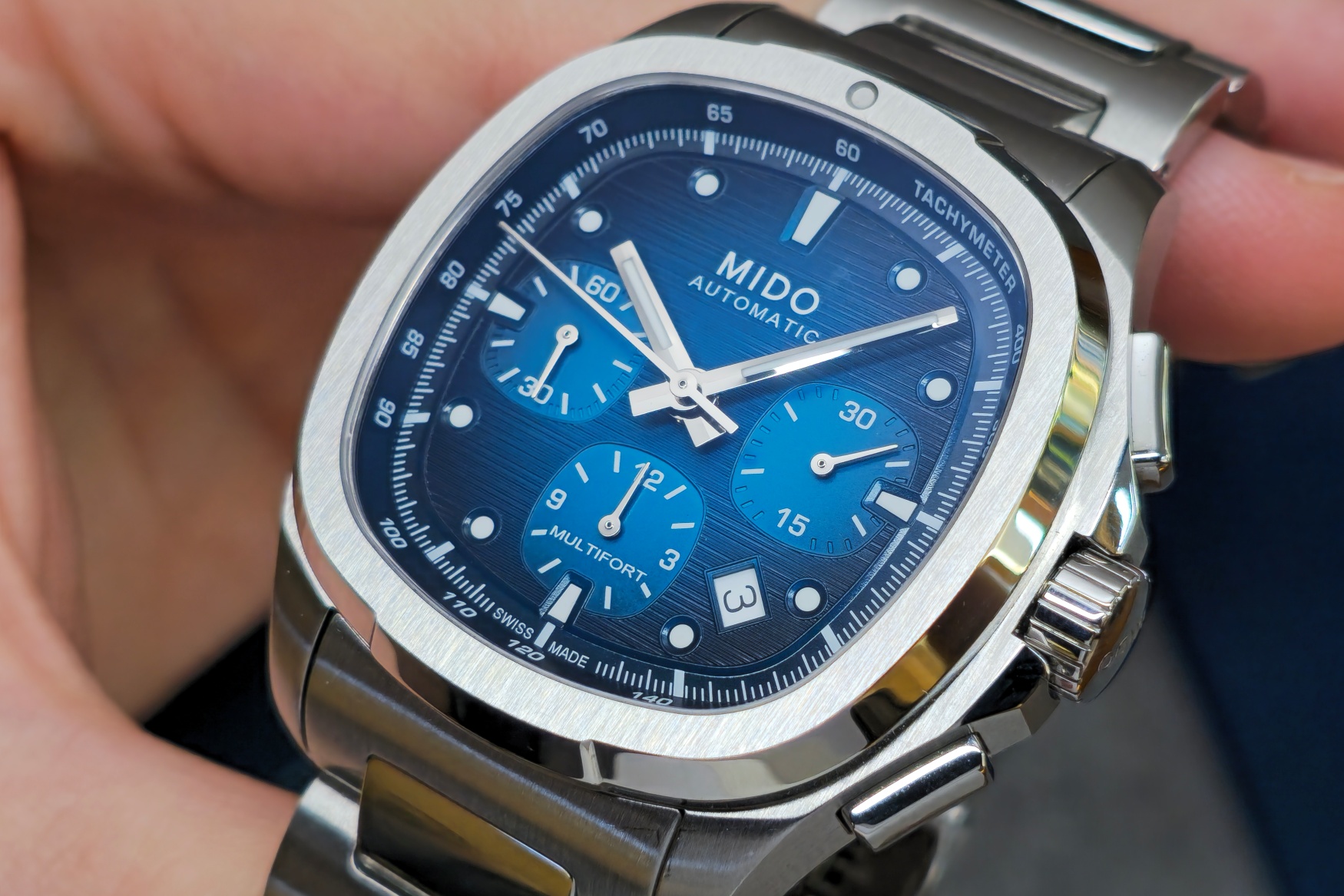
Enter the Mido Multifort TV. First launched in 1973 but brought back in 2023 with the Multifort TV Big Date, it’s grown to become one of Mido’s best-selling collections globally, offering big 70s vibes at a very reasonable price. 2025 has seen the Multifort TV Chronograph join the range, representing the first major mechanical complication in the collection. I had the chance to wear this Mido for a solid month, both around Sydney as well as during a trip to Bangkok with the brand: it’s rare that I get the chance to spend such a long time reviewing a watch, and it’s not the sort of watch I’d normally go for, but I have to say, I enjoyed having it on my wrist.
Tuning in
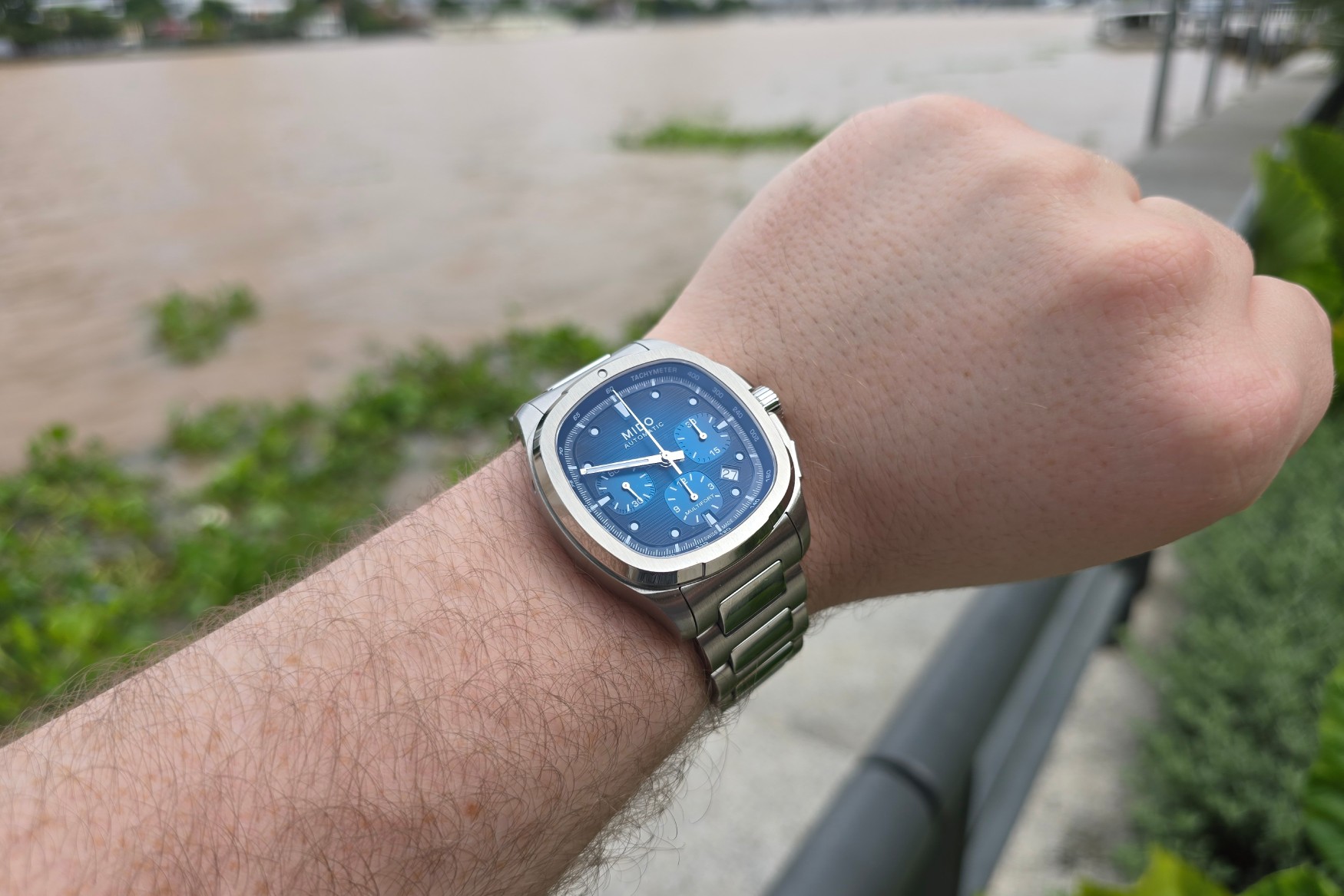
Let’s start with the obvious: the Mido Multifort TV Chronograph wears big. On paper, it doesn’t sound too overwhelming – 42mm in diameter is large but not obscene, and 14.3mm is thick but not insane – but because of its wide dial aperture and integrated look (although it isn’t actually an integrated bracelet watch), it cuts a pretty bold figure on the wrist… Or, if I’m committing to the TV puns, it’s a big screen.
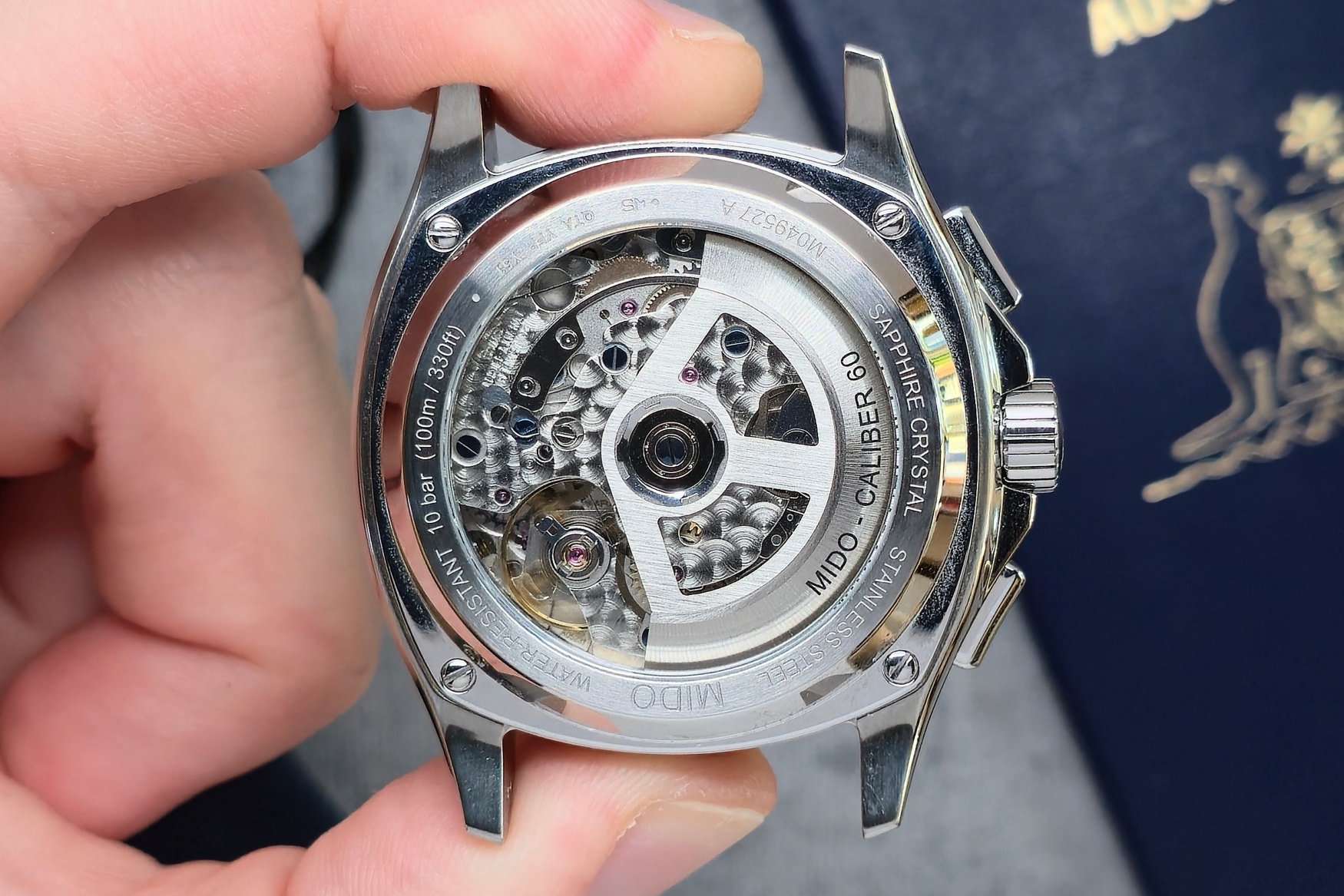
Under the hood beats the Mido Calibre 60, which is based on the ETA A05.H31, itself an evolution of the venerable Valjoux 7750. I’d describe it as an above-average mechanical chronograph movement: it’s got a better power reserve than a 7750, offering 60 hours (hence its name), has a Nivachron balance spring, and beats at 4 Hz. Unusually, the Multifort TV Chronograph has a pusher on the left-hand side of the case to advance the date window. You can still advance the date as you set the watch, but having the pusher is handy if you haven’t worn the watch in a week or two and need to cycle through the whole date wheel to get to the correct date – it’s more convenient and puts less stress on the crown and winding stem.
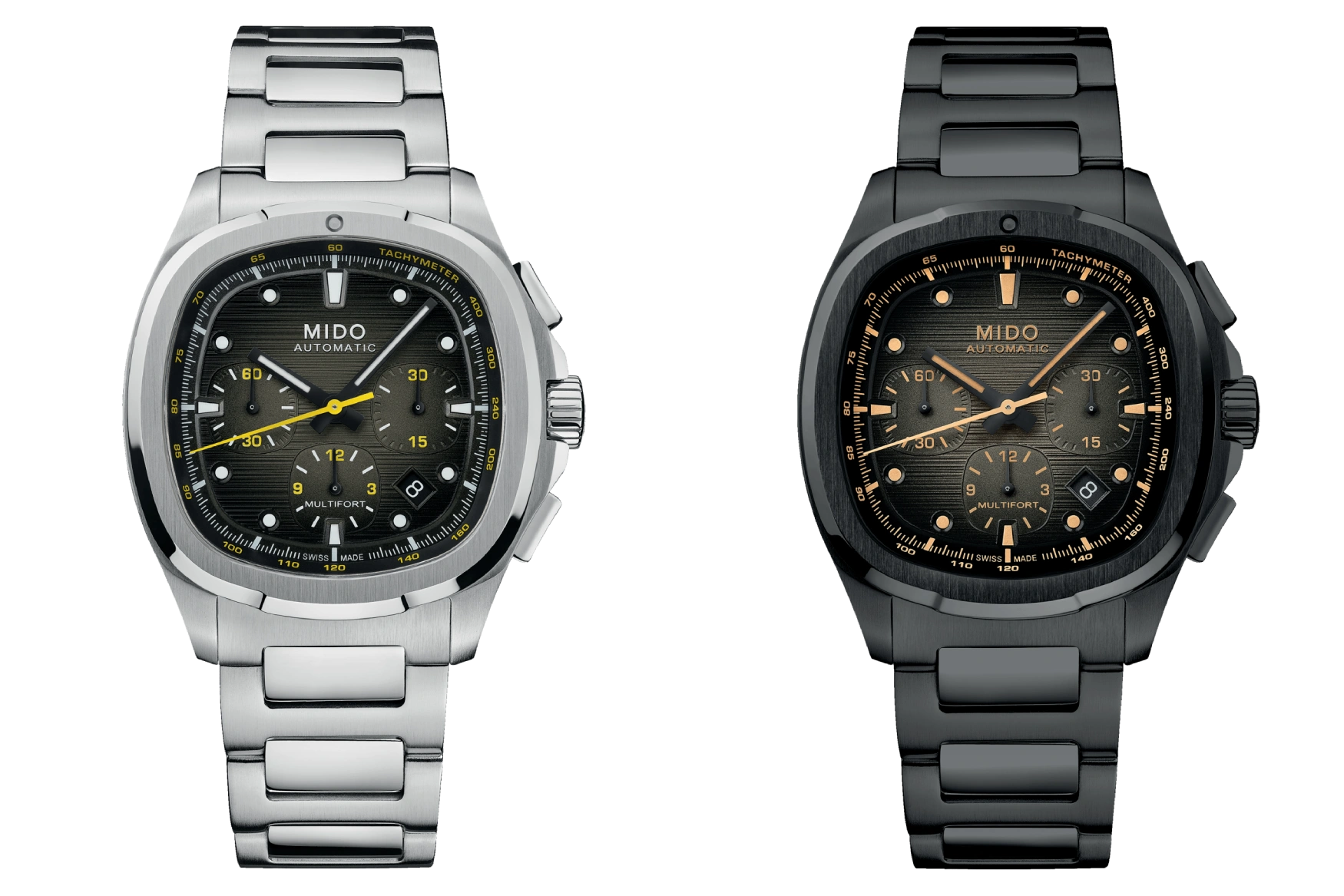
There are three different models in the collection: the blue-dial model with white highlights that I had for my review, a grey-dial model with orangy-yellow and white highlights, and a black PVD-coated model also with a grey dial but with tan highlights. Of the three, the blue model is easily the most versatile (or perhaps the least overtly 70s), which is why it appeals most to me.
Prime time TV
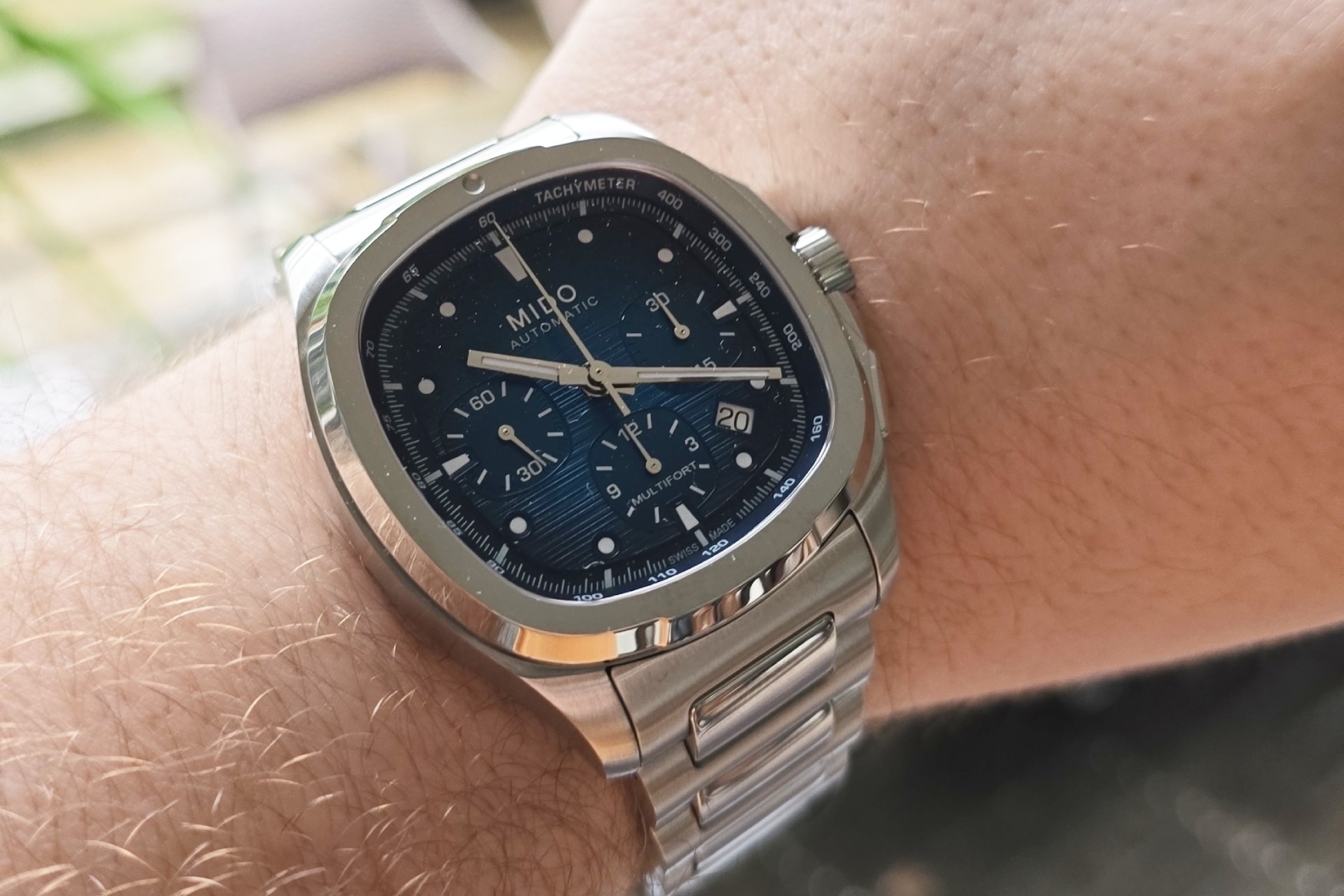
Now, I’m not normally a big fan of chronographs, not for any good reason. I should be, as a motorsports fan, but it’s a complication that’s never truly spoken to me. Indeed, this Mido review was probably the longest I’d ever worn a mechanical chronograph (my first ‘nice’ watch was a quartz Certina DS Podium, which I wore plenty, but it doesn’t get that much wrist time these days). Nor am I a huge fan of TV dial watches: I do like weird and wacky 70s stuff, but it’s not a style of watch I typically gravitate to. However, I quite enjoyed my time with the Multifort TV Chronograph, especially being able to travel overseas with it to Thailand.
I actually found having a chronograph on my wrist quite helpful for tracking how long I was in the air, as well as for timing how long boarding procedures took (Thai Airways is actually pretty efficient in my experience). More specifically, though, I really gelled with the vibe of the Multifort TV Chronograph. This is not a subtle watch, but it’s not meant to be. It’s a bit of a style statement, but it’s by no means lairy. It’s sporty, but you can easily dress it up, too.
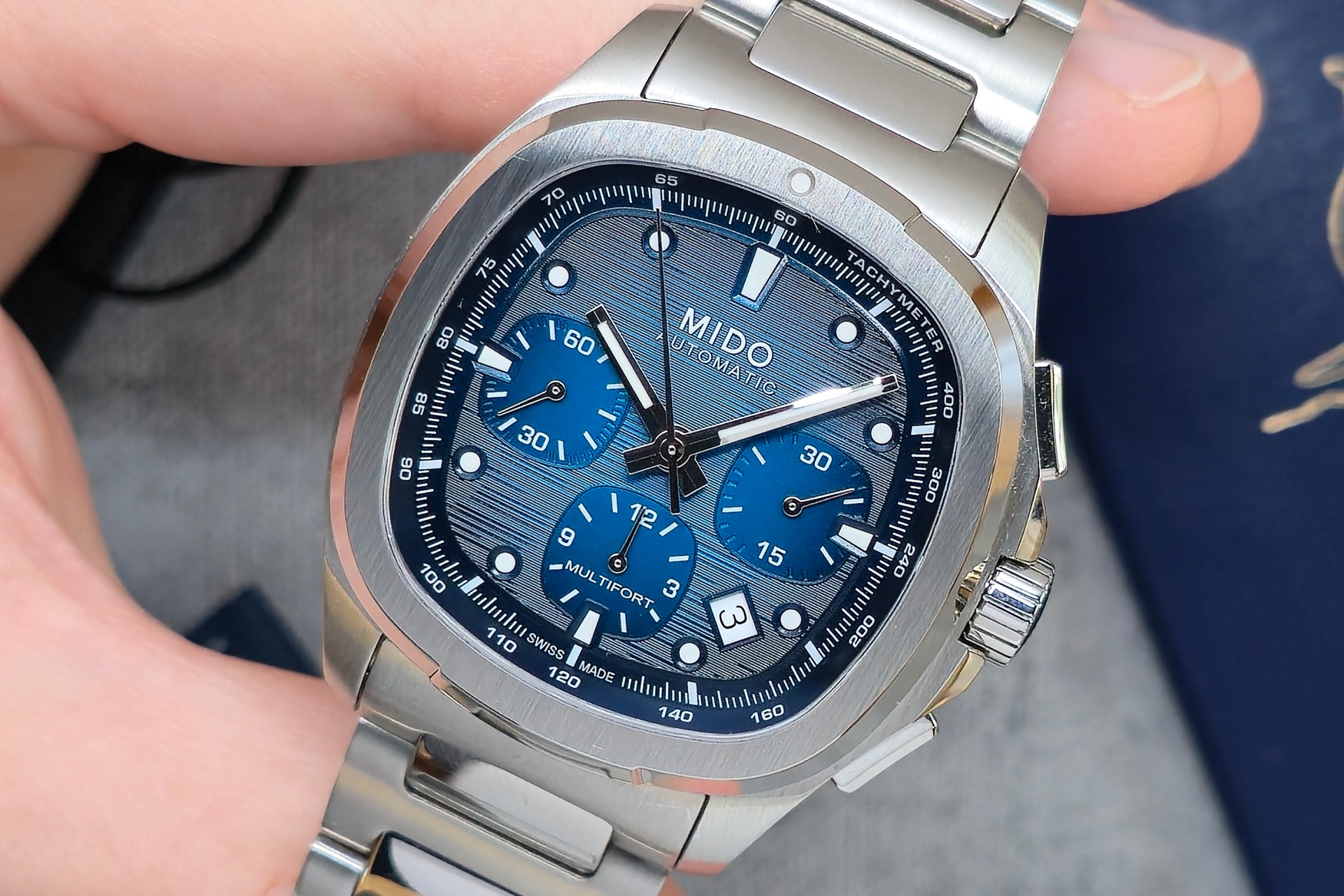
Its blue fumé dial, with its subtle horizontal striations and recessed lume plots, gives it a distinct look, as do the squircle-shaped subdials, which match its case design. Maybe it’s just because of the hotel I was staying at, but the dial really reminded me of a swimming pool… I also like how the bezel has a single lumed pip at 12 o’clock, and the mix of finishes across its case and bracelet.
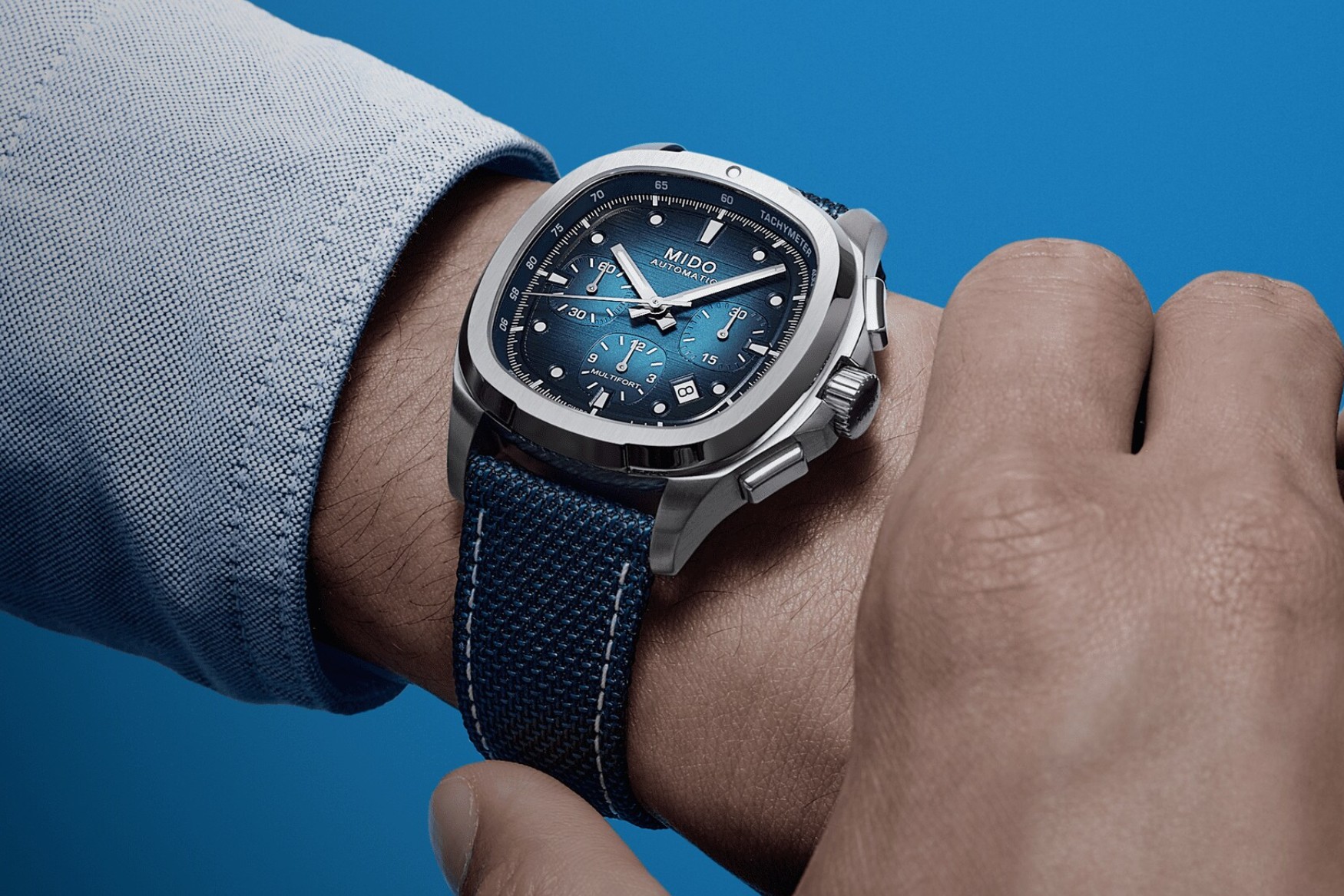
On the wrist, it’s a little top-heavy, but it’s quite comfortable: while the additional textile strap is fine, and does reduce the weight of the watch significantly, the bracelet is too good not to wear, in my opinion. It balances the weight of the watch but also just looks and feels superb, with great light play to be found with those big, polished centre links.
Closing thoughts
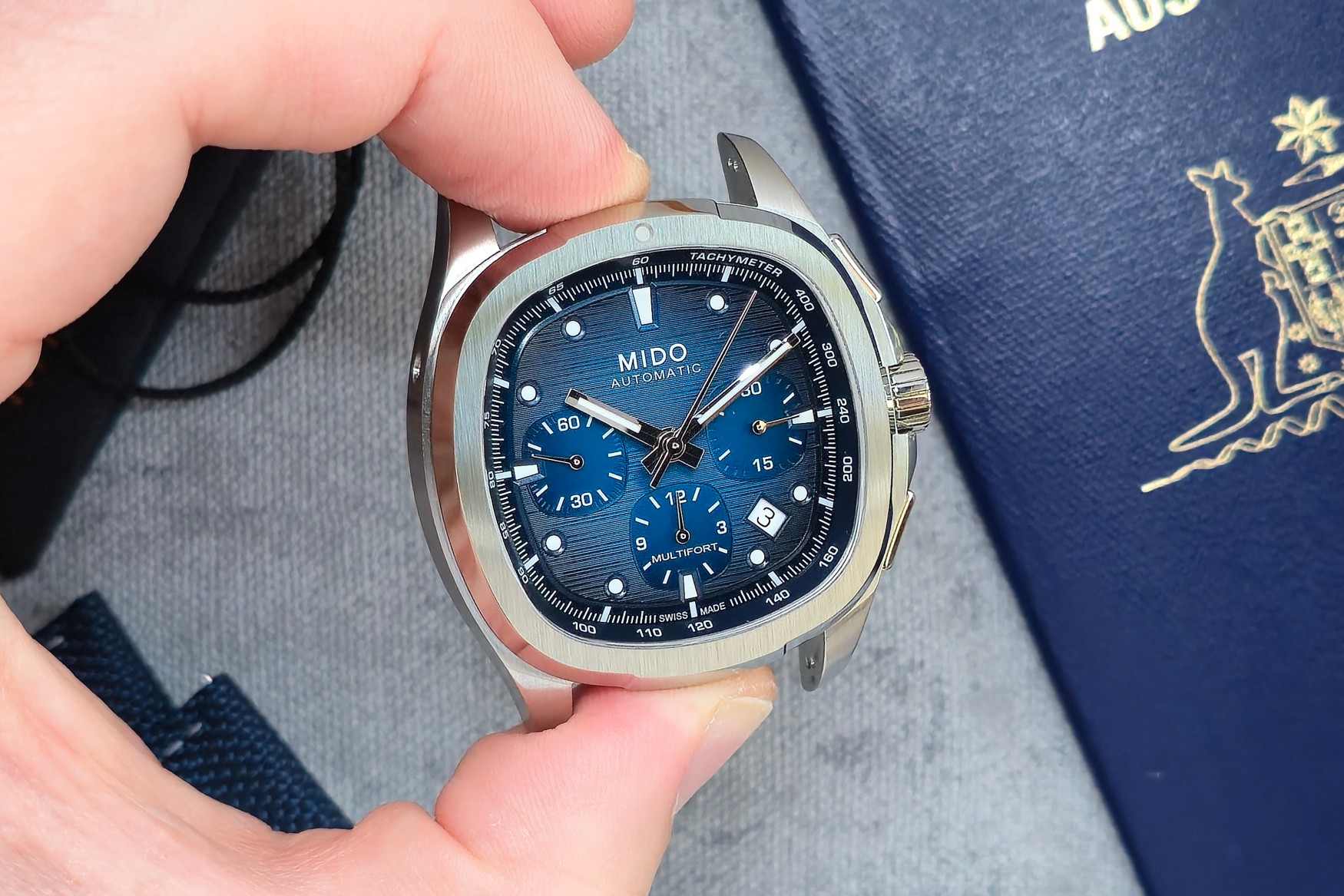
To call a spade a spade, one of the biggest selling points of the Mido Multifort TV is that it looks a bit like a Patek Philippe Nautilus, but it’s a fraction of the price (and there’s no waiting list). Nautilus chronographs are particularly unobtanium, especially in steel, and while I’m sure few collectors are seriously cross-shopping Mido and Patek, the reality is that the Multifort TV Chronograph offers an aesthetically similar experience.
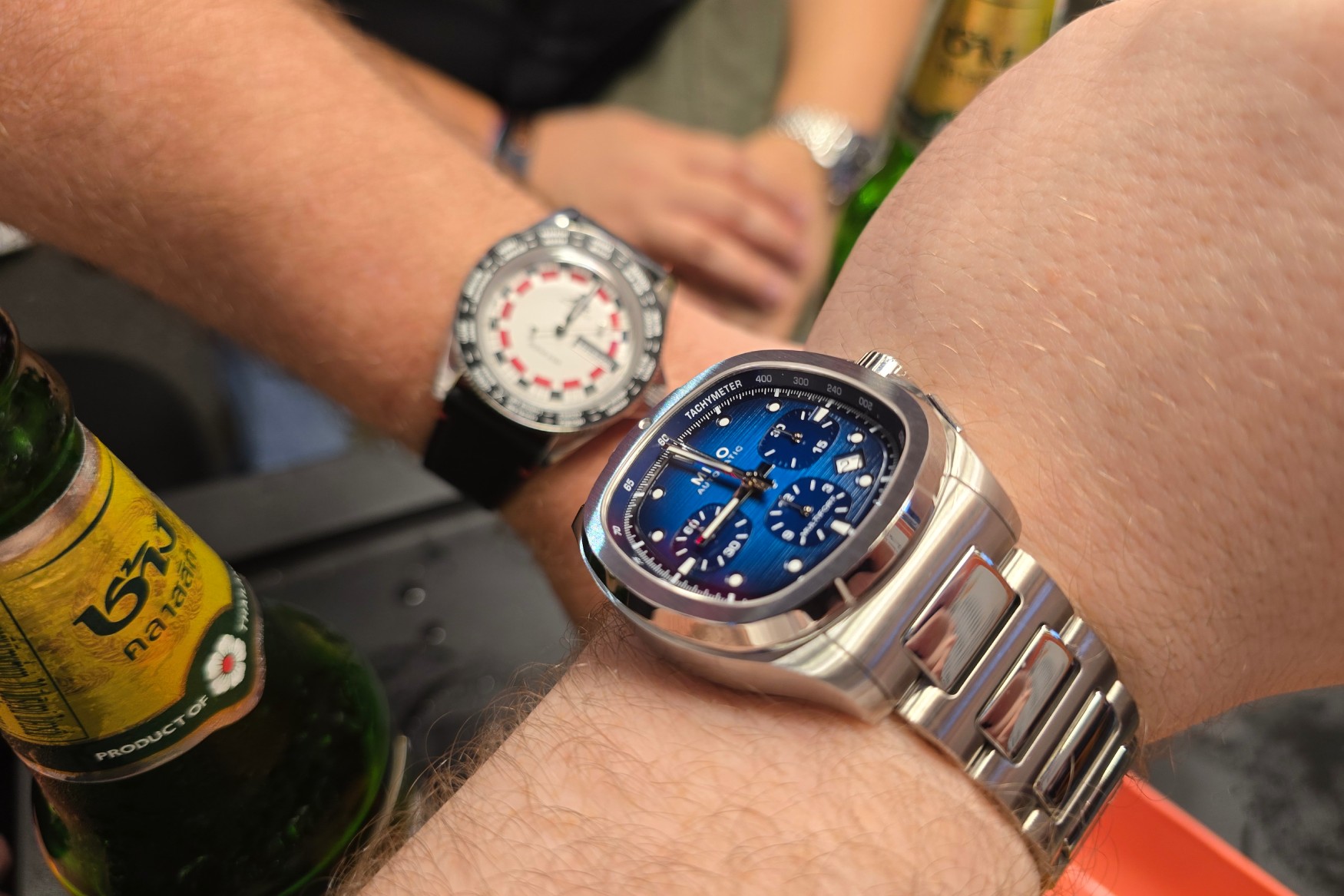
In that sense, it’s kind of the ideal travel watch – which is the context in which I reviewed it, too. It’s premium enough to feel special and aesthetically similar to watches at a significantly higher price point, yet distinct enough to make a style statement of its own (or attract negative attention from thieves and the like when you’re out and about in an unfamiliar country).
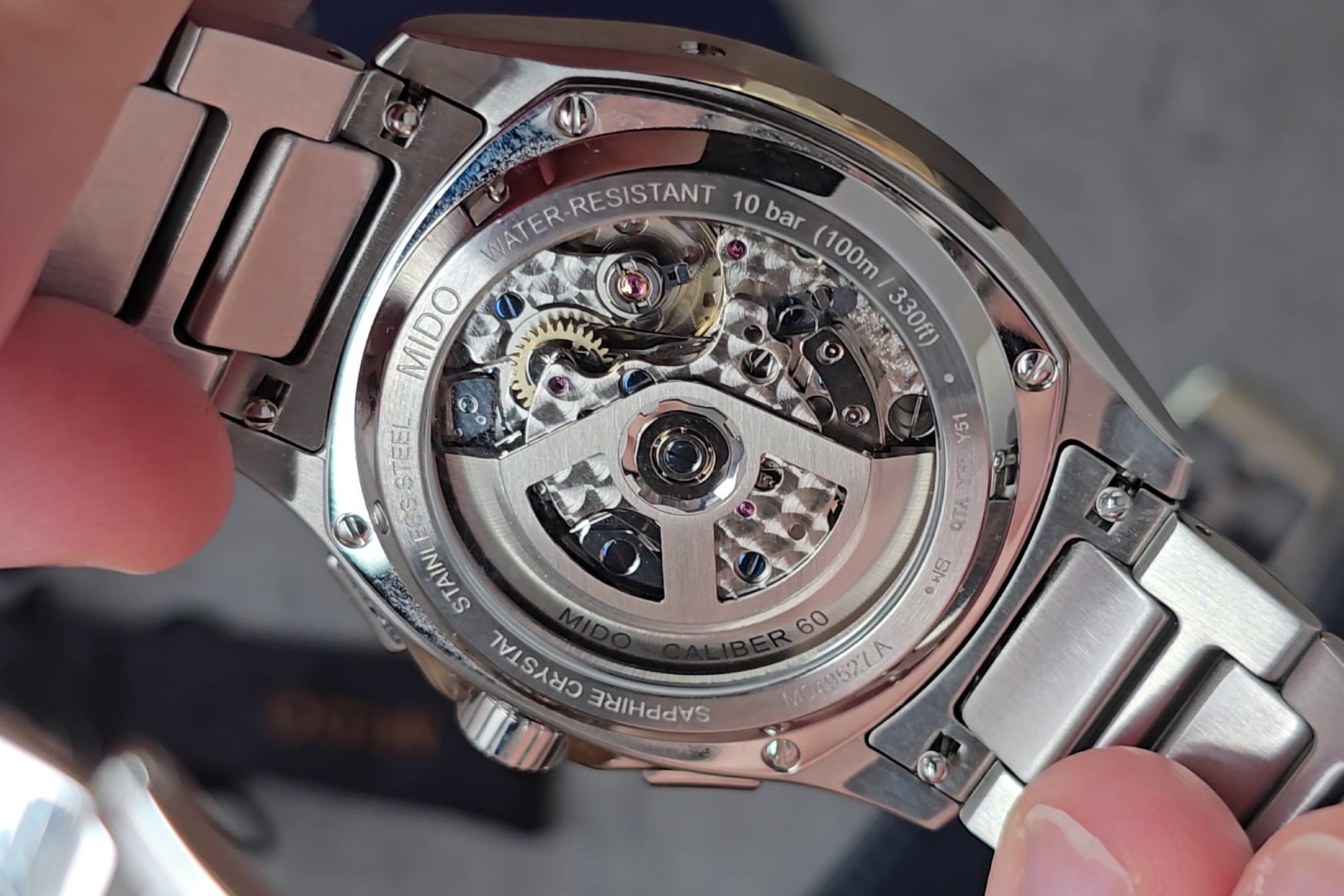
My chief complaint with the watch is actually not even really a function of the watch; it’s the double-quick-release spring bars that its bracelet uses. When swapping from the bracelet to the strap, I found the spring bars unbearably stiff and extremely hard to operate… And then, when it came time to put the bracelet back on, it was a pain, as the spring bar floats within the first link of the bracelet, and kept moving sideways. Other brands that use double-quick-release spring bars, like Christopher Ward, affix the spring bar with a screw to stop it from moving sideways: Mido should follow suit, or integrate a proper quick-release system into its Multifort bracelets. This is only a problem if you’re regularly changing strap options, however.
Mido Multifort TV Chronograph pricing and availability
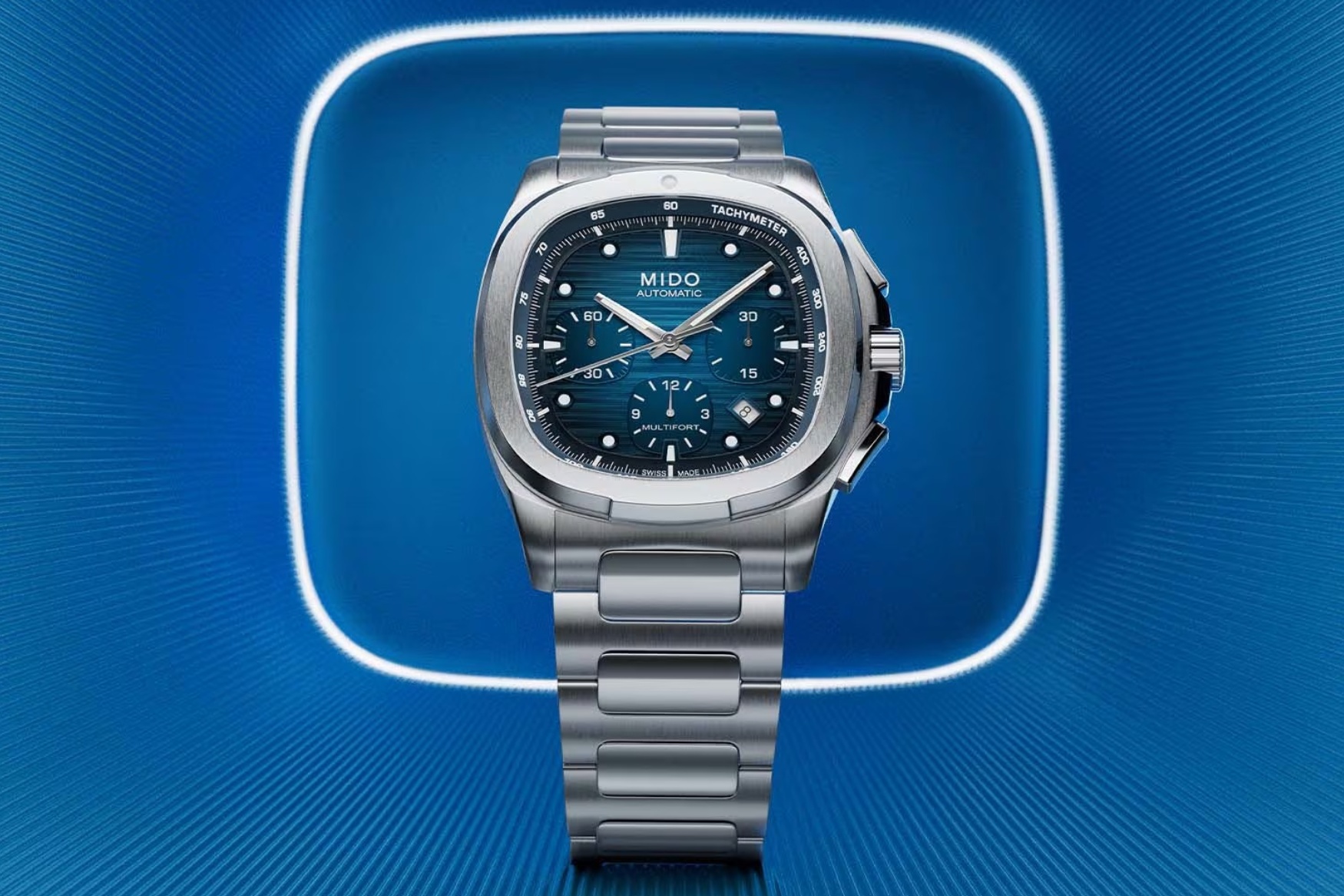
The Mido Multifort TV Chronograph in blue is available now from the Time+Tide Shop and comes with a bracelet and an additional textile strap. Price: A$3,975
Brand
Mido
Model
Multifort TV Chronograph
Reference Number
M049.527.11.041.00 (blue dial, as tested)
Case Dimensions
42mm (D) x 14.3mm (T)
Case Material
Stainless steel
Weight
208 g
Water Resistance
100 metres, screw-down crown
Crystal(s)
Sapphire front and back
Dial
Blue fumé
Lug Width
23mm
Strap
Three-link steel bracelet with butterfly clasp
Additional blue textile strap with stainless steel pin buckle
Movement
Mido Calibre 60, ETA A05.H31 base, automatic
Power Reserve
60 hours
Functions
Hours, minutes, small seconds, date, chronograph
Availability
Available now from the Time+Tide Shop
Price
A$3,975