
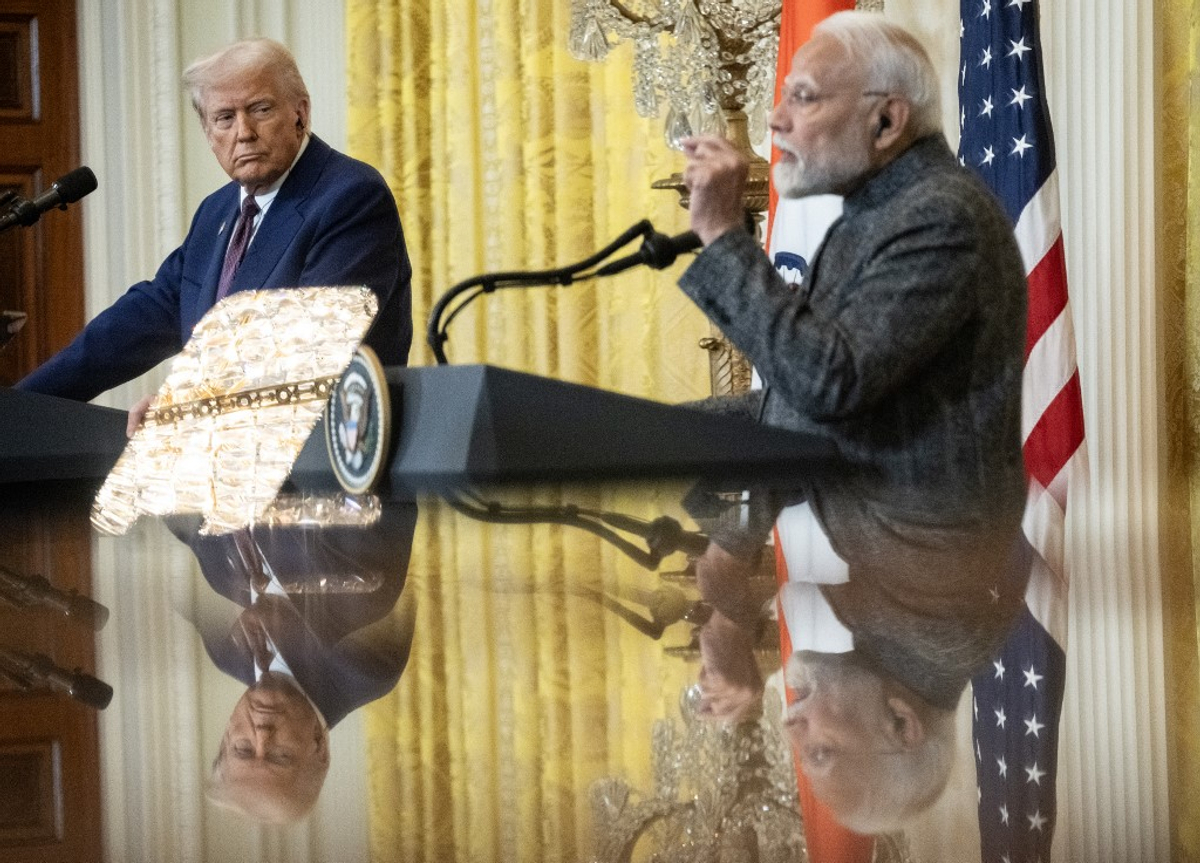
US President Donald Trump told reporters on Wednesday that Indian Prime Minister Narendra Modi has promised him that India will stop buying Russian oil.
“So I was not happy that India was buying oil, and [Modi] assured me today that they will not be buying oil from Russia,” Trump said in the Oval Office. “That’s a big step. Now we’re going to get China to do the same thing.”
JOIN US ON TELEGRAM
Follow our coverage of the war on the @Kyivpost_official.
Trump said that India would not be able to stop the purchases “immediately,” noting that “it’s a little bit of a process,” but indicated that “the process is going to be over with soon.”
Modi supposedly made the commitment during a Wednesday meeting which had previously been undisclosed.
If confirmed by Delhi, the move would mark a major diplomatic triumph for Trump’s campaign to pressure Vladimir Putin into ending the war in Ukraine, and could reshape the balance of global energy diplomacy.
According to trade data previously reported by Reuters, India has emerged as the top buyer of seaborne crude from Russia, sourcing roughly 35 percent of its total crude needs from Moscow.
Since Western nations moved to cut energy ties with Russia in 2022, India and China have filled much of that gap, becoming critical purchasers of discounted Russian oil.
These cheap imports have saved India billions of dollars and helped to keep domestic fuel prices steady despite global instability.
Other Topics of Interest
Serbia at Crossroads: US Senators Lay Out Stark Dilemma as Sanctions Hit Russian-Owned Oil Firm
Bipartisan warning from the US Senate tells Serbian President Aleksandar Vučić to choose EU future or continued reliance on Moscow’s ‘weaponized’ energy
Tensions between Washington and Delhi intensified this summer when Trump levied a 25 percent tariff on Indian goods after trade talks failed, then doubled it to 50 percent in response to India’s continued reliance on Russian energy.
The rift deepened further when the White House moved to impose a $100,000 fee on new applications for H-1B visas disproportionately used by Indian tech workers in the US.
Modi’s government had hit back at Trump’s criticisms that it was bankrolling Russia’s war effort, denouncing the tariffs as “unfair, unjustified and unreasonable.”
India’s trade minister Piyush Goyal said that India “will neither bow down nor ever appear weak” in response to the tariffs salvo, pledging to “move together and capture new markets.”
Trump was also said to be putting pressure on G7 countries to follow his lead in imposing high tariffs on China and India in order to increase pressure on the Kremlin.
At the end of September, Indian officials reportedly told the Trump administration that they could only significantly reduce Russian oil imports if they were allowed to source alternative supply from sanctioned Iran and Venezuela.
On Monday, a reconciliation appeared to be on the cards between Trump and Modi as the former described the Indian premier as a “very good friend” doing a “fantastic job.”