
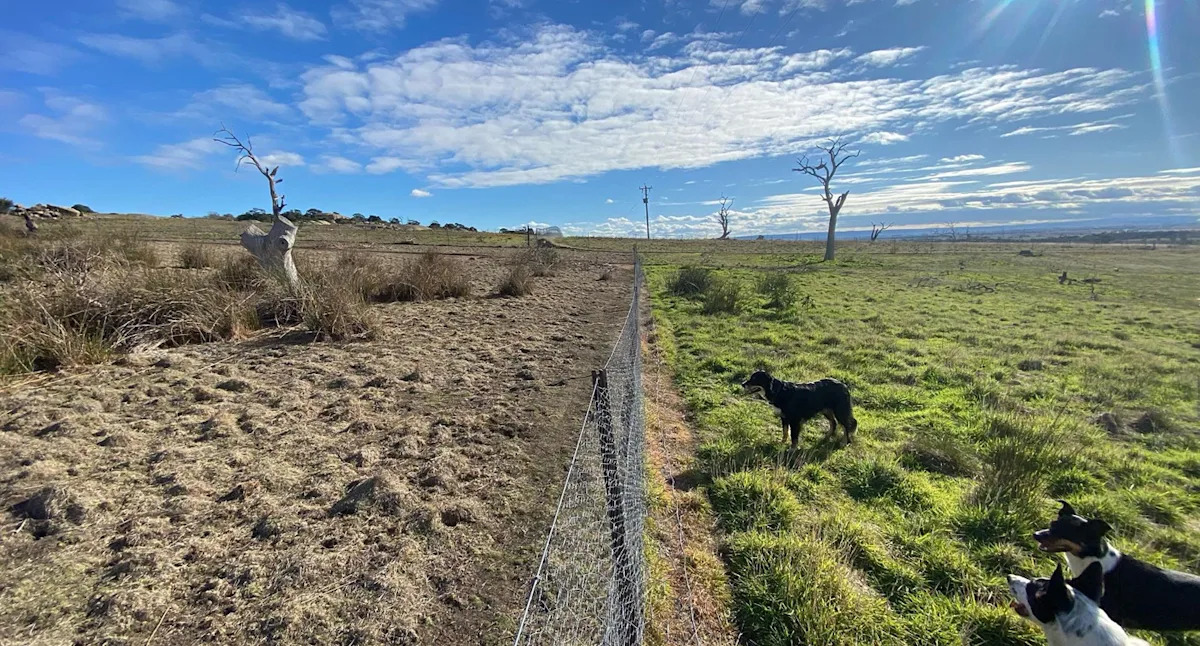
An incredible image taken in Victoria’s south highlights the incredible impact rabbits have had on Australia’s fragile landscape. To the left of the fence is a barren paddock where the invasive pests still exist, but to its right, the grass is flourishing less than five months after they were eradicated.
The change has been documented at Mount Rothwell, a sanctuary that lies between Melbourne and Geelong. It’s operated by Odonata Foundation – a non-profit that specialises in managing landscapes with wild animals that are threatened with extinction.
Odonata’s CFO Matt Singleton explained native grasses are unable to grow due to rabbit overgrazing, allowing weeds like serrated tussocks and Chilean needle grass to dominate.
“We’ve got to manage the flora threats, the fauna threats, and then critically, reintroduce the species into that landscape that are the ones that drive the function,” he told Yahoo News.
The species he’s referring to are the native marsupials that were once abundant across Australia, but due to foxes, rabbits and weeds infiltrating the landscape and habitat destruction, they’re not rare to see in the wild.
“A great example is the eastern barred bandicoot, and its foraging activities create the perfect shape of hole for many of our native grass seeds to be able to germinate within,” he said.
Related: Invasive rabbits undergo mysterious change as they dominate Australia
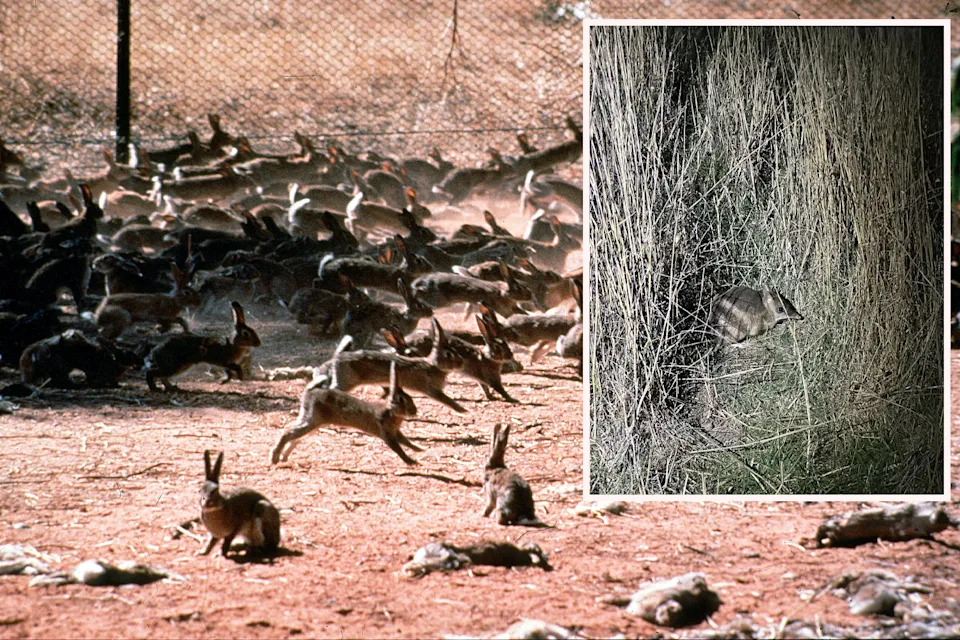
While species like the eastern barred bandicoot (inset) help create healthy ecosystems in Australia, rabbits (background) are destructive. Source: Odonata Foundation/Getty
“But then, if you’re not controlling the threat that rabbits pose, native grasses aren’t even getting to the point of seeding. And if you’re not managing the weed loads, then there aren’t any niches or spaces for native grasses to thrive. You’ve got to do all three in conjunction to start to tip that tide of threats.”
Species like the rufous bettong and eastern bettong at Mount Rothwell are also critically important in spreading fungal spores, which spread underground, and improve the health of trees. There’s been a noticeable change to the appearance of she-oaks growing on the hilltops, which now have a fuller appearance.
“We’ve seen a massive change right across the landscape,’ Singleton said.
Hope for Victoria’s rare volcanic grasslands
Rabbits have been eradicated from around 170 hectares, or a third of Mount Rothwell, and sniffer dogs are regularly used to confirm they have not returned. But building internal fences to keep them at bay is only the first step in restoring the landscape.
The Mount Rothwell property now has approximately:
168 hectares medium density
Flora species from the existing seedbank in the soils have returned, creating an increase in biomass that’s a mixture of both weeds and native species. Odonata is now working to hand-pull the pest species from the landscape to tip the balance in favour of natives.
“The high-threat weeds are brutal in the way they disperse, colonise and create a monoculture, quashing biodiversity,” Singleton said.
Less than 1 per cent of Victoria’s volcanic plains grasslands remain, and on the whole, they are continuing to diminish. They have been denuded by farming and allowed to become infested by weeds due to years of mismanagement.
Odonata’s plan is to recover some of these ecosystems at scale, and demonstrate the importance of small marsupials as ecosystem engineers to the landscape.
Love Australia’s weird and wonderful environment? 🐊🦘😳 Get our new newsletter showcasing the week’s best stories.
