
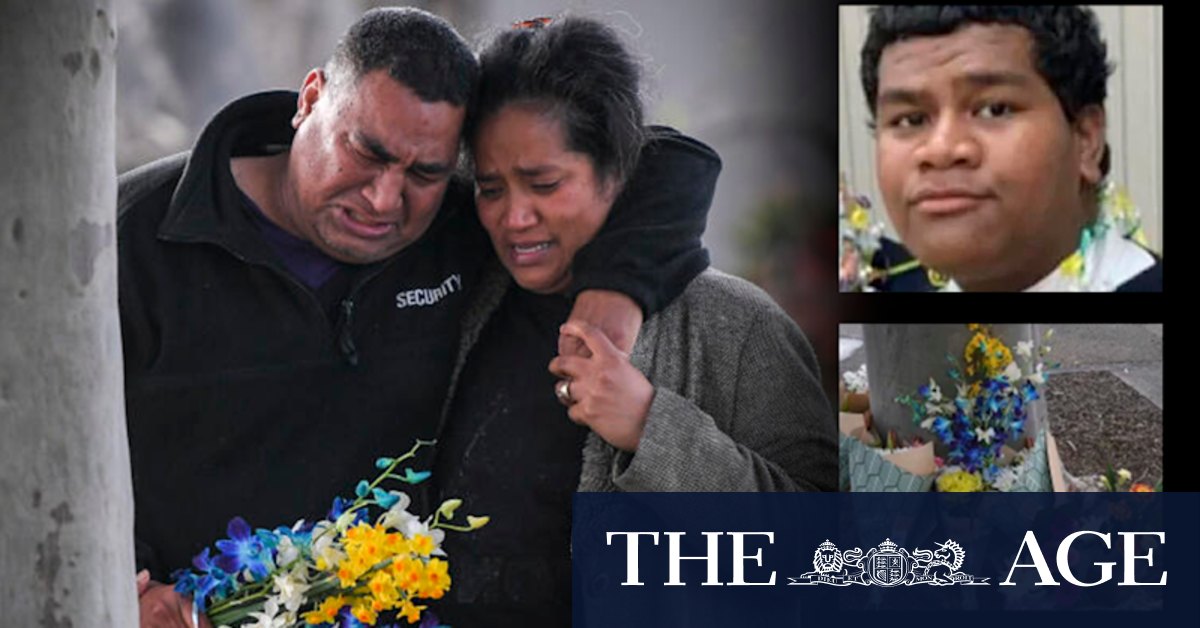
Giles said on June 16, 2020, Solomone was walking with friends when confronted and accused of being part of a third gang, known as VB, with which the other groups were fighting.
Loading
“Members of the group asked Solomone and his friends if they were part of a gang known as ‘VB’ or ‘VB Youngins’, and whether they had been involved in a fight the previous day. They said they had not been and began walking away,” Giles said.
Solomone and his friends fled when weapons were produced, but returned to the area after hearing a friend’s younger brother was being harassed at Brimbank Shopping Centre.
Soon after arriving, the 15-year-old was attacked and knocked to the ground.
“Solomone was punched, kicked and struck with weapons, including a baseball bat and an extended baton. As a result, Solomone was stabbed once to the left-hand side of his chest,” Giles said.
The young man who inflicted the fatal wound, who cannot be named due to his young age, was jailed for two years after pleading guilty to manslaughter.
“He loved his family and was loved by them in return,” Giles said.
Victoria Police Commander Mark Galliott told the coroner the north-west region of Melbourne was home to the largest proportion of youth gang offending – 44 per cent.
More than half of the state’s violent youth gang offences also occurred there, with crimes including abduction, kidnap, assault, aggravated burglary, homicide, robbery, violent weapons and explosives offences.
Coroner Giles said the state could not police its way out of the problem and that it cost the state $7775 a day to hold teenagers behind bars.
She found youth gang members were more likely to have experienced family violence, come from fragmented family structures and live in socioeconomically disadvantaged communities.
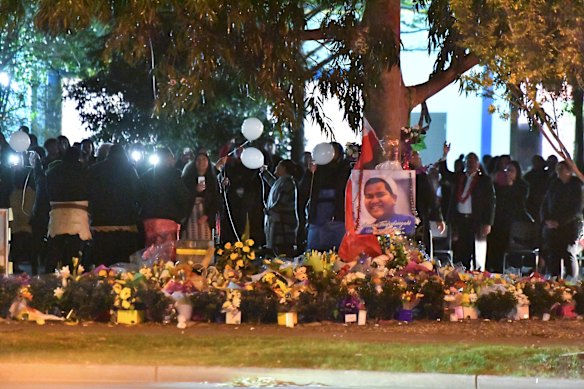
Family members released white balloons in memory of Solomone during a ceremony at the site of his death.Credit: Joe Armao
Giles said there was a need to ensure young people, particularly multicultural children and youth, are not marginalised in the community, have the same educational and vocational opportunities as other young Victorians and that their positive contributions to the broader community are recognised, valued and nurtured.
“Social cohesion and inclusion, as heralded by a whole-of-community response to youth offending – in which the voices of affected young people are amplified – is the clearest pathway to long-term safer outcomes for Victorian communities,” she said.
As part of Giles’ findings, she sought statements from Victoria Police, Youth Justice and the Western Community Legal Centre and has sent her recommendations to Premier Jacinta Allan.
Loading
“The responsibility to prevent further fatalities from youth knife crime requires a whole-of-community response that addresses the reasons such crimes are being committed in the first place,” Giles said.
“In nine of 11 gang-related child homicides, there was evidence that the victim was a member of a migrant community.
“Weapon-carrying among young people may [also] be more common among socioeconomically disadvantaged communities.”
Anoushka Jeronimus from Western Community Legal Centre (Westjustice), echoed the coroner’s remarks about addressing the root causes of youth knife crime.
Jeronimus warned police and criminal justice-centred responses may only address the symptoms of knife crime and risk unnecessarily criminalising groups of young people already over-represented in the legal system.
Weapon-carrying among young people, Jeronimus said, was also often motivated by fear of victimisation rather than intent to harm.
Start the day with a summary of the day’s most important and interesting stories, analysis and insights. Sign up for our Morning Edition newsletter.