
A particularly realistic radio play adaptation of HG Wells’ sci-fi novel The War of the Worlds caused mass panic when it was broadcast on October 30, 1938.
Or at least, that’s how the story goes.
The broadcast by young auteur Orson Welles was reported to have triggered hysteria among the millions of listeners who believed what was happening was real.
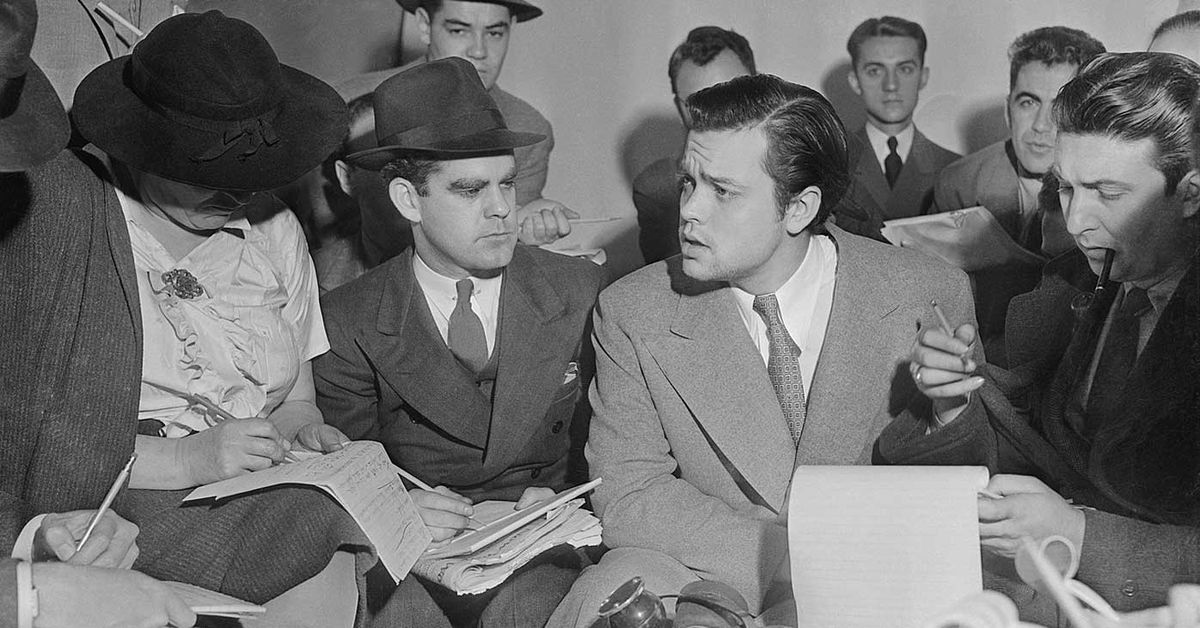
 Orson Welles speaks to reporters about the War of the Worlds broadcast. (Public Domain)
The radio drama was presented as a breaking news report, talking of a Martian invasion of planet Earth.
And as newspapers reported the following day, listeners were terrified at what they believed was a real news broadcast.
The Washington Post reported a man died of a heart attack during the show.
Other newspapers wrote of riots, panicked people crowding the streets, and National Guardsmen assembling.
But in spite of the hysteria entering popular folklore, it didn’t happen.
The supposed panic was largely works of fiction by newspapers looking for ways to take down the medium threatening their livelihoods – the radio.
Nevertheless, the 23-year-old Welles issued an apology in a press conference the following morning.
Across the Atlantic, Adolf Hitler described the supposed panic as evidence of “the decadence and corrupt condition of democracy”.
Within weeks, a large volume of Americans surveyed would claim they listened to the program and were alarmed.
But the ratings showed that fewer than two per cent of the population actually tuned into the show.
 Orson Welles broadcasts his radio show of H. G. Wells’s science fiction novel “The War of the Worlds”. (AP/AAP)
The broadcast was dramatically outrated by the Chase and Sanborn Hour, a program starring ventriloquist Edgar Bergen and his dummy.
But another version of the radio play did cause genuine hysteria eleven years later.
A Spanish-language broadcast caused panic in Ecuador in February 1949.
When the hysterical mob realised they had been had, they rioted, setting the radio station alight.
At least seven people were killed.
The radio drama made Welles an overnight celebrity, and he was signed to a substantial Hollywood contract the following year.
His first film, Citizen Kane, is widely regarded as the most influential movie of all time.
 Orson Welles wrote, directed and starred in Citizen Kane in 1941. (Bettmann Archive)
Initially, Welles was irritated at how the press had hyped up the panic his radio play caused.
But as time went on, Welles would become the most enthusiastic exaggerator of the events of that night.
“Houses were emptying, churches were filling up – from Nashville to Minneapolis there was wailing in the streets and the rending of garments,” he later said.