
Profits at Shell have climbed to more than $43bn for the year so far after fossil fuel production in the Gulf of Mexico reached a 20-year high and production in Brazil set a new record.
The oil company reported better than expected earnings of $5.4bn for the third quarter, a 27% increase on the $4.3bn in the previous three-month period – but lower than the $6bn recorded over the same period a year earlier.
The FTSE 100 company is on track to report lower annual profits this year compared with 2024 due to lower oil and gas prices in the global market, but the company claimed to have “one of the strongest balance sheets in the industry”.
Wael Sawan, Shell’s chief executive, said: “Shell delivered another strong set of results, with clear progress across our portfolio and excellent performance in our marketing business and deepwater assets in the Gulf of America and Brazil.”
More than half of Shell’s oil and gas volumes are extracted from projects in Brazil and the Gulf of Mexico, where earlier this year it began production at the Whale platform. The project has delivered more oil and gas than expected in its investment case, and in half the time anticipated.
Shell has also started up new projects in the UK this year, where it has reported a tax charge of $509m (£387m) for the first nine months of the year related to the UK energy profits levy – a windfall tax.
The controversial levy was introduced after Russia’s invasion of Ukraine, when global oil prices reached more than $100 a barrel, inflating oil company profits, and was due to remain in place until 2030.
However, the British chancellor, Rachel Reeves, is reportedly weighing up plans to scrap the profits levy on the UK oil and gas industry sooner than expected amid growing concerns over the government’s approach to the North Sea.
Reeves may use her upcoming budget to end the windfall tax in March 2029 instead, according to the Financial Times. But the Treasury is understood to be seeking assurances from oil and gas companies that the move would result in greater jobs and investment.
Since the tax was introduced global oil prices have tumbled to about $65 a barrel. The average price over the last quarter was $69 a barrel, compared with more than $80 a barrel in the same period last year.
Sawan said: “Despite continued volatility, our strong delivery this quarter enables us to commence another $3.5bn of buybacks for the next three months.”
Shell plans to buy back shares from its investors for the 16th consecutive quarter, in line with the energy company’s aim to return between 40% to 50% of cash flow to investors. The latest buybacks put the company on track to have purchased about a quarter of its shares over the past four years.
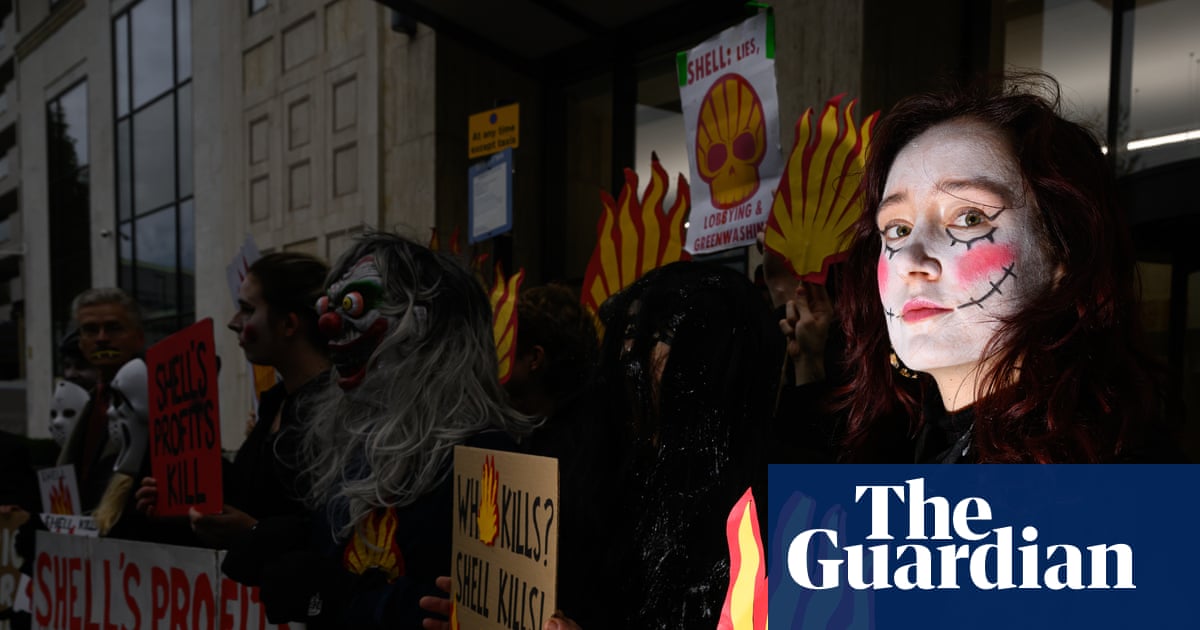
The company’s London headquarters were targeted by protesters this week after activists from Fossil Free London staged an early Halloween campaign against the company’s “horror show” profits.
Robin Wells, the director of Fossil Free London, said: “Each quarter, Shell’s inordinate profits are announced, with no acknowledgment of the exploitation and destruction of communities across the world that enables this greed. We’re here today to say that Shell’s profits are a horror show. And that when it comes to big oil, it’s always trick or trick.”