
The European Central Bank has held its interest rates at 2 per cent after the eurozone economy performed better than expected in the third quarter.
The central bank for the 20 countries in the bloc made no change to its three interest rates, as widely expected by financial markets. The ECB, which has cut interest rates steadily from a peak of 4 per cent last year, has said the region’s economy is in a “good place” with inflation falling toward its 2 per cent target this year.
The bank’s governing council said future decisions “will follow a data-dependent and meeting-by-meeting approach to determining the appropriate monetary policy stance”.
• US cuts interest rates for second month amid slowing labour market concerns
“In particular, the governing council’s interest rate decisions will be based on its assessment of the inflation outlook and the risks surrounding it, in light of the incoming economic and financial data, as well as the dynamics of underlying inflation and the strength of monetary policy transmission.”
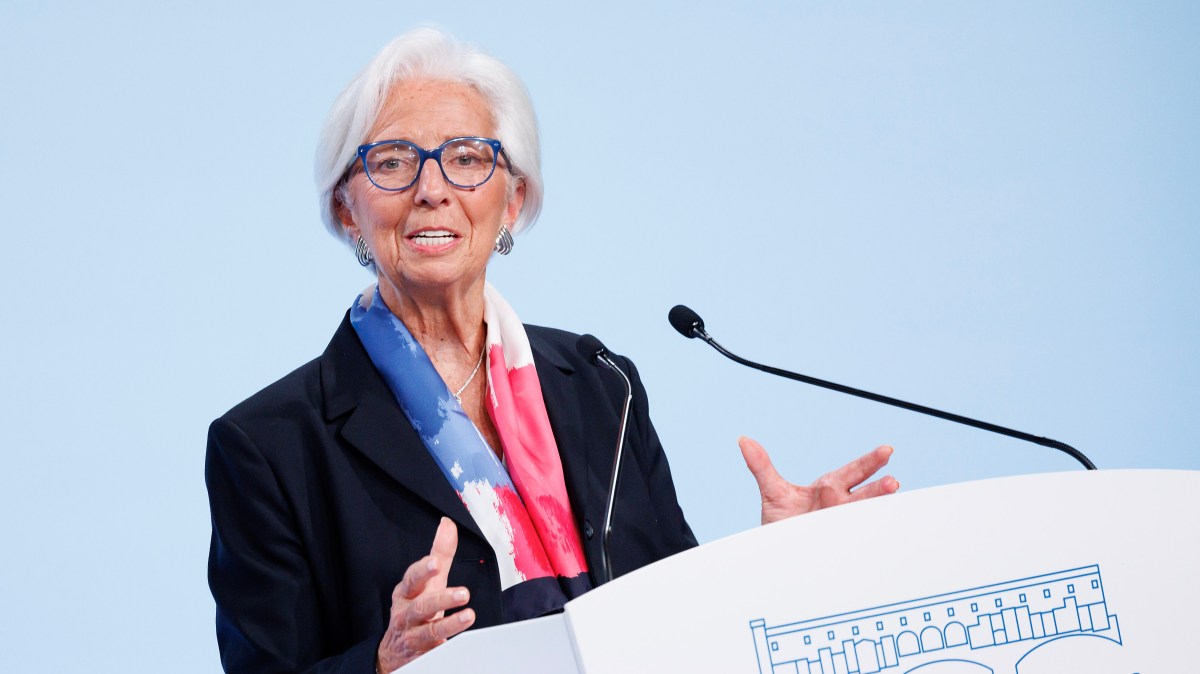
Christine Lagarde, ECB president, said that the bloc remained “in a good place. Is it a fixed good place? No, but we’re ready to do whatever is needed to stay there.”
The decision comes after official growth figures on Thursday showed the single currency area’s GDP rose by 0.2 per cent between July and September, up from 0.1 per cent in the previous quarter and faster than the zero growth forecast by the central bank.
The outperformance was largely driven by France, the second biggest economy in the eurozone, which expanded by a surprise 0.5 per cent, beating forecasts of 0.1 per cent. Spain, the fourth largest economy in the zone, continued to be the best performing major country, with an expansion of 0.6 per cent in the third quarter.
Germany’s economy, which has been stuck in recession for the last two years, stagnated with no growth after a 0.2 per cent contraction in the second quarter.
Lagarde said the growth figures were “a bit better than expected”, adding: “I would not complain about growth. We could do better.”
Latest estimates for inflation in October point to stronger price pressures than the ECB expected. A flash measure of annual inflation in Germany fell to 2.3 per cent in October, from 2.4 per cent in September, but higher than the 2.2 per cent expected by economists. Consumer price inflation in Spain rose to 3.2 per cent this month.
Financial markets do not expect the ECB to cut interest rates until the second quarter of next year. But economists have warned the central bank could be forced into more monetary easing early next year as the impact of US tariffs and threat of Chinese oversupply of goods pushes down inflation below the 2 per cent target in 2026.
“Disinflationary forces are gathering momentum,” Natasha May, an analyst at JP Morgan Asset Management, said. “Paired with a strong euro, this could lead eurozone inflation to undershoot the ECB’s forecasts next year. The governing council cannot become complacent.”