
Several developers of planned ScotWind floating offshore wind farms are have enquired about selling their projects to a Chinese manufacturing giant, Recharge can reveal.
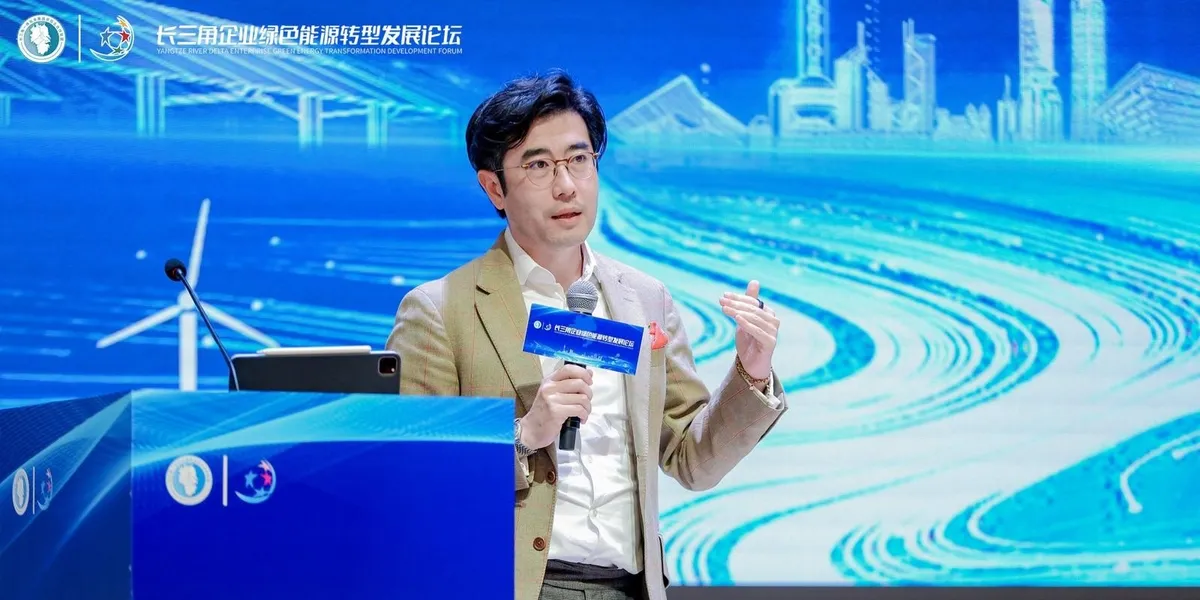
Speaking to Recharge at the China Wind Power summit that took place this month in Beijing, the UK CEO of wind turbine giant Mingyang, Aman Wang, revealed the company has been propositioned by several ScotWind developers.
Mingyang is hoping to sell its floating turbines to several ScotWind projects and is in the running to supply the pioneering 540MW Green Volt floating array. Edinburgh-based Flotation Energy and Norway’s Vargronn are developing that project.Cerulean Winds is also considering turbine from Mingyang, a global leader in the floating wind sector, for a 6GW pipeline of Scottish projects, Recharge revealed last year.
Without naming names, Wang, who is also vice president of global strategy and investment at Mingyang, said the turbine-maker has been in discussions with more than just those developers about supplying Scotwind projects.
“It’s a mixed bag,” he said. Some developers are interested in using a particular floating wind turbine for their projects, “one or two as a pilot, then with a bigger pipeline” to follow.
But others are “interested in trying to sell their seabed lease to us,” said Wang. “So i.e. they are giving up on the floating projects and trying to sell the development project to us.”
This comes at a time when the offshore wind industry, and particularly the nascent floating sector, is struggling to make the numbers add up for projects amid inflation and supply chain pressures.
There are 20 ScotWind projects with seabed option agreements, according seabed landlord The Crown Estate Scotland, all announced in 2022.
Up to 35GW of offshore wind capacity has been tendered under the ScotWind and INTOG programmes, the latter being a leasing round for projects that will directly reduce emissions from oil and gas production.
Mingyang this month went public with its plan to open up a £1.5bn ($2bn) fully integrated factory in Scotland to service the offshore wind sector, fixed-bottom and floating. That plan is still subject to UK government approval, amid fierce debate over the acceptance of Chinese turbine suppliers in Europe.
“When it comes to floating, it’s not a rosy picture at the moment,” said Wang, describing it as “crunch time” for the sector.
Wang said that it is crucial that government, investors and technology leaders “work together” to help floating wind get back on track.
On whether Mingyang is interested in taking up the developers on their offer to buy the seabed lease, Wang said that developing floating wind projects is “not our primary interest at the moment.”
He stressed that the way that Mingyang “contributes to the sector” is with technology. “We’re not there to make development money and take on that risk at the moment.”
However, Wang continued that Mingyang is working to collaborate with different stakeholders like the UK’s new public clean power champion GB Energy to “jointly look into” how to best service the country’s offshore wind sector.
“If necessary, we’re open to it,” he said, regarding buying up seabed rights. “We’re not ruling that out. But it’s not on the primary list [of Mingyang priorities].”