
President Lee Jae Myung’s push to extend Korea’s legal retirement age to 65 from the current 60 is emerging as a political and economic battleground, pitting the ruling Democratic Party of Korea (DPK) against the conservative main opposition People Power Party (PPP) and business groups, market watchers said Tuesday.
Further intensifying the decades-long issue is growing frustration from younger voters, who are increasingly losing job opportunities due to the protection of vested interests of older generations, compounded recently by the spread of artificial intelligence (AI).
At stake is Korea’s youth employment and corporate productivity, highly likely to be undermined due to the push to close the “income void” affecting retirees who have no source of income until they are eligible for monthly payments from the state-run National Pension Service (NPS).
The ruling party is pushing to raise the age of retirement to 65 in stages by 2033, when the minimum age eligible for the monthly pension will be raised to 65 from the current 63. The push would remove the income void, making it a widely favored plan for the older generation.
However, businesses and the PPP say the DPK’s plan — largely embraced by labor unions — fails to overhaul seniority-based pay, with the fallout shouldered almost exclusively by younger workers in the form of limited job opportunities.
According to political circles, the ruling party’s special committee to extend the retirement age convened their first meeting on Monday.
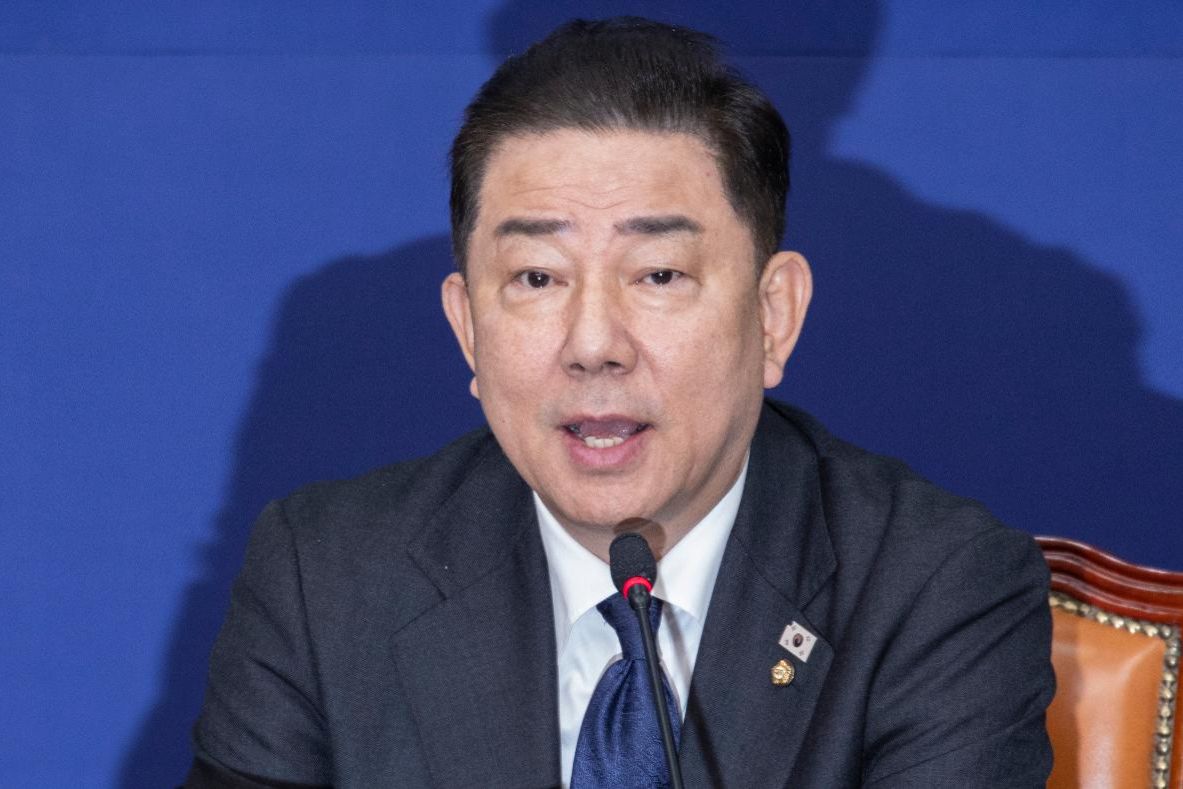
DPK floor leader Kim Byung-kee vowed to complete legislation within the year.
“Extending the retirement age fills the income void, stabilizes pension finances and utilizes skilled labor,” Kim said at the committee’s meeting at the National Assembly. “We will do our utmost to achieve concrete legislative results.”
He stressed that since last year, Korea has entered a super-aged society, with those aged 65 and older accounting for more than 20 percent of the population.
“The challenges ahead are clear — labor shortages and instability in pension finances, At the same time, we must carefully examine the potential downsides, such as reduced youth employment and increased corporate burdens. A broad public discussion between generations and between labor and management is necessary.”
Former PPP leader Han Dong-hoon said Monday that the ruling party’s plan only benefits older workers nearing retirement, at the expense of future generations.
“Changing the legal retirement age while maintaining the seniority-based pay system puts young people at a significant disadvantage. Longer life expectancy warrants longer periods to hold jobs, but the ruling party and labor sector’s unified voice is problematic. The alternative should be ‘rehiring’ — signing new contracts under new conditions from age 60 until they reach the pension-eligible age of 65.”
Han’s stance is in line with a Bank of Korea report released in April.
At the time, the central bank said extending the retirement age without overhauling the seniority-based pay system will exacerbate youth joblessness and labor market polarization.
Korea should rehire retired employees instead of extending the retirement age, the report suggested. Otherwise, job opportunities will be further limited for young people and more job seekers will increasingly favor large conglomerates over small companies even when it means delaying employment for years.