
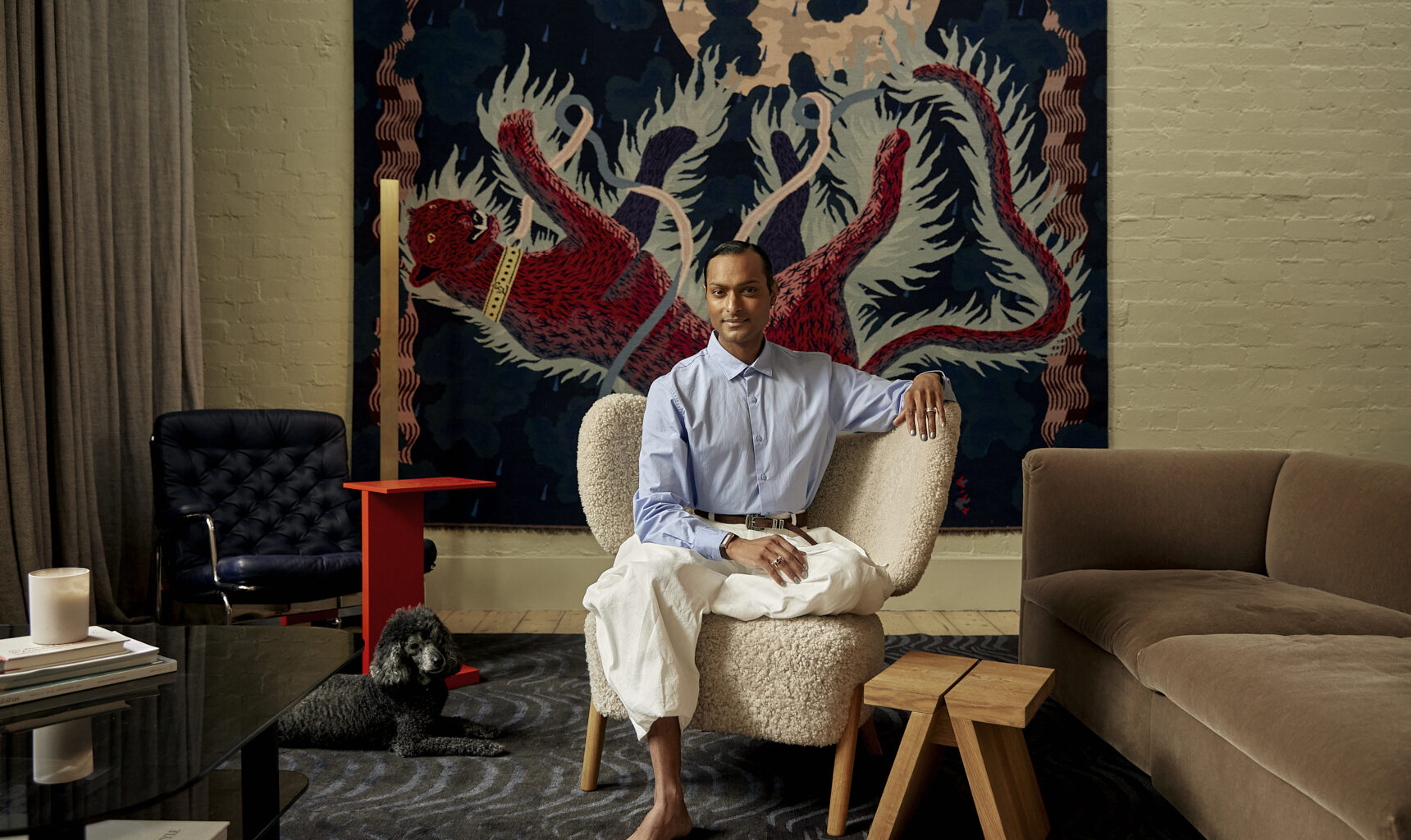
Brahman Perera approaches design as a kind of quiet choreography – a study of how the feeling of timber grain, stone surfaces and fabrics ground us, or the way shifting light imparts mood and imbues a space with character.
“Technology is a powerful tool, but emotion and intuition remain uniquely human,” he says. “The human touch is what gives design its soul, memory, sentimentality and imperfection.”
He returns as a frequent collaborator for Lexus, bringing his tactile philosophy to a second year designing LANDMARK by Lexus, the three-storey hospitality pavilion at the Melbourne Cup Carnival. The pavilion embodies this year’s theme of “synthesis”, and also reflects Lexus’s dedication to craftsmanship inspired by Takumi, the Japanese master artisans with exceptional commitment and expertise in their work. It also showcases the auto maker’s prioritising of personalised luxury, where comfort, curiosity and delight are thoughtfully considered at every touchpoint.
“For me, synthesis is about balance: the meeting point of human craftsmanship and technological precision,” Perera says. Bespoke textiles sit alongside intelligent systems such as responsive lighting, interactive surfaces and AI-driven installations. “This is not a clash of worlds but a harmony, where the warmth of the human hand is amplified by the possibilities of innovation.”
The pavilion experience draws on omotenashi, the Japanese hospitality concept of anticipating every need in advance. Visitors move in stages, with each space carefully composed to draw them further in. Level one opens with a gifting suite with a mini bar serving coffee and champagne; walnut floors create a sense of welcome before guests step into the restaurant, led by chef Josh Raine. As guests move upward, the vibe shifts from intimate dining settings to expansive entertainment areas, culminating in a lounge with sweeping views of the track.
The architecture is focused on dining, ensuring it’s an integral part of the spatial experience rather than an afterthought. Tables inspired by Donald Judd’s minimalist geometry are softened by lighting that responds subtly to movement, creating a rhythm that changes with the energy of the room.
“Food and design become inseparable – the plate, the table, the room all work in unison to heighten the experience,” Perera says. “Each dish is framed as a moment of theatre.”
The richness of each floor and experience is the result of collaboration, with the voices of different creatives helping to shape the pavilion’s character. Florist Simone Gooch’s ikebana-inspired arrangements punctuate spaces with colour and form, while collage artist Simone Esterhuizen’s works are translated into animations that ripple across digital screens.
Every texture and finish in the pavilion also carries a story of sustainability, thoughtfully chosen for their environmental impact and tactile warmth. Walnut and sisal flooring bring warmth underfoot, Kvadrat textiles add both refinement and eco-conscious integrity, and fabric light fixtures cast a soft, organic glow, making the whole space feel ethereal, futuristic and elemental.
For Perera, the emotional resonance of a space matters as much as its visual impact. “I want people to feel inspired by the beauty of connection: between tradition and innovation, between human touch and technological potential. More than anything, I want them to feel cared for, as though every detail anticipated their comfort, curiosity and delight.”
This is exactly the spirit of LANDMARK by Lexus 2025: a pavilion where craftsmanship, innovation and hospitality converge, ensuring an experience that lingers long after race day ends.
This article is produced by Broadsheet in partnership with Lexus. LANDMARK by Lexus is making its return to Flemington Racecourse for the Melbourne Cup Carnival on November 1, 4, 6 and 8.

Produced by Broadsheet in partnership with Lexus
Learn more about partner content on Broadsheet.