
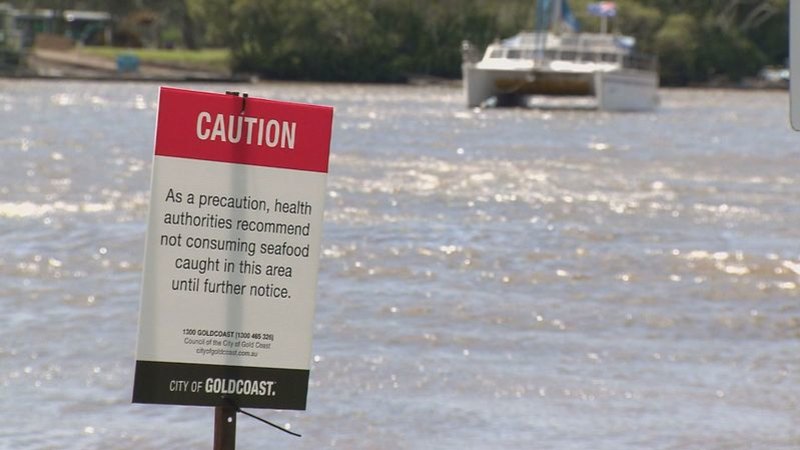
An accumulation of rag – material that does not break down, such as wet wipes – impacted the ability of the pumps, council told the department.
An emergency bypass that council had fitted for the main was not big enough, which DETSI said in the order had “resulted in prolonged sewage overflows”.
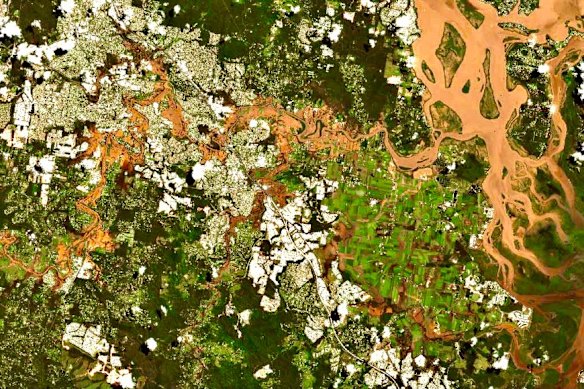
The Logan River in flood in 2022. Credit: Healthy Land and Water
Another overflow occurred in Yatala in September 2024 after a corroded rising main was isolated for repair, having leaked 750,000 litres of sewage into Sandy Creek, a tributary of the Logan River.
Sewage spilled from an overflow pipe and a manhole into a drain that led to an area of high ecological significance, according to the order.
Inspecting officers observed the presence of “black water, strong sewage odour, fish gasping for air, and several dead eels”, the order said.
Loading
In December last year, a further 580,000 litres of sewage leaked into an unnamed tributary of the Albert River when a pump failed on the bypass of the area being repaired from the major spill.
Officers found dirty water and dead fish in the water near the well-known highway stopover Yatala Pies, with rag buildup again to blame for the pump failure.
In the order, the department highlighted that the council had not provided an emergency back-up pump for the bypass, choosing to rely on a single pump.
The department has ordered the council to establish a risk framework for all sewage rising mains, emergency response plans for pumps at the bottom of rising mains, and contingency plans for those with the highest risk of failure.
New pressure meters will be installed on pipes with a high risk of failure that lead to the council’s sewage treatment plants, and magnetic velocity readers on high-risk pipes with flow of more than 40 litres a second.
A council spokesperson said they had worked closed with DETSI since the Albert River spill and increased their investment in the system.
They said DETSI’s demands in the order aligned with work that was already under way.
“We have increased our investment in condition assessments to better understand the state of our critical assets, including sewerage rising mains,” they said.
In a statement, a department spokesperson said they understood the challenges faced by utility providers.
“We have worked collaboratively with Council to develop the requirements of the Environmental Enforcement Order (EEO), outlining actions to mitigate medium- to long-term infrastructure risks,” they said.
Start the day with a summary of the day’s most important and interesting stories, analysis and insights. Sign up for our Morning Edition newsletter.