
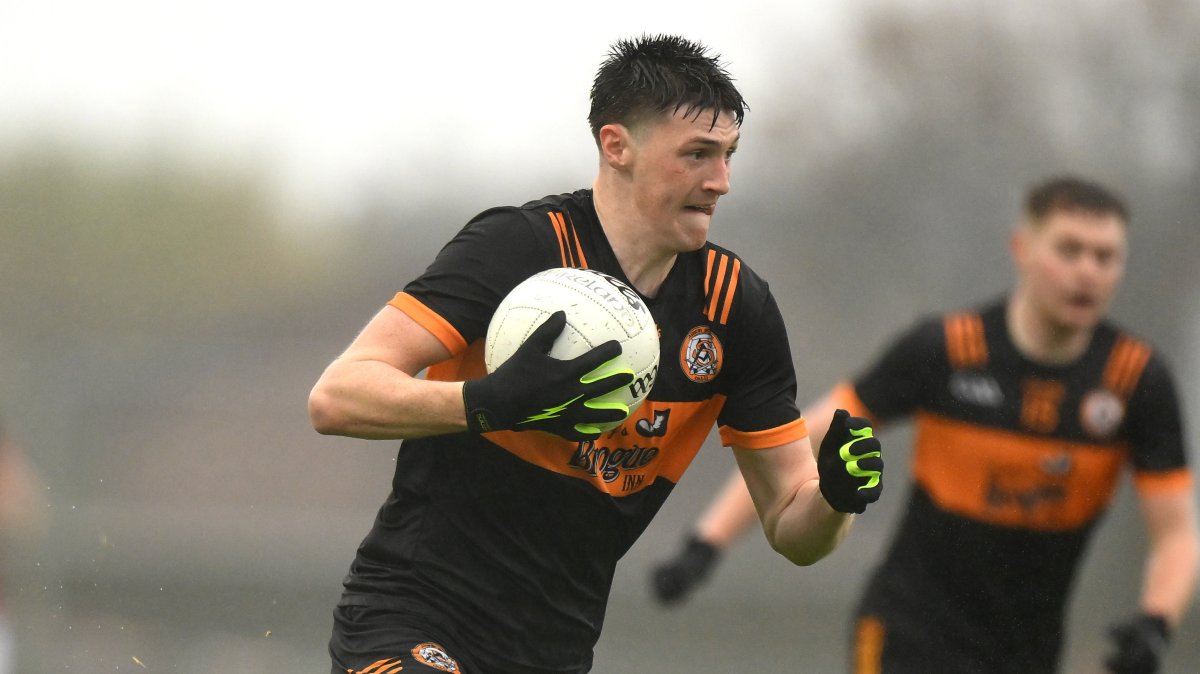
Cillian McDaid was still only 17 in 2015 when AFL scouts first started sniffing around his potential. Tadgh Kenneally reached out to gauge his interest and see if he’d attend an AFL Combine in Dublin. McDaid subsequently made two trips to Florida for trials with the AFL Academy, but he’d already made his championship debut with Galway before finally settling on his decision. By the time he signed a professional contact with Carlton in November 2017, McDaid was 19.
Injury decimated his time in Australia. A stress fracture in his foot that flared up on three separate occasions left him sidelined for 14 weeks, limiting him to a handful of games with Carlton’s VFL [Victorian Football League] team, the Northern Blues. After 11 months, McDaid returned home, beaten up and worn down.
“It is professional and cut-throat,” he says. “It is a different dynamic. There is pressure that comes with a salary and a contract, whereas you don’t have those same pressures in the GAA. The injury was tough but I knew fairly quickly that I was going to be happier here playing with Galway. Sometimes you have to go without something to make you realise how much you want it.”
McDaid took all the time he felt he needed to decide whether Australia was really for him but the pathway was more drawn-out back then too. After the Combine, footage was sent back to a raft of AFL clubs before scouts assessed players in more detail during the trials in Florida. Anyone who caught the eye usually had a list of suitors but the process often had the feel of an old town hall dance too. Who do I go with? How much do they really want me?
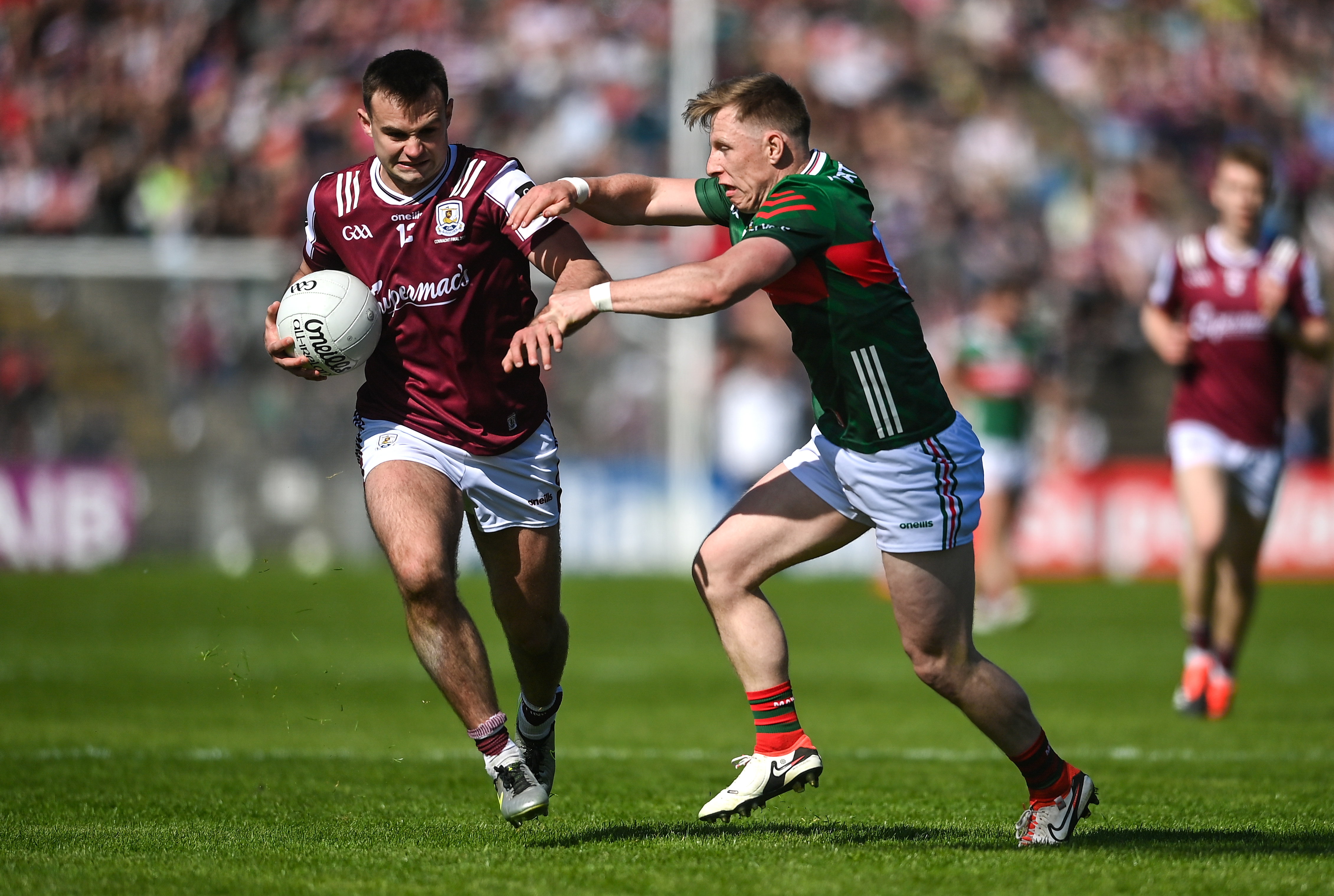
McDaid says ‘a couple of players going to Australia every year’ should not be a cause for panic
DAVID FITZGERALD/SPORTSFILE
Chrissy McKaigue, the former Derry player, was 18 when Carlton first approached him. He was 20 by the time he signed with the Sydney Swans in 2009. “Clubs are going away now from players going through the Combine and other routes,” McKaigue says. “They’re doing their work independently, and they’re doing it earlier. St Kilda and Brisbane are not interested in Kobe McDonald and Ben Murphy going through a draft. Those clubs want first preference on those players. To me, that’s the best way of doing it. The other ways, clubs are often undecided and it’s not fully defined as to whether they really want you or not. It’s nice to know that you’re wanted.”
Now that McDonald, 17, and Murphy, 18, signed last weekend for St Kilda and Brisbane Lions respectively, the howls of anguish in Mayo and Kerry at the loss of such excellent young players has echoed the frustration in Gaelic football of the AFL draining more of the best young talent from the game.
Is that an overreaction? Over 70 players have made the move to AFL but over 40 never played a senior game. The majority return. A lot more talented young GAA players are consistently lost to other sports every year. Plenty of other players have emigrated to Australia, often for more than just a year, because of the housing crisis here.
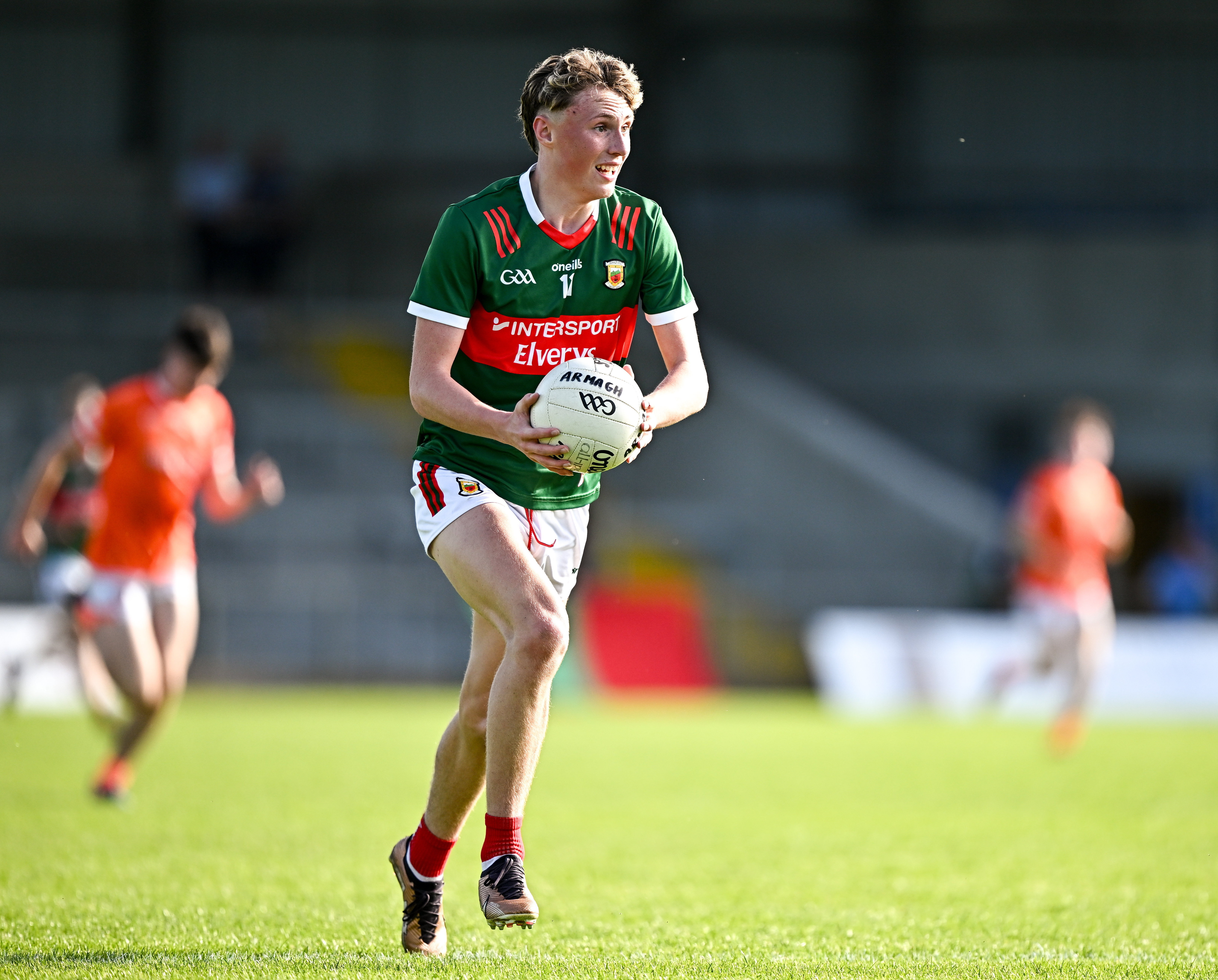
McDonald, son of Mayo great Ciarán, has joined St Kilda
SAM BARNES/SPORTSFILE
Amateur players have every right to pursue professional ambitions. There are barely a dozen Irish players on the books of AFL clubs for next year, but this is still a highly emotive debate for a number of reasons. Unlike other sports, AFL clubs haven’t had to invest anything into the development of young players. And then those clubs can arrive here and cherry-pick the best GAA talent whenever they see fit. “The association has to take some action regarding the AFL’s constant scrutiny of our younger stars,” said Patrick O’Sullivan, Kerry chairperson, at last year’s county convention.
What can be done? Making it as attractive as possible for players to stay here through increased player grants or financial support for education is an obvious starting point. There needs to be a more formalised policy of regulation too. O’Sullivan believes that clubs should be compensated for the loss of players. Peter Twiss, Kerry’s CEO, stated his belief this week that AFL clubs would be agreeable to financially contributing to the original clubs of recruited Gaelic footballers.
The GAA will always be reluctant to authorise such a practice when it is so incompatible with the amateur status. Complications would undoubtedly emerge regarding how an amateur player’s value is estimated. Is that not turning them into tradeable commodities?
“I have heard anecdotally of some clubs looking for that compensation, but it’s not something I would like to see happening,” McDaid says. “You’d need then to have some sort of contract. It’s not going to happen in an amateur organisation unless clubs want to negotiate some sort of gesture of goodwill from an AFL club off their own bat. I think the GAA have bigger issues than worrying about a couple of players going to Australia every year. Then again, I’m sure if Galway lost some of our top players to the AFL, I might have a different outlook.”
McKaigue has a dual-perspective on that topic because of his own experience in Australia, and how it instilled professional habits that helped him drive Slaughtneil and Derry on his return. But what if he had stayed in the AFL?
“There is a big difference,” McKaigue says. “Slaughtneil didn’t need any compensation for me going to Sydney for two years because I came back a better player and athlete. But not everyone comes back. I just think it’s wrong for Kilmaine and Mayo to lose Oisín Mullin without getting anything in return. Because make no mistake about it — Oisín Mullin is gone for life.
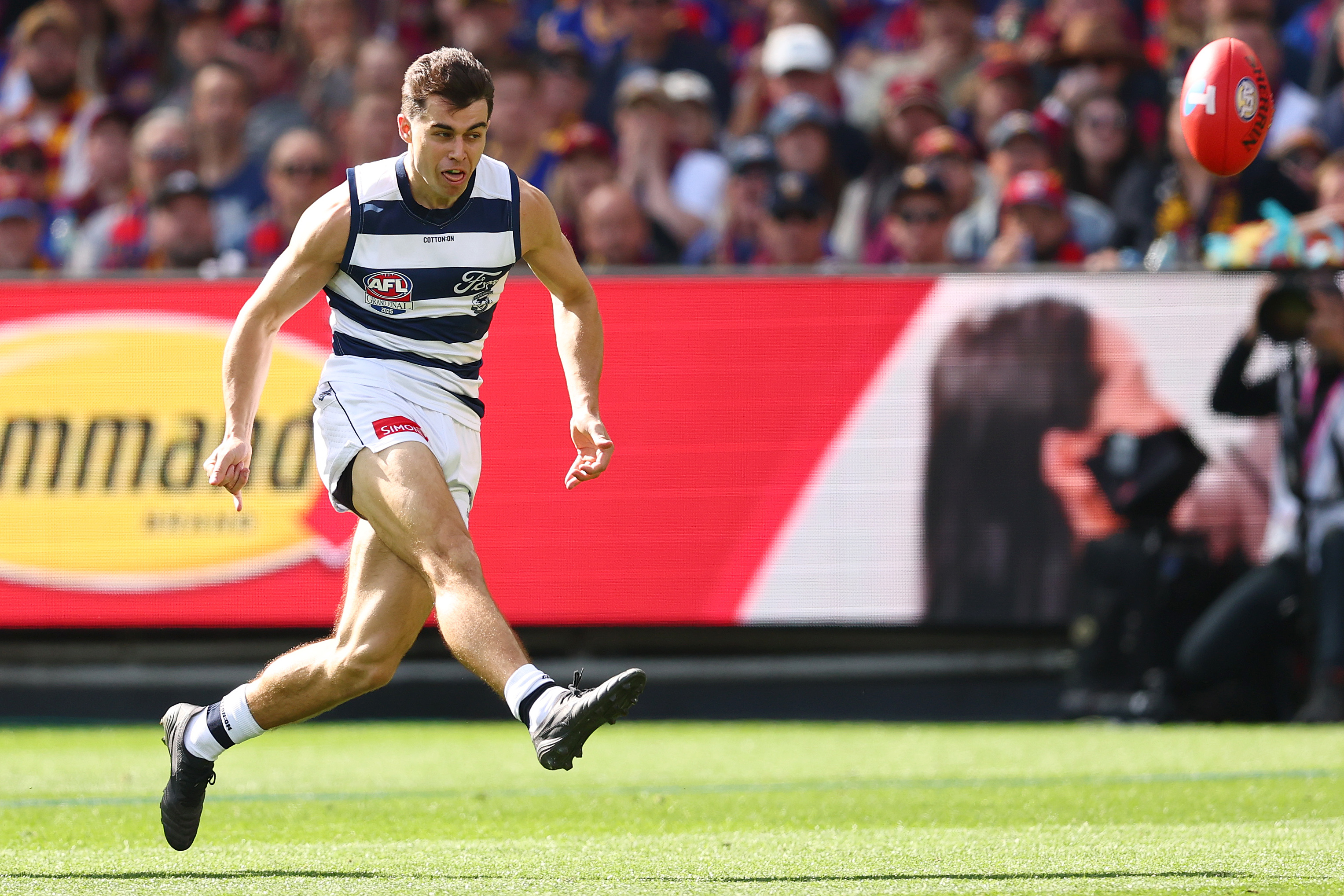
Mullin switched to the AFL in 2023, joining Geelong
MORGAN HANCOCK/AFL PHOTOS/VIA GETTY IMAGES
“I think if a player plays 50 AFL games, some form of compensation has to be given to that club and county. Because in essence, that means that they’re gone from GAA for good. That gives everyone a clearer reference point. I think that financial recognition is only fair, especially for the club that invested so much time into that player.”
Their own personal AFL experiences made McKaigue and McDaid better GAA players but it’s wrong to assume too that it enhanced the career of every player who returned. Players naturally come back stronger and fitter. They look better equipped for Gaelic football but hordes of Irish players effectively disappeared when they returned from Australia.
Why? The assumption is that both games are broadly similar but they’re not. A player’s body is often stripped down and transformed to play a different game. The differences between both codes are subtle to the naked eye but they are technically profound. Leaving behind a professional career is also a massive life adjustment.
“I don’t know what it did to some players psychologically, or what it was, but it’s been an unbelievably worrying pattern for a lot of players who came home after a two or three year period,” says McKaigue. “Some of those lads haven’t even been able to play top level club, never mind inter-county. It’s scary.”
Across the last 40 years, only 12 Irish players have played more than 50 AFL games, but the terrain is so different now that a trickle could yet turn into a much steadier flow. With players more immersed in a strong S&C and athletic development culture from a younger age, footballers are becoming far better equipped for the AFL. And the clubs have also become much more aware of what’s required to transform the Irish players into a better long term investment.
“During the time I went, and even before that, I felt that the AFL clubs weren’t really expecting much from the Irish lads,” McKaigue says. “It was nearly a shot in the dark but these clubs now are not taking Kobe McDonald and Ben Murphy over on the off-chance that they might make it. They see them as potentially 100-150 gamers for their club.
“That’s smart recruitment, but the AFL clubs have learned a lot about how to monopolise that Irish talent and get more bang for their buck. Having that better understanding of how to maximise their potential is a positive for the Irish players, but it’s a worrying trend for the GAA. I honestly think we’re only seeing the start now of what will be a much bigger influx of the best Irish talent going to the AFL.”
This heated debate may still only be warming up.