
WASHINGTON, DC – The ink was barely dry on the apparent deal to shield Hungary from US sanctions targeting Russian oil and gas when the details began dissolving into a bitter dispute between Washington and Budapest.
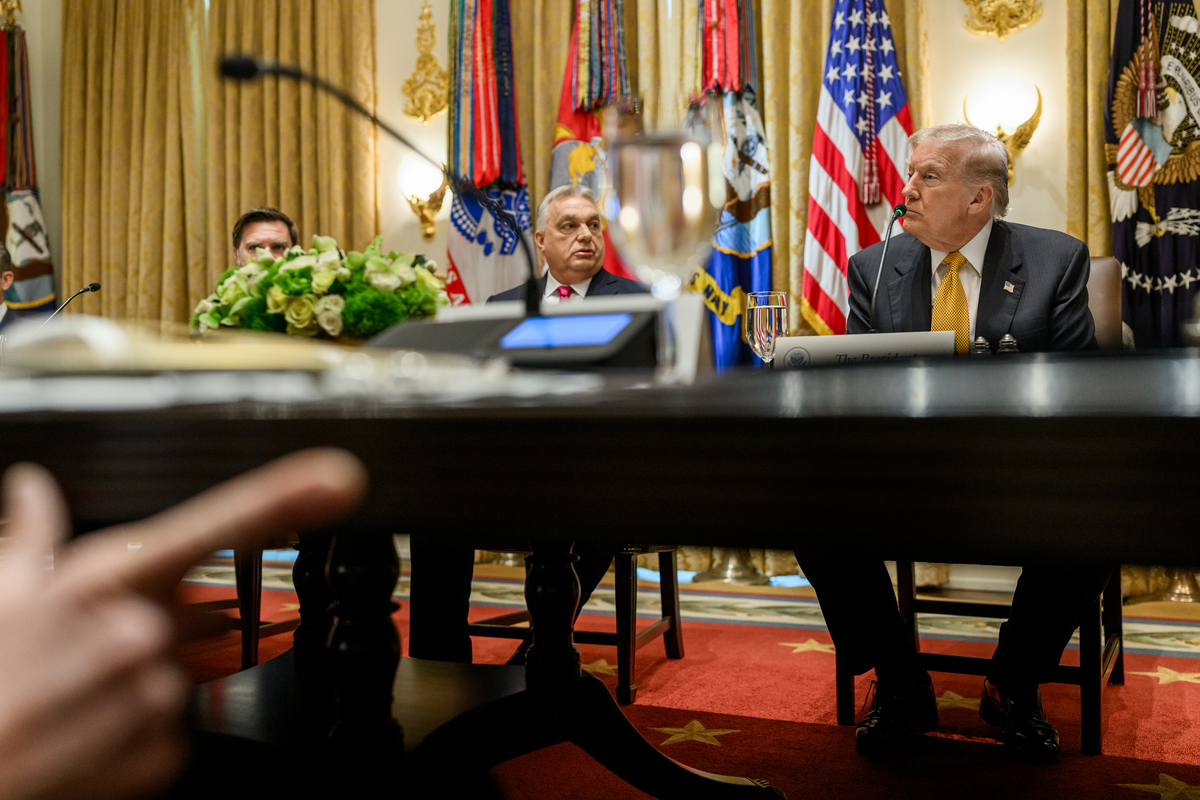
Just hours after Hungarian Prime Minister Viktor Orbán – a long-time ideological ally – concluded a friendly White House meeting with US President Donald Trump, a crucial rift emerged over the longevity of the prized energy waiver.
JOIN US ON TELEGRAM
Follow our coverage of the war on the @Kyivpost_official.
The reprieve, which Orbán had personally lobbied for to protect his energy-starved economy, is now at the center of a transatlantic quarrel.
Orbán’s camp declares victory
Hungarian Foreign Minister Péter Szijjártó took to social media late Saturday to aggressively counter claims that the exemption was a temporary, one-year measure.
“Fake news,” he declared in a weekend volley that would be right at home in a full-blown diplomatic spat. “The exemption is permanent for an indefinite period,” he wrote.
His unequivocal statement was met with an equally definitive rebuttal from the Trump administration.
A senior US official, speaking on condition of anonymity to Kyiv Post, dismissed Hungary’s version with a curt, two-word correction: “Nothing is indefinite.”
As Kyiv Post reported earlier, US officials said Friday the exemption was for one year only – a timeline that undercuts the narrative Orbán is selling to his domestic base ahead of a challenging election year.

Other Topics of Interest
A Higher Duty: The Military’s Obligations to the Constitution
Civic duty over personal loyalty.
Pipeline problem
The dispute turns on the fate of Russia’s energy pipelines – Druzhba for oil and TurkStream for gas – which feed a Hungarian economy critically dependent on Moscow.
According to IMF figures, Hungary in 2024 relied on Russia for roughly 86 percent of its oil and 74 percent of its gas.
Budapest has consistently argued that an immediate cutoff would send energy costs “skyrocketing,” potentially costing the landlocked nation more than 4 percent of its GDP and triggering “unbearable” price hikes for households and firms.
For Orbán, securing an indefinite waiver is both an economic and political imperative. It allows him to claim a major victory over pressure from Brussels, Kyiv, and NATO – and from earlier, punitive US sanctions imposed by the Trump administration last month on Russian energy giants Lukoil and Rosneft.
Orbán’s domestic political fortunes, facing a nascent opposition challenge, rely heavily on his ability to insulate Hungarians from the economic fallout of the Ukraine war.
Warm meeting, cold aftermath
The meeting between the two nationalist leaders was, by all accounts, warm. Trump publicly praised Orbán, hailing his hardline stance on immigration and even appearing sympathetic to Hungary’s geographic bind.
“We’re looking at it,” Trump said Friday. “It’s very different for him to get the oil and gas from other areas… they don’t have sea. They don’t have the ports.”
In return for the reprieve, a White House official noted that Budapest had committed to buying US liquefied natural gas (LNG) under contracts valued at roughly $600 million – a concession that fits neatly into Trump’s “America First” energy agenda.
Confusion, or calculated ambiguity?
The dueling narratives emerging from Washington and Budapest reveal a dangerous ambiguity at the heart of the deal.
Szijjártó’s social media blitz – insisting, “Anyone who claims otherwise was not present at the negotiations. It is much easier to ask those of us who were there” – is a direct, aggressive challenge to the White House’s public statement.
It suggests that, in the Oval Office, an “indefinite” nod was given, which US aides are now attempting to roll back into a more conventional, term-limited diplomatic arrangement.
The episode is vintage Trump: a deal struck on personal rapport with a foreign leader, immediately followed by a scramble among US officials to pin down the concrete terms of the agreement.
It’s also classic Orbán: seizing maximum political advantage from a friendly meeting, then using the claim of “fake news” to shut down any inconvenient details that diminish his diplomatic triumph.
Allies watching nervously
For Washington’s foreign policy establishment, the short-term waiver is a damage-control measure – preventing an all-out rupture with an important, if often contrarian, NATO ally while maintaining leverage.
For Kyiv and its allies in the EU, however, the dispute itself is a sign of instability.
It suggests that a critical energy sanction meant to choke Moscow’s war effort has now become a contested political bargaining chip – one where the White House and a key EU nation can’t even agree on the expiration date.
The question now is whether the “indefinite” claim is a simple communication breakdown, or if Orbán is banking on the political reality that reversing a waiver once granted – even a one-year one – will be difficult, especially with an election looming and a powerful ally in the White House.
The immediate casualty is clarity – replaced by a transatlantic shouting match over the single most important detail: how long.