
The rivalry between two of Britain’s most revered painters is to be revived this month when the Tate
marks the 250th anniversary of JMW Turner and John Constable’s births.
Turner & Constable: Rivals & Originals, due to open on November 27, is to showcase the works at the centre of the painters’ legendary feud side by side.
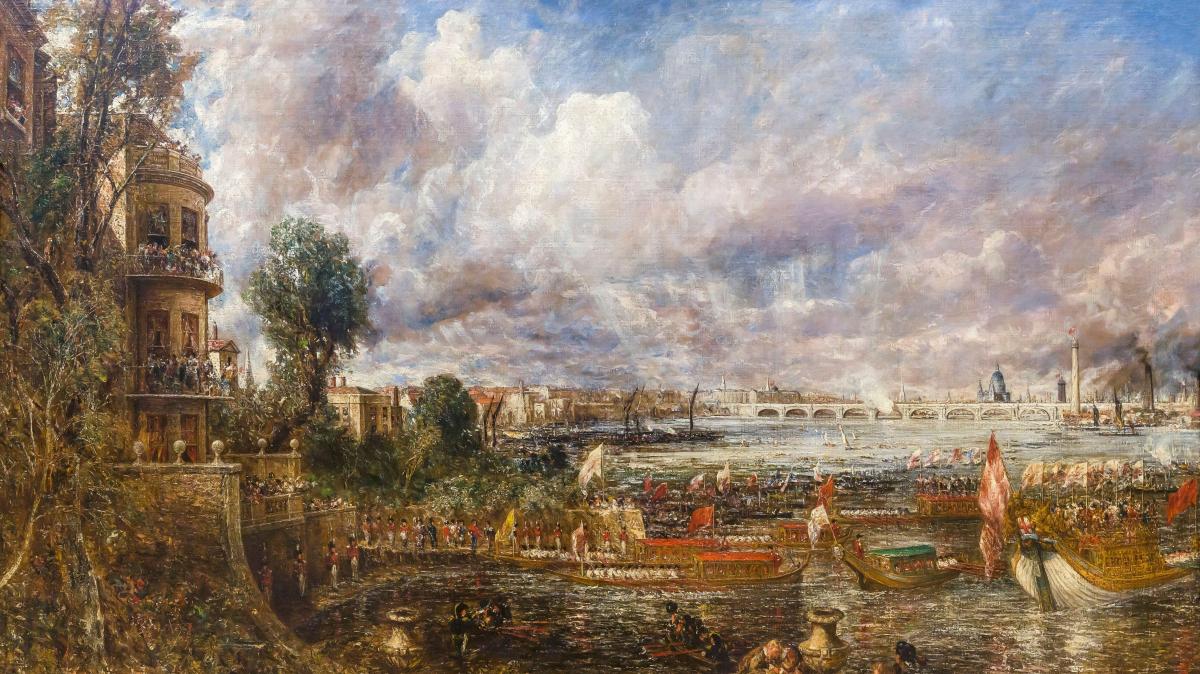
Constable’s study of Waterloo Bridge from 1819 is among the 170 paintings that will adorn the walls of the Tate Britain.
It will be reunited beside his now acclaimed large-scale vision of the scene, The Opening Of Waterloo Bridge, which he had delayed until 1832.
Constable’s initial painting of the bridge, built to commemorate the British victory at Waterloo, had been bought by the French industrialist Camille Groult.
It remained in his family until 2017 before being purchased by Daniel Katz, the British collector, who is loaning the work to the exhibition. This will be the first time in almost two centuries that the painting will be put on public display.
The paintings, however, caused Constable much angst during his lifetime. The first Waterloo Bridge painting was criticised by a senior Royal Academician, Joseph Farington, while his friend, John Fisher, the Bishop of Salisbury, said his work “did not solicit attention”.
• How impressionism began on Normandy’s windswept shores
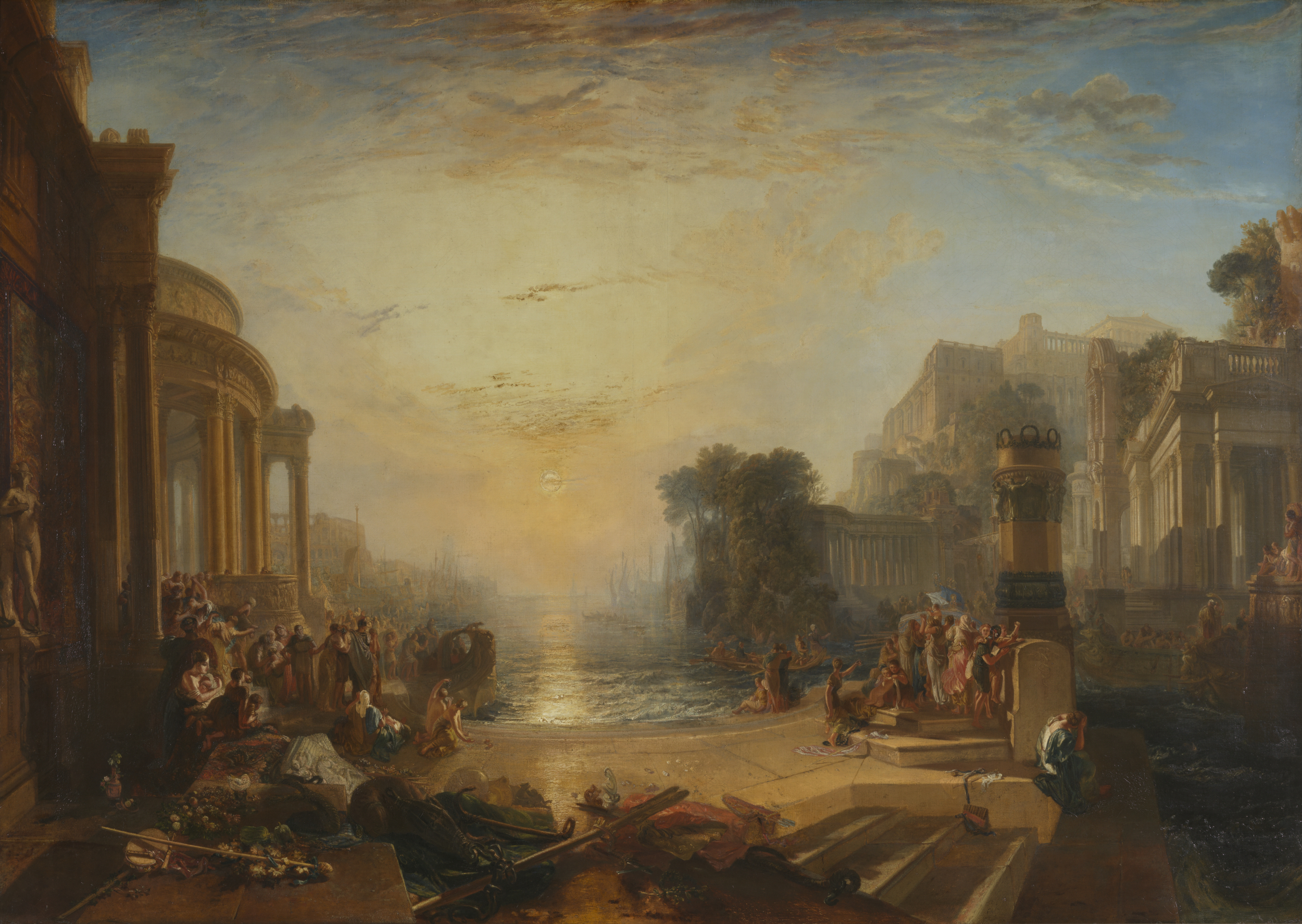
JMW Turner, The Decline of the Carthaginian Empire, first exhibited in 1817
HASSELBLAD H6D
He agonised for more than a decade before producing his vast 1832 tableau, which shows the Prince Regent boarding his river boat to open the bridge.
“He got bogged down by such a big painting,” said Anne Lyles, an expert on Constable, “and yet, to his credit, he also persevered.” The Tate bought the work in 1987.
“The bridge paintings were a major style change for a man known for pastoral scenes,” added Amy Concannon, curator of the Tate exhibtion.
• Stubbs, Lowry or Turner: who painted Britain best?
The paintings had been encouraged by Constable’s father-in-law, Charles Bicknell, who, as legal adviser to the Crown, wanted to ingratiate himself to the royals and obtain more money for the artist and his wife.
“Bicknell was initially against his daughter marrying Constable as he didn’t think he could earn enough,” said Concannon.
By 1832, Constable felt he must finish the tableau. He wrote in his diary: “I’m dashing away at the Great London [sic]. And why not. I might as well exhibit this as any other abortion.”
Its unveiling at the Royal Academy summer exhibition also led to an extraordinary spat with Turner.
Having spotted Constable’s painting before the opening, Turner was angered by its bright colours.
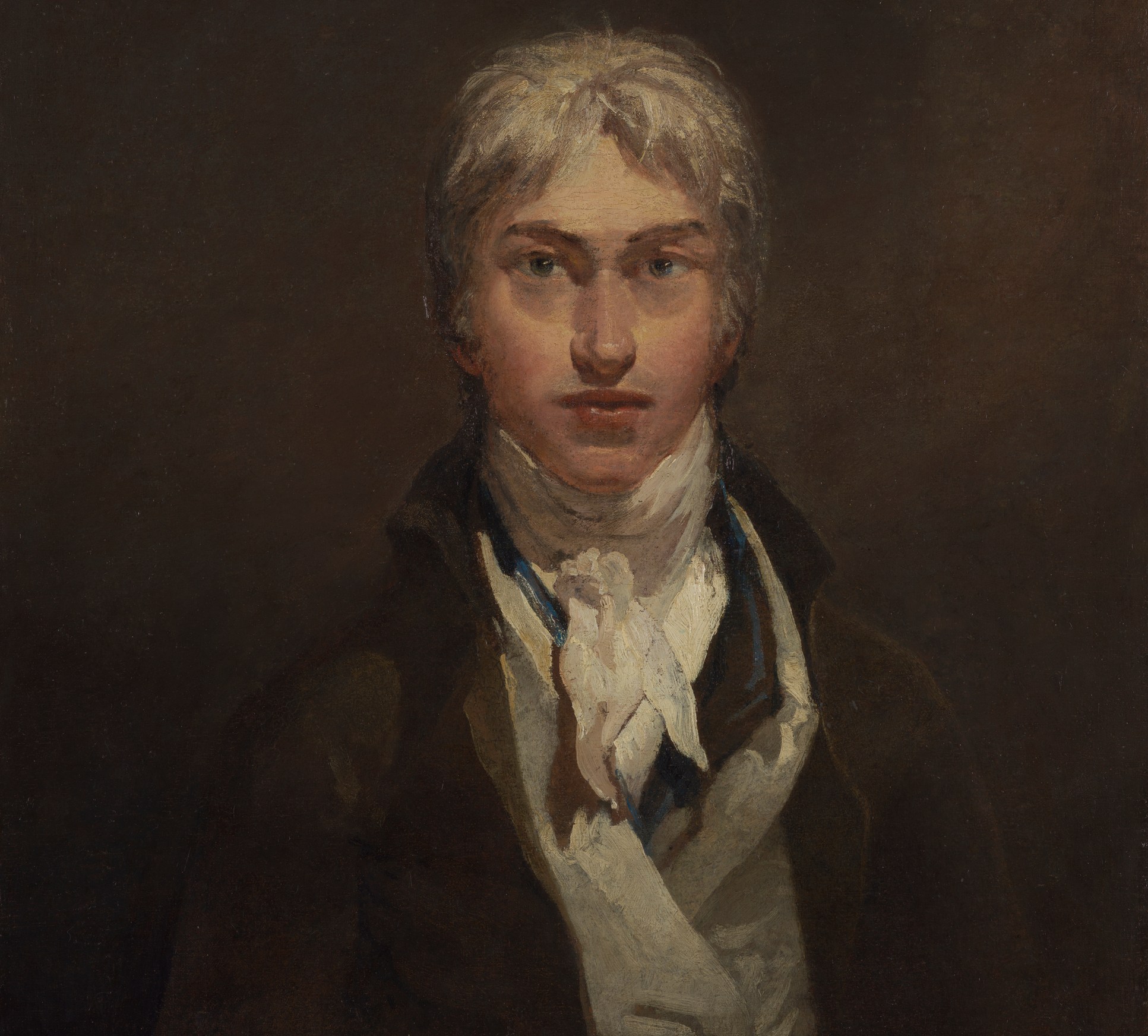
JMW Turner’s self portrait from 1799
TATE
Overnight, he added a red buoy to his grey seascape since it was to be hung next to Constable’s work.
On seeing the addition, Constable was overheard saying: “He [Turner] has been here and fired the gun”. It was at this moment, art historians believe, that one of the greatest artistic rivalries in British history was born.
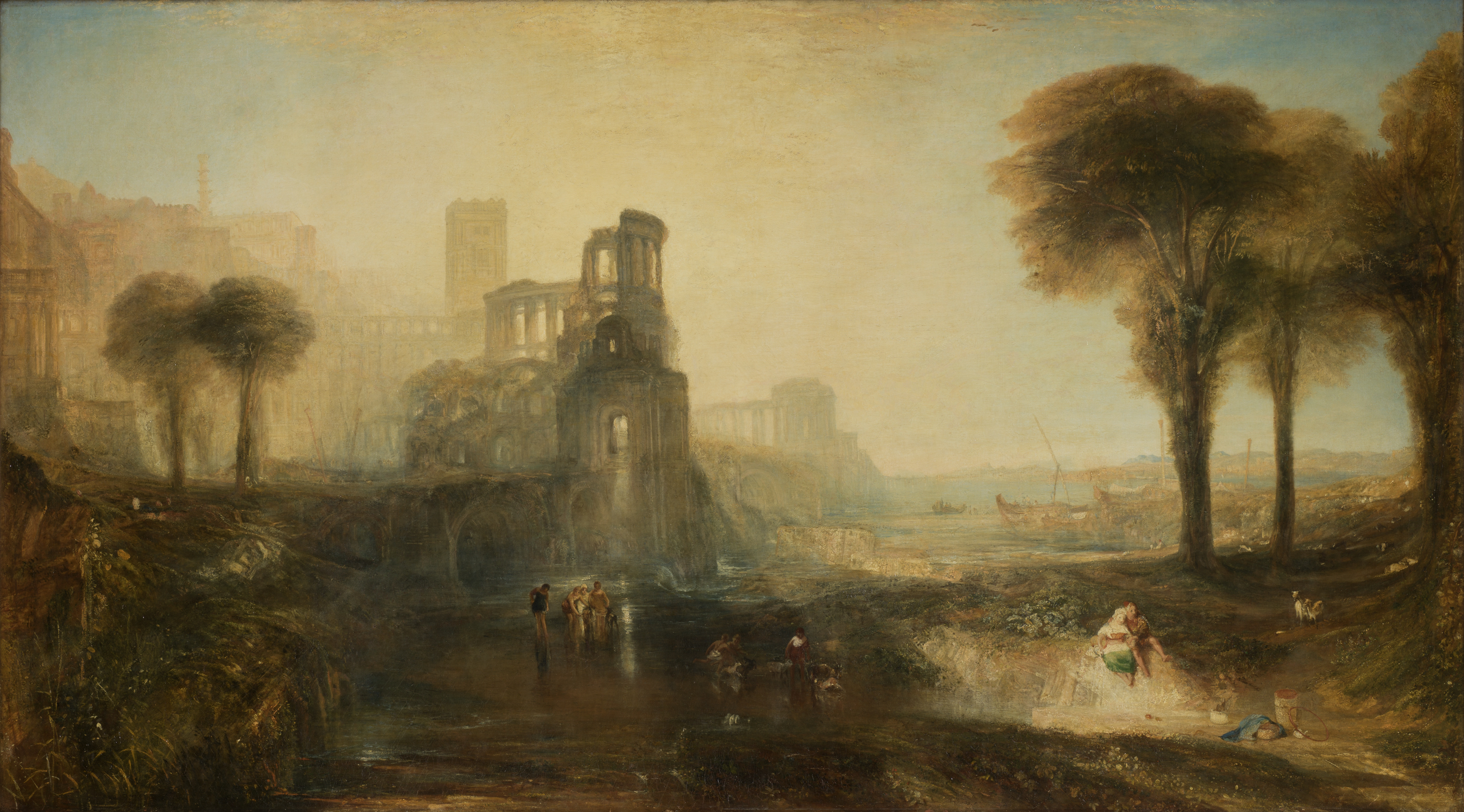
Caligula’s Palace and Bridge, 1831, by JMW Turner
HASSELBLAD H6D
Commenting on the rivalry at the centre of its upcoming exhibition, Tate Britain said: “With the two painters vying for success through very different but equally bold approaches, the scene was soon set for a heady rivalry within the competitive world of landscape art.
“Turner painted blazing sunsets and sublime scenes from his travels, while Constable often returned to depictions of a handful of beloved places, striving for freshness and authenticity in his portrayal of nature.”
Also in the exhibition will be Turner’s Juliet and her Nurse, a view of Venice with Juliet with her surrogate mother in the foreground. Not seen publicly since the 1836 Summer Exhibition, it features Juliet in Venice and not Verona. It was bought in 1980 by the Argentinian heiress Amalia Lacroze de Fortabat.
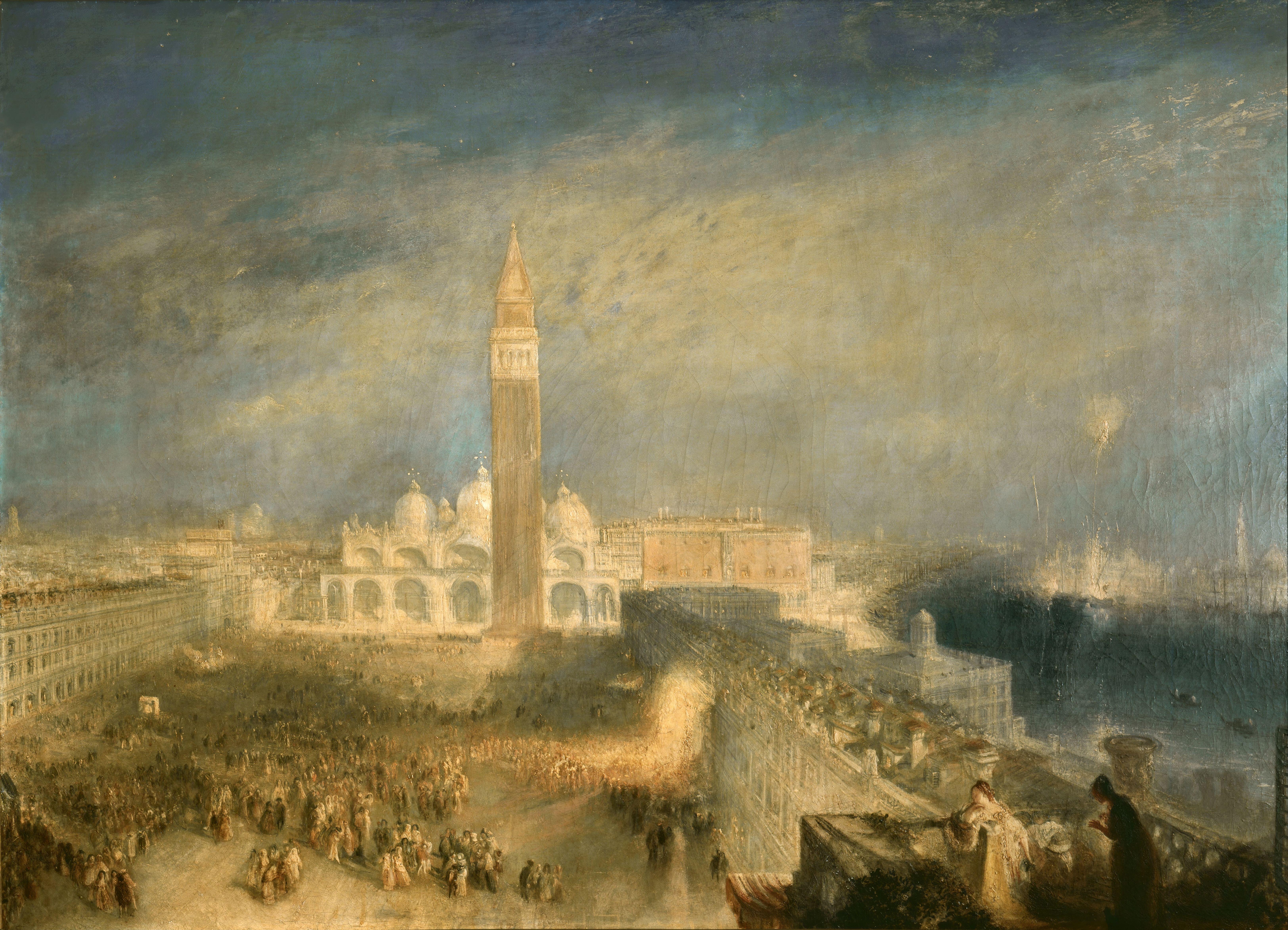
Turner’s Juliet and her Nurse
ALAMY
Yet the painting had initially been savaged as “too abstract”, “for the Shakespearean characters hidden in the lower right corner” and as “a strange jumble”.
This, said Concannon, led John Ruskin, a 17-year-old polymath and art historian, to write in defence of Turner.
It was Ruskin’s first encounter with the artist, whose work he then proselytised. However, after Turner’s death in 1851, when some of his erotic drawings were discovered, Ruskin claimed he had many burnt — either because he found them disgusting or because he wanted to protect the artist’s reputation. Constable died in 1837.