
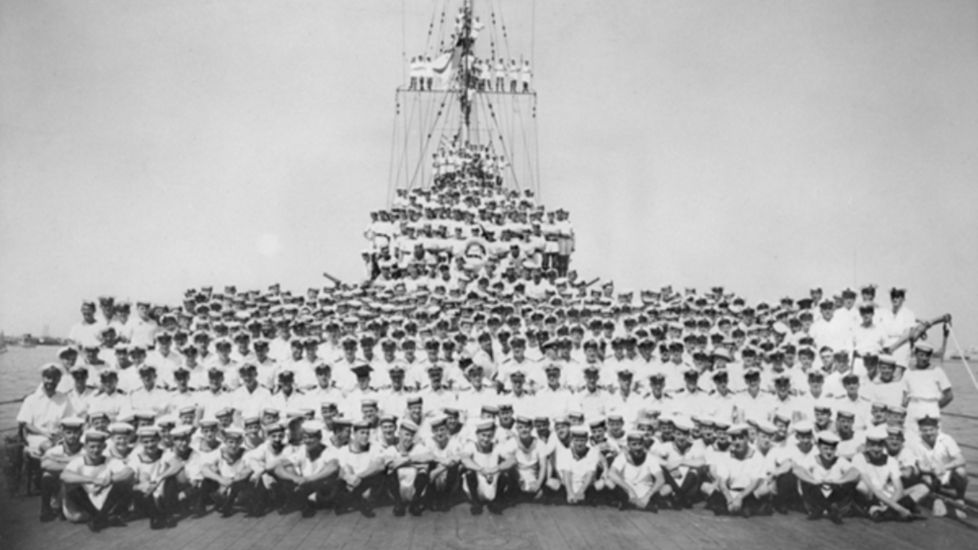
She was the pride of the Royal Australian Navy with battle honours earnt with distinction following the entry of the Italians into World War 2.
Bearing the name of her famous WW1 predecessor, HMAS Sydney II had originally been laid down as a Leander Class Light Cruiser for the British Royal Navy in the early 1930s but was purchased by the Australian Government in 1934 to reinforce the strength of the RAN.
Between her commissioning in 1935 and her tragic loss off the coast of Western Australia in 1941, the Sydney operated out of Gibraltar, Egypt and Cyprus before finally reaching Australia in 1936.
After the outbreak of war three years later, she undertook convoy escort duties, transported allied troops, shelled enemy ports, sank Axis merchant ships, saw off air attacks and did battle with Italian warships – all without losing a crew member in action during a hectic eight-month deployment in the Mediterranean.
A return to Australia including a hero’s welcome in its namesake city was followed by deployment in coastal waters around the continent throughout 1941 before Sydney’s final and fateful mission.
Encounter with Kormoran
On 19 November she and her 645 crew were heading south towards Fremantle when she encountered the disguised and heavily armed German raider Kormoran.
As the Sydney approached to investigate, Kormoran revealed its true identity and opened fire on the Australian ship at close range.
In the ensuing battle, both vessels were fatally damaged. Kormoran was scuttled by its crew, while Sydney drifted away, heavily damaged and on fire.
No distress signal was received from the Sydney and she sank with no survivors. Among those who died were four CBA staffers: James Hudson, Charles Mitchell, Walter Freer and Alan Edenborough.
Hudson had begun his banking career in 1938 in Queensland and enlisted in the Navy a year later. He had only joined Sydney as a Signalman in August 1941 and was just 20 when the ship went down.
Mitchell, a CBA staffer since 1937, had joined the Navy in May 1940 and was even newer to the Sydney than Hudson. He boarded the ship 18 days before she went into battle with the Kormoran. He too was just 20 years old.
Freer had had a long career in the Navy before joining CBA in 1935. Re-enlisting in June 1941, he was assigned to the Sydney in August. Aged 38, he left behind a wife and three children.
Edenborough was another August assignee. Aged 21, he had worked for CBA since 1936 and joined the Navy in January 1941.