
70 Years of Yamaha Design
MCNews.com.au was recently invited to Japan to attend a special 70th anniversary celebration and media experience hosted by Yamaha Motor Company. While at the company’s headquarters in Iwata, we met Takanori Iwai, the General Manager of the company’s Product Design Division.
During our chat, he offered a fascinating glimpse into how Yamaha’s motorcycles express emotion through form, where curves, surfaces and lines are used not just to optimise performance, but to communicate feeling.
Before joining Yamaha in 2022, Iwai-san spent more than a decade designing wristwatches and smartphones. That background shaped his precise eye for proportion and detail. “The heartbeat of a watch is not so different from that of an engine,” he says. “Both demand rhythm, balance, and soul.”
For most of us, motorcycle design is viewed primarily as a means of enhancing performance, achieving sharper aerodynamics, improving ergonomics, and increasing efficiency. But for Yamaha’s designers, form goes beyond function. Each line and surface tells a story, conveying a sense of motion, character and even the soul of the machine itself.
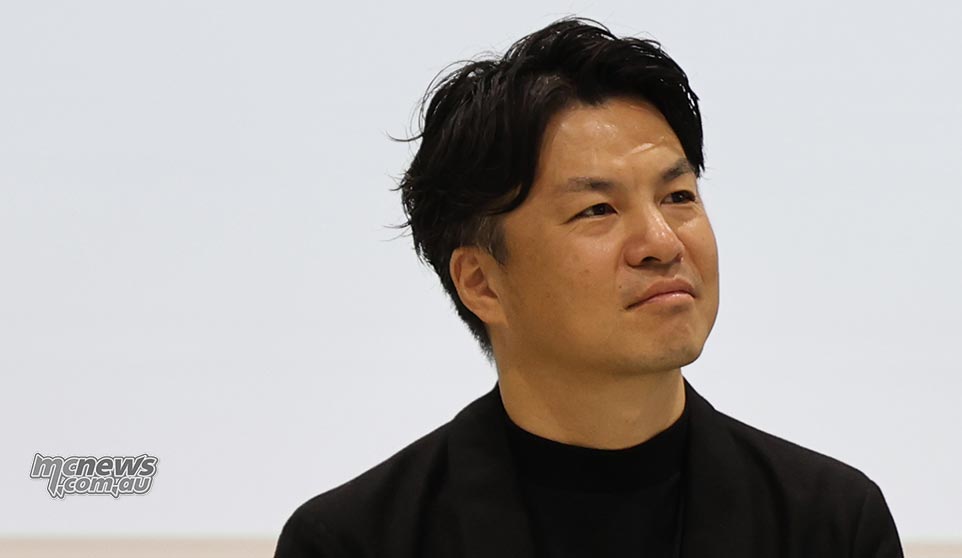 Takanori Iwai – Yamaha Creative Centre Product Design General Manager
“When I think about Yamaha design, I always begin with our founder, Genichi Kawakami,” Iwai-san explains. “After World War II, he visited North America and saw people enjoying leisure through mobility. He realised that ‘the enjoyment of life leads to true richness.’ From the beginning, Yamaha built motorcycles not only as a means of transportation but also as tools to enhance joy. Kawakami also believed that motorcycles and people are connected through beauty. That conviction still guides us today.
“Our modern design organisation was formalised in 2012,” Iwai-san continued. “Today, we have around 130 designers across six countries, about 80 of them based here in Japan.
“Our philosophies are Kando and Jin-Ki Kannō. Yamaha strives to be a Kando-creating company. Kando is the deep satisfaction and excitement that comes from encountering something truly special. The harmony that Kando creates between human and machine is what we call Jin-Ki Kannō, the moment when rider and motorcycle become one.”
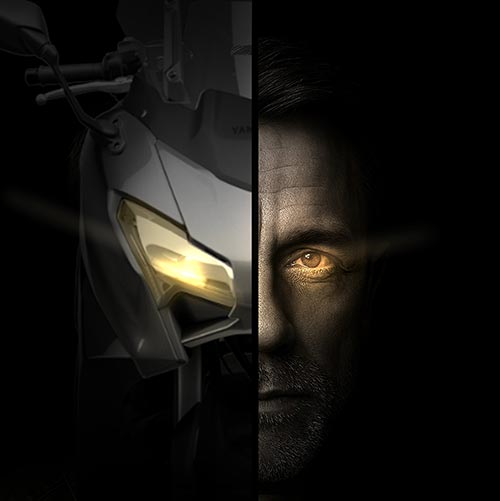 MAX Series — The Aesthetics of Power Flow
The Machines That Tell the Story
YA-1 (1955) — Where It All Began
“Our first motorcycle, the YA-1, carried that founding spirit. At a time when nearly every bike was black, Yamaha chose chestnut brown. It was a bold statement of individuality. Its handle mounts, musical-instrument-like muffler, and tuning-fork badge were all crafted to express beauty as well as precision. Even its brake levers were shaped like butter knives. Everything was graceful yet purposeful.”
 1955 Yamaha YA-1
R Series — Running Art
“The R Series brings the thrill of supersport performance to everyday riders. Every surface is sculpted to express speed and tension even at rest. The sharp, race-inspired headlight and aerodynamic body lines convey mastery and focus. It’s what I call the sensuality of intelligence. It’s not aggression but control.”
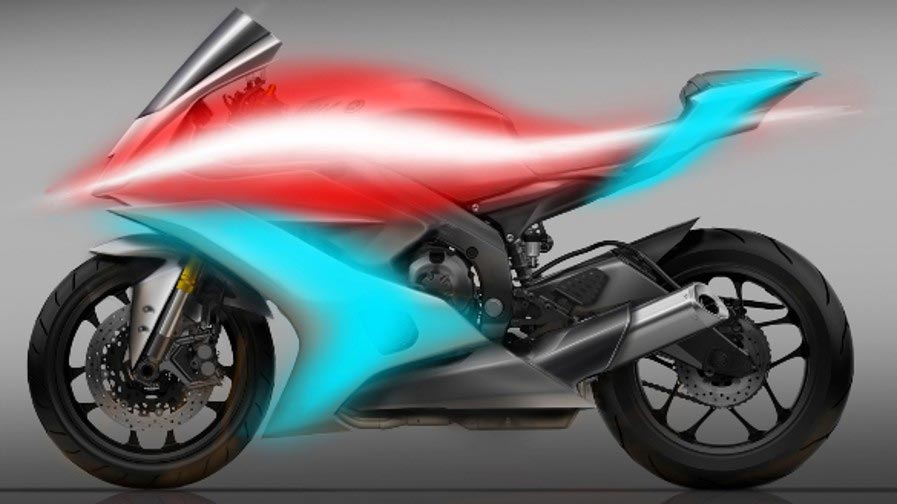 R Series — Running Art
MT Series — Torque and Agility
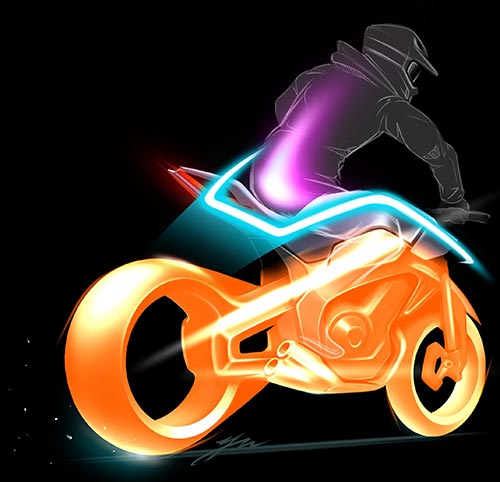 MT Series — Torque and Agility
“MT embodies the coexistence of torque and nimbleness. Its 3:7 upper-to-lower-body ratio gives a high-centred, athletic stance, visually transmitting the surge of power from rear tyre to head pipe. Even standing still, it looks alive, ready to pounce.”
 Yamaha MT-10 SP
YZ Series — Horizontal Motion
“Our off-road YZ line is defined by a single straight axis. Front fender, shrouds, seat and rear fender aligned to express horizontal flow. It captures the kinetic energy of riding across terrain. Every surface is refined for seamless movement between rider and machine, the purest form of Jin-Ki Kannō in action.”
 YZ Series — Horizontal Motion
MAX Series — The Aesthetics of Power Flow
“MAX scooters visualise invisible energy. The side panel’s boomerang motif represents torque looping from rear to front, the circulation of force. Their twin-headlight face projects composure rather than aggression. The double-wedge body design balances stability and agility. TMAX for long-range poise, XMAX for urban responsiveness. To me, MAX expresses beauty born from the frame, inner tension meeting outer grace.”
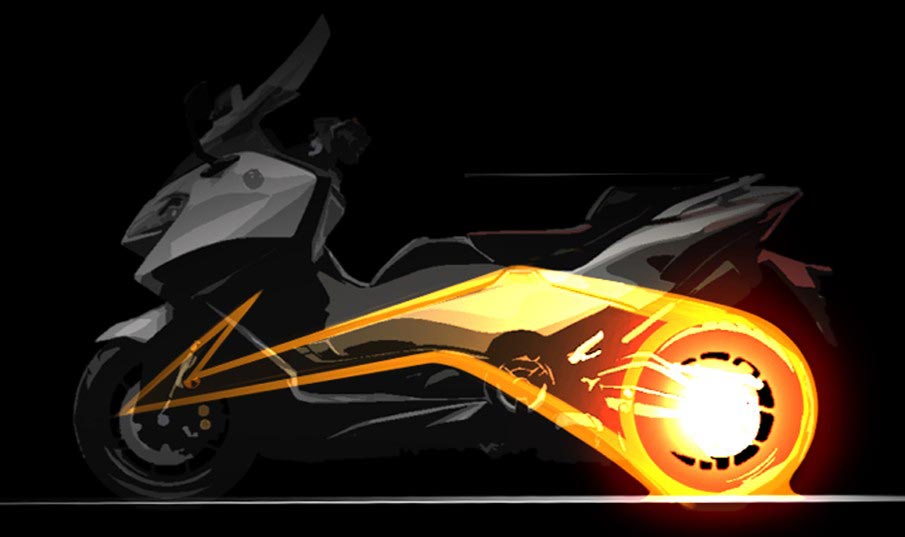 MAX Series — The Aesthetics of Power Flow
Looking Ahead — Human and Machine in Harmony
“At the 2023 Japan Mobility Show, we presented MOTOROiD 2, our vision of future mobility. It can recognise its rider, stand up by itself and adjust posture naturally, as if alive. This is empathy in motion, a machine that responds and grows alongside its owner. Yamaha’s dream is a future where machines are companions that share our emotions. After 70 years, the Yamaha Motor journey continues. Its goal is to create forms that move not only through space, but through the human heart.”
 Motoroid 2 standing in front of the original Yamaha YA-1 ‘Red Dragonfly’
MOTOROiD:Λ.
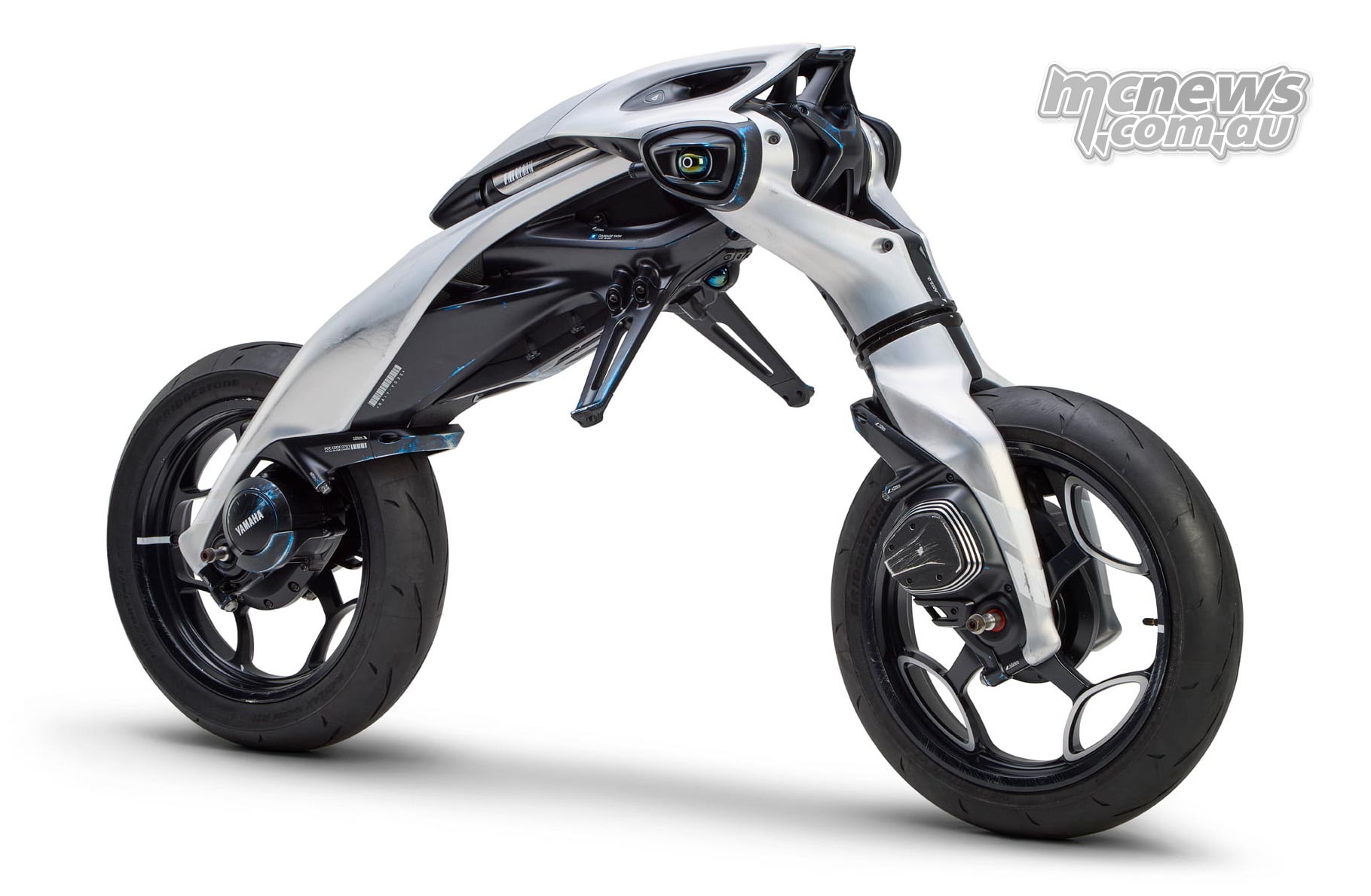
The third generation of Yamaha’s Motoroid dynasty broke cover at the Japan Mobility Show just after we visited Japan, meet MOTOROiD:Λ.
 MOTOROiD:Λ
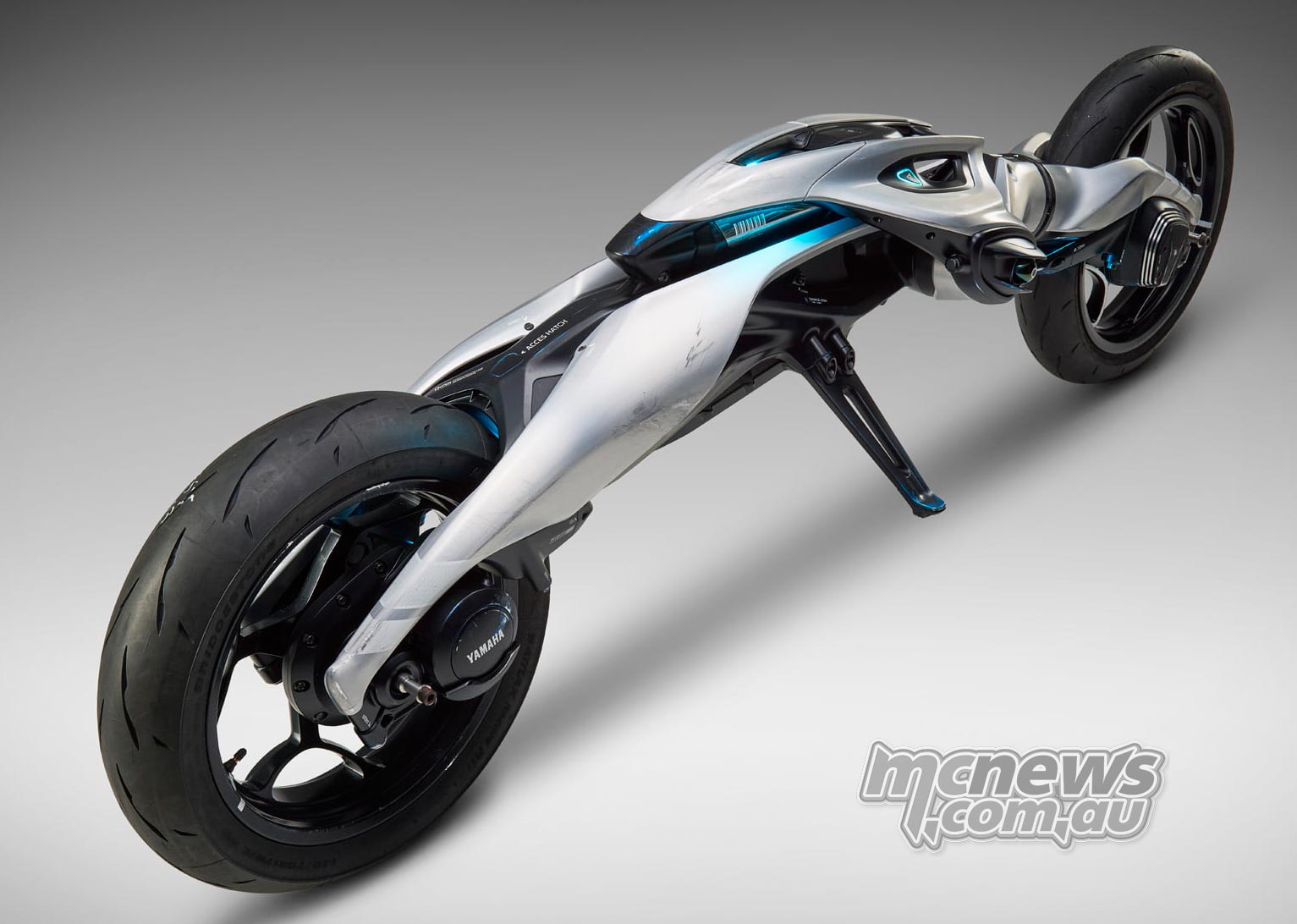
The model’s main features include optimised, organic movements generated through AI-based learning and a lightweight, durable exoskeleton engineered to withstand the trial-and-error impacts of the learning process.
 MOTOROiD:Λ
From a fully unfolded 180-degree position, it can independently drive each motor based on its own judgment to raise the vehicle body and stand upright while maintaining balance.